Kawahara Takeshi, Shimizu Issei, Tanaka Yuuki, Tobita Keisuke, Tomokiyo Mikado, Watanabe Itsuki
Faculty of Agriculture, Shinshu University, Nagano, Japan.
KITII Co., Ltd., Tokyo, Japan.
Front Microbiol. 2022 Feb 22;13:783879. doi: 10.3389/fmicb.2022.783879. eCollection 2022.
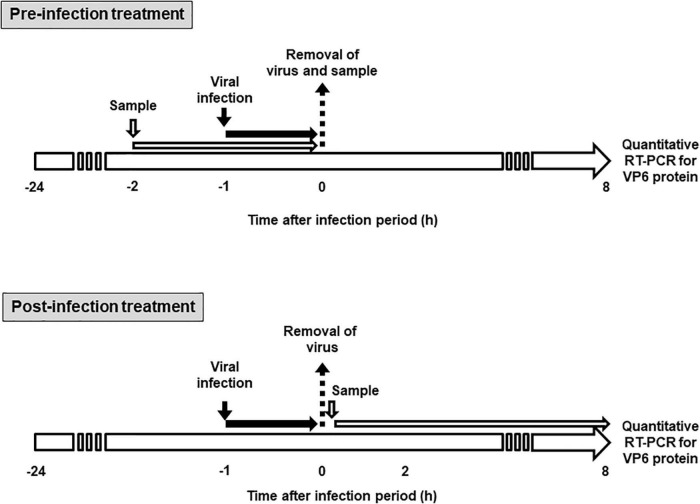
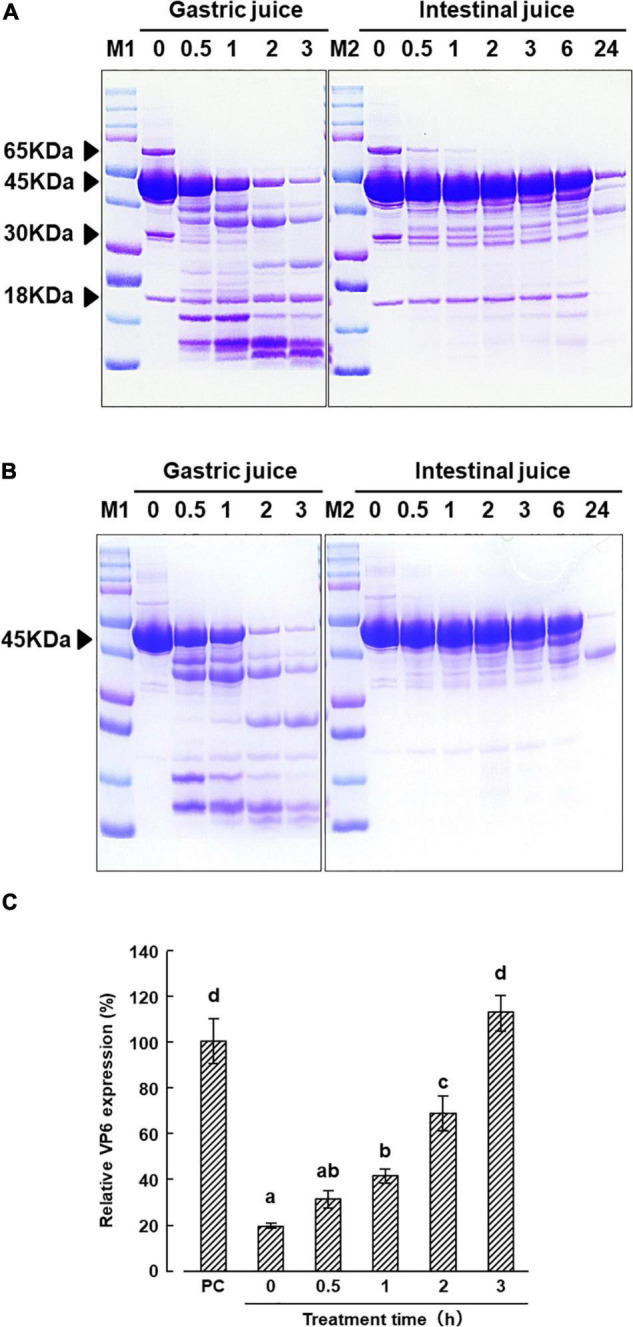
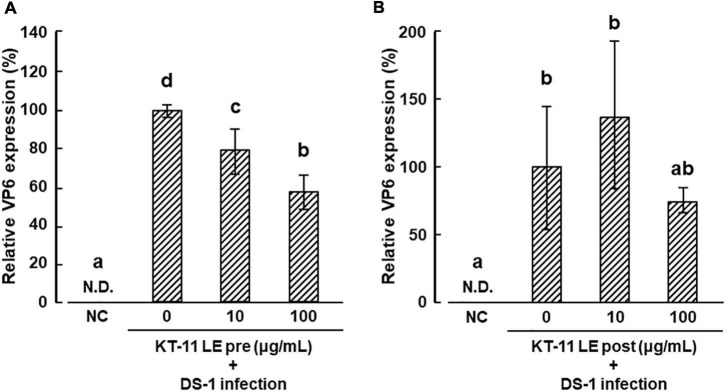
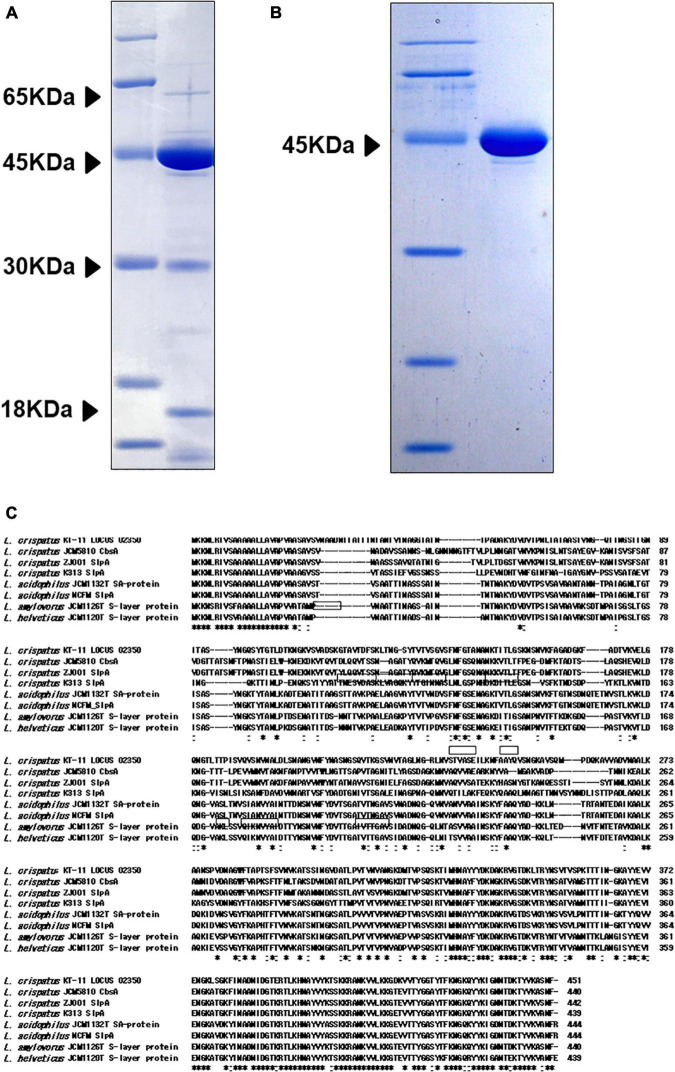
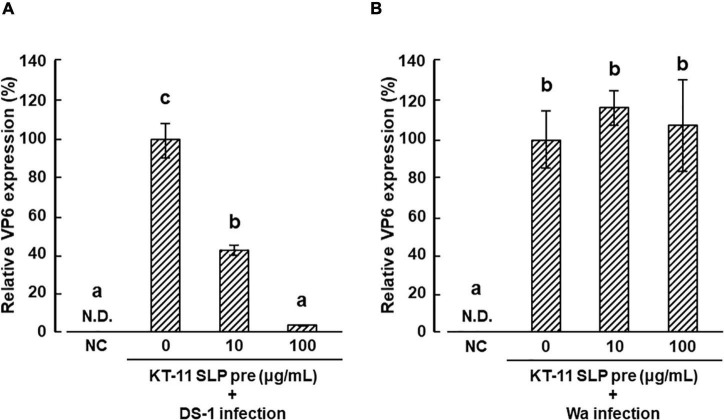
S-layer proteins (SLPs), which are present in the external layer of certain strains of lactic acid bacteria isolated from the intestinal tract, are known to recognize and bind to specific proteins and glycan structures and contribute to adsorption to the host intestinal mucosa. The binding properties of certain SLPs are considered to exert a competitive inhibitory effect on infection because similar properties are involved in the infection mechanisms of several viruses. However, little is known regarding whether SLPs directly inhibit viral infection. In the present study, we investigated the effect of an SLP of the KT-11 strain, a probiotic strain isolated from a healthy human infant, on human rotavirus infection. The impact of KT-11 lithium chloride extract (KT-11 LE), which contains SLP, on the infection of the P[4] genotype human rotavirus strain DS-1 was evaluated by monitoring the amplification of viral protein 6 (VP6) expression in human intestinal epithelial Caco-2 cells by quantitative reverse transcription-polymerase chain reaction assay after infection. KT-11 LE showed a significant suppressive effect on DS-1 infection in a dose-dependent manner with pre-infection treatment, whereas post-infection treatment was not effective. A 45 KDa protein isolated from KT-11 LE was investigated for homology using the BLAST database and was found to be a novel SLP. KT-11 SLP concentrate (KT-11 SLP) significantly inhibited the proliferative process of the DS-1 strain but not that of the P[8] genotype human rotavirus strain Wa. KT-11 SLP exerted significant inhibitory effect on DS-1 infection by pre-infection treatment even after digestion with gastric juice up to 2 h. Our results provided crucial evidence that SLPs from certain strains can inhibit human rotavirus infection of intestinal epithelial cells.
S层蛋白(SLPs)存在于从肠道分离出的某些乳酸菌菌株的外层,已知其能识别并结合特定蛋白质和聚糖结构,有助于吸附到宿主肠道黏膜。某些SLPs的结合特性被认为对感染具有竞争性抑制作用,因为几种病毒的感染机制涉及类似特性。然而,关于SLPs是否直接抑制病毒感染知之甚少。在本研究中,我们调查了从健康人类婴儿分离出的益生菌菌株KT-11的SLP对人轮状病毒感染的影响。通过定量逆转录-聚合酶链反应测定法监测感染后人类肠上皮Caco-2细胞中病毒蛋白6(VP6)表达的扩增,评估了含有SLP的KT-11氯化锂提取物(KT-11 LE)对P[4]基因型人轮状病毒株DS-1感染的影响。预感染处理时,KT-11 LE对DS-1感染呈剂量依赖性显著抑制作用,而感染后处理则无效。使用BLAST数据库对从KT-11 LE中分离出的一种45 kDa蛋白进行同源性研究,发现它是一种新型SLP。KT-11 SLP浓缩物(KT-11 SLP)显著抑制DS-1株的增殖过程,但对P[8]基因型人轮状病毒株Wa的增殖过程无抑制作用。即使在胃液中消化长达2小时后,预感染处理时KT-11 SLP对DS-1感染仍有显著抑制作用。我们的结果提供了关键证据,表明某些菌株的SLPs可抑制肠道上皮细胞的人轮状病毒感染。