Department of Thoracic Surgery, Shaanxi Provincial People's Hospital, The Third Affiliated Hospital of Xi'an Jiaotong University, Xi'an, 710068, China.
Department of Thoracic Surgery, Tangdu Hospital, Air Force Medical University, 1 Xinsi Road, Xi'an , 710038, China.
J Exp Clin Cancer Res. 2022 Mar 11;41(1):91. doi: 10.1186/s13046-022-02266-9.
Histone deacetylases (HDACs) play crucial roles in cancers, but the role and mechanism of HDAC7 in NSCLC have not been fully understood.
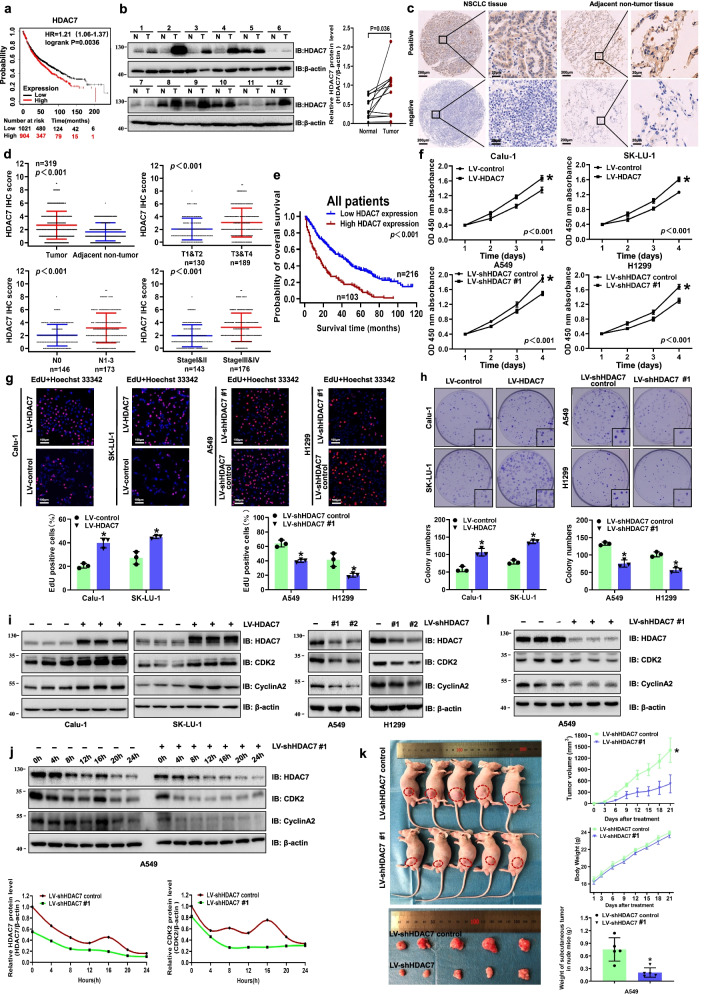
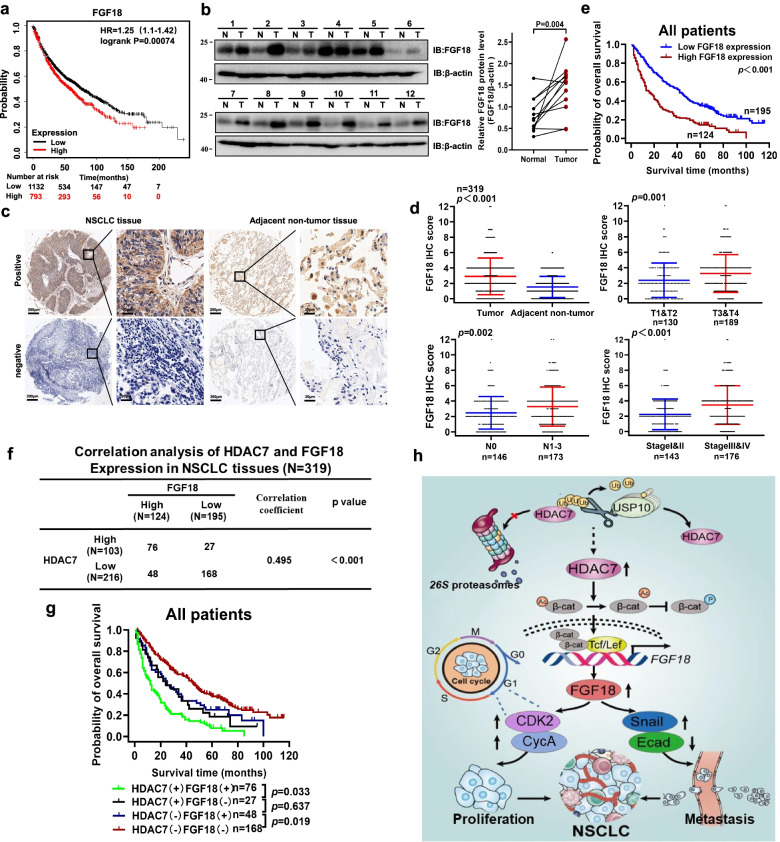
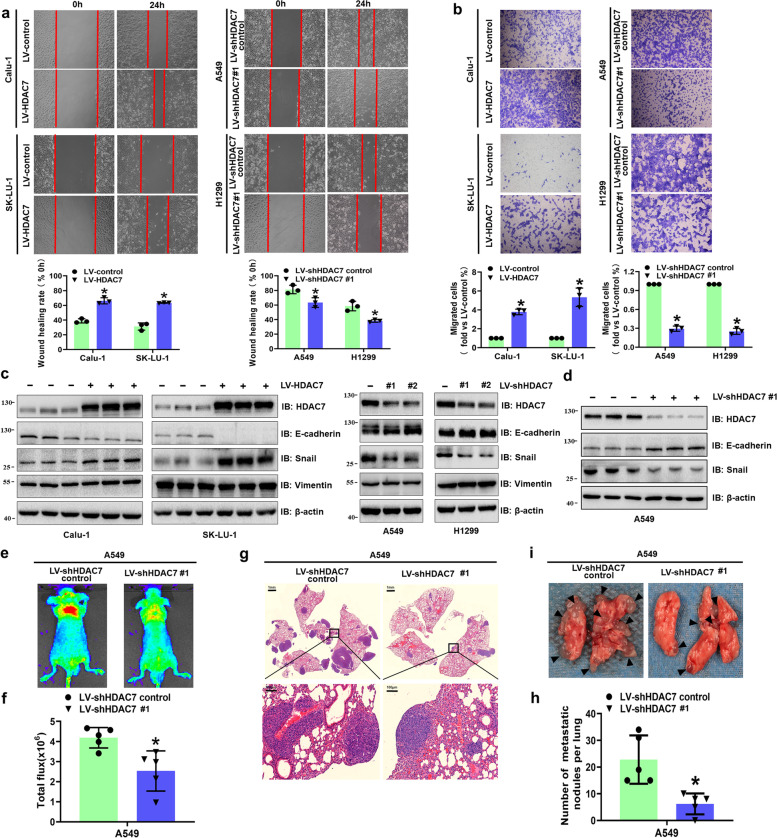
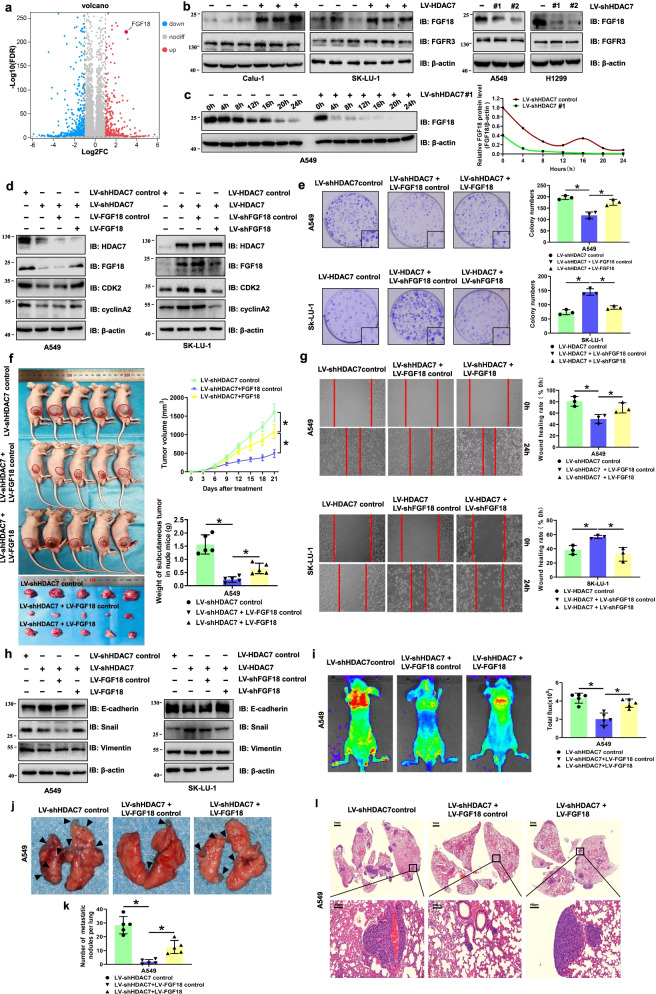
A total of 319 patients with non-small cell lung cancer (NSCLC) who underwent surgery were enrolled in this study. Immunohistochemistry and Kaplan-Meier survival analysis were performed to investigate the relationship between HDAC7, fibroblast growth factor 18 (FGF18) expression, and clinicopathologic characteristics. Cell functional experiments were implemented both in vivo and in vitro to investigate the effects on NSCLC cell proliferation and metastasis. Recombinant lentivirus-meditated in vivo gene overexpression or knockdown, real-time polymerase chain reaction (PCR), western blotting, and coimmunoprecipitation assays were applied to clarify the underlying molecular mechanism of HDAC7 in promoting NSCLC progression.
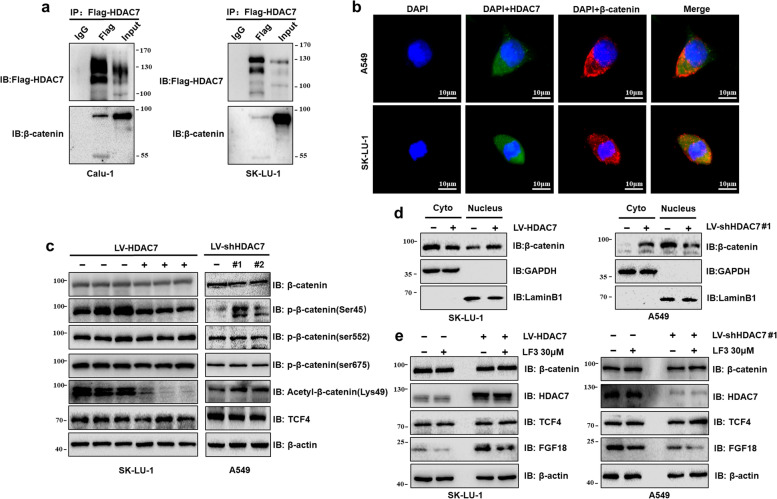
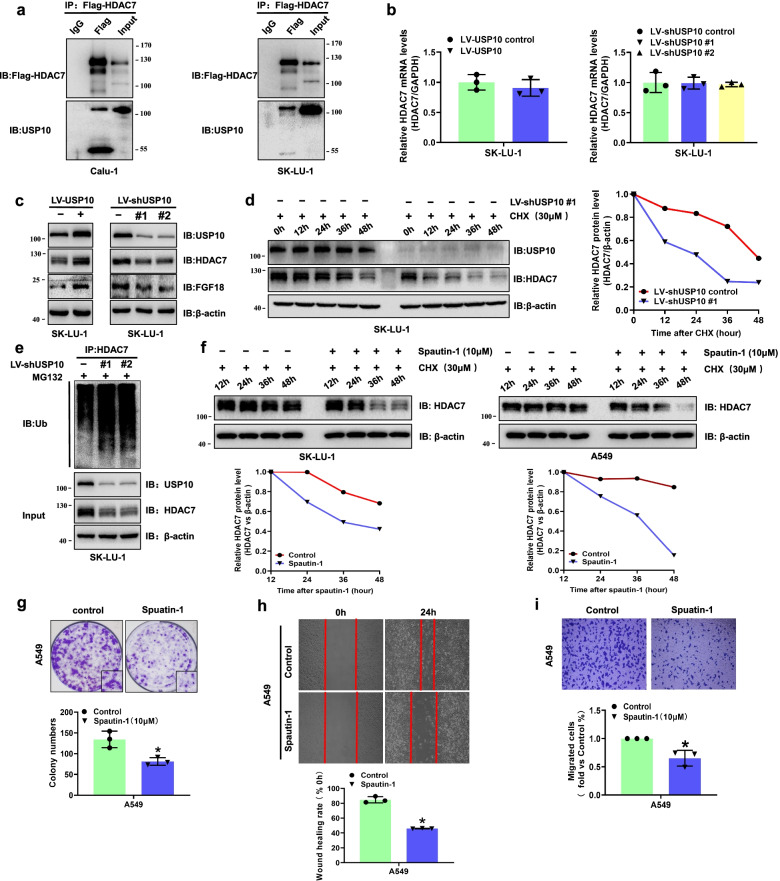
The elevated expression of HDAC7 or FGF18 was positively correlated with poor prognosis, tumor-node-metastasis (TNM) stage, and tumor differentiation of NSCLC patients. NSCLC patients with co-expressed HDAC7 and FGF18 suffered the worst prognosis. HDAC7 overexpression promoted NSCLC proliferation and metastasis by upregulating FGF18. Conversely, overexpression of FGF18 reversed the attenuated ability in tumor growth and metastasis mediated by downregulating HDAC7. In terms of mechanism, our results suggested that the interaction of HDAC7 with β-catenin caused decreased β-catenin acetylation level at Lys49 and decreased phosphorylation level at Ser45. As a consequence, the HDAC7-mediated posttranslational modification of β-catenin facilitated nuclear transfer and activated FGF18 expression via binding to TCF4. Furthermore, deubiquitinase USP10 interacted with and stabilized HDAC7. The suppression of USP10 significantly accelerated the degradation of HDAC7 and weakened NSCLC growth and migration.
Our findings reveal that HDAC7 promotes NSCLC progression through being stabilized by USP10 and activating the β-catenin-FGF18 pathway. Targeting this novel pathway may be a promising strategy for further developments in NSCLC therapy.
组蛋白去乙酰化酶(HDACs)在癌症中发挥着关键作用,但 HDAC7 在非小细胞肺癌(NSCLC)中的作用和机制尚未完全阐明。
本研究共纳入 319 例接受手术治疗的非小细胞肺癌(NSCLC)患者。采用免疫组织化学和 Kaplan-Meier 生存分析方法,探讨 HDAC7、成纤维细胞生长因子 18(FGF18)表达与临床病理特征的关系。通过体内和体外细胞功能实验,研究其对 NSCLC 细胞增殖和转移的影响。应用重组慢病毒介导的体内基因过表达或敲低、实时聚合酶链反应(PCR)、Western blot 和免疫共沉淀实验,阐明 HDAC7 促进 NSCLC 进展的潜在分子机制。
HDAC7 或 FGF18 的高表达与 NSCLC 患者的不良预后、肿瘤-淋巴结-转移(TNM)分期和肿瘤分化呈正相关。同时表达 HDAC7 和 FGF18 的 NSCLC 患者预后最差。HDAC7 过表达通过上调 FGF18 促进 NSCLC 的增殖和转移。相反,通过下调 HDAC7 逆转了 FGF18 过表达对肿瘤生长和转移能力的减弱作用。在机制方面,我们的结果表明,HDAC7 与 β-连环蛋白的相互作用导致 β-连环蛋白赖氨酸 49 乙酰化水平和丝氨酸 45 磷酸化水平降低。因此,HDAC7 介导的 β-连环蛋白翻译后修饰促进了核转移,并通过与 TCF4 结合激活了 FGF18 的表达。此外,去泛素化酶 USP10 与 HDAC7 相互作用并使其稳定。USP10 的抑制作用显著加速了 HDAC7 的降解,并减弱了 NSCLC 的生长和迁移。
本研究结果表明,HDAC7 通过 USP10 稳定并激活 β-连环蛋白-FGF18 通路促进 NSCLC 进展。靶向该新型通路可能是 NSCLC 治疗进一步发展的一种有前途的策略。