Instituto de Biología Molecular y Celular de Plantas (Consejo Superior de Investigaciones Científicas - Universitat Politècnica de València), 46022, Valencia, Spain.
Plant J. 2022 May;110(4):1166-1181. doi: 10.1111/tpj.15730. Epub 2022 Mar 27.
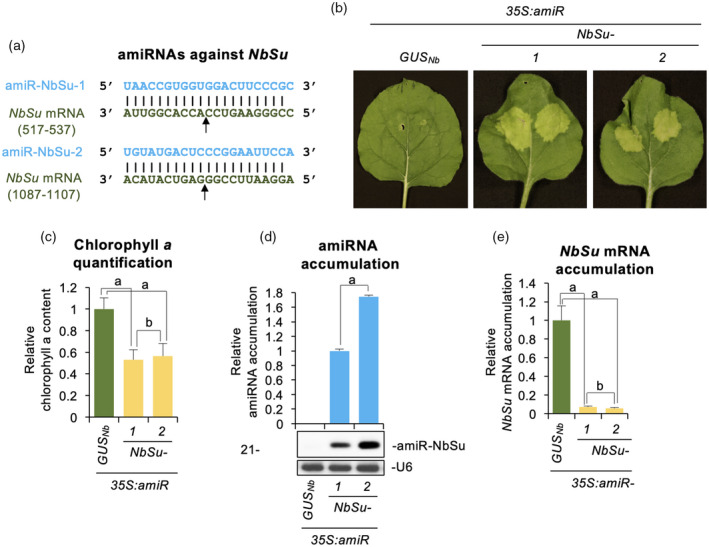
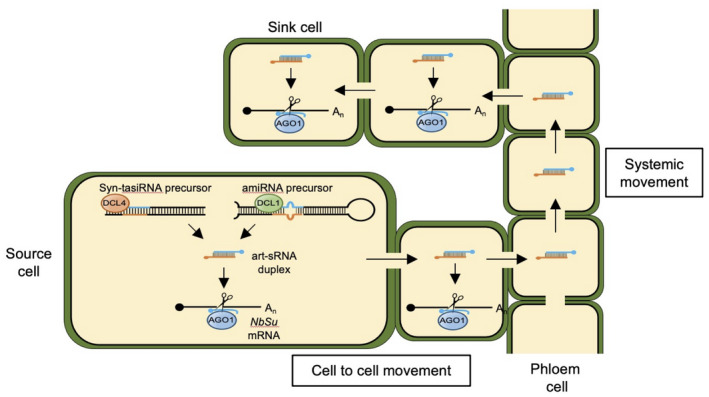
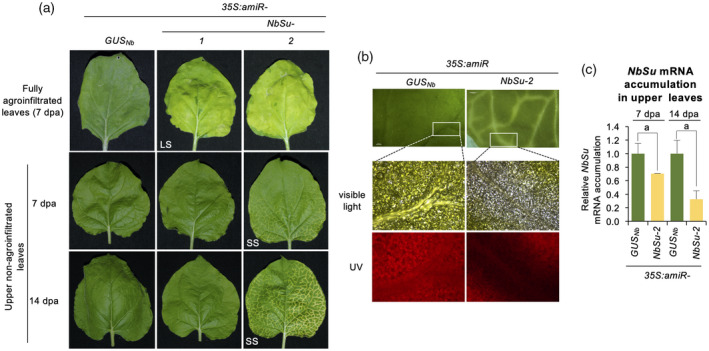
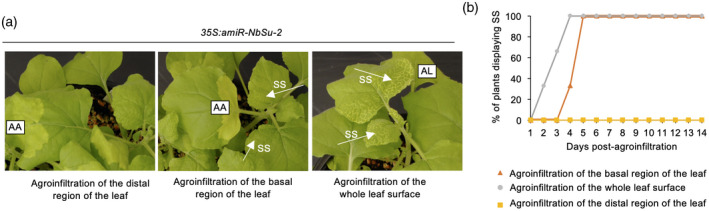
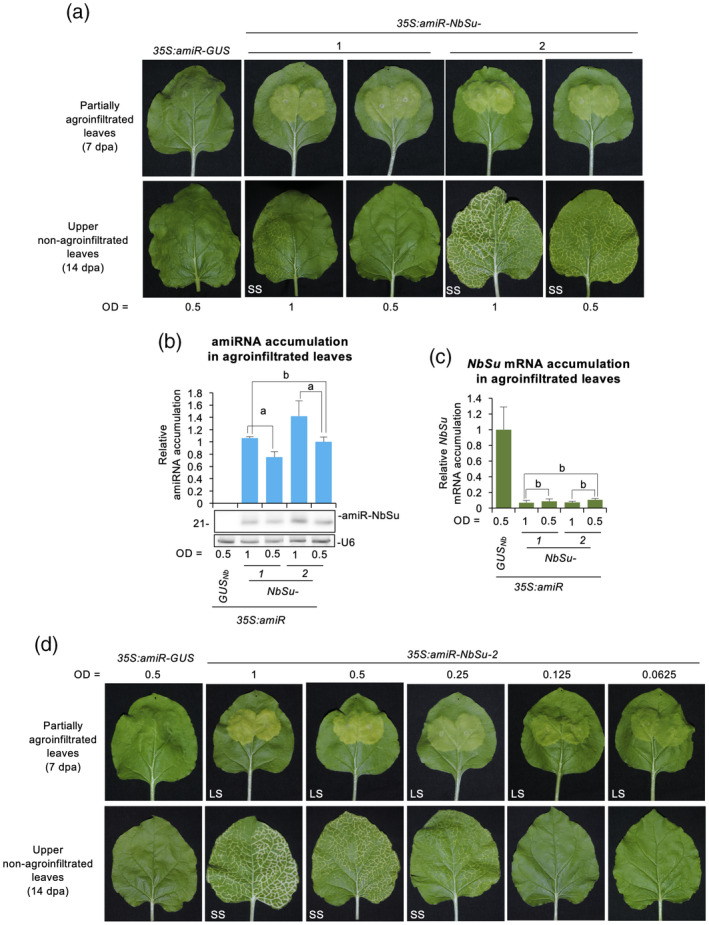
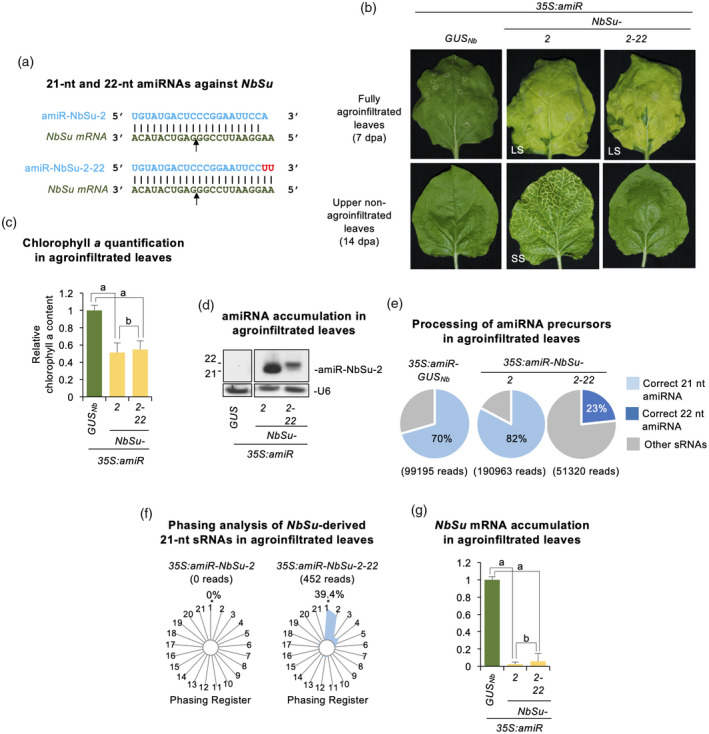
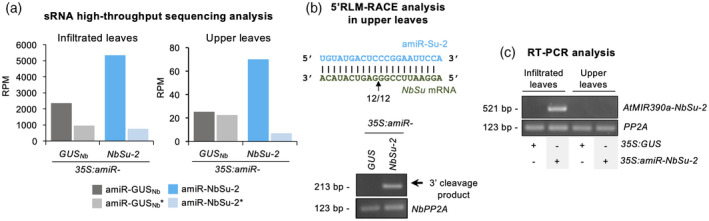
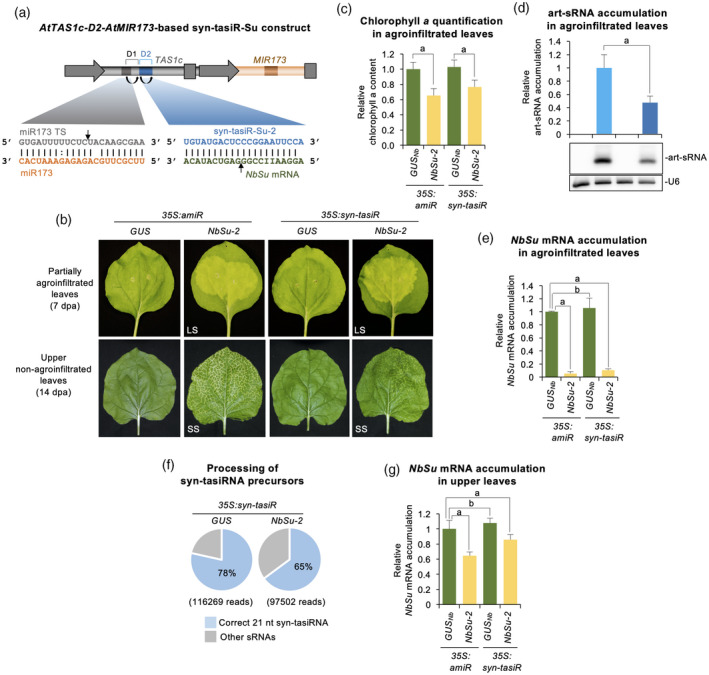
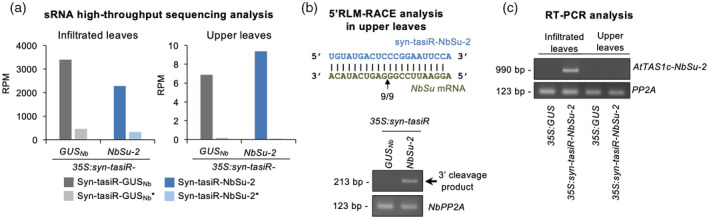
Artificial small RNAs (art-sRNAs) are 21-nucleotide small RNAs (sRNAs) computationally designed to silence plant genes or pathogenic RNAs with high efficacy and specificity. They are typically produced in transgenic plants to induce silencing at the whole-organism level, although their expression in selected tissues for inactivating genes in distal tissues has not been reported. Here, art-sRNAs designed against the magnesium chelatase subunit CHLI-encoding SULFUR gene (NbSu) were agroinfiltrated in Nicotiana benthamiana leaves, and the induction of local and systemic silencing was analyzed phenotypically by monitoring the appearance of the characteristic bleached phenotype, as well as molecularly by analyzing art-sRNA processing, accumulation and targeting activity and efficacy. We found that the two classes of art-sRNAs, artificial microRNAs (amiRNAs) and synthetic trans-acting small interfering RNAs (syn-tasiRNAs), are able to induce systemic silencing of NbSu, which requires high art-sRNA expression in the vicinity of the leaf petiole but is independent on the production of secondary sRNAs from NbSu mRNAs. Moreover, we revealed that 21-nucleotide amiRNA and syn-tasiRNA duplexes, and not their precursors, are the molecules moving between cells and through the phloem to systemically silence NbSu in upper leaves. In sum, our results indicate that 21-nucleotide art-sRNAs can move throughout the plant to silence plant genes in tissues different from where they are produced. This highlights the biotechnological potential of art-sRNAs, which might be applied locally for triggering whole-plant and highly specific silencing to regulate gene expression or induce resistance against pathogenic RNAs in next-generation crops. The present study demonstrates that artificial small RNAs, such as artificial microRNAs and synthetic trans-acting small interfering RNAs, can move long distances in plants as 21-nucleotide duplexes, specifically silencing endogenous genes in tissues different from where they are applied. This highlights the biotechnological potential of artificial small RNAs, which might be applied locally for triggering whole-plant, highly specific silencing to regulate gene expression or induce resistance against pathogenic RNAs in next-generation crops.
人工小 RNA(art-sRNA)是 21 个核苷酸的小 RNA(sRNA),通过计算机设计可高效且特异地沉默植物基因或致病 RNA。它们通常在转基因植物中产生,以在整个生物体水平诱导沉默,尽管尚未报道在选定组织中表达以在远端组织中失活基因。在这里,针对镁螯合酶亚基 CHLI 编码的 SULFUR 基因(NbSu)设计的 art-sRNA 被农杆菌浸润到 Nicotiana benthamiana 叶片中,并通过监测特征性白化表型的出现来表型分析局部和系统沉默,以及通过分析 art-sRNA 加工、积累和靶向活性和功效进行分子分析。我们发现,两类 art-sRNA,人工 microRNA(amiRNA)和合成反式作用小干扰 RNA(syn-tasiRNA),能够诱导 NbSu 的系统沉默,这需要在叶片叶柄附近高表达 art-sRNA,但不依赖于 NbSu mRNA 产生次级 sRNA。此外,我们揭示了 21 个核苷酸的 amiRNA 和 syn-tasiRNA 双链体,而不是它们的前体,是在细胞之间移动并通过韧皮部在系统中沉默上叶中的 NbSu 的分子。总之,我们的结果表明,21 个核苷酸的 art-sRNA 可以在整个植物中移动,以沉默不同组织中产生的植物基因。这突出了 art-sRNA 的生物技术潜力,可局部应用于触发整个植物的高度特异性沉默,以调节基因表达或诱导下一代作物对致病 RNA 的抗性。本研究表明,人工小 RNA(如人工 microRNA 和合成反式作用小干扰 RNA)可以作为 21 个核苷酸双链体在植物中远距离移动,特异性地沉默不同组织中的内源性基因。这突出了人工小 RNA 的生物技术潜力,可局部应用于触发整个植物的高度特异性沉默,以调节基因表达或诱导下一代作物对致病 RNA 的抗性。