Immunology Department, Germans Trias i Pujol Research Institute and University Hospital, Autonomous University of Barcelona, Badalona, Spain.
Department of Political and Social Sciences, Health Inequalities Research Group (GREDS-EMCONET), Pompeu Fabra University, Barcelona, Spain.
Front Immunol. 2022 Feb 23;13:825426. doi: 10.3389/fimmu.2022.825426. eCollection 2022.
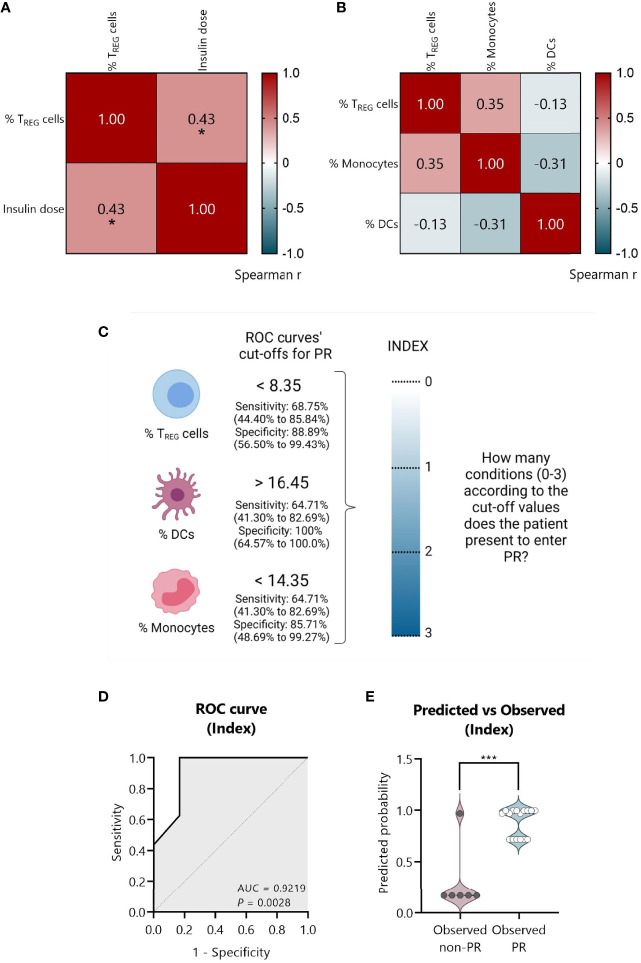
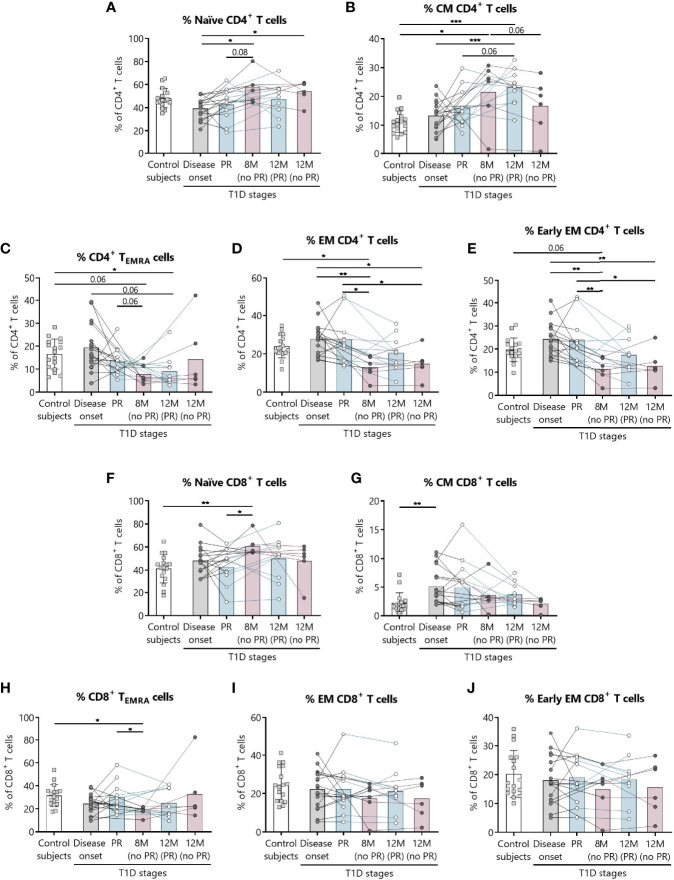
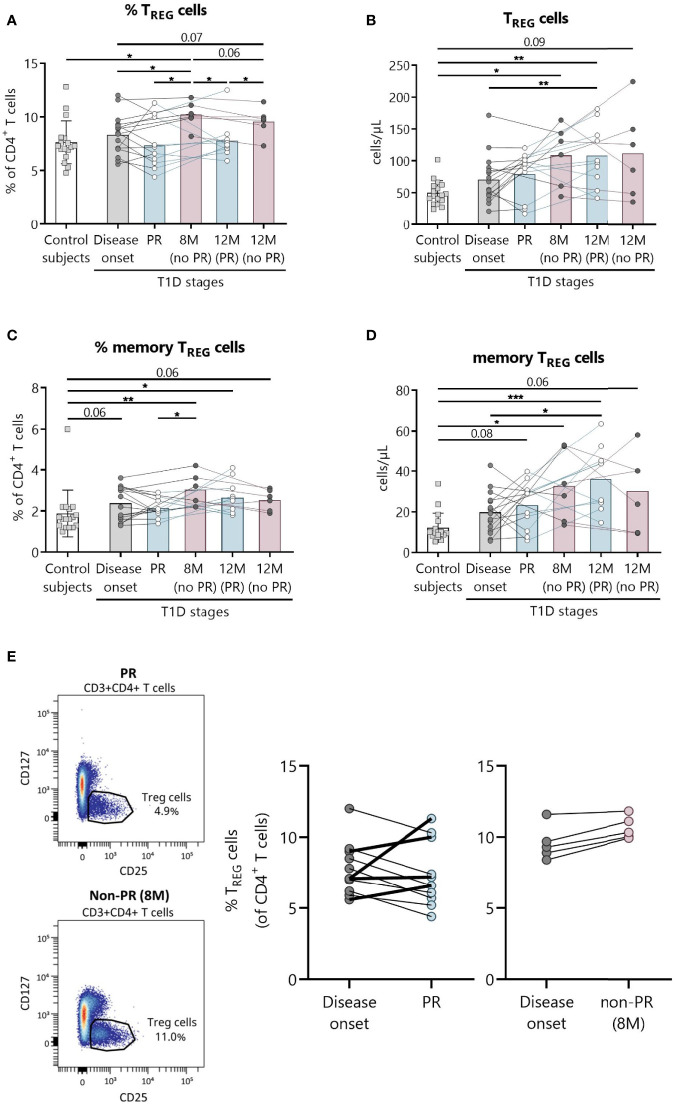
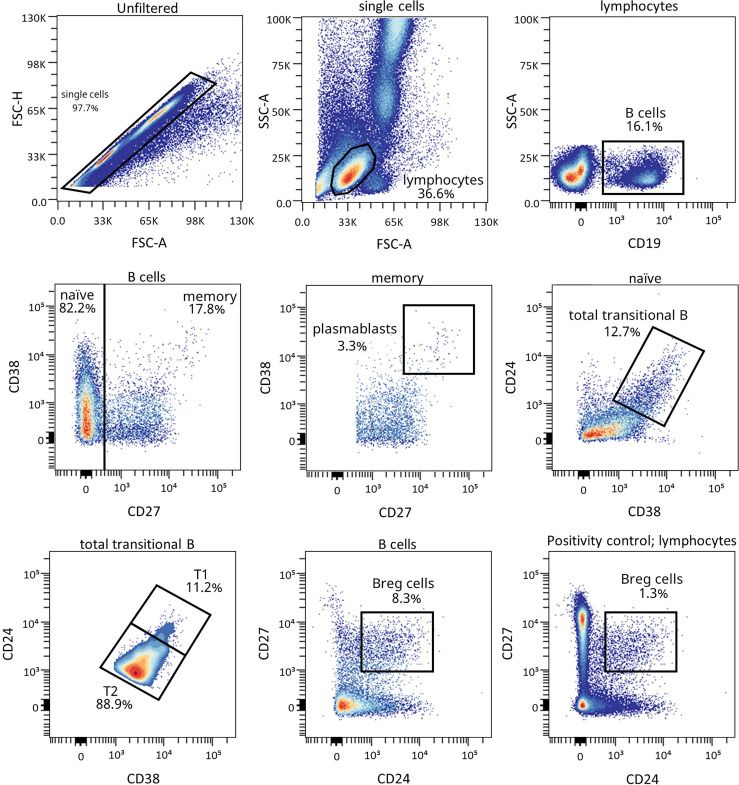
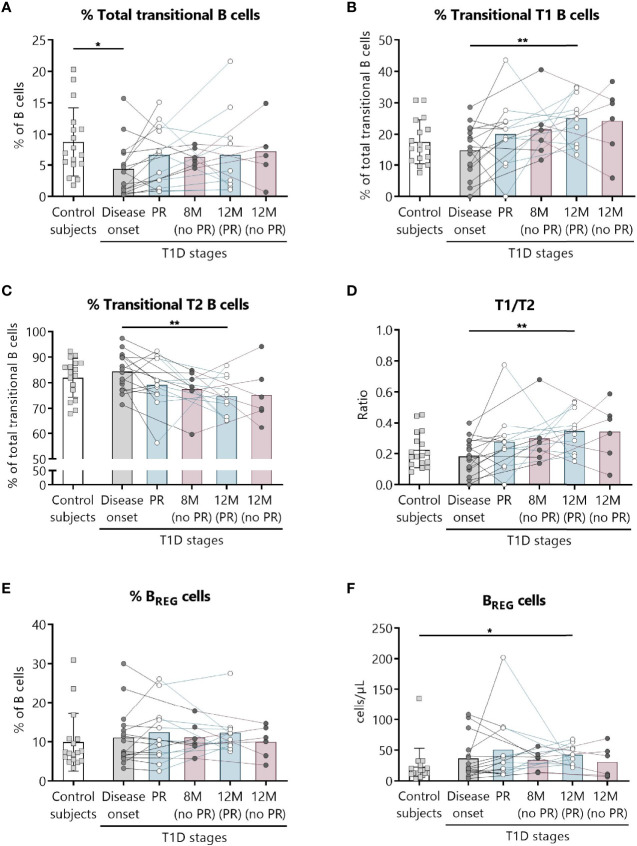
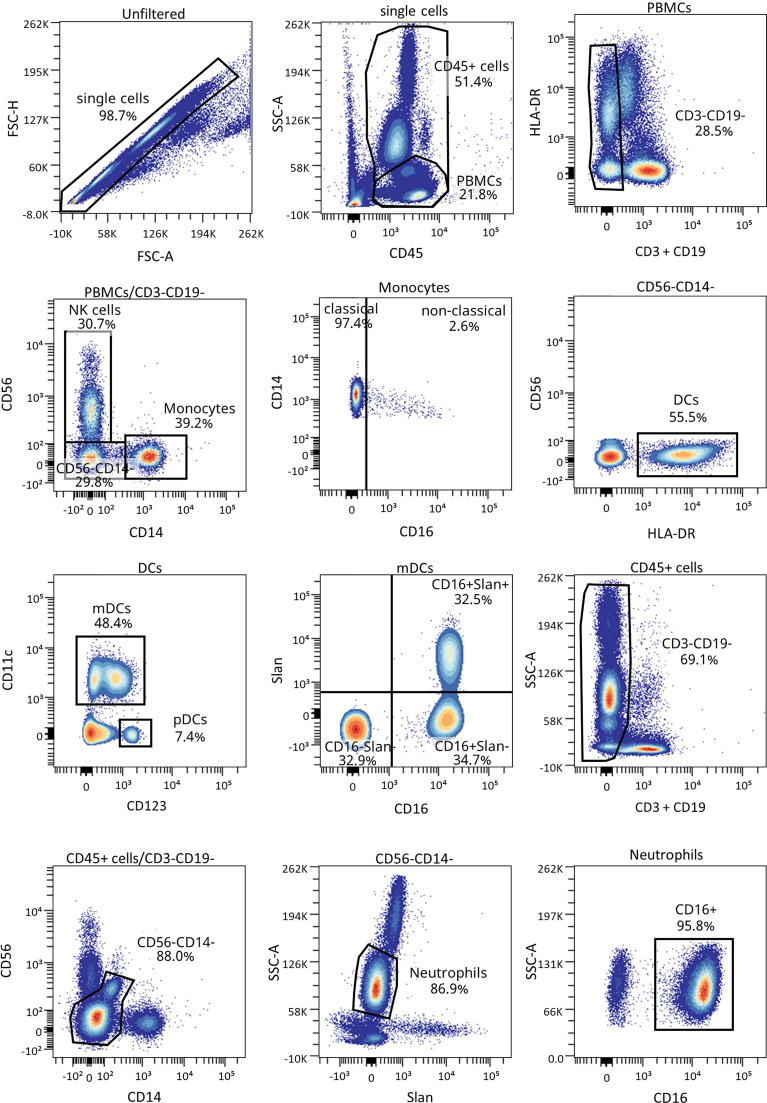
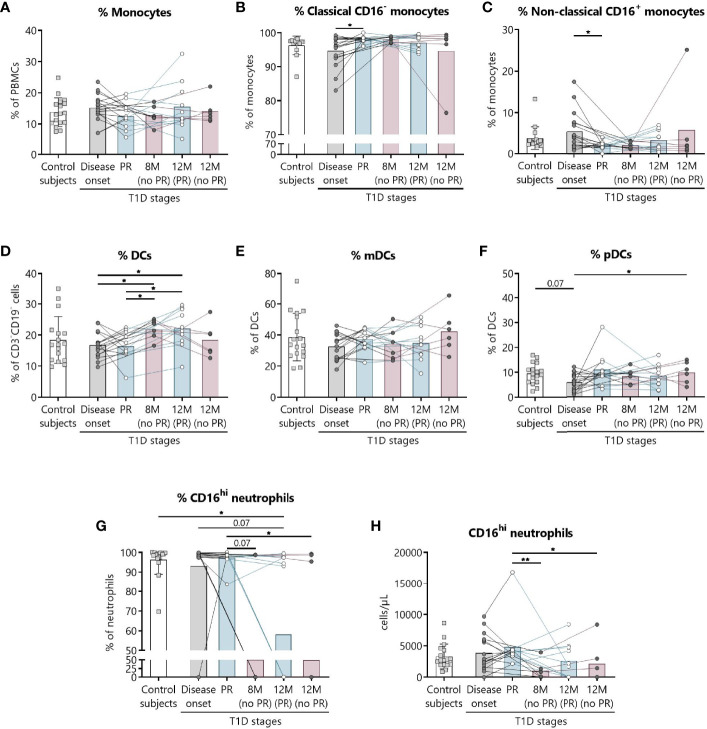
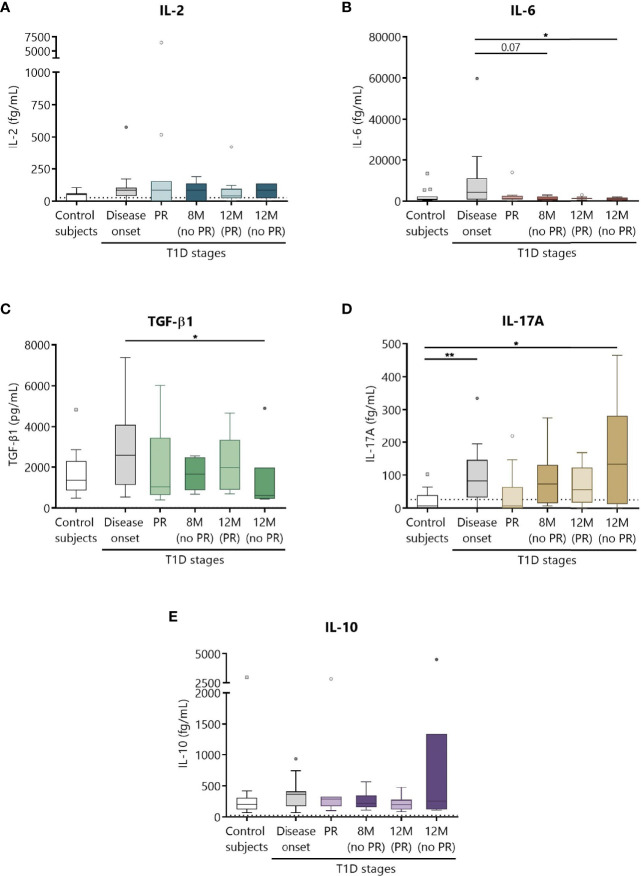
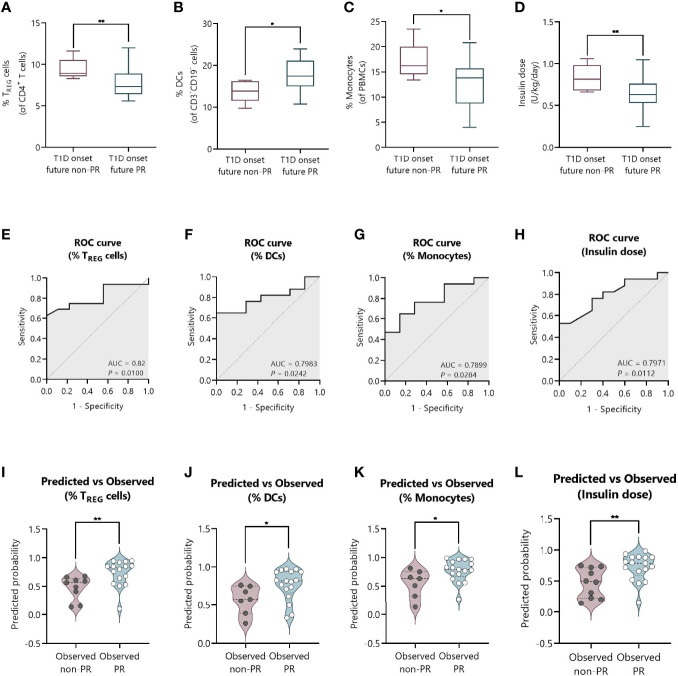
The partial remission (PR) phase, a period experienced by most patients with type 1 diabetes (T1D) soon after diagnosis, is characterized by low insulin requirements and improved glycemic control. Given the great potential of this phase as a therapeutic window for immunotherapies because of its association with immunoregulatory mechanisms and β-cell protection, our objective was to find peripheral immunological biomarkers for its better characterization, monitoring, and prediction. The longitudinal follow-up of 17 pediatric patients with new-onset T1D over one year revealed that, during the PR phase, remitter patients show increased percentages of effector memory (EM) T lymphocytes, terminally differentiated EM T lymphocytes, and neutrophils in comparison to non-remitter patients. On the contrary, remitter patients showed lower percentages of naïve T lymphocytes, regulatory T cells (T), and dendritic cells (DCs). After a year of follow-up, these patients also presented increased levels of regulatory B cells and transitional T1 B lymphocytes. On the other hand, although none of the analyzed cytokines (IL-2, IL-6, TGF-β1, IL-17A, and IL-10) could distinguish or predict remission, IL-17A was increased at T1D diagnosis in comparison to control subjects, and remitter patients tended to maintain lower levels of this cytokine than non-remitters. Therefore, these potential monitoring immunological biomarkers of PR support that this stage is governed by both metabolic and immunological factors and suggest immunoregulatory attempts during this phase. Furthermore, since the percentage of T, monocytes, and DCs, and the total daily insulin dose at diagnosis were found to be predictors of the PR phase, we next created an index-based predictive model comprising those immune cell percentages that could potentially predict remission at T1D onset. Although our preliminary study needs further validation, these candidate biomarkers could be useful for the immunological characterization of the PR phase, the stratification of patients with better disease prognosis, and a more personalized therapeutic management.
部分缓解(PR)期是大多数 1 型糖尿病(T1D)患者在确诊后不久经历的一个阶段,其特点是胰岛素需求低,血糖控制改善。鉴于该阶段作为免疫疗法治疗窗口的巨大潜力,因为它与免疫调节机制和β细胞保护有关,我们的目标是寻找外周免疫生物标志物,以便更好地对其进行特征描述、监测和预测。对 17 名新诊断为 T1D 的儿科患者进行的为期一年的纵向随访发现,在 PR 期,与非缓解者相比,缓解者患者的效应记忆(EM)T 淋巴细胞、终末分化的 EM T 淋巴细胞和中性粒细胞的百分比增加。相反,缓解者患者的幼稚 T 淋巴细胞、调节性 T 细胞(Treg)和树突状细胞(DC)的百分比较低。经过一年的随访,这些患者还表现出调节性 B 细胞和过渡性 T1B 淋巴细胞的水平升高。另一方面,尽管分析的细胞因子(IL-2、IL-6、TGF-β1、IL-17A 和 IL-10)都不能区分或预测缓解,但与对照组相比,T1D 诊断时 IL-17A 增加,缓解者患者的这种细胞因子水平往往低于非缓解者。因此,这些 PR 的潜在监测免疫生物标志物支持该阶段由代谢和免疫因素共同控制,并表明在该阶段进行免疫调节尝试。此外,由于 T 细胞、单核细胞和 DC 以及诊断时的总每日胰岛素剂量被发现是 PR 期的预测因素,因此我们接下来创建了一个基于指数的预测模型,该模型包含那些可能预测 T1D 发病时缓解的免疫细胞百分比。尽管我们的初步研究需要进一步验证,但这些候选生物标志物可能有助于 PR 期的免疫特征描述、预后更好的患者分层以及更个性化的治疗管理。