Department of Molecular Pneumology, Friedrich-Alexander-University (FAU) Erlangen-Nürnberg, Universitätsklinikum Erlangen, Erlangen, Germany.
Children's Hospital, Department of Allergy and Pneumology, Friedrich-Alexander-University (FAU) Erlangen-Nürnberg, Universitätsklinikum Erlangen, Erlangen, Germany.
Front Immunol. 2022 Feb 23;13:821658. doi: 10.3389/fimmu.2022.821658. eCollection 2022.
Allergic asthma is a chronic airway inflammatory disease associated with airway mucus hyper-production. ILC2 cells, which express the Th2 transcription factor GATA3, have been associated with allergic asthma. The cytokine IL-3 is known to support eosinophil, basophil and mucosal mast cell differentiation and survival; however, its role on T regulatory cells as well as on lung ILC2 and in pediatric asthma needs further investigation.
To investigate the role of IL-3 in preschool children and to explore its therapeutic role in experimental asthma.
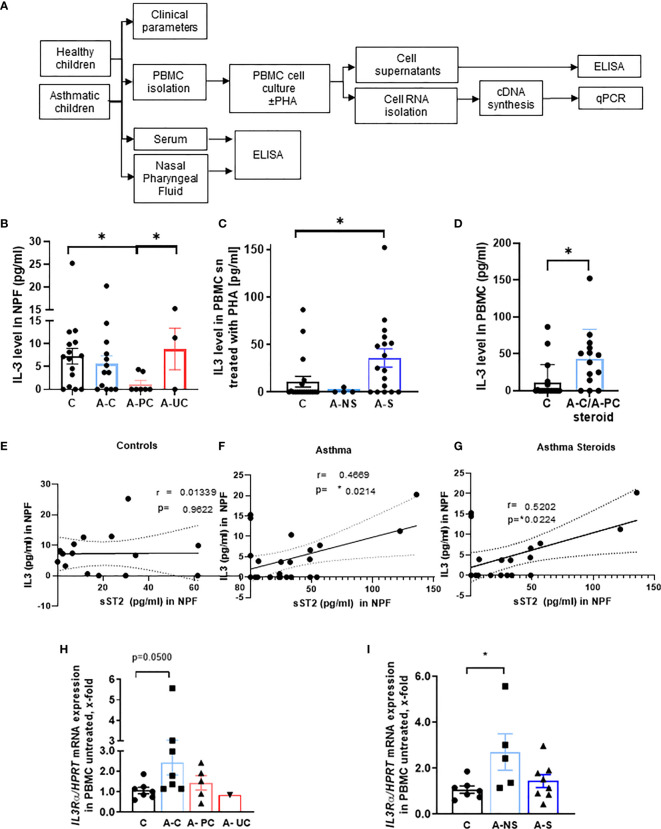
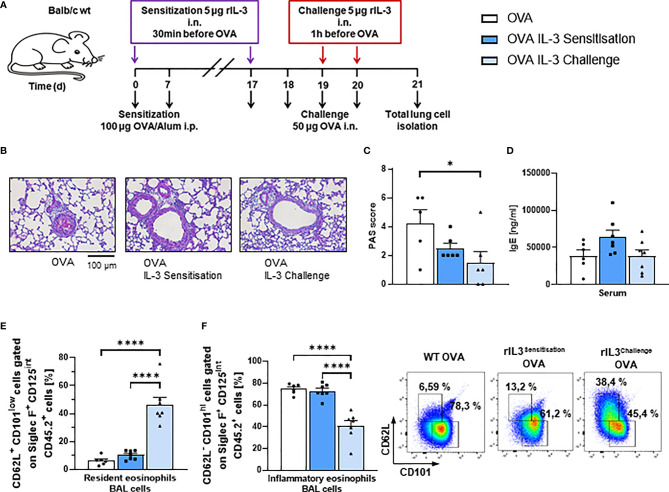
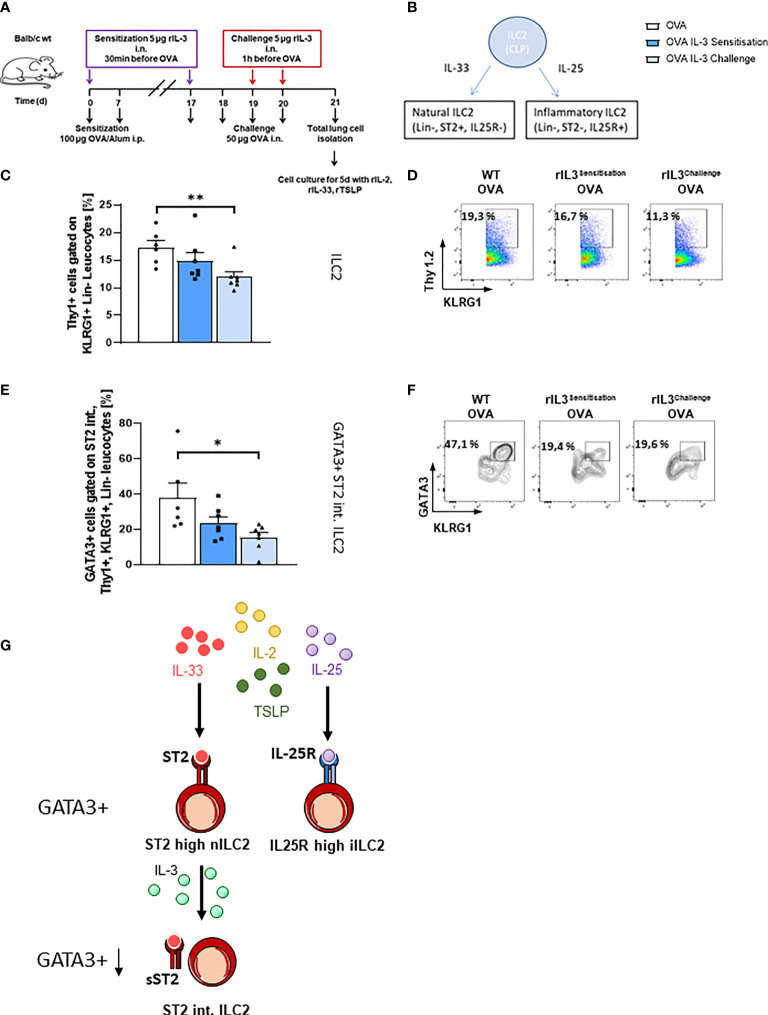
In a cohort of preschool children with and without asthma, we analyzed the secretion of IL-3 in nasopharyngeal fluid (NPF) and IL-3 receptor (R) alpha chain mRNA expression in peripheral blood mononuclear cells (PBMCs). In a murine model of allergic asthma, we analyzed the phenotype of wild-type untreated and rIL-3 intranasally treated asthmatic mice.
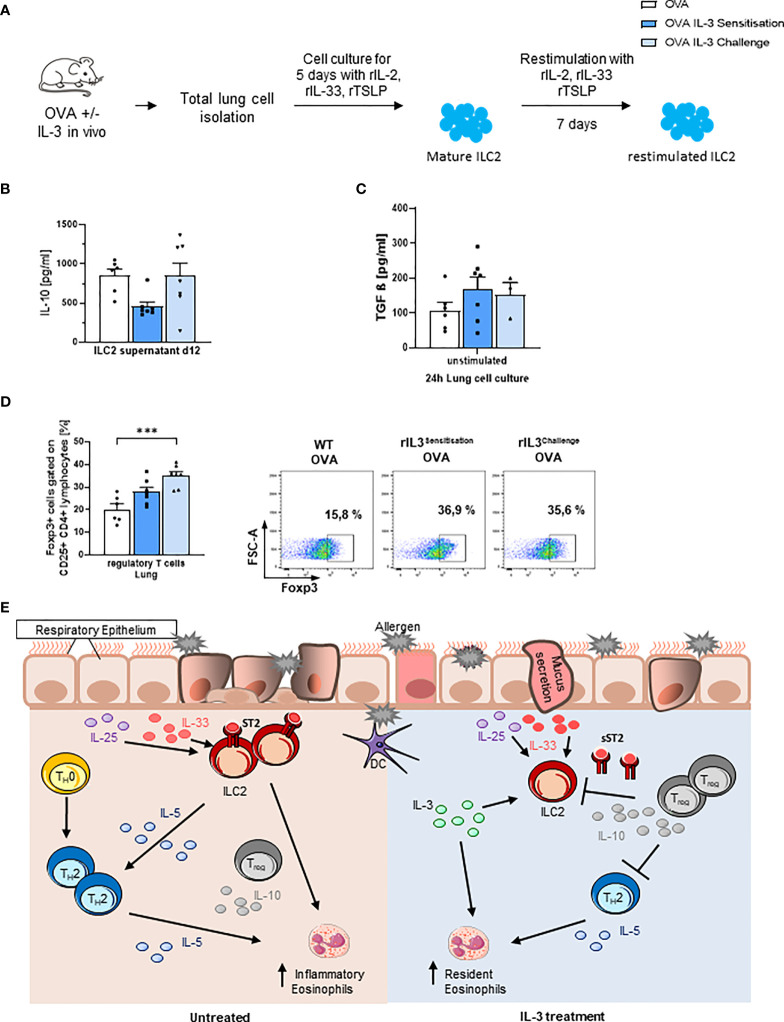
IL-3 was found downregulated in the nasopharyngeal fluid of children with partially controlled asthma, as compared to control children. Moreover, IL-3 was found induced in phytohemagglutinin (PHA)-stimulated PBMCs from children with asthma and treated with steroids. Finally, IL-3 in NPF directly correlated with the anti-inflammatory molecule sST2 in steroid-treated asthmatic children. Intranasal rIL-3 delivery during the challenge phase decreased airway mucus production and inflammatory eosinophils. Moreover, rIL-3 given during the challenge phase, reduced lung ST2GATA3+ILC2, accompanied by an induction of T regulatory cells in the airways.
IL-3 was found associated with steroid-resolved asthma. Moreover, treatment with rIL-3 resulted in amelioration of airway eosinophilia and mucus production, two main pathophysiological conditions associated with asthma in a murine model of allergic asthma. Thus, rIL-3 opens new strategies for immunotherapy of this disease.
过敏性哮喘是一种与气道粘液过度产生相关的慢性气道炎症性疾病。表达 Th2 转录因子 GATA3 的 ILC2 细胞与过敏性哮喘有关。细胞因子 IL-3 已知可支持嗜酸性粒细胞、嗜碱性粒细胞和粘膜肥大细胞的分化和存活;然而,其在 T 调节细胞以及肺 ILC2 中的作用以及在儿科哮喘中的作用仍需进一步研究。
研究 IL-3 在学龄前儿童中的作用,并探索其在实验性哮喘中的治疗作用。
在一组患有和不患有哮喘的学龄前儿童中,我们分析了鼻分泌物 (NPF) 中 IL-3 的分泌和外周血单核细胞 (PBMC) 中 IL-3 受体 (R) α 链 mRNA 的表达。在过敏性哮喘的小鼠模型中,我们分析了未经处理的野生型和 rIL-3 经鼻腔处理的哮喘小鼠的表型。
与对照组儿童相比,部分控制哮喘儿童的鼻咽分泌物中发现 IL-3 下调。此外,从哮喘儿童的植物血球凝集素 (PHA) 刺激 PBMC 中发现 IL-3 诱导,并经类固醇治疗。最后,NPF 中的 IL-3 与接受类固醇治疗的哮喘儿童中的抗炎分子 sST2 直接相关。在挑战阶段给予 rIL-3 鼻腔内给药可减少气道粘液产生和炎症性嗜酸性粒细胞。此外,在挑战阶段给予 rIL-3 可减少肺 ST2GATA3+ILC2,并诱导气道中的 T 调节细胞。
发现 IL-3 与类固醇缓解的哮喘有关。此外,rIL-3 的治疗可改善气道嗜酸性粒细胞增多和粘液产生,这是过敏性哮喘小鼠模型中与哮喘相关的两种主要病理生理状况。因此,rIL-3 为该疾病的免疫治疗开辟了新的策略。