Grund Janina C, Krammer Susanne, Yang Zuqin, Mitländer Hannah, Rauh Manfred, Zirlik Sabine, Kiefer Alexander, Zimmermann Theodor, Rieker Ralf J, Geppert Carol I, Papadopoulos Nikolaos G, Finotto Susetta
Department of Molecular Pneumology, Universitätsklinikum Erlangen, Erlangen, Germany.
Department of Clinical Laboratories, Universitätsklinikum Erlangen, Erlangen, Germany.
J Allergy Clin Immunol Glob. 2023 Mar 24;2(3):100099. doi: 10.1016/j.jacig.2023.100099. eCollection 2023 Aug.
Vitamin D (VitD) is known to have immunomodulatory functions, and VitD deficiency is associated with more severe asthma.
We aimed to assess the immunoregulatory effects of VitD food supplementation on asthma manifestation, with particular focus on T cells and type 2 innate lymphoid cells.
Preschool children and adult asthmatic cohorts were analyzed in the context of VitD supplementation and serum levels. In a murine model of ovalbumin-induced asthma, effects of diet VitD sufficiency and deficiency on T cells and type 2 innate lymphoid cells immune mechanisms were investigated.
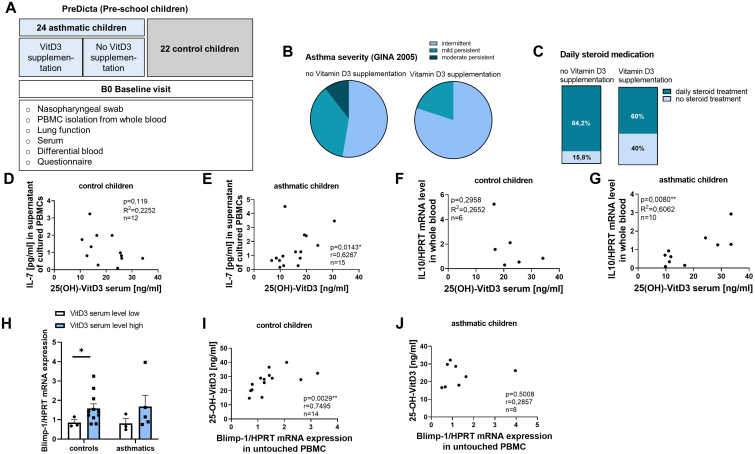
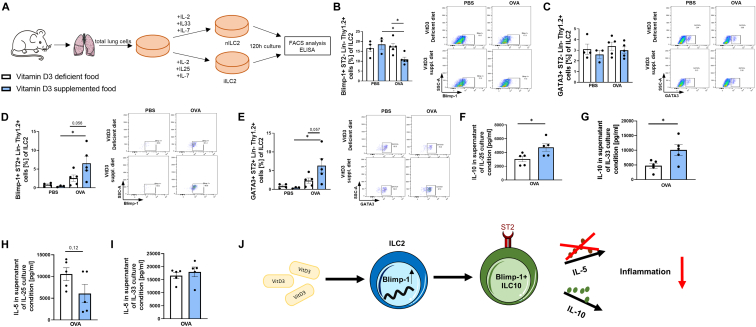
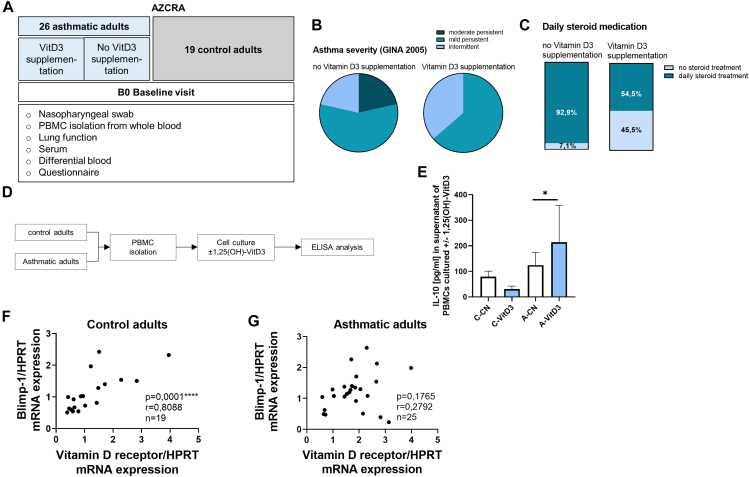
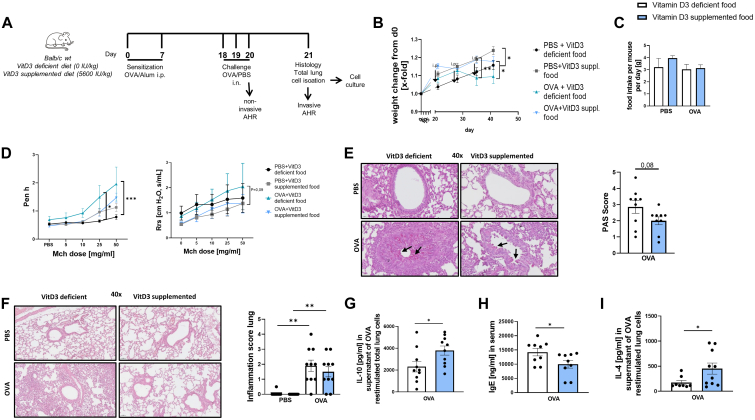
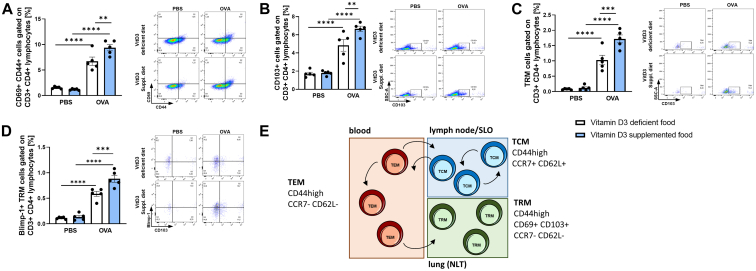
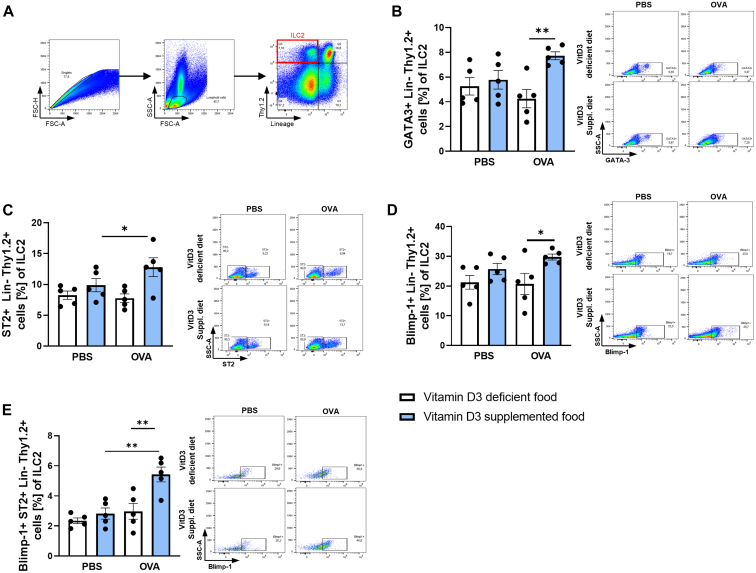
We found less severe and better-controlled asthma phenotypes along with reduced need for steroid medication in preschool children and asthmatic adults with VitD supplementation. VitD serum levels correlated with B lymphocyte-induced maturation protein 1 (Blimp-1) expression in blood peripheral mononuclear cells. VitD-supplement-fed mice showed decreased asthmatic traits, with a decrease in IgE serum levels, reduced airway mucus, and increased IL-10 production by lung cells. Furthermore, we discovered an upregulation of effector T cells and Blimp-1 lung tissue-resident memory T cells as well as induction of anti-inflammatory Blimp-1 lung innate lymphoid cells producing IL-10.
Supplementing VitD resulted in amelioration of clinical asthma manifestations in human studies as well as in experimental allergic asthma, indicating that VitD shifts proinflammatory immune responses to anti-inflammatory immune responses via upregulating Blimp-1 in lung innate lymphoid cells and tissue-resident memory cells.
已知维生素D(VitD)具有免疫调节功能,且维生素D缺乏与更严重的哮喘有关。
我们旨在评估补充维生素D食物对哮喘表现的免疫调节作用,特别关注T细胞和2型固有淋巴细胞。
在补充维生素D和血清水平的背景下,对学龄前儿童和成人哮喘队列进行分析。在卵清蛋白诱导的哮喘小鼠模型中,研究饮食中维生素D充足和缺乏对T细胞和2型固有淋巴细胞免疫机制的影响。
我们发现,补充维生素D的学龄前儿童和哮喘成人的哮喘表型较轻且控制较好,同时对类固醇药物的需求减少。维生素D血清水平与外周血单个核细胞中B淋巴细胞诱导成熟蛋白1(Blimp-1)的表达相关。喂食补充维生素D食物的小鼠哮喘特征减轻,血清IgE水平降低,气道黏液减少,肺细胞产生的IL-10增加。此外,我们发现效应T细胞和Blimp-1肺组织驻留记忆T细胞上调,以及诱导产生IL-10的抗炎性Blimp-1肺固有淋巴细胞。
在人体研究和实验性过敏性哮喘中,补充维生素D均导致临床哮喘表现改善,表明维生素D通过上调肺固有淋巴细胞和组织驻留记忆细胞中的Blimp-1,将促炎免疫反应转变为抗炎免疫反应。