Department of Chemistry, National Taiwan University, Taipei, Taiwan.
Institute of Biological Chemistry, Academia Sinica, Taipei, Taiwan.
Front Immunol. 2022 Feb 23;13:858894. doi: 10.3389/fimmu.2022.858894. eCollection 2022.
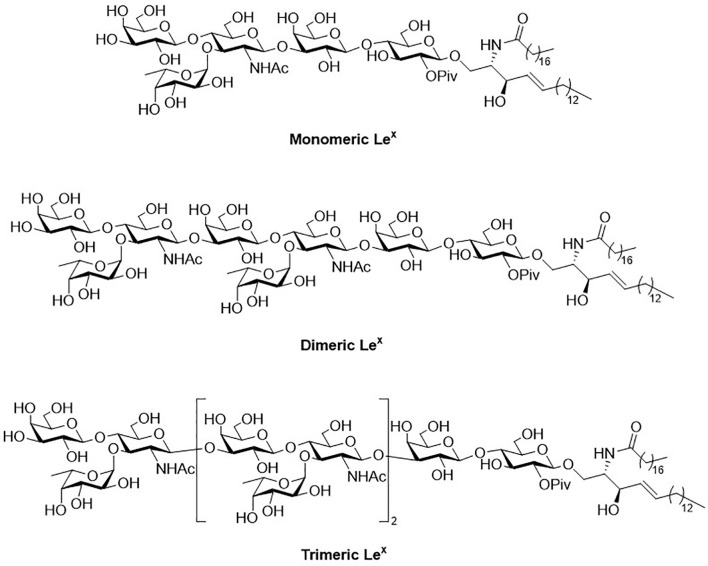
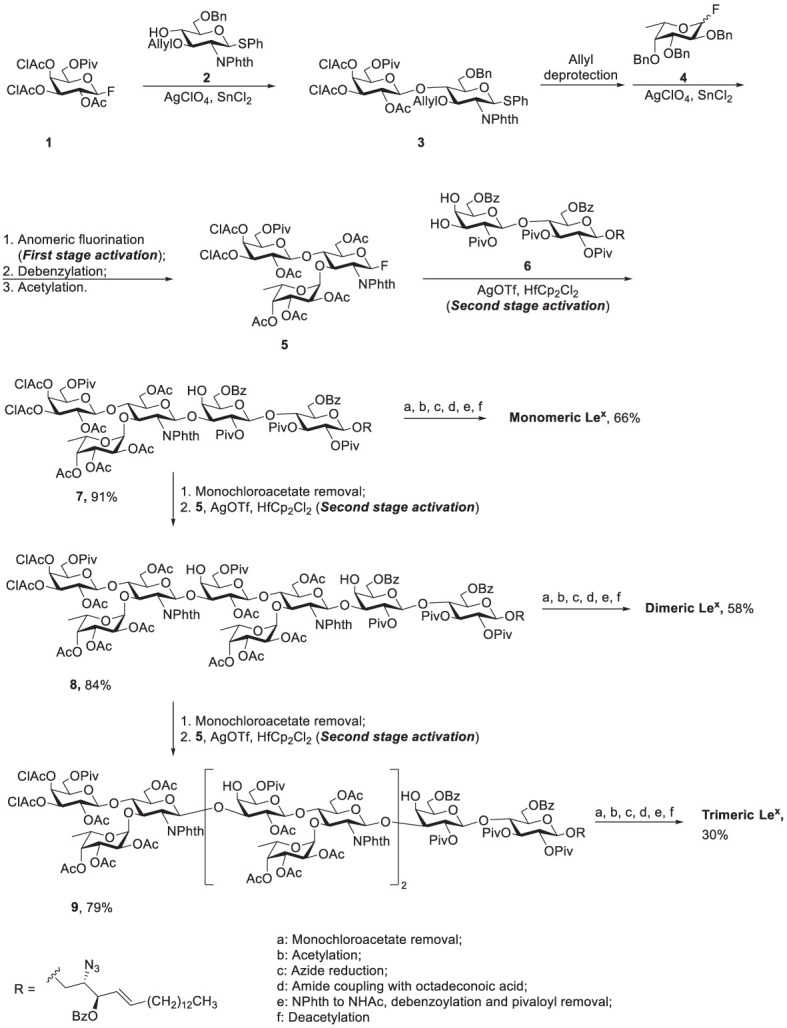
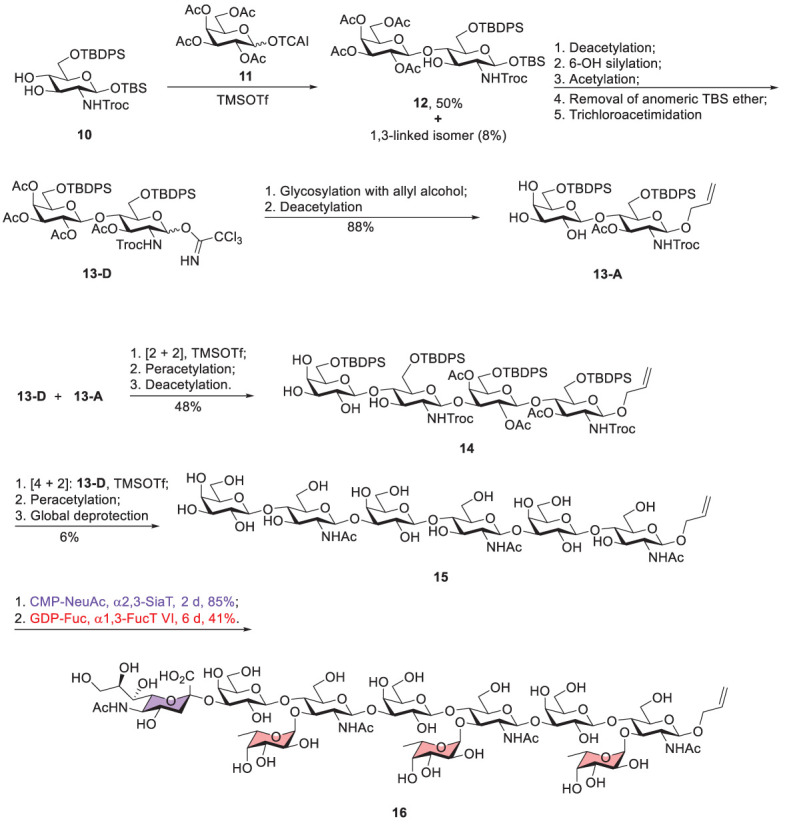
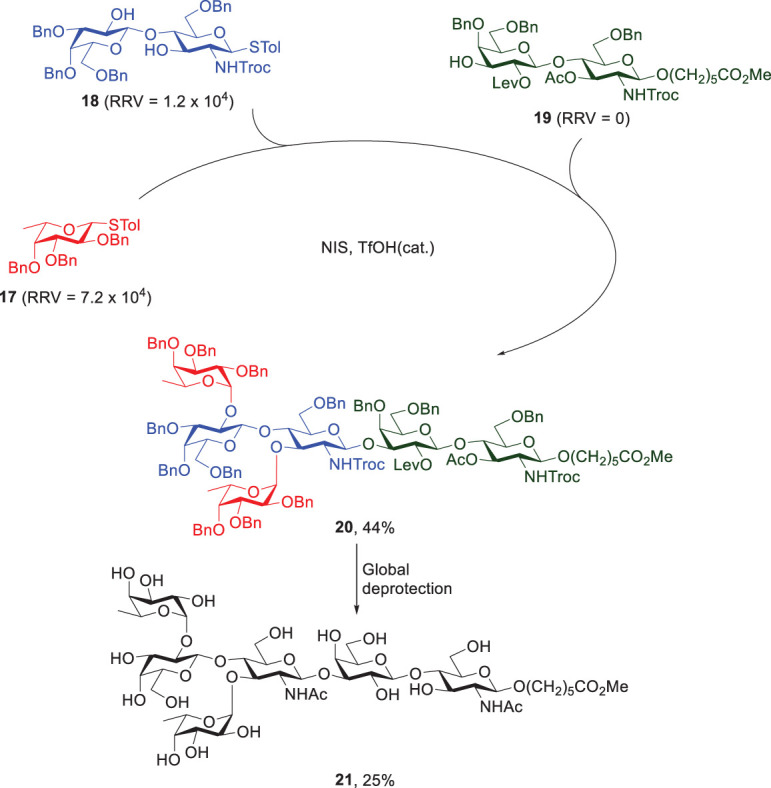
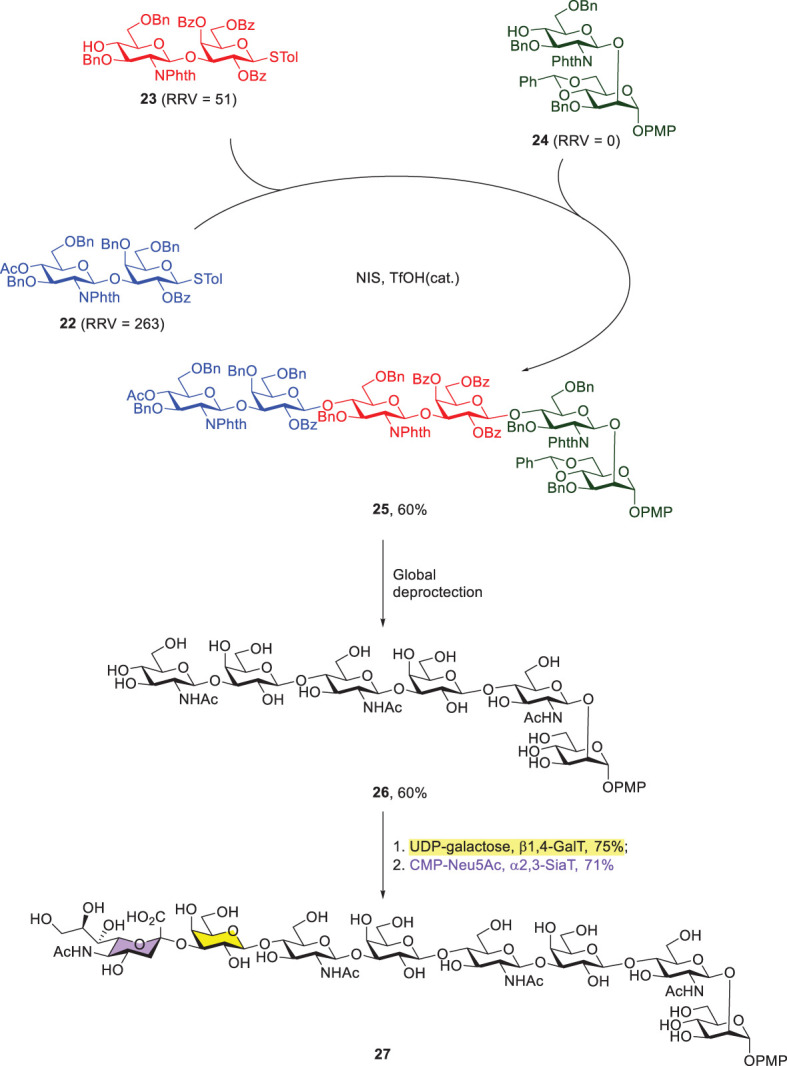
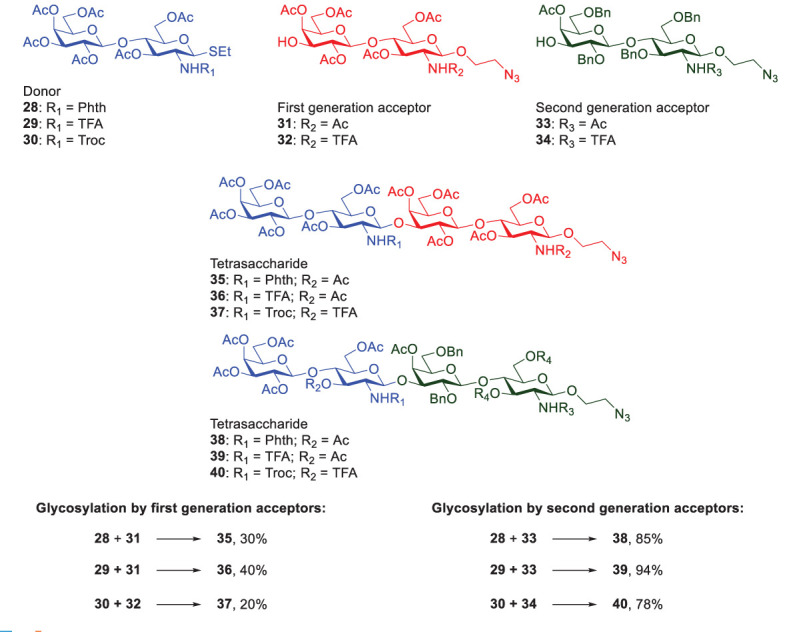
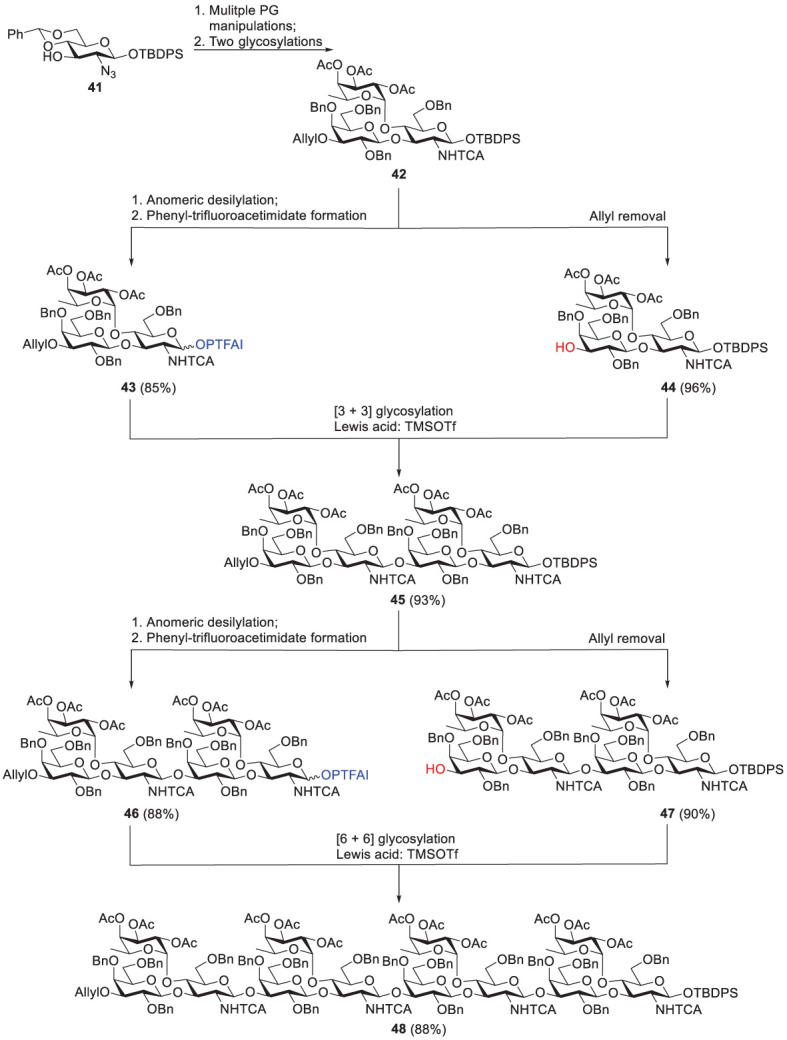
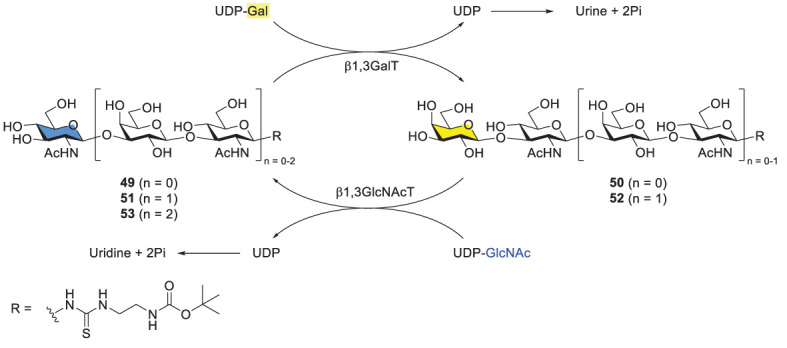
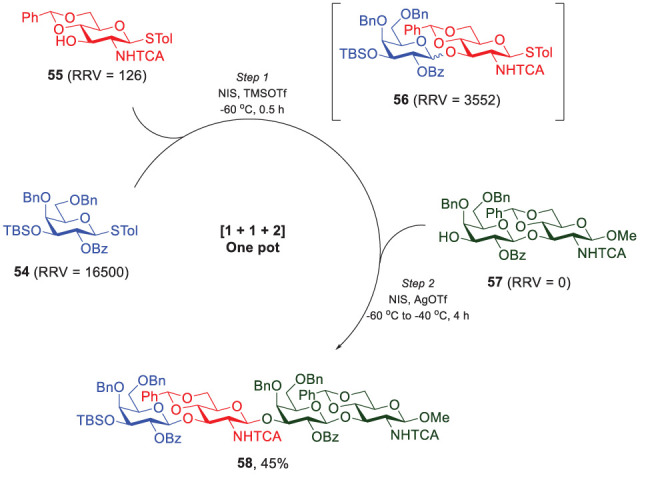
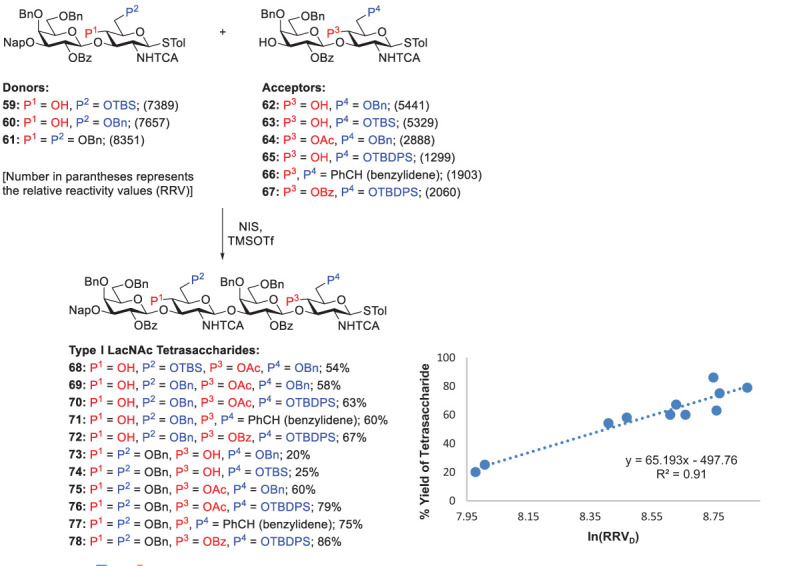
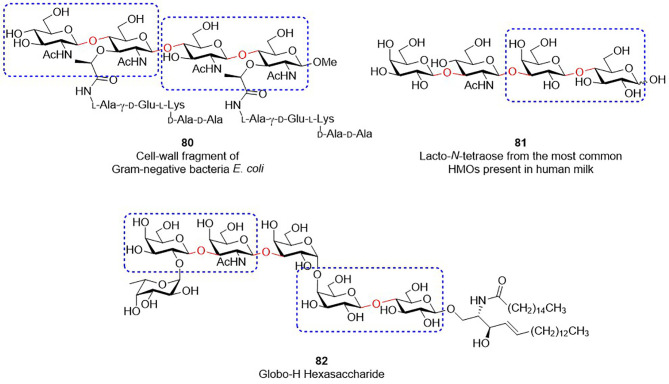
Type-I and Type-II LacNAc are Gal-GlcNAc disaccharides bearing a β1,3- or β1,4-linkage respectively. They exist as the backbones of Lewis antigens that are highly expressed in several cancers. Owing to the promise of developing carbohydrate-based anti-cancer vaccines, glycan synthesis at a large scale is indeed an important task. Synthesis of Type-I and Type-II tandem repeat oligomers has been hampered by the presence of GlcNAc residues. Particularly, -protecting group plays a determining role in affecting glycosyl donor's reactivity and acceptor's nucleophilicity. This review discusses several representative studies that assembled desirable glycans in an efficient manner, such as chemoselective one-pot synthesis and chemoenzymatic methods. Additionally, we also highlight solutions that have been offered to tackle long-lasting problems, e.g., prevention of the oxazoline formation and change of donor/acceptor reactivity. In retrospect of scientific achievements, we present the current restrictions and remaining challenges in this less explored frontier.
I 型和 II 型 LacNAc 分别是带有β1,3-或β1,4-键的 Gal-GlcNAc 二糖。它们作为Lewis 抗原的骨架存在,Lewis 抗原在几种癌症中高度表达。由于开发基于碳水化合物的抗癌疫苗具有广阔前景,因此大规模进行糖合成确实是一项重要任务。I 型和 II 型串联重复寡聚物的合成受到 GlcNAc 残基的阻碍。特别是,-保护基在影响糖基供体的反应性和受体的亲核性方面起着决定性作用。本文综述了几种有代表性的研究,这些研究以有效的方式组装了所需的聚糖,如化学选择性一锅合成和化学酶法。此外,我们还强调了为解决长期存在的问题而提供的解决方案,例如防止恶唑啉的形成和改变供体/受体的反应性。在回顾科学成就的基础上,我们提出了在这个探索较少的前沿领域目前存在的限制和挑战。