Szlaga Agata, Sambak Patryk, Trenk Aleksandra, Gugula Anna, Singleton Caitlin E, Drwiega Gniewosz, Blasiak Tomasz, Ma Sherie, Gundlach Andrew L, Blasiak Anna
Department of Neurophysiology and Chronobiology, Institute of Zoology and Biomedical Research, Jagiellonian University, Krakow, Poland.
The Florey Institute of Neuroscience and Mental Health, The University of Melbourne, Parkville, VIC, Australia.
Front Cell Neurosci. 2022 Feb 25;16:836116. doi: 10.3389/fncel.2022.836116. eCollection 2022.
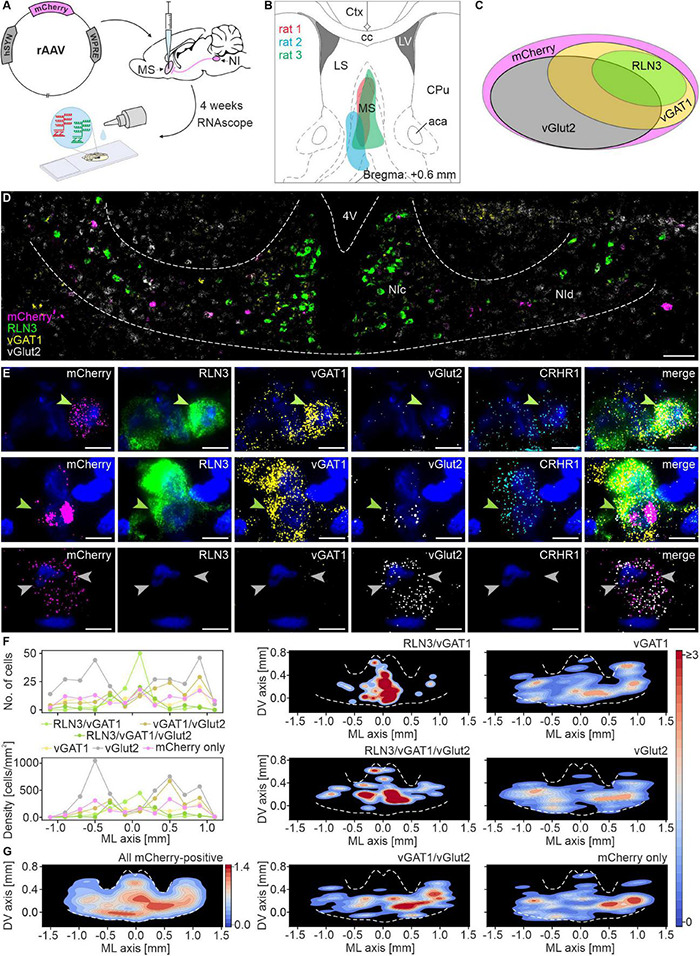
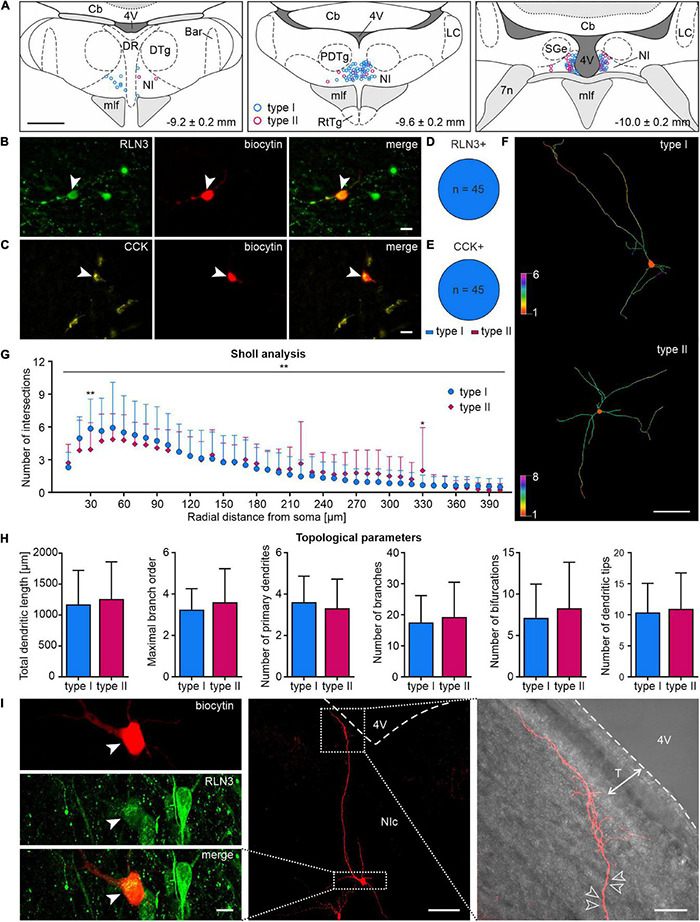
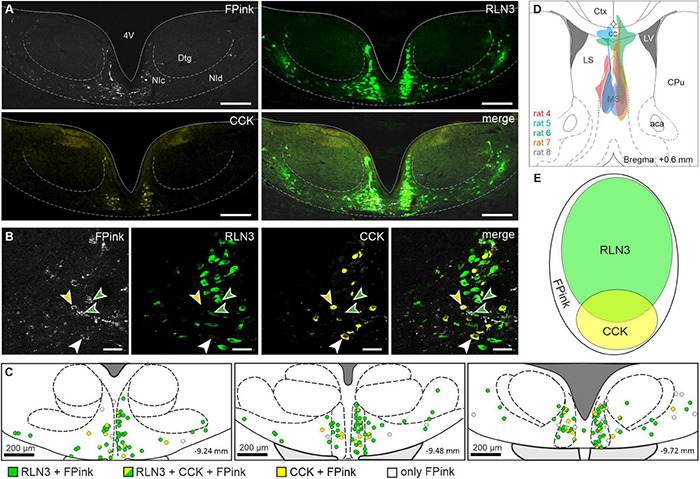
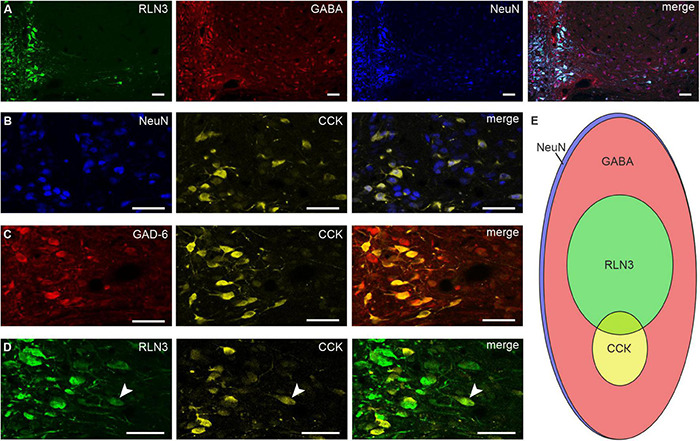
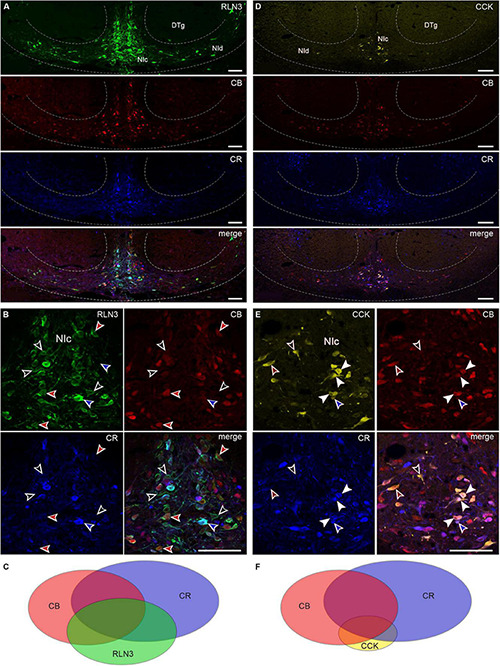
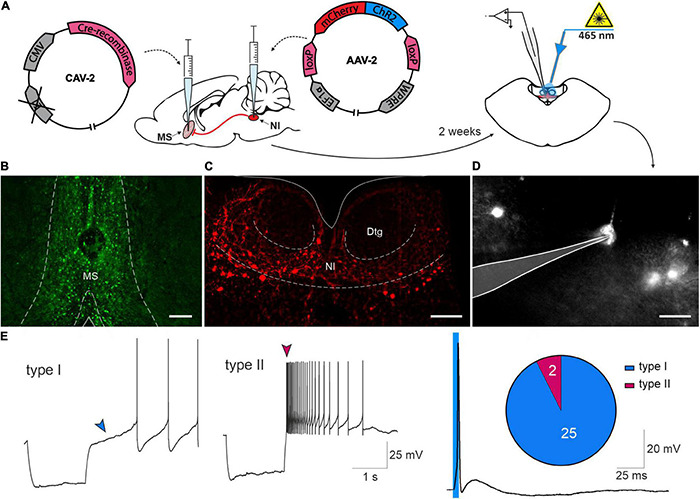
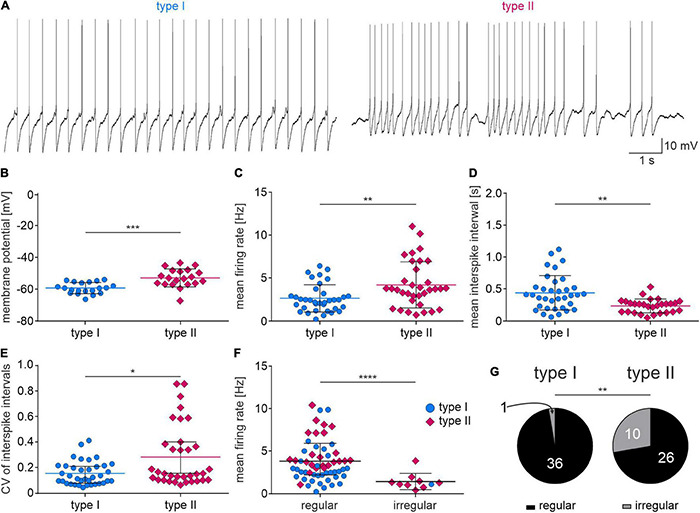
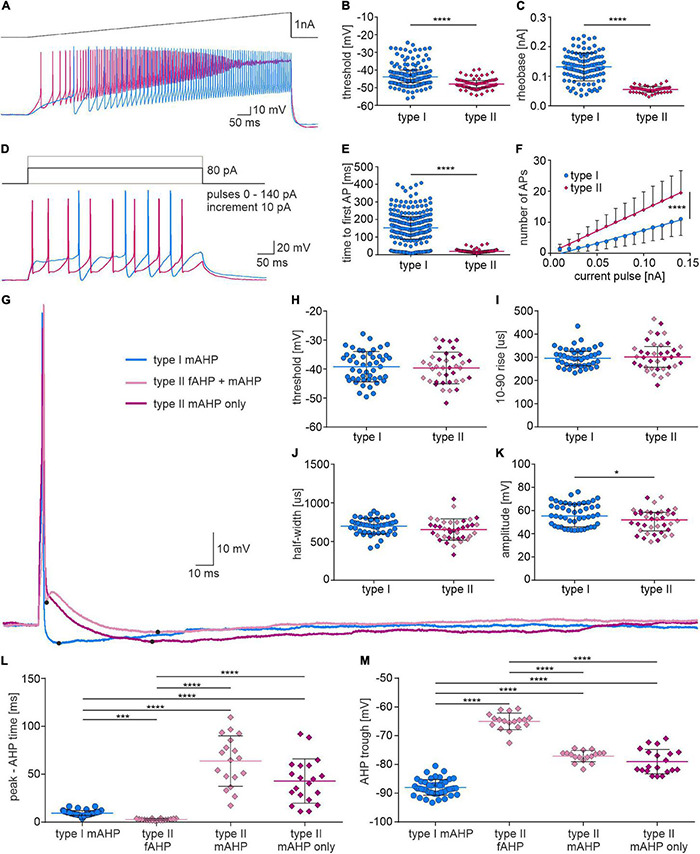
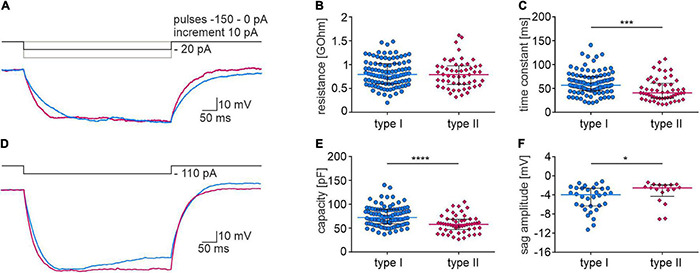
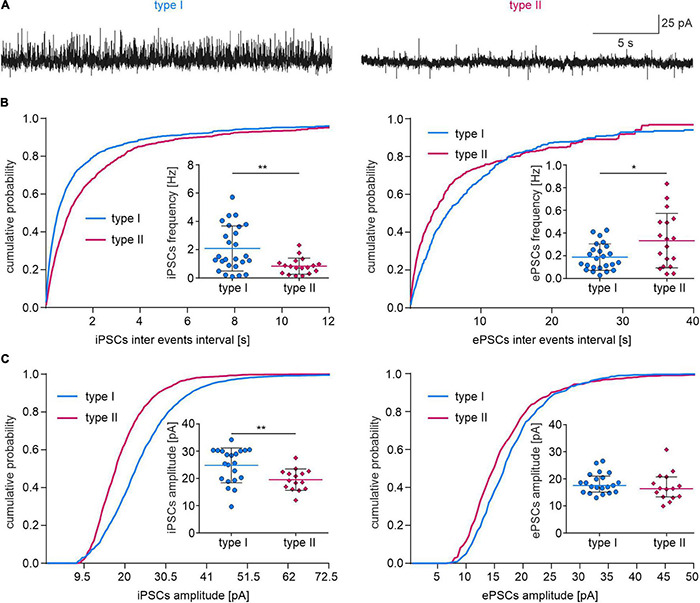
The medial septum (MS) is critically involved in theta rhythmogenesis and control of the hippocampal network, with which it is reciprocally connected. MS activity is influenced by brainstem structures, including the stress-sensitive, nucleus incertus (NI), the main source of the neuropeptide relaxin-3 (RLN3). In the current study, we conducted a comprehensive neurochemical and electrophysiological characterization of NI neurons innervating the MS in the rat, by employing classical and viral-based neural tract-tracing and electrophysiological approaches, and multiplex fluorescent hybridization. We confirmed earlier reports that the MS is innervated by RLN3 NI neurons and documented putative glutamatergic (vGlut2 mRNA-expressing) neurons as a relevant NI neuronal population within the NI-MS tract. Moreover, we observed that NI neurons innervating MS can display a dual phenotype for GABAergic and glutamatergic neurotransmission, and that 40% of MS-projecting NI neurons express the corticotropin-releasing hormone-1 receptor. We demonstrated that an identified cholecystokinin (CCK)-positive NI neuronal population is part of the NI-MS tract, and that RLN3 and CCK NI neurons belong to a neuronal pool expressing the calcium-binding proteins, calbindin and calretinin. Finally, our electrophysiological studies revealed that MS is innervated by A-type potassium current-expressing, type I NI neurons, and that type I and II NI neurons differ markedly in their neurophysiological properties. Together these findings indicate that the MS is controlled by a discrete NI neuronal network with specific electrophysiological and neurochemical features; and these data are of particular importance for understanding neuronal mechanisms underlying the control of the septohippocampal system and related behaviors.
内侧隔区(MS)在θ节律产生和海马网络控制中起着关键作用,它与海马网络相互连接。MS的活动受脑干结构影响,包括应激敏感的不确定核(NI),神经肽松弛素-3(RLN3)的主要来源。在本研究中,我们采用经典和基于病毒的神经束追踪、电生理方法以及多重荧光杂交技术,对支配大鼠MS的NI神经元进行了全面的神经化学和电生理特征分析。我们证实了早期报道,即MS由RLN3 NI神经元支配,并记录了假定的谷氨酸能(表达vGlut2 mRNA)神经元是NI-MS束内相关的NI神经元群体。此外,我们观察到支配MS的NI神经元可表现出GABA能和谷氨酸能神经传递的双重表型,并且40%投射到MS的NI神经元表达促肾上腺皮质激素释放激素-1受体。我们证明了已鉴定的胆囊收缩素(CCK)阳性NI神经元群体是NI-MS束的一部分,并且RLN3和CCK NI神经元属于表达钙结合蛋白钙结合蛋白和钙视网膜蛋白的神经元池。最后,我们的电生理研究表明,MS由表达A型钾电流的I型NI神经元支配,并且I型和II型NI神经元在神经生理特性上有显著差异。这些发现共同表明,MS由具有特定电生理和神经化学特征的离散NI神经元网络控制;这些数据对于理解海马隔区系统控制及相关行为背后的神经元机制尤为重要。