Wang Jingya, Zeng Zhirui, Lei Shan, Han Junbin, Liao Shanggao, Zhang Jinjuan, Wang Lu, Dong Yuhua, Li Haiyang, Chen Tengxiang
Guizhou Provincial Key Laboratory of Pathogenesis & Drug Research on Common Chronic Diseases, Department of Physiology, School of Basic Medical Sciences, Guizhou Medical University, Guian New District 550025, Guizhou, People's Republic of China.
Department of Surgery, Affiliated Hospital of Guizhou Medical University, Guiyang 550009, Guizhou, People's Republic of China.
J Cancer. 2022 Jan 24;13(4):1229-1240. doi: 10.7150/jca.65212. eCollection 2022.
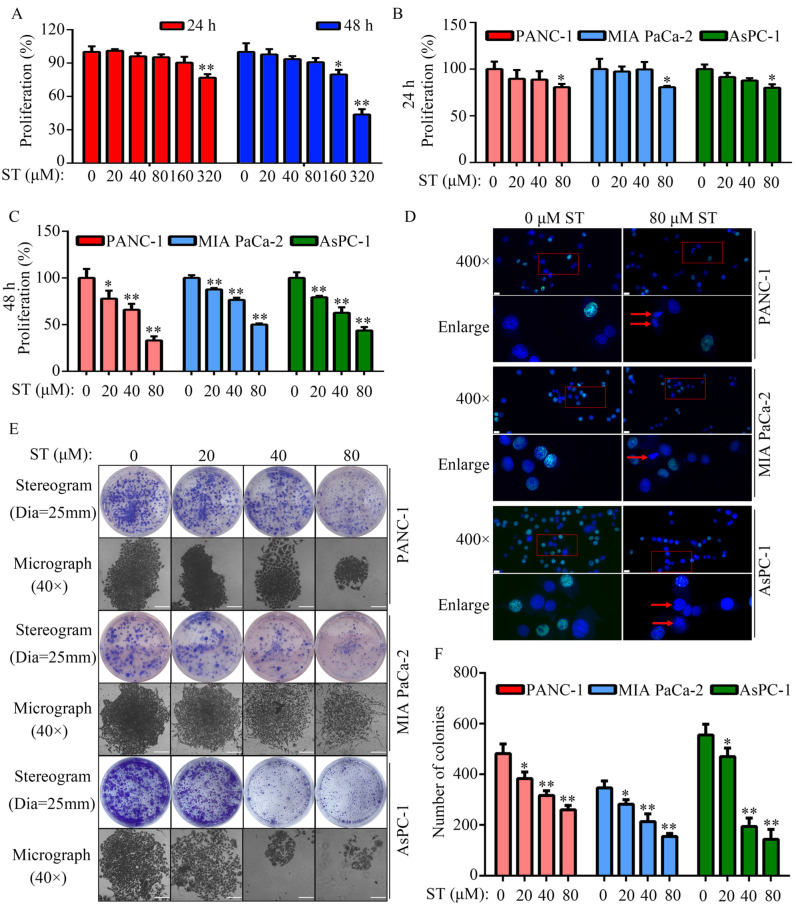
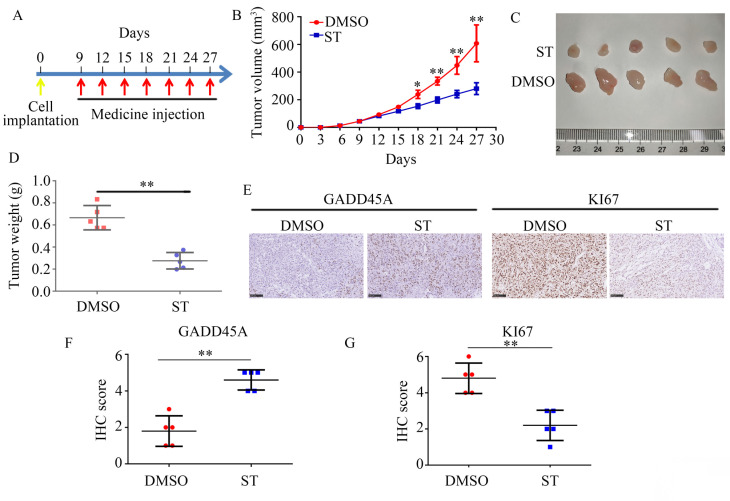
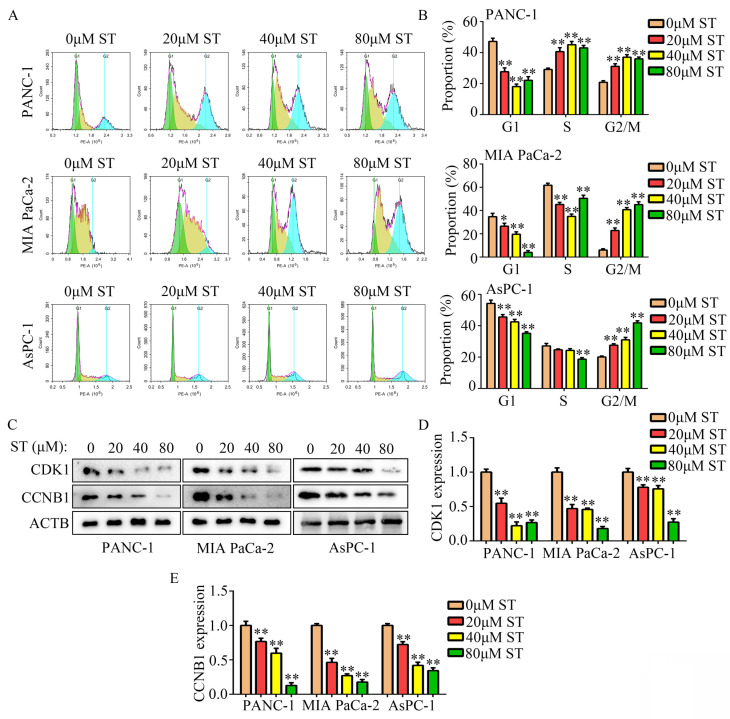
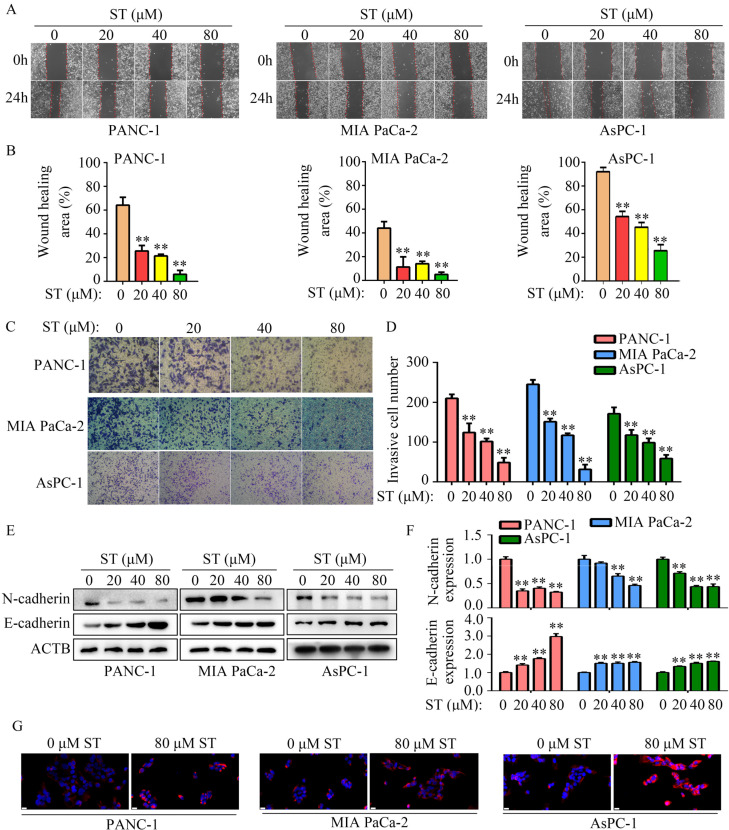
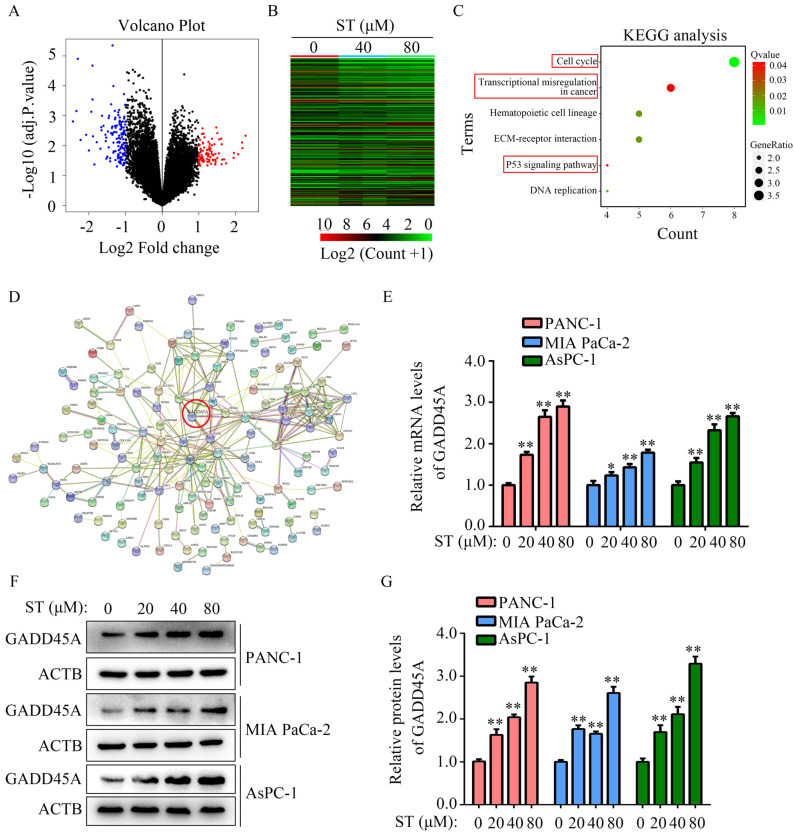
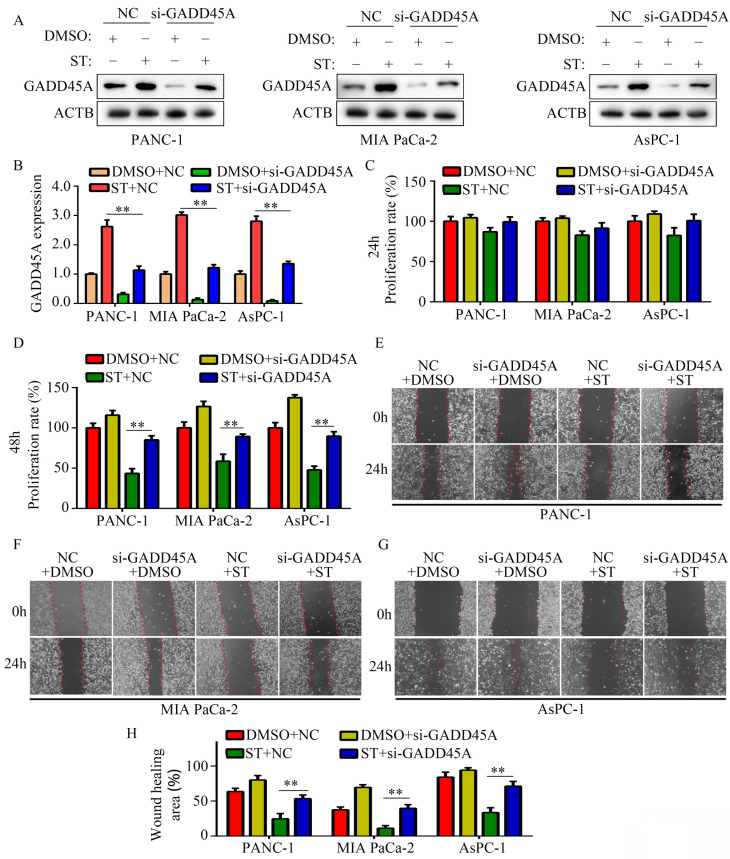
Sinapine thiocyanate (ST), an alkaloid isolated from the seeds of cruciferous species, has exhibited anti-inflammatory, anti-malignancy, and anti-angiogenic effects in previous studies. However, the effects and molecular mechanisms of action of ST in pancreatic cancer (PC) are still limited. PC cells were treated with different concentrations (0, 20, 40, and 80 μM) of ST. The proliferative ability of PC cells was determined using cell count kit-8 (CCK-8), 5-ethynyl-2' deoxyuridine, colony formation, and flow cytometry assays. The mobility of PC cells was analyzed using wound healing assay, transwell assay, Western blotting, and immunofluorescence. High-throughput sequencing followed by bioinformatics analysis, reverse-transcriptase quantitative polymerase chain reaction (RT-qPCR), and Western blotting were performed to identify the key targets of ST. Finally, CCK-8 assay, wound healing assay, and xenograft tumor model were used to determine the relationship between ST and growth arrest and DNA damage-inducible alpha (GADD45A; the key target of ST) and malignant biological properties of PC and . ST significantly repressed the PC cell proliferation rate and colony formation and arrested cells in the G2/M phase. ST inhibited PC cell mobility and increased E-cadherin expression (an epithelial biomarker). GADD45A was considered the key target of ST in PC and was elevated in PC cells treated with ST. The inhibition of GADD45A significantly alleviated the suppressive effects of ST on PC cell proliferation and mobility . ST suppressed PC cell proliferation and increased GADD45A expression in tumor tissues. ST exhibited significant anti-tumor effects on PC cells by upregulating GADD45A. ST may be a potential drug for PC treatment.
硫氰酸芥子碱(ST)是一种从十字花科植物种子中分离出的生物碱,在先前的研究中已显示出抗炎、抗恶性和抗血管生成作用。然而,ST在胰腺癌(PC)中的作用及分子作用机制仍不明确。用不同浓度(0、20、40和80 μM)的ST处理PC细胞。使用细胞计数试剂盒-8(CCK-8)、5-乙炔基-2'-脱氧尿苷、集落形成和流式细胞术检测来测定PC细胞的增殖能力。使用伤口愈合试验、Transwell试验、蛋白质免疫印迹法和免疫荧光法分析PC细胞的迁移能力。通过高通量测序结合生物信息学分析、逆转录定量聚合酶链反应(RT-qPCR)和蛋白质免疫印迹法来鉴定ST的关键靶点。最后,使用CCK-8试验、伤口愈合试验和异种移植肿瘤模型来确定ST与生长停滞和DNA损伤诱导蛋白α(GADD45A;ST的关键靶点)以及PC的恶性生物学特性之间的关系。ST显著抑制PC细胞增殖率和集落形成,并使细胞停滞于G2/M期。ST抑制PC细胞迁移并增加E-钙黏蛋白表达(一种上皮生物标志物)。GADD45A被认为是ST在PC中的关键靶点,在用ST处理的PC细胞中其表达升高。抑制GADD45A可显著减轻ST对PC细胞增殖和迁移的抑制作用。ST抑制PC细胞增殖并增加肿瘤组织中GADD45A的表达。ST通过上调GADD45A对PC细胞表现出显著的抗肿瘤作用。ST可能是一种用于PC治疗的潜在药物。