Larsen Knud, Christensen Thomas Bové, Højberg Ole, Sørensen Martin Tang
Department of Molecular Biology and Genetics, Aarhus University, C.F. Møllers Allé 3, DK-8000 Aarhus C, Denmark.
Department of Animal Science, Aarhus University, Blichers Allé 20, DK-8830 Tjele, Denmark.
Toxicol Rep. 2022 Mar 7;9:298-310. doi: 10.1016/j.toxrep.2022.02.007. eCollection 2022.
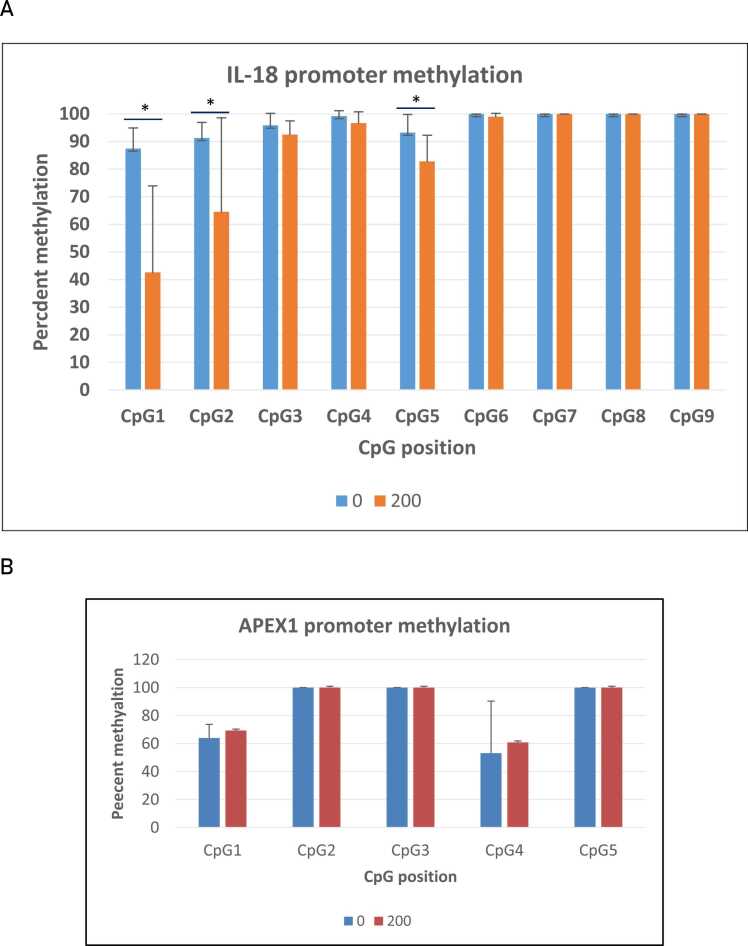
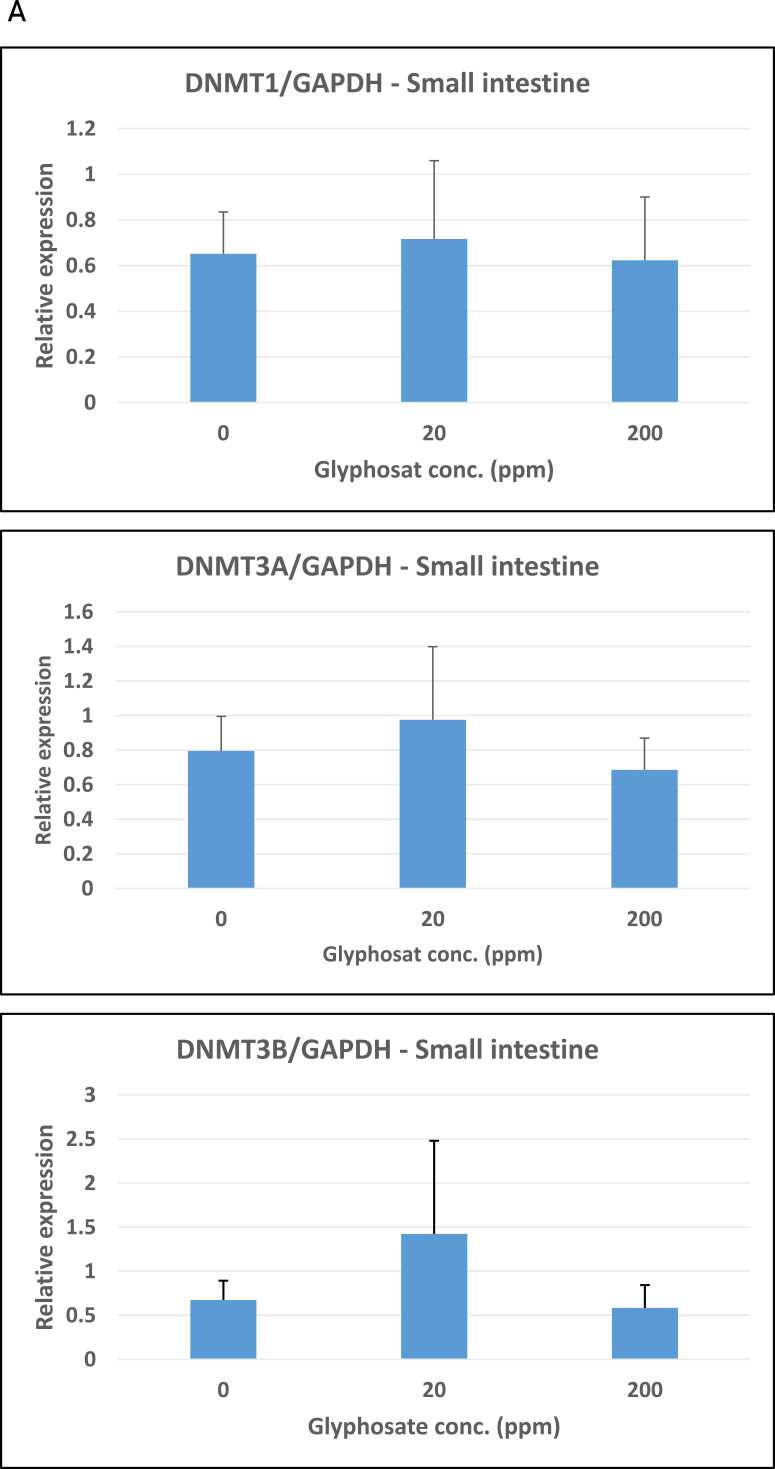
Glyphosate (-(phosphonomethyl)glycine) is a broad-spectrum systemic herbicide and crop desiccant. Glyphosate has long been suspected of leading to the development of cancer and of compromising fertility. Herbicides have been increasingly recognized as epigenetic modifiers, and the impact of glyphosate on human and animal health might be mediated by epigenetic modifications. This article presents the results from an animal study where pigs were exposed to glyphosate while feeding. The experimental setup included a control group with no glyphosate added to the feed and two groups of pigs with 20 ppm and 200 ppm of glyphosate added to the feed, respectively. After exposure, the pigs were dissected, and tissues of the small intestine, liver, and kidney were used for DNA methylation and gene expression analyses. No significant change in global DNA methylation was found in the small intestine, kidney, or liver. Methylation status was determined for selected genes involved in various functions such as DNA repair and immune defense. In a CpG island of the promoter for IL18, we observed significantly reduced DNA methylation for certain individual CpG positions. However, this change in DNA methylation had no influence on IL18 mRNA expression. The expression of the DNA methylation enzymes DNMT1, DNMT3A, and DNMT3B was measured in the small intestine, kidney, and liver of pigs exposed to glyphosate. No significant changes in relative gene expression were found for these enzymes following dietary exposure to 20 and 200 ppm glyphosate. In contrast, a significant increase in expression of the enzyme TET3, responsible for demethylation, was observed in kidneys exposed to 200 ppm glyphosate.
草甘膦(N-(膦酰基甲基)甘氨酸)是一种广谱内吸性除草剂和作物干燥剂。长期以来,草甘膦一直被怀疑会导致癌症的发生并损害生育能力。除草剂越来越被认为是表观遗传修饰剂,草甘膦对人类和动物健康的影响可能是由表观遗传修饰介导的。本文介绍了一项动物研究的结果,该研究中猪在进食时接触草甘膦。实验设置包括一个饲料中未添加草甘膦的对照组和两组分别在饲料中添加了20 ppm和200 ppm草甘膦的猪。接触后,对猪进行解剖,并将小肠、肝脏和肾脏组织用于DNA甲基化和基因表达分析。在小肠、肾脏或肝脏中未发现全局DNA甲基化有显著变化。对参与DNA修复和免疫防御等各种功能的选定基因的甲基化状态进行了测定。在IL18启动子的一个CpG岛中,我们观察到某些个别CpG位点的DNA甲基化显著降低。然而,这种DNA甲基化的变化对IL18 mRNA表达没有影响。在接触草甘膦的猪的小肠、肾脏和肝脏中测量了DNA甲基化酶DNMT1、DNMT3A和DNMT3B的表达。在饲料中接触20 ppm和200 ppm草甘膦后,这些酶的相对基因表达没有发现显著变化。相反,在接触200 ppm草甘膦的肾脏中观察到负责去甲基化的TET3酶的表达显著增加。