Wu Ji, Wang Zhenhua, Xu Shanling, Fu Yang, Gao Yi, Wu Zuxiang, Yu Yun, Yuan Yougen, Zhou Lin, Li Ping
Department of Cardiovascular, The Second Affiliated Hospital of Nanchang University, Nan Chang, China.
Department of Cardiovascular, Medicine, Fuzhou First People's Hospital, Fu Zhou, China.
PeerJ. 2022 Mar 9;10:e12994. doi: 10.7717/peerj.12994. eCollection 2022.
Septic cardiomyopathy (SC) is a common complication of sepsis that leads to an increase in mortality. The pathogenesis of septic cardiomyopathy is unclear, and there is currently no effective treatment. EGCG (epigallocatechin gallate) is a polyphenol that has anti-inflammatory, antiapoptotic, and antioxidative stress effects. However, the role of EGCG in septic cardiomyopathy is unknown.
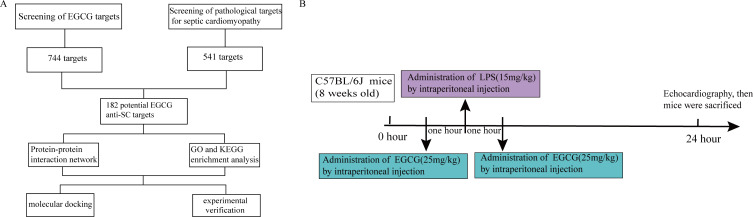
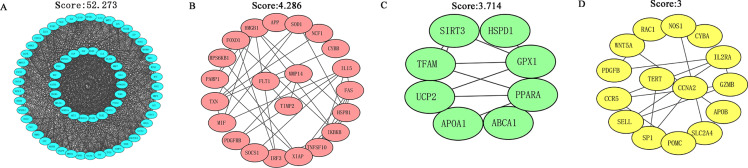
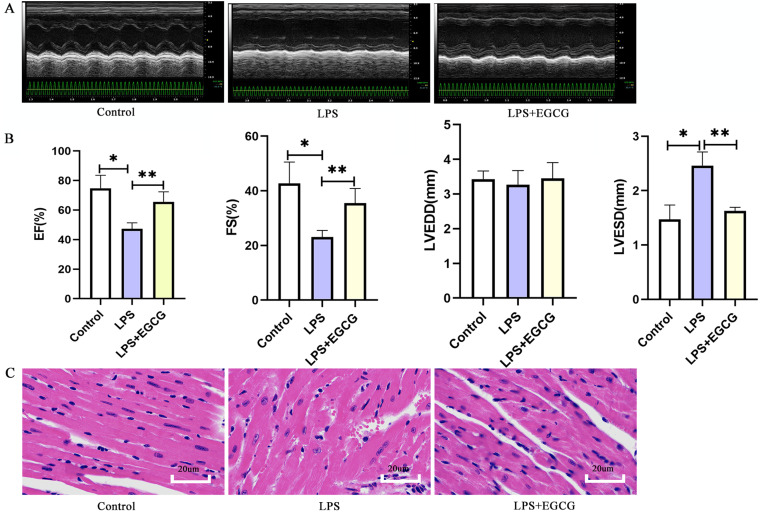
Network pharmacology was used to predict the potential targets and molecular mechanisms of EGCG in the treatment of septic cardiomyopathy, including the construction and analysis of protein-protein interaction (PPI) network, gene ontology (GO), and Kyoto Encyclopedia of Genes and Genomes (KEGG) pathway analysis and molecular docking. The mouse model of septic cardiomyopathy was established after intraperitoneal injection of LPS (lipopolysaccharide). The myocardial protective effect of EGCG on septic mice is observed by cardiac ultrasound and HE staining. RT-PCR is used to verify the expression level of the EGCG target in the septic cardiomyopathy mouse model.
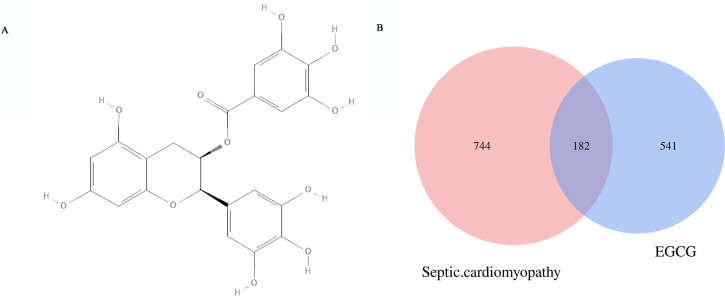
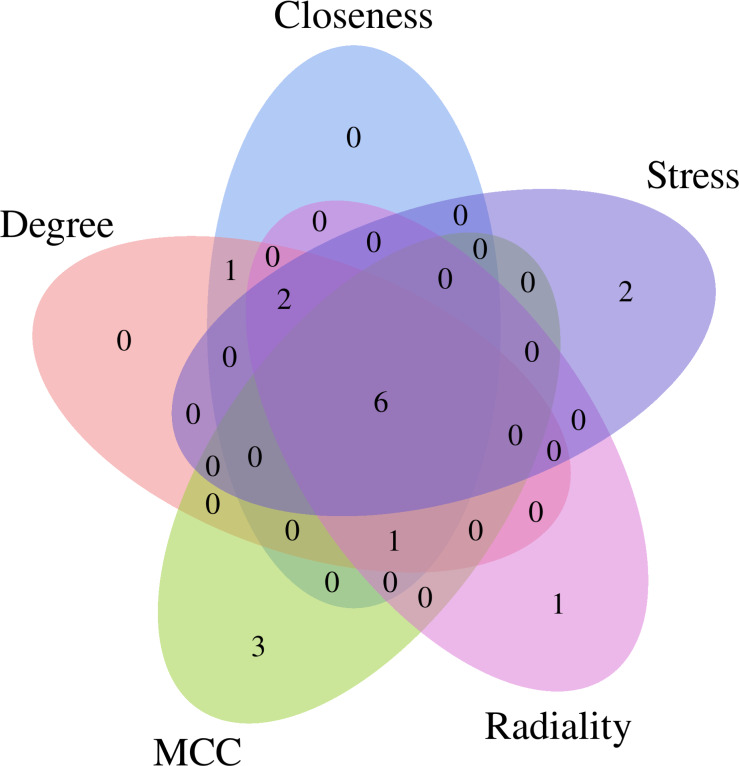
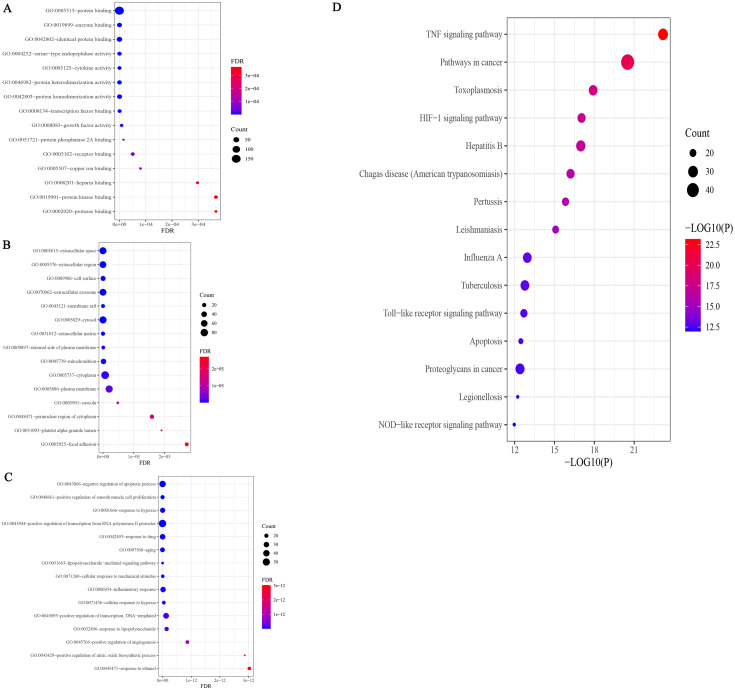
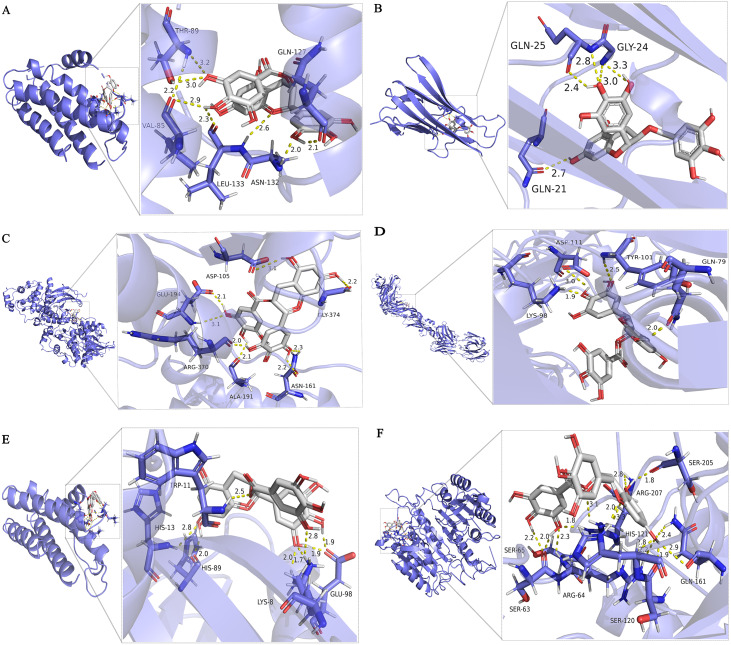
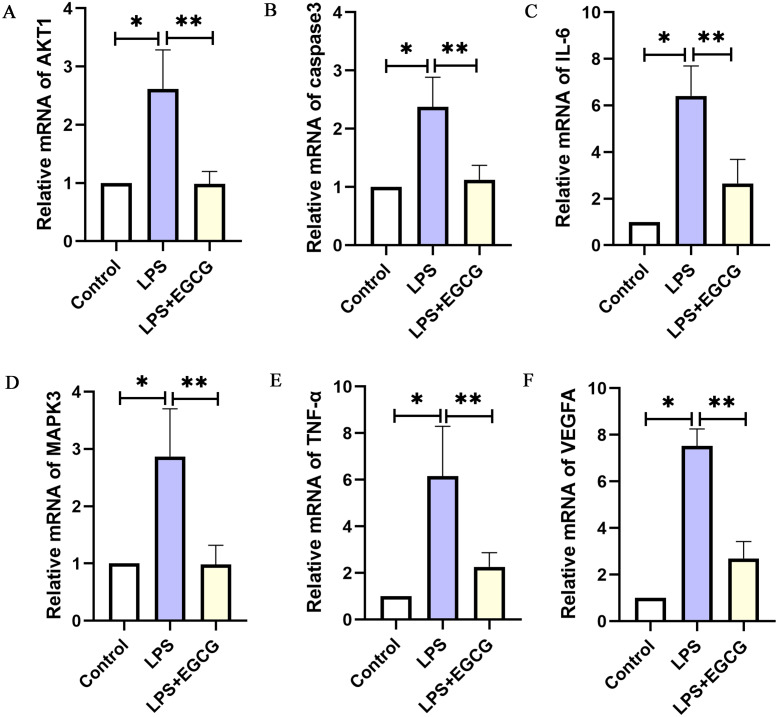
A total of 128 anti-SC potential targets of EGCGareselected for analysis. The GO enrichment analysis and KEGG pathway analysis results indicated that the anti-SC targets of EGCG mainly participate in inflammatory and apoptosis processes. Molecular docking results suggest that EGCG has a high affinity for the crystal structure of six targets (IL-6 (interleukin-6), TNF (tumor necrosis factor), Caspase3, MAPK3 (Mitogen-activated protein kinase 3), AKT1, and VEGFA (vascular endothelial growth factor)), and the experimental verification result showed levated expression of these 6 hub targets in the LPS group, but there is an obvious decrease in expression in the LPS + EGCG group. The functional and morphological changes found by echocardiography and HE staining show that EGCG can effectively improve the cardiac function that is reduced by LPS.
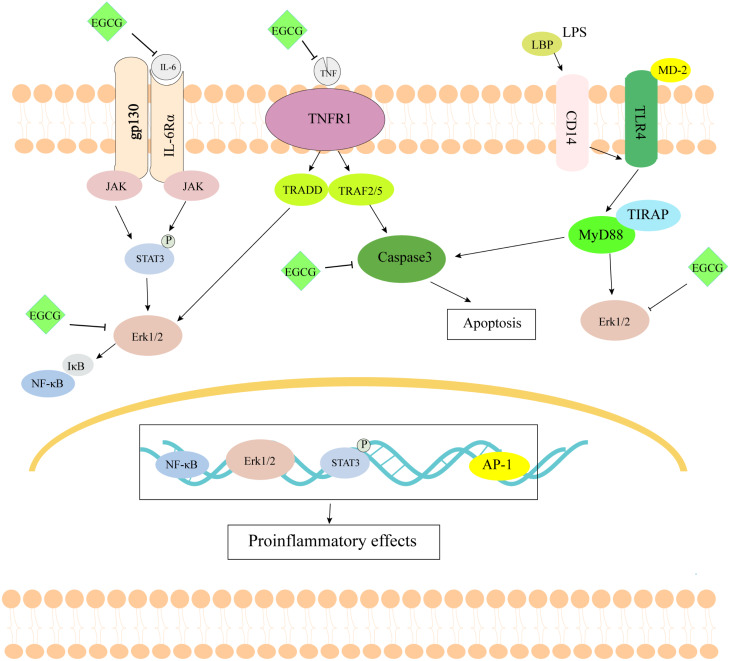
Our results reveal that EGCG may be a potentially effective drug to improve septic cardiomyopathy. The potential mechanism by which EGCG improves myocardial injury in septic cardiomyopathy is through anti-inflammatory and anti-apoptotic effects. The anti-inflammatory and anti-apoptotic effects of EGCG occur not only through direct binding to six target proteins (IL-6,TNF-α, Caspase3, MAPK3, AKT1, and VEGFA) but also by reducing their expression.
脓毒症性心肌病(SC)是脓毒症常见的并发症,可导致死亡率升高。脓毒症性心肌病的发病机制尚不清楚,目前尚无有效治疗方法。表没食子儿茶素没食子酸酯(EGCG)是一种具有抗炎、抗凋亡和抗氧化应激作用的多酚类物质。然而,EGCG在脓毒症性心肌病中的作用尚不清楚。
采用网络药理学预测EGCG治疗脓毒症性心肌病的潜在靶点和分子机制,包括蛋白质-蛋白质相互作用(PPI)网络构建与分析、基因本体(GO)分析、京都基因与基因组百科全书(KEGG)通路分析及分子对接。腹腔注射脂多糖(LPS)建立脓毒症性心肌病小鼠模型。通过心脏超声和苏木精-伊红(HE)染色观察EGCG对脓毒症小鼠的心肌保护作用。采用逆转录聚合酶链反应(RT-PCR)验证脓毒症性心肌病小鼠模型中EGCG靶点的表达水平。
共筛选出128个EGCG抗SC潜在靶点进行分析。GO富集分析和KEGG通路分析结果表明,EGCG抗SC靶点主要参与炎症和凋亡过程。分子对接结果显示,EGCG与6个靶点(白细胞介素-6(IL-6)、肿瘤坏死因子(TNF)、半胱天冬酶3、丝裂原活化蛋白激酶3(MAPK3)、蛋白激酶B(AKT1)和血管内皮生长因子A(VEGFA))的晶体结构具有高亲和力,实验验证结果显示,这6个核心靶点在LPS组表达升高,但在LPS + EGCG组表达明显降低。心脏超声和HE染色发现的功能和形态学变化表明,EGCG可有效改善LPS降低的心脏功能。
我们的研究结果表明,EGCG可能是改善脓毒症性心肌病的一种潜在有效药物。EGCG改善脓毒症性心肌病心肌损伤的潜在机制是通过抗炎和抗凋亡作用。EGCG的抗炎和抗凋亡作用不仅通过直接结合6种靶蛋白(IL-6、TNF-α、半胱天冬酶3、MAPK3、AKT1和VEGFA)发生,还通过降低其表达来实现。