Cui Can, Ingre Caroline, Yin Li, Li Xia, Andersson John, Seitz Christina, Ruffin Nicolas, Pawitan Yudi, Piehl Fredrik, Fang Fang
Unit of Integrative Epidemiology, Institute of Environmental Medicine, Karolinska Institutet, Stockholm, Sweden.
SLL- ME Neurologi, Karolinska University Hospital, Stockholm, Sweden.
Elife. 2022 Mar 15;11:e74065. doi: 10.7554/eLife.74065.
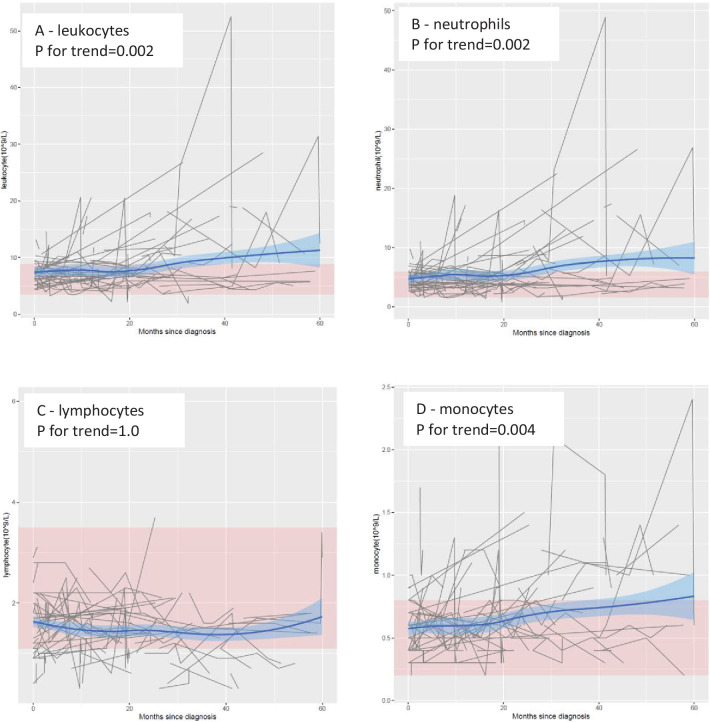
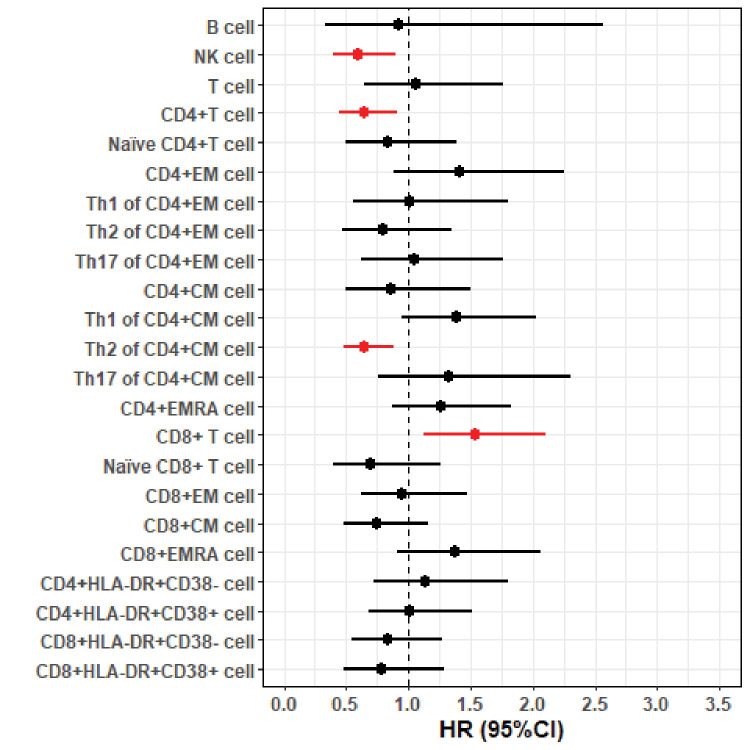
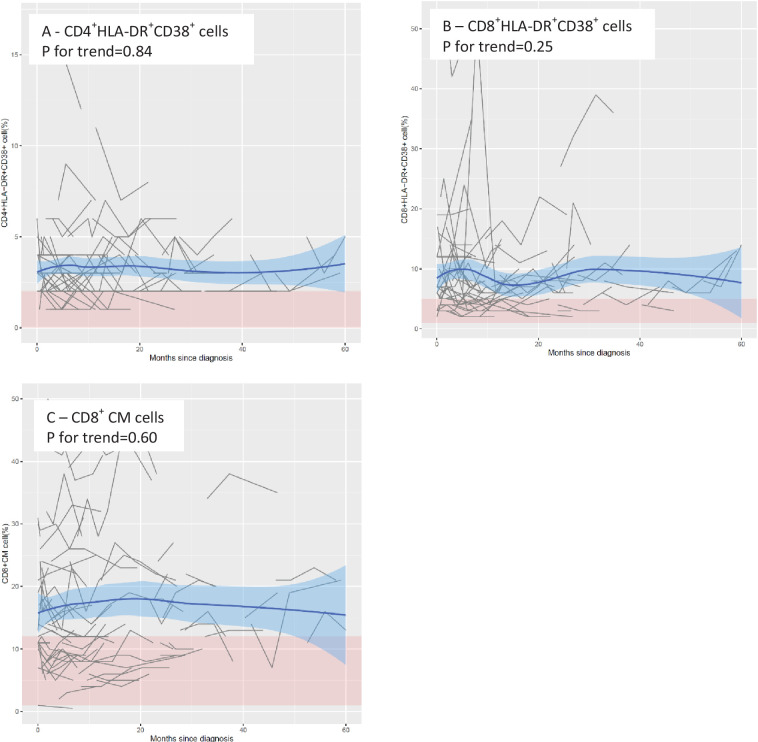
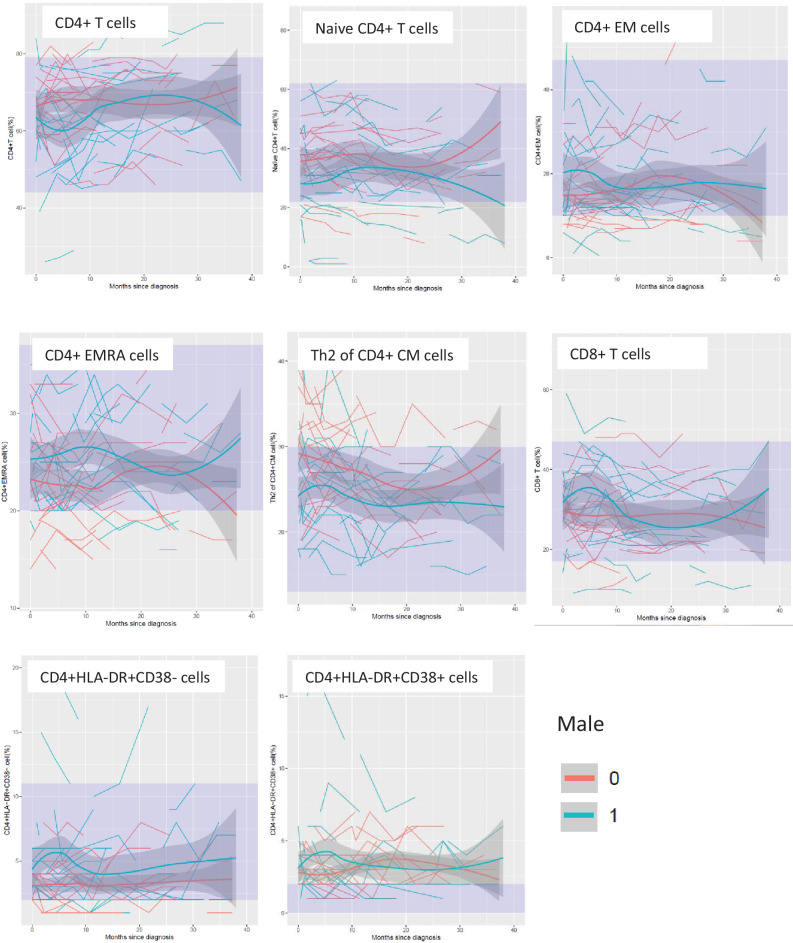
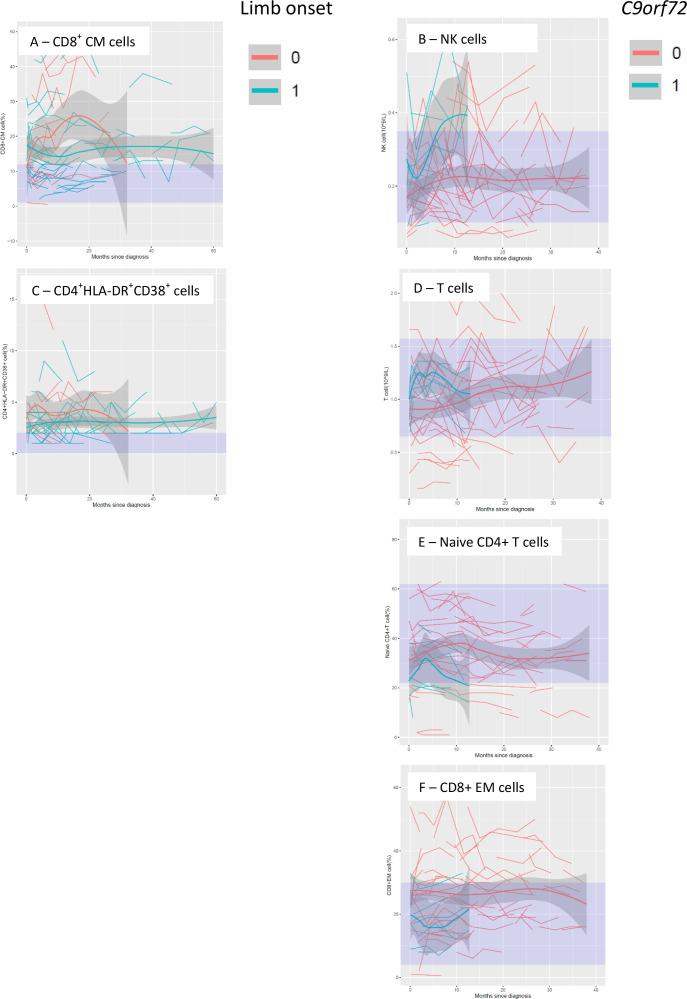
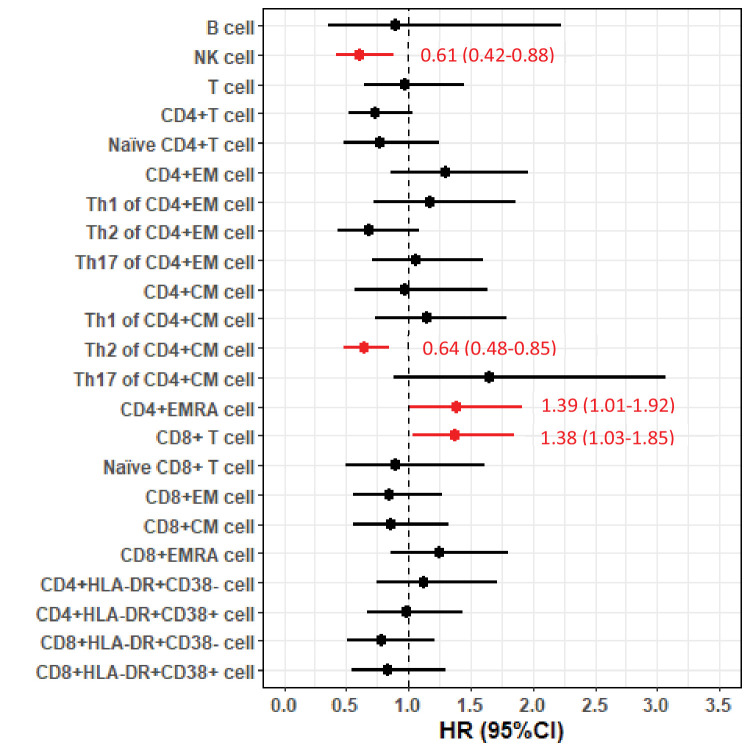
The prognostic role of immune cells in amyotrophic lateral sclerosis (ALS) remains undetermined. Therefore, we conducted a longitudinal cohort study including 288 ALS patients with up to 5-year follow-up during 2015-2020 recruited at the only tertiary referral center for ALS in Stockholm, Sweden, and measured the levels of differential leukocytes and lymphocyte subpopulations. The primary outcome was risk of death after diagnosis of ALS and the secondary outcomes included functional status and disease progression rate. Cox model was used to evaluate the associations between leukocytes and risk of death. Generalized estimating equation model was used to assess the correlation between leukocytes and functional status and disease progression rate. We found that leukocytes, neutrophils, and monocytes increased gradually over time since diagnosis and were negatively correlated with functional status, but not associated with risk of death or disease progression rate. For lymphocyte subpopulations, NK cells (HR= 0.61, 95% CI = [0.42-0.88] per SD increase) and Th2-diffrentiated CD4 central memory T cells (HR= 0.64, 95% CI = [0.48-0.85] per SD increase) were negatively associated with risk of death, while CD4 effector memory cells re-expressing CD45RA (EMRA) T cells (HR= 1.39, 95% CI = [1.01-1.92] per SD increase) and CD8 T cells (HR= 1.38, 95% CI = [1.03-1.86] per SD increase) were positively associated with risk of death. None of the lymphocyte subpopulations was correlated with functional status or disease progression rate. Our findings suggest a dual role of immune cells in ALS prognosis, where neutrophils and monocytes primarily reflect functional status whereas NK cells and different T lymphocyte populations act as prognostic markers for survival.
免疫细胞在肌萎缩侧索硬化症(ALS)中的预后作用仍未明确。因此,我们进行了一项纵向队列研究,纳入了288例ALS患者,于2015年至2020年期间在瑞典斯德哥尔摩唯一的ALS三级转诊中心招募,随访时间长达5年,并测量了不同白细胞和淋巴细胞亚群的水平。主要结局是ALS诊断后的死亡风险,次要结局包括功能状态和疾病进展率。采用Cox模型评估白细胞与死亡风险之间的关联。使用广义估计方程模型评估白细胞与功能状态和疾病进展率之间的相关性。我们发现,自诊断以来,白细胞、中性粒细胞和单核细胞随时间逐渐增加,且与功能状态呈负相关,但与死亡风险或疾病进展率无关。对于淋巴细胞亚群,自然杀伤细胞(每标准差增加,HR = 0.61,95%CI = [0.42 - 0.88])和Th2分化的CD4中央记忆T细胞(每标准差增加,HR = 0.64,95%CI = [0.48 - 0.85])与死亡风险呈负相关,而重新表达CD45RA的CD4效应记忆细胞(EMRA)T细胞(每标准差增加,HR = 1.39,95%CI = [1.01 - 1.92])和CD8 T细胞(每标准差增加,HR = 1.38,95%CI = [1.03 - 1.86])与死亡风险呈正相关。没有淋巴细胞亚群与功能状态或疾病进展率相关。我们的研究结果表明免疫细胞在ALS预后中具有双重作用,其中中性粒细胞和单核细胞主要反映功能状态,而自然杀伤细胞和不同的T淋巴细胞群体作为生存的预后标志物。