Department of Microbiology, New York University Grossman School of Medicine, New York, New York, USA.
mBio. 2022 Apr 26;13(2):e0015822. doi: 10.1128/mbio.00158-22. Epub 2022 Mar 15.
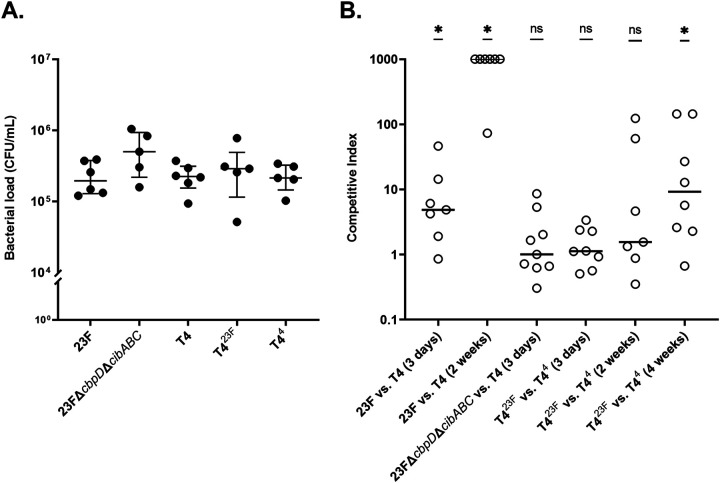
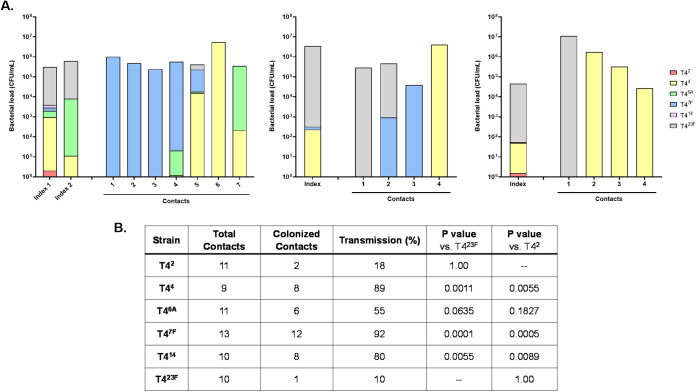
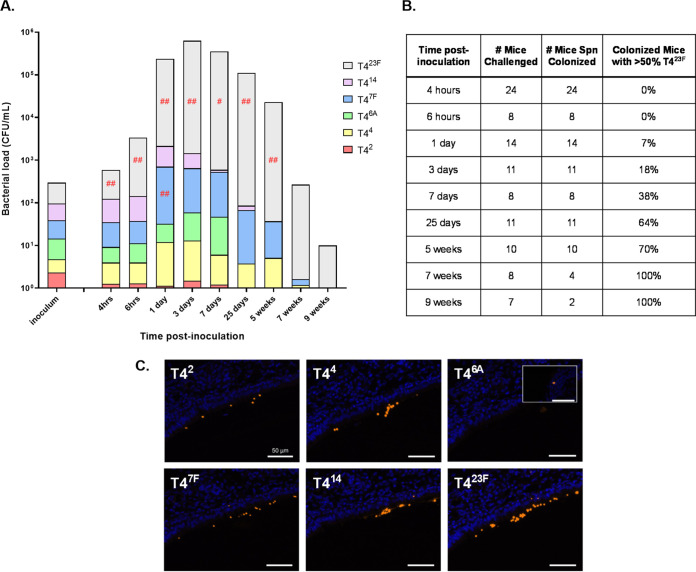
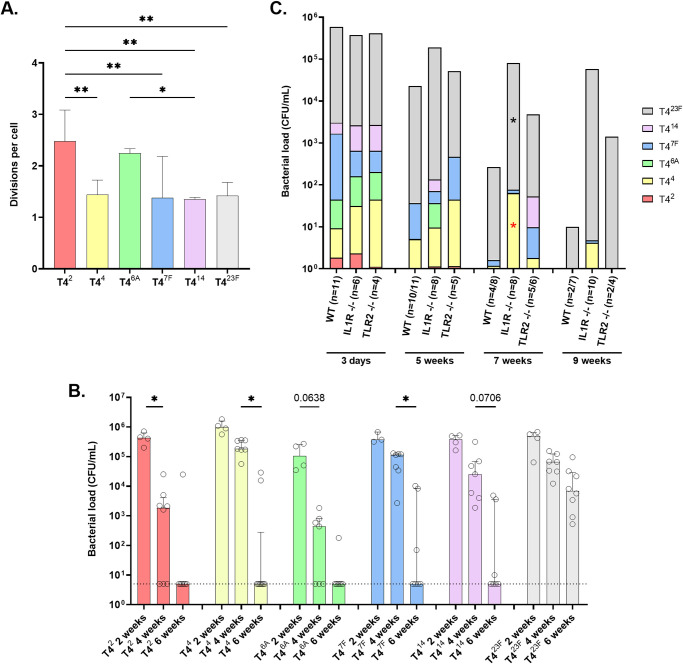
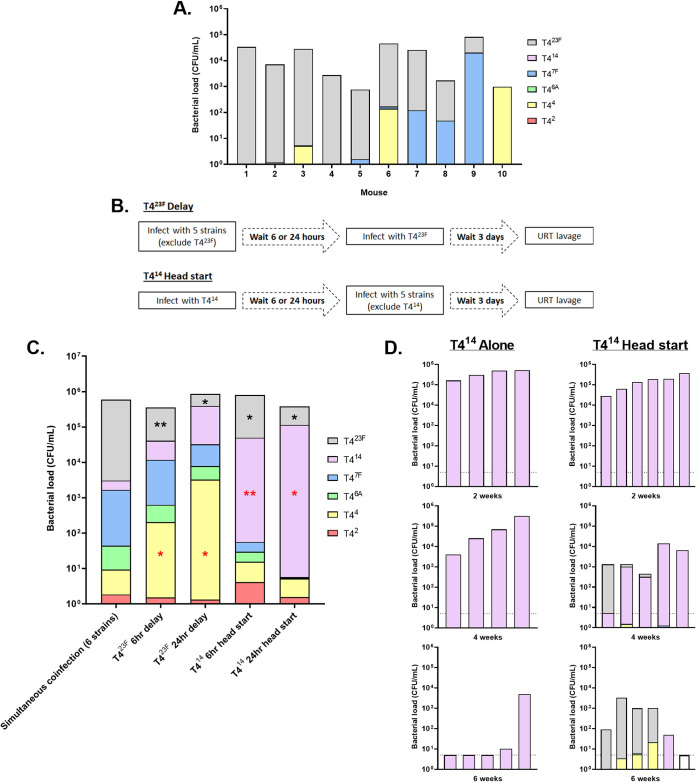
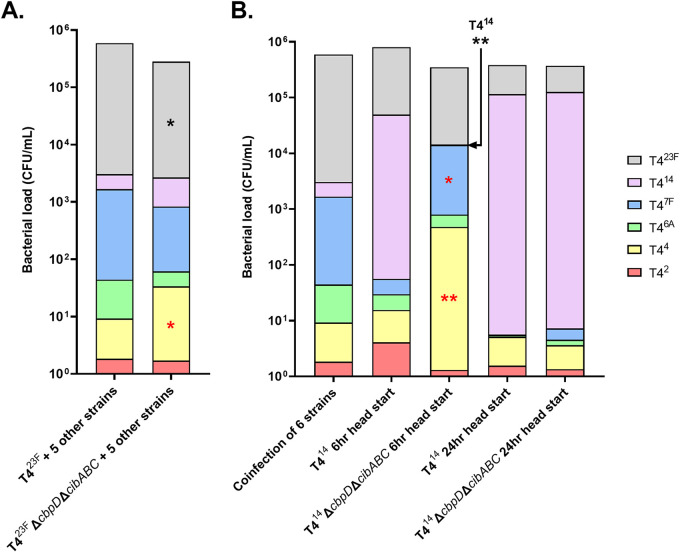
Capsule-switch mutants were compared to analyze how serotype affects the success of Streptococcus pneumoniae (Spn) during colonization and transmission. Strains of multiple serotypes were tested in highly susceptible infant mice, both singly and in competitive assays. Our findings demonstrated a role of serotype, apart from genetic background, in competitive success of strains, but this depended on timing postinoculation. As is the case for natural carriage, there was a hierarchy of success among serotypes using capsule-switch strains. The long-term dominance of a serotype was established within the first 4 h after acquisition, suggesting an effect independent of Spn-induced host responses. The hierarchy of serotype dominance correlated with decreased clearance rather than increased growth . Competitive assays staggering the timing of challenge showed that the first strain to dominate the niche sustained its competitive advantage, potentially explaining how increased density from delayed early clearance could result in serotype-dependent success. Effector molecules of intrastrain competition (fratricide), regulated by the competence operon in a quorum-sensing mechanism, were required for early niche dominance. This suggested a winner-takes-all scenario in which serotype is a major factor in achieving early niche dominance, such that once a strain reaches a threshold density it is able to exclude competitors through fratricide. Serotype was also an important determinant of transmission dynamics, although transit to a recipient host depended on effects of serotype different from its contribution to the dominance of colonization in the donor host. Capsule is the major virulence factor and surface antigen of the opportunistic respiratory pathogen Streptococcus pneumoniae (Spn). Strains of Spn express at least 100 structurally and immunologically distinct types (serotypes) of capsule, but for unknown reasons only a few are common. The effect of serotypes during the commensal interactions of Spn and its host, colonization and transmission, was tested. This was carried out by comparing genetically modified strains differing only in serotype in infant mouse models. Results show that serotype is an important factor in a strain's success during colonization. This was attributed to the effect of serotype on early clearance of the organism in the host. Competitive factors expressed by Spn (in a mechanism referred to as fratricide) allow the strain gaining this initial advantage to then dominate the upper respiratory tract niche. Serotype also plays an important role in a strain's success during transmission from one host to another.
对荚膜转换突变体进行了比较分析,以探讨血清型如何影响肺炎链球菌(Spn)在定植和传播过程中的成功。在高度易感的婴儿小鼠中,单独测试和竞争测定了多种血清型的菌株。我们的研究结果表明,血清型除了遗传背景外,在菌株的竞争成功中也起着作用,但这取决于接种后时间。与自然携带一样,使用荚膜转换菌株存在血清型成功的等级制度。在获得后 4 小时内,一个血清型的长期优势得以确立,这表明其作用独立于 Spn 诱导的宿主反应。血清型优势等级与清除率降低而非生长增加相关。竞争测定使挑战时间错开,表明首先占据生态位的菌株保持其竞争优势,这可能解释了为什么早期清除延迟导致的密度增加会导致与血清型相关的成功。种内竞争的效应分子(同种相残)由群体感应机制中的感受态操纵子调节,对于早期生态位优势是必需的。这表明了一种胜者通吃的情况,即血清型是实现早期生态位优势的主要因素,因此一旦菌株达到阈值密度,它就能够通过同种相残来排斥竞争者。血清型也是传播动力学的重要决定因素,尽管向受体宿主的转移取决于与其在供体宿主中定植优势不同的血清型效应。荚膜是机会性呼吸道病原体肺炎链球菌(Spn)的主要毒力因子和表面抗原。Spn 菌株至少表达 100 种结构和免疫上不同的荚膜类型(血清型),但原因不明,只有少数常见。在 Spn 与其宿主的共生相互作用、定植和传播过程中,检测了血清型的作用。这是通过在婴儿小鼠模型中比较仅在血清型上有所不同的遗传修饰菌株来完成的。结果表明,血清型是菌株在定植过程中成功的一个重要因素。这归因于血清型对宿主中生物体早期清除的影响。Spn 表达的竞争因子(在称为同种相残的机制中)允许获得这一初始优势的菌株随后主导上呼吸道生态位。血清型在从一个宿主到另一个宿主的传播过程中,对菌株的成功也起着重要作用。