Department of Microbiology and Immunology, Stritch School of Medicine, Loyola University Chicago, Maywood, Illinois, USA.
Van Kampen Cardiopulmonary Research Laboratory, Stritch School of Medicine, Loyola University Chicago, Maywood, Illinois, USA.
Immunology. 2022 Jun;166(2):238-248. doi: 10.1111/imm.13470. Epub 2022 Apr 1.
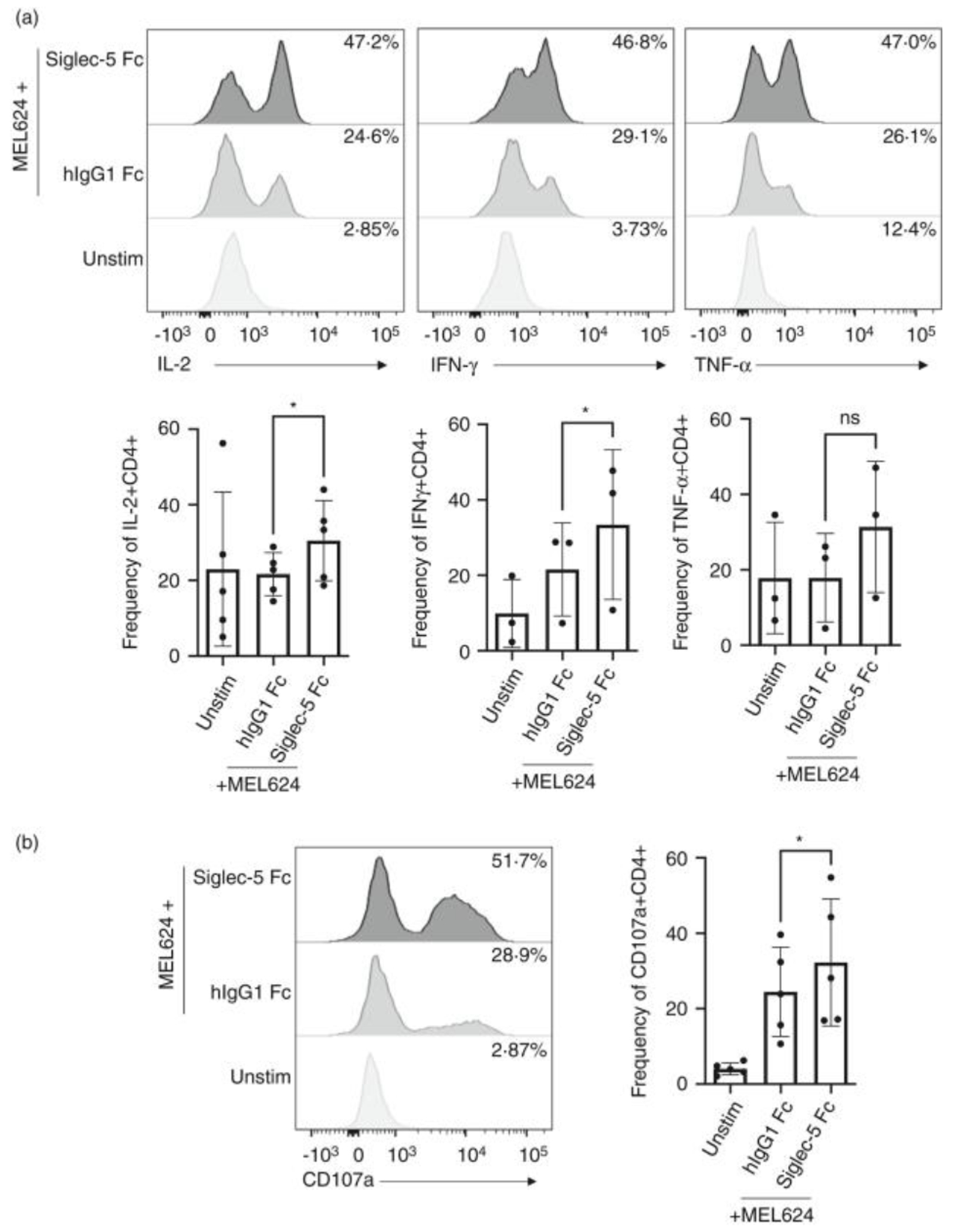
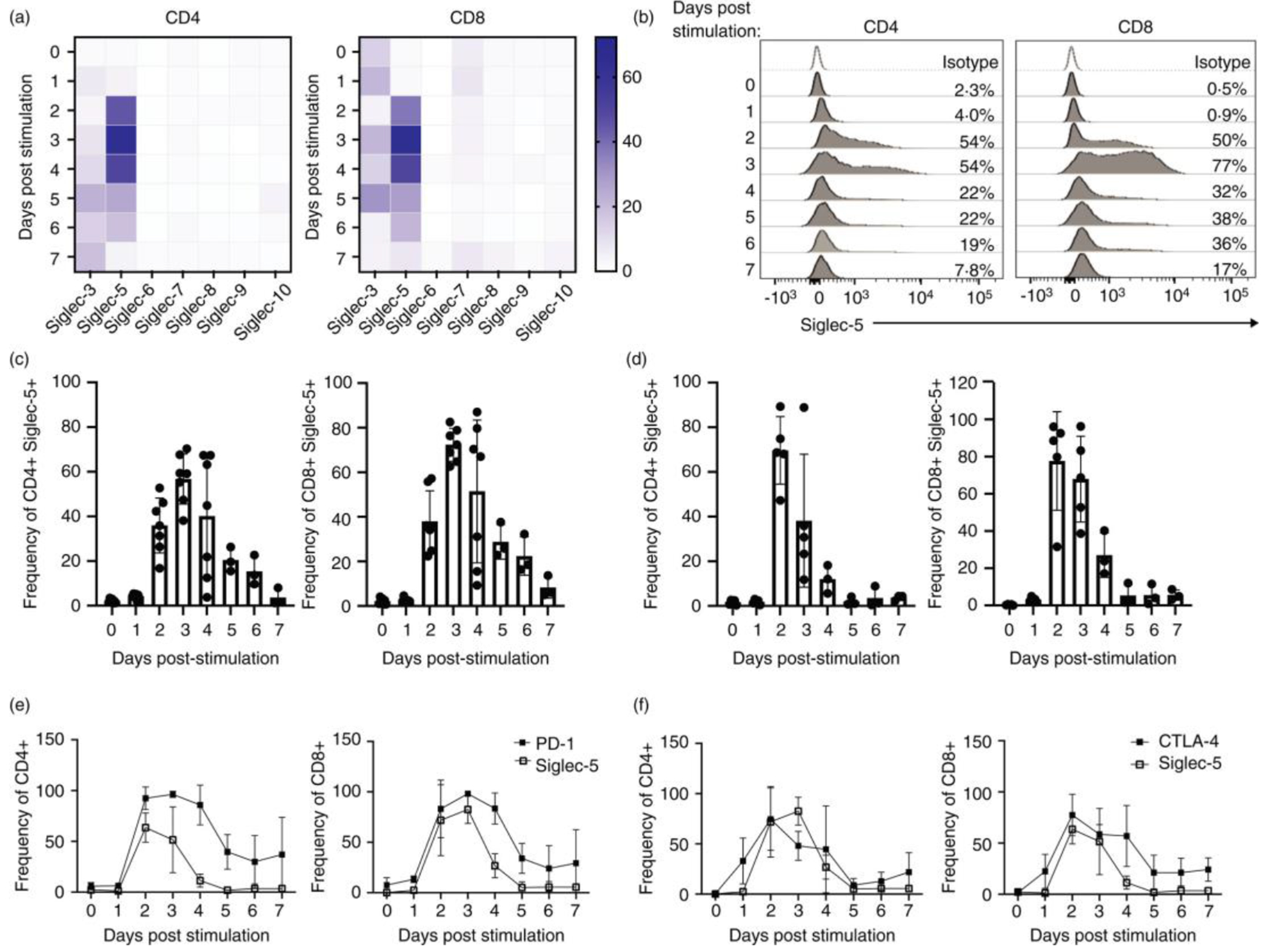
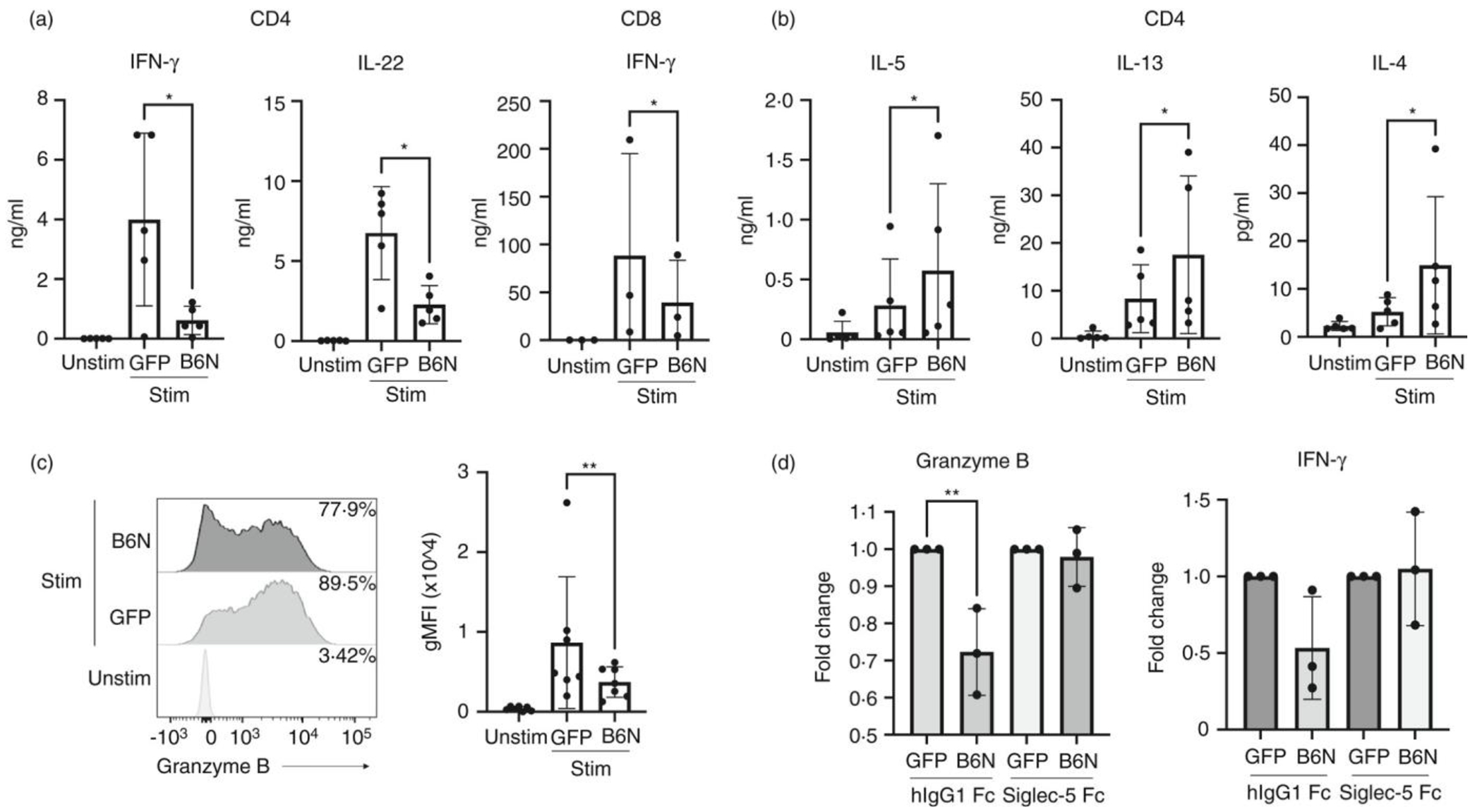
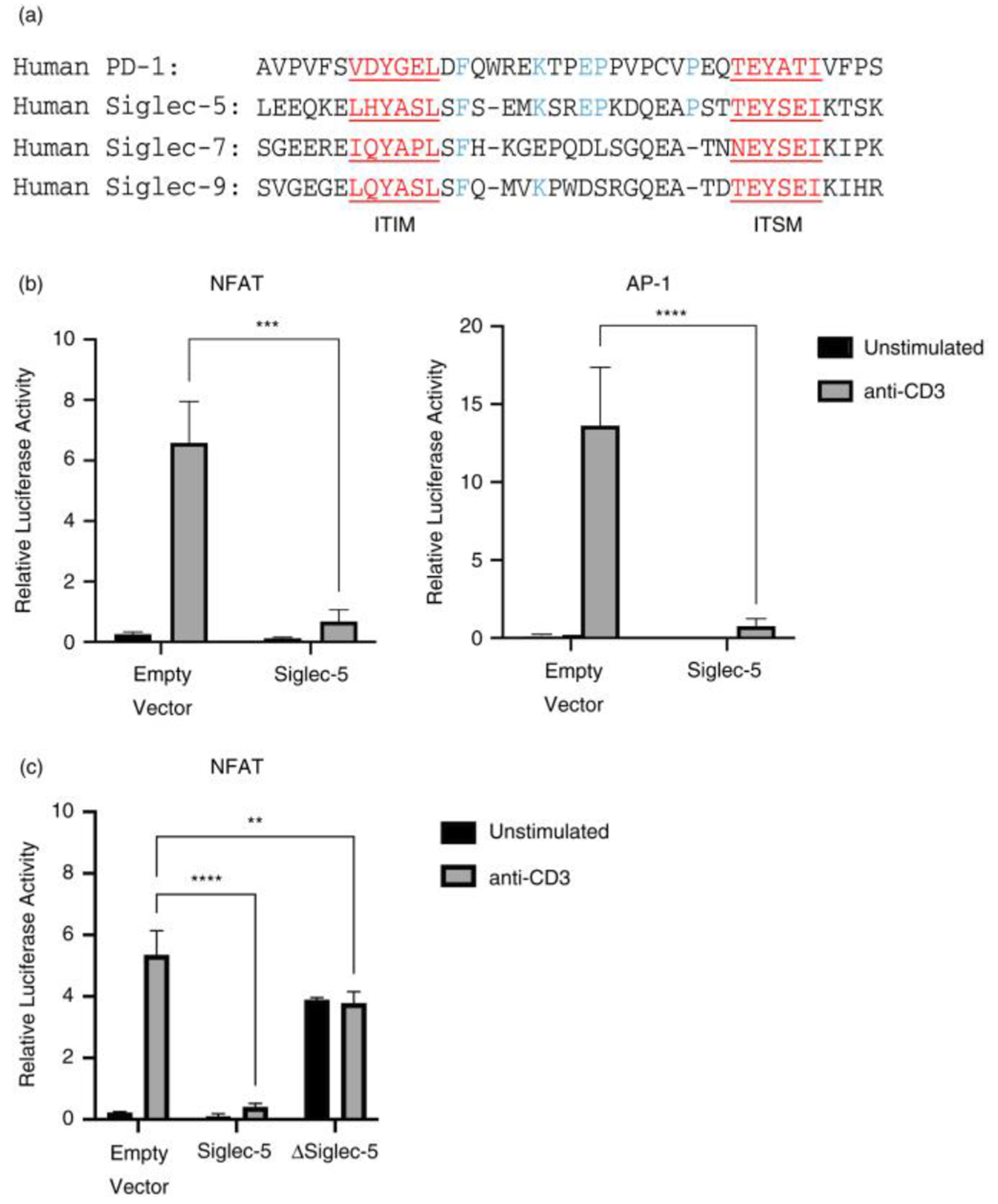
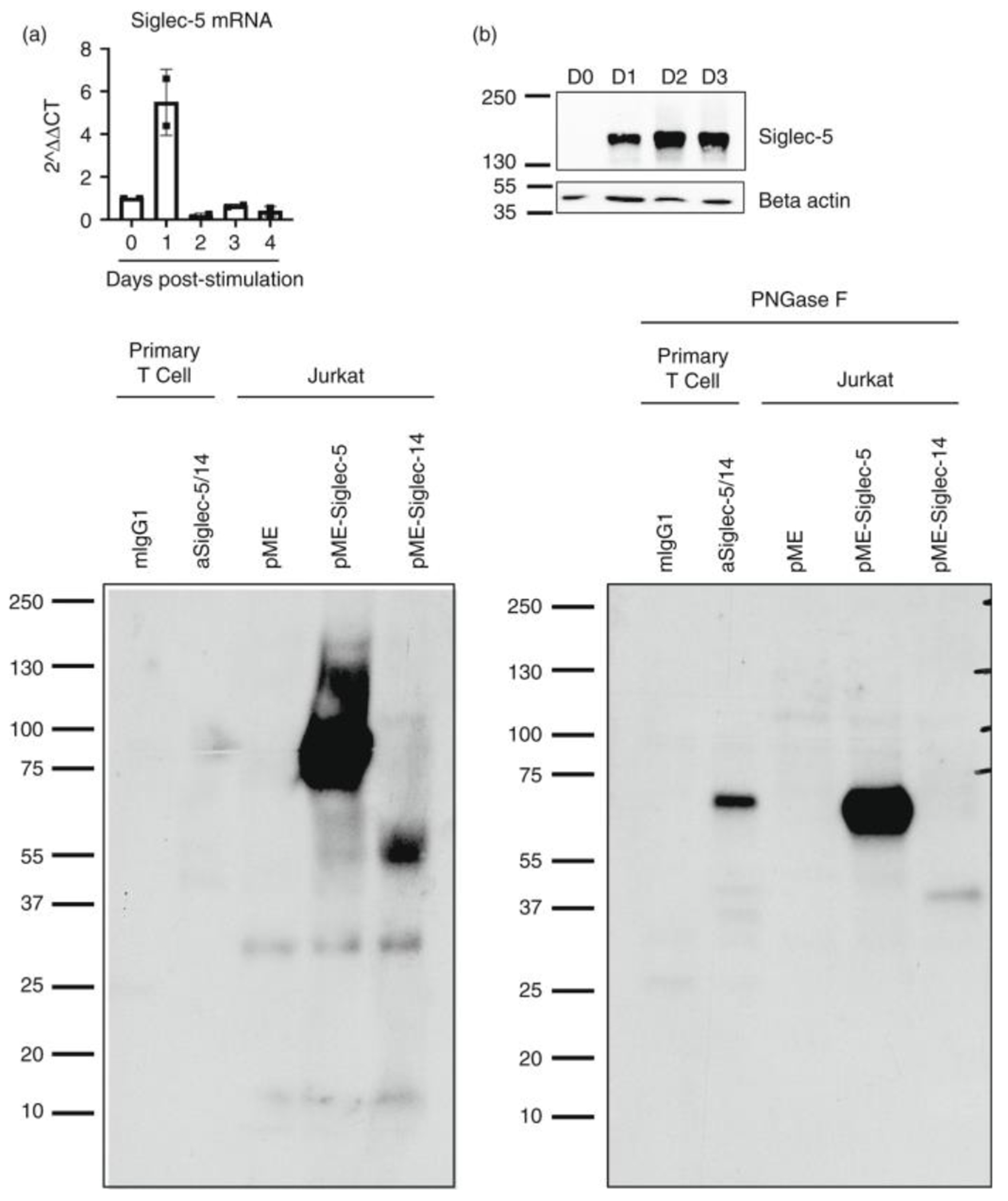
Sialic acid-binding immunoglobulin-type lectins (Siglecs) are a family of immunoglobulin-type lectins that mediate protein-carbohydrate interactions via sialic acids attached to glycoproteins or glycolipids. Most of the CD33-related Siglecs (CD33rSiglecs), a major subfamily of rapidly evolving Siglecs, contain a cytoplasmic signaling domain consisting of the immunoreceptor tyrosine-based inhibitory motif (ITIM) and immunoreceptor tyrosine-based switch motif (ITSM) and mediate suppressive signals for lymphoid and myeloid cells. While most CD33rSiglecs are expressed by innate immune cells, such as monocytes and neutrophils, to date, the expression of Siglecs in human T cells has not been well appreciated. In this study, we found that Siglec-5, a member of the CD33rSiglecs, is expressed by most activated T cells upon antigen receptor stimulation. Functionally, Siglec-5 suppresses T cell activation. In support of these findings, we found that Siglec-5 overexpression abrogates antigen receptor induced activation of NFAT and AP-1. Furthermore, we show that GBS β-protein, a known bacterial ligand of Siglec-5, reduces the production of cytokines and cytolytic molecules by activated primary T cells in a Siglec-5 dependent manner. Our data also show that some cancer cell lines express a putative Siglec-5 ligand(s), and that the presence of soluble Siglec-5 enhances tumor-cell specific T cell activation, suggesting that some tumor cells inhibit T cell activation via Siglec-5. Together, our data demonstrate that Siglec-5 is a previously unrecognized inhibitory T cell immune checkpoint molecule and suggest that blockade of Siglec-5 could serve as a new strategy to enhance anti-tumor T cell functions.
唾液酸结合免疫球蛋白型凝集素(Siglecs)是一类免疫球蛋白型凝集素,通过与糖蛋白或糖脂结合的唾液酸介导蛋白质-碳水化合物相互作用。大多数 CD33 相关 Siglecs(CD33rSiglecs)是迅速进化的 Siglecs 的主要亚家族,包含一个由免疫受体酪氨酸基抑制基序(ITIM)和免疫受体酪氨酸基开关基序(ITSM)组成的细胞质信号域,并介导淋巴样和髓样细胞的抑制信号。虽然大多数 CD33rSiglecs 由先天免疫细胞表达,如单核细胞和中性粒细胞,但到目前为止,人类 T 细胞中 Siglecs 的表达尚未得到很好的理解。在这项研究中,我们发现 CD33rSiglecs 的成员 Siglec-5 在抗原受体刺激后大多数活化的 T 细胞中表达。功能上,Siglec-5 抑制 T 细胞活化。支持这些发现,我们发现 Siglec-5 过表达可消除抗原受体诱导的 NFAT 和 AP-1 的活化。此外,我们表明 GBS β-蛋白,Siglec-5 的已知细菌配体,以 Siglec-5 依赖的方式减少激活的原代 T 细胞产生细胞因子和细胞毒性分子。我们的数据还表明,一些癌细胞系表达假定的 Siglec-5 配体,并且可溶性 Siglec-5 的存在增强了肿瘤细胞特异性 T 细胞的活化,表明一些肿瘤细胞通过 Siglec-5 抑制 T 细胞活化。总之,我们的数据表明 Siglec-5 是一种以前未被识别的抑制性 T 细胞免疫检查点分子,并表明阻断 Siglec-5 可能成为增强抗肿瘤 T 细胞功能的新策略。