Huang Jianmei, Feng Lu, Huang Jianming, Zhang Guonan, Liao Shixiu
Medical Genetic Institute of Henan Province, Henan Key Laboratory of Genetic Diseases and Functional Genomics, National Health Commission Key Laboratory of Birth Defects Prevention, Henan Provincial People's Hospital, People's Hospital of Zhengzhou University, Zhengzhou University, Zhengzhou, Henan, China.
Department of Oncology, The Affiliated Hospital of Southwest Medical University, Luzhou, Sichuan, China.
Front Immunol. 2024 Dec 20;15:1479181. doi: 10.3389/fimmu.2024.1479181. eCollection 2024.
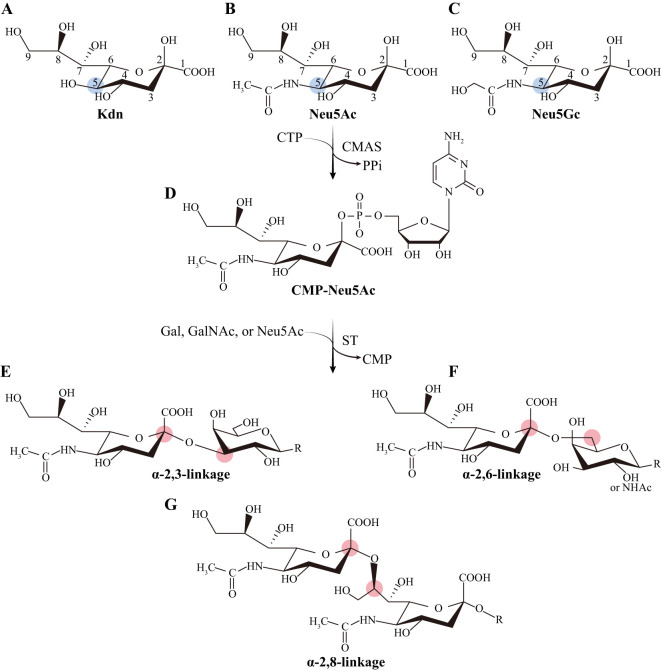
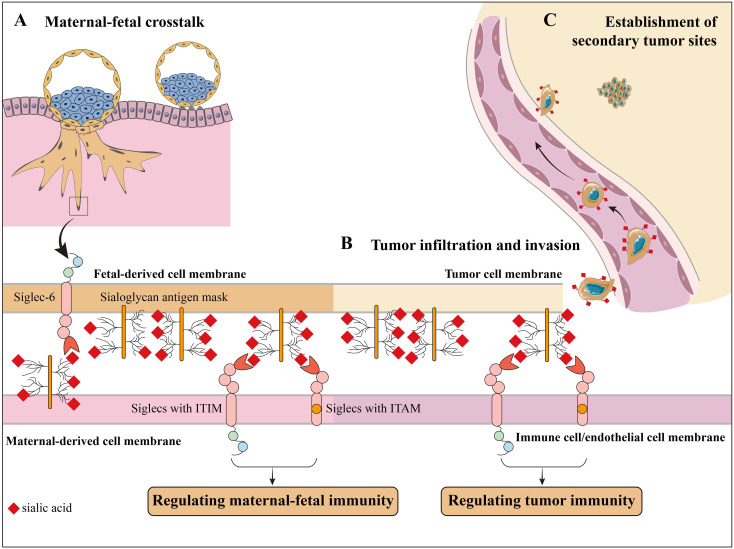
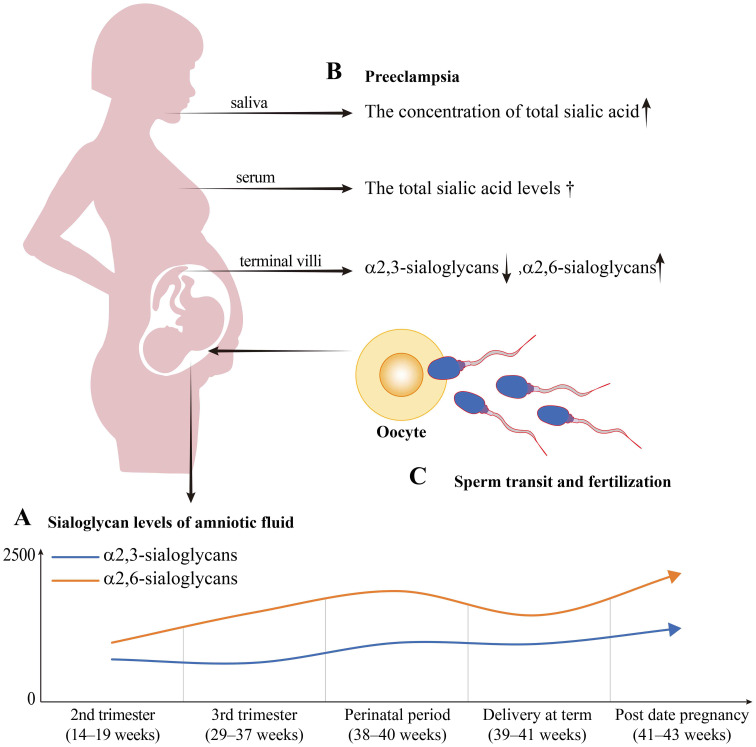
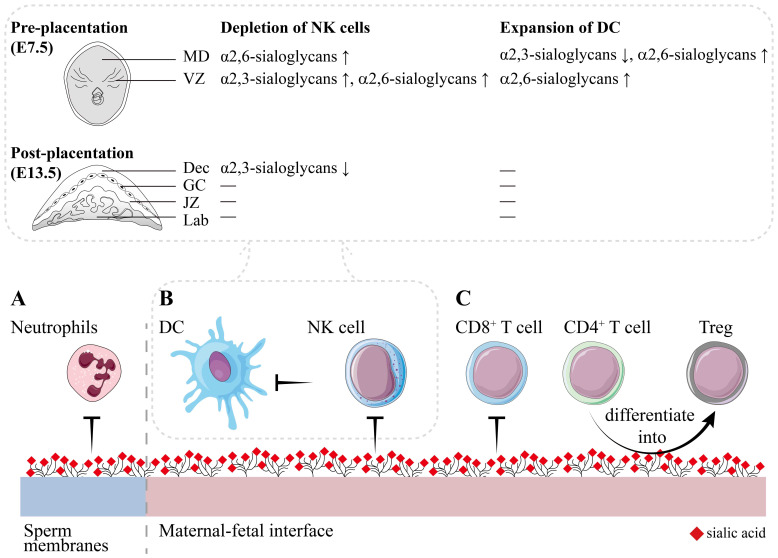
Sialylation is a typical final step of glycosylation, which is a prevalent post-translational modification of proteins. Sialoglycans, the products of sialylation, are located on the outmost of cells and participate in pivotal biological processes. They have been identified as glyco-immune checkpoints and are currently under rigorous investigation in the field of tumor research. It is noteworthy that the exploration of sialoglycans in tumor and pregnancy contexts was both initiated in the 1960s. Mechanisms in these two conditions exhibit similarities. Trophoblast infiltration during pregnancy gets controlled, while tumor invasion is uncontrolled. The maternal-fetal immunotolerance balances acceptance of the semiallogeneic fetus and resistance against "non-self" antigen attack simultaneously. Tumors mask themselves with sialoglycans as "don't eat me" signals to escape immune surveillance. The trophoblastic epithelium is covered with sialoglycans, which have been demonstrated to play an immune regulatory role throughout the entire pregnancy. Immune abnormalities are commonly recognized as an important reason for miscarriages. Therapeutic strategies that desialylation and targeting receptors of sialoglycans have been studied in tumors, while agents that target glyco-immune checkpoints have not been studied in pregnancy. Thus, investigating the roles of sialoglycans in pregnancy and their intersection with tumors may facilitate the development of novel therapies targeting glyco-immune checkpoints for the treatment of pregnancy-related diseases, such as miscarriage and preeclampsia.
唾液酸化是糖基化的典型终末步骤,而糖基化是蛋白质普遍存在的翻译后修饰。唾液酸化的产物唾液酸聚糖位于细胞最外层,参与关键的生物学过程。它们已被确定为糖免疫检查点,目前在肿瘤研究领域正受到严格研究。值得注意的是,对肿瘤和妊娠背景下唾液酸聚糖的探索均始于20世纪60年代。这两种情况下的机制存在相似之处。妊娠期间滋养层细胞浸润受到控制,而肿瘤侵袭不受控制。母胎免疫耐受同时平衡对半同种异体胎儿的接受和对“非自身”抗原攻击的抵抗。肿瘤用唾液酸聚糖作为“别吃我”信号来掩盖自身,以逃避免疫监视。滋养层上皮覆盖有唾液酸聚糖,已证明其在整个妊娠过程中发挥免疫调节作用。免疫异常通常被认为是流产的重要原因。在肿瘤中已经研究了去唾液酸化和靶向唾液酸聚糖受体的治疗策略,而在妊娠中尚未研究靶向糖免疫检查点的药物。因此,研究唾液酸聚糖在妊娠中的作用及其与肿瘤的交叉点可能有助于开发针对糖免疫检查点的新型疗法,用于治疗与妊娠相关的疾病,如流产和先兆子痫。