Department of Medical Informatics, Medical School of Nantong University, Nantong, China.
Department of Information, The First Affiliated Hospital, Nanjing Medical University, Nanjing, China.
J Med Internet Res. 2022 Mar 16;24(3):e26634. doi: 10.2196/26634.
Gestational diabetes mellitus (GDM) is a common endocrine metabolic disease, involving a carbohydrate intolerance of variable severity during pregnancy. The incidence of GDM-related complications and adverse pregnancy outcomes has declined, in part, due to early screening. Machine learning (ML) models are increasingly used to identify risk factors and enable the early prediction of GDM.
The aim of this study was to perform a meta-analysis and comparison of published prognostic models for predicting the risk of GDM and identify predictors applicable to the models.
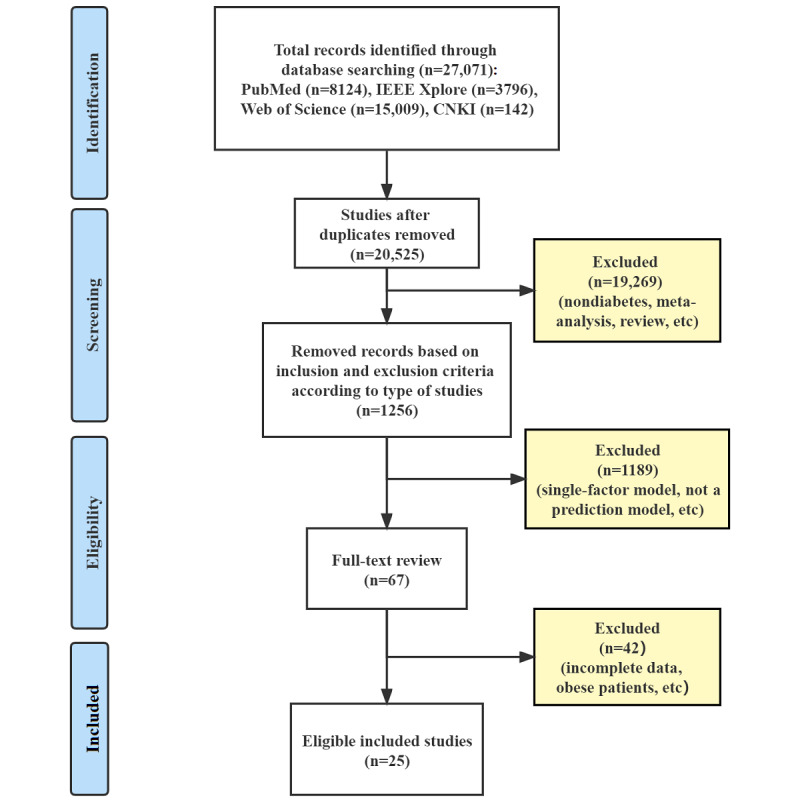
Four reliable electronic databases were searched for studies that developed ML prediction models for GDM in the general population instead of among high-risk groups only. The novel Prediction Model Risk of Bias Assessment Tool (PROBAST) was used to assess the risk of bias of the ML models. The Meta-DiSc software program (version 1.4) was used to perform the meta-analysis and determination of heterogeneity. To limit the influence of heterogeneity, we also performed sensitivity analyses, a meta-regression, and subgroup analysis.
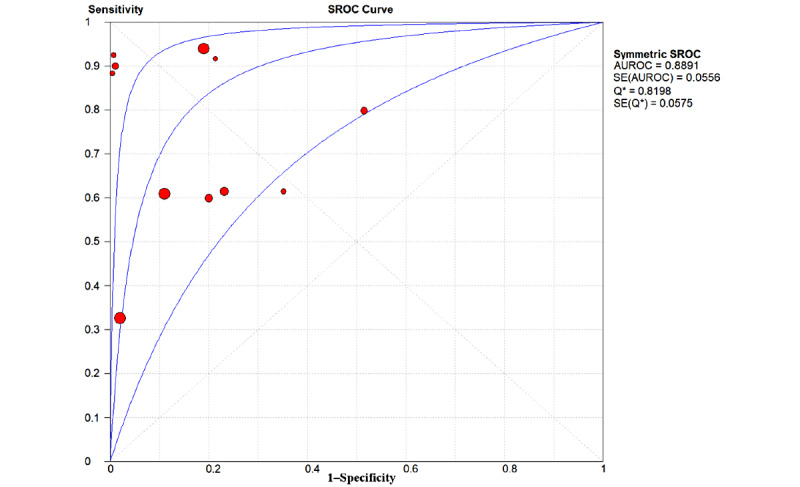
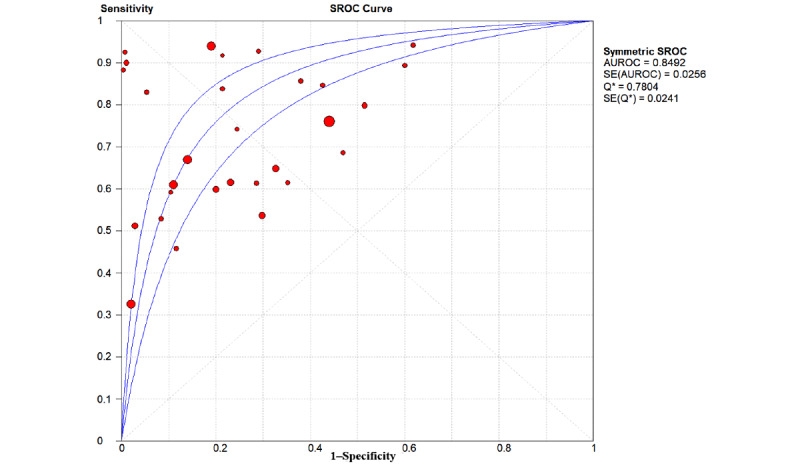
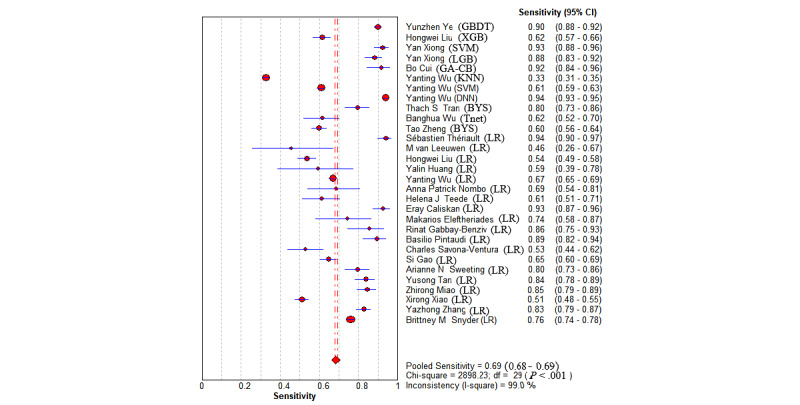
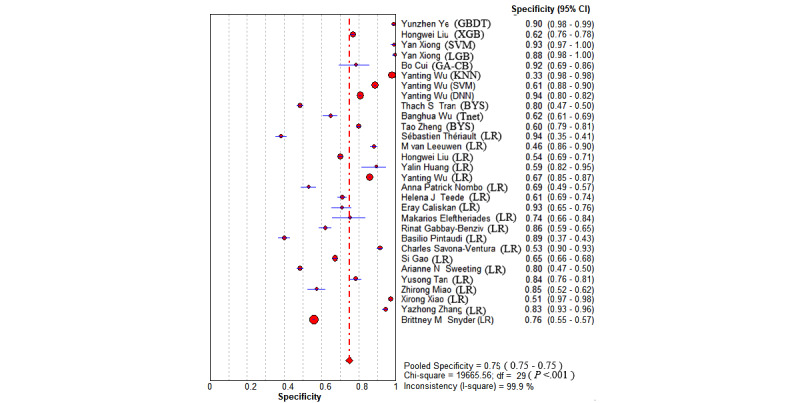
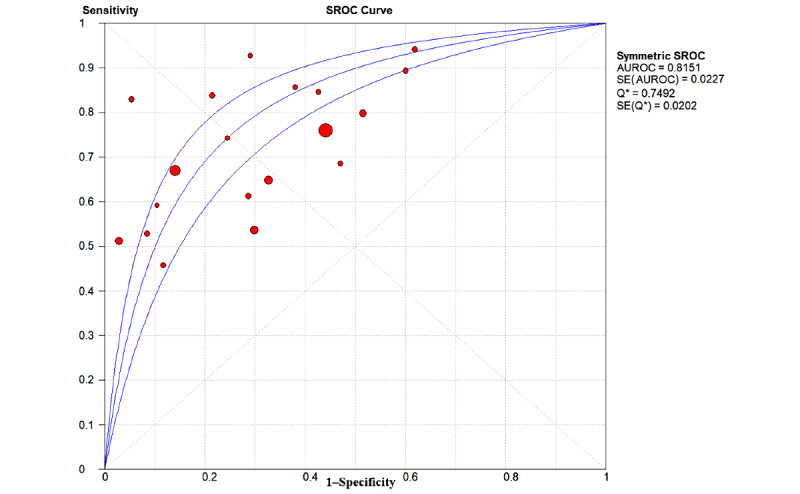
A total of 25 studies that included women older than 18 years without a history of vital disease were analyzed. The pooled area under the receiver operating characteristic curve (AUROC) for ML models predicting GDM was 0.8492; the pooled sensitivity was 0.69 (95% CI 0.68-0.69; P<.001; I=99.6%) and the pooled specificity was 0.75 (95% CI 0.75-0.75; P<.001; I=100%). As one of the most commonly employed ML methods, logistic regression achieved an overall pooled AUROC of 0.8151, while non-logistic regression models performed better, with an overall pooled AUROC of 0.8891. Additionally, maternal age, family history of diabetes, BMI, and fasting blood glucose were the four most commonly used features of models established by the various feature selection methods.
Compared to current screening strategies, ML methods are attractive for predicting GDM. To expand their use, the importance of quality assessments and unified diagnostic criteria should be further emphasized.
妊娠期糖尿病(GDM)是一种常见的内分泌代谢疾病,涉及到妊娠期间不同严重程度的碳水化合物不耐受。由于早期筛查,GDM 相关并发症和不良妊娠结局的发生率有所下降。机器学习(ML)模型越来越多地用于识别危险因素,并实现 GDM 的早期预测。
本研究旨在对发表的用于预测 GDM 风险的预测模型进行荟萃分析和比较,并确定适用于这些模型的预测因素。
我们在四个可靠的电子数据库中搜索了用于一般人群(而非高危人群)中 GDM 的 ML 预测模型的研究。我们使用新颖的预测模型风险偏倚评估工具(PROBAST)来评估 ML 模型的偏倚风险。我们使用 Meta-DiSc 软件程序(版本 1.4)进行荟萃分析和异质性的确定。为了限制异质性的影响,我们还进行了敏感性分析、元回归和亚组分析。
我们分析了 25 项共纳入 18 岁以上无重大疾病史的女性的研究。用于预测 GDM 的 ML 模型的汇总接收器操作特征曲线(AUROC)为 0.8492;汇总敏感性为 0.69(95%CI 0.68-0.69;P<.001;I=99.6%),汇总特异性为 0.75(95%CI 0.75-0.75;P<.001;I=100%)。作为最常用的 ML 方法之一,逻辑回归的总体汇总 AUROC 为 0.8151,而非逻辑回归模型的表现更好,总体汇总 AUROC 为 0.8891。此外,产妇年龄、糖尿病家族史、BMI 和空腹血糖是各种特征选择方法建立的模型中最常用的四个特征。
与当前的筛查策略相比,ML 方法在预测 GDM 方面具有吸引力。为了扩大其应用,应进一步强调质量评估和统一诊断标准的重要性。