Department of Medicine, Koc University School of Medicine, Istanbul, Turkey.
Associazione Nefrologica Gabriella Sebastio, Martina Franca, Italy.
J Nephrol. 2022 Apr;35(3):795-805. doi: 10.1007/s40620-022-01296-y. Epub 2022 Mar 16.
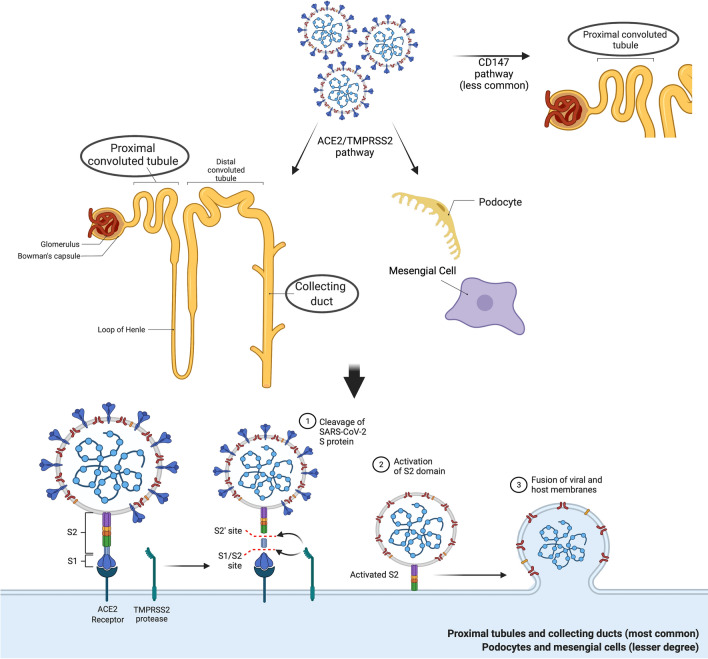
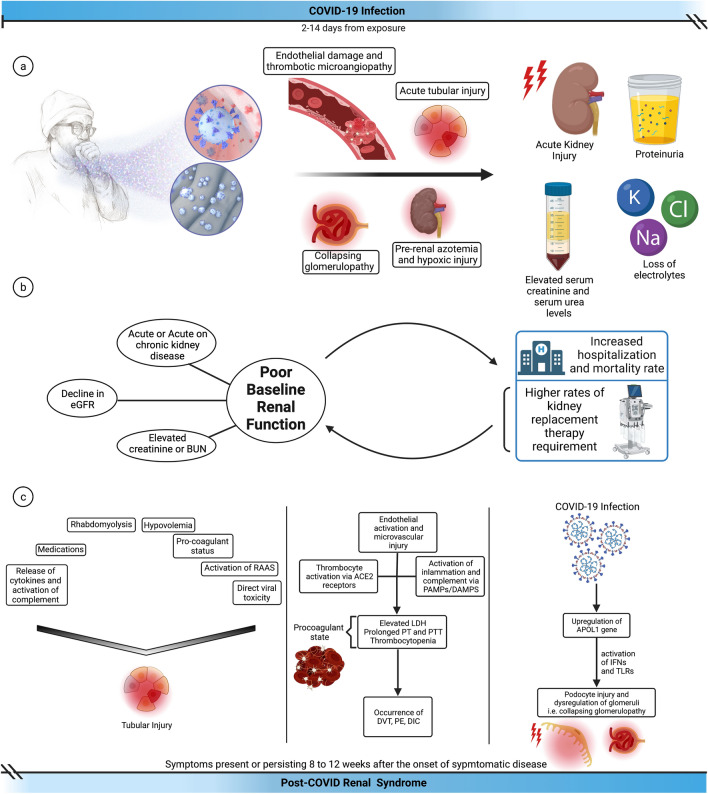
COVID-19, a disease caused by a novel coronavirus (SARS-CoV-2), is a major global threat that has turned into a pandemic. Despite the emergence of multiple vaccination alternatives and developing therapeutic options, dramatic short- and long-term clinical outcomes have been recorded with more than 250 million infected people and over 5 million deaths as of November 2021. COVID-19 presents various respiratory, cardiovascular, neuropsychiatric, musculoskeletal and kidney features during the acute phase; nevertheless, renal involvement in the post-infection period has recently been emphasized. The present review aims to evaluate the growing literature on kidney involvement in the SARS-CoV-2 infection along with clinical features reported both in the acute phase of the infection and in the post-acute COVID-19 period by assessing potential pathophysiological frameworks explaining such conditions. Chronic kidney disease and development of acute kidney injury (AKI) in the course of initial hospitalization are associated with high mortality and morbidity rates. Moreover, growing evidence suggests a decline in renal function in the 6-to-12-month follow-up period even in patients without any signs of AKI during the acute phase. Despite such concerns there are no guidelines regulating the follow-up period or therapeutic alternatives for such patient population. In conclusion, the burden of COVID-19 on the kidney is yet to be determined. Future prospective large scale studies are needed with long follow-up periods assessing kidney involvement via multiple parameters such as biopsy studies, urinalysis, measurement of serum creatinine and cystatin C, directly measured glomerular filtration rate, and assessment of tubular function via urinary β-microglobulin measurements.
新型冠状病毒(SARS-CoV-2)引起的 COVID-19 是一种重大的全球威胁,已发展为大流行。尽管出现了多种疫苗选择和治疗方法,但截至 2021 年 11 月,已有超过 2.5 亿人感染,超过 500 万人死亡,这表明其具有明显的短期和长期临床结局。COVID-19 在急性期具有多种呼吸道、心血管、神经精神、肌肉骨骼和肾脏特征;然而,最近人们强调了感染后肾脏的受累。本综述旨在评估关于 SARS-CoV-2 感染中肾脏受累的不断增长的文献,以及在感染急性期和急性 COVID-19 后期间报告的临床特征,同时评估解释这些情况的潜在病理生理框架。慢性肾脏病和急性肾损伤(AKI)在初始住院期间的发展与高死亡率和发病率相关。此外,越来越多的证据表明,即使在急性期没有任何 AKI 迹象的患者中,肾功能也会在 6 至 12 个月的随访期间下降。尽管存在这些担忧,但对于此类患者人群,尚无规范的随访期或治疗选择的指南。总之,COVID-19 对肾脏的影响尚未确定。需要未来进行前瞻性的大规模研究,通过活检研究、尿液分析、血清肌酐和胱抑素 C 测量、直接测量肾小球滤过率以及通过尿β-微球蛋白测量评估肾小管功能等多个参数来评估肾脏受累情况,并进行长期随访。