Mariano Stefania, Tacconi Stefano, Fidaleo Marco, Rossi Marco, Dini Luciana
Department of Biological and Environmental Science and Technology, University of Salento, Lecce, Italy.
Department of Biology and Biotechnology "Charles Darwin", Sapienza University of Rome, Rome, Italy.
Front Toxicol. 2021 Feb 26;3:636640. doi: 10.3389/ftox.2021.636640. eCollection 2021.
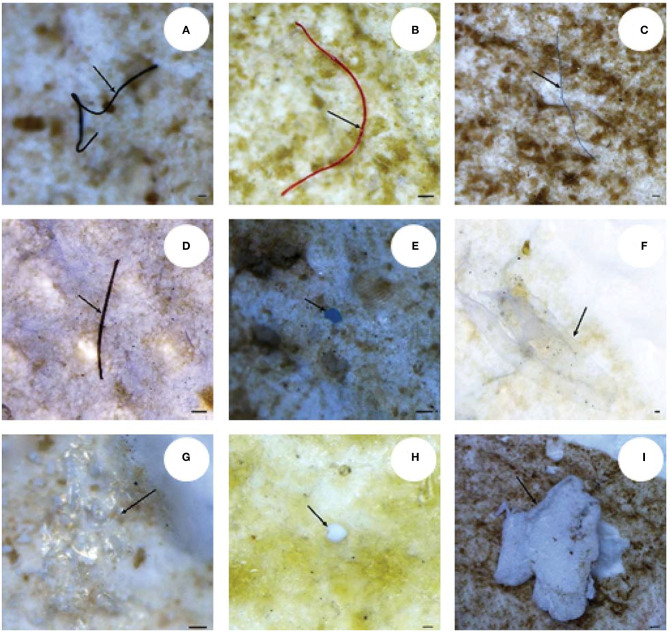
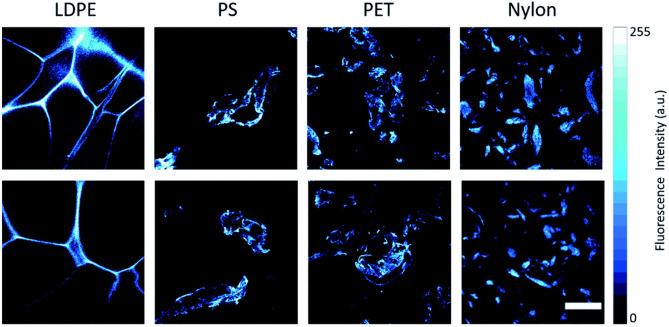
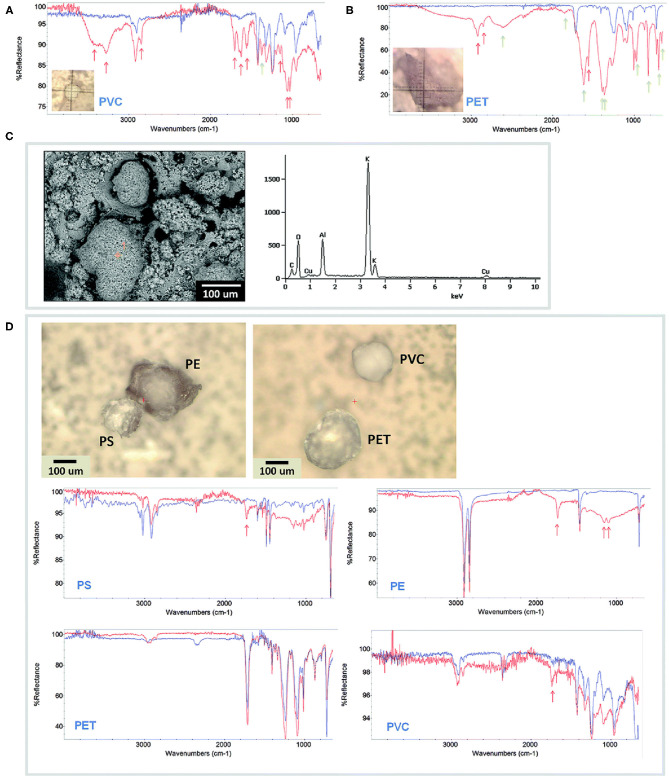
Micro and nanoplastics are fragments with dimensions less than a millimeter invading all terrestrial and marine environments. They have become a major global environmental issue in recent decades and, indeed, recent scientific studies have highlighted the presence of these fragments all over the world even in environments that were thought to be unspoiled. Analysis of micro/nanoplastics in isolated samples from abiotic and biotic environmental matrices has become increasingly common. Hence, the need to find valid techniques to identify these micro and nano-sized particles. In this review, we discuss the current and potential identification methods used in microplastic analyses along with their advantages and limitations. We discuss the most suitable techniques currently available, from physical to chemical ones, as well as the challenges to enhance the existing methods and develop new ones. Microscopical techniques (i.e., dissect, polarized, fluorescence, scanning electron, and atomic force microscopy) are one of the most used identification methods for micro/nanoplastics, but they have the limitation to produce incomplete results in analyses of small particles. At present, the combination with chemical analysis (i.e., spectroscopy) overcome this limit together with recently introduced alternative approaches. For example, holographic imaging in microscope configuration images microplastics directly in unfiltered water, thus discriminating microplastics from diatoms and differentiates different sizes, shapes, and plastic types. The development of new analytical instruments coupled with each other or with conventional and innovative microscopy could solve the current problems in the identification of micro/nanoplastics.
微塑料和纳米塑料是尺寸小于一毫米的碎片,它们侵入了所有陆地和海洋环境。在最近几十年里,它们已成为一个重大的全球环境问题。事实上,最近的科学研究已经凸显出这些碎片在世界各地都存在,甚至在那些被认为未受破坏的环境中也是如此。对来自非生物和生物环境基质的分离样本中的微塑料/纳米塑料进行分析已变得越来越普遍。因此,需要找到有效的技术来识别这些微米级和纳米级的颗粒。在这篇综述中,我们讨论了目前在微塑料分析中使用的以及潜在的识别方法,以及它们的优缺点。我们讨论了目前可用的最合适的技术,从物理技术到化学技术,以及改进现有方法和开发新方法所面临的挑战。显微镜技术(即解剖显微镜、偏光显微镜、荧光显微镜、扫描电子显微镜和原子力显微镜)是微塑料/纳米塑料最常用的识别方法之一,但它们在分析小颗粒时存在产生不完整结果的局限性。目前,与化学分析(即光谱学)相结合以及最近引入的替代方法克服了这一局限性。例如,显微镜配置下的全息成像可直接对未过滤水中的微塑料成像,从而将微塑料与硅藻区分开来,并区分不同的尺寸、形状和塑料类型。相互结合或与传统及创新显微镜相结合的新型分析仪器的开发,有望解决当前微塑料/纳米塑料识别方面的问题。