Guedes Sandra, Bricout Hélène, Langevin Edith, Tong Sabine, Bertrand-Gerentes Isabelle
Sanofi Pasteur, 14 Espace Henry Vallée, 69007, Lyon, France.
Sanofi, Chilly-Mazarin, France.
BMC Public Health. 2022 Mar 17;22(1):521. doi: 10.1186/s12889-022-12933-3.
Invasive meningococcal disease (IMD) causes high fatality in untreated patients alongside long-term sequelae in 20% survivors. For a comprehensive assessment of epidemiology, an analysis of these sequelae is required. This study aims to investigate the epidemiology of disease between 2008 and 2017 including a description of the sequelae, through the analysis of data collected from the UK Clinical Practice Research Datalink (CPRD) linked with data from the Hospital Episode Statistics (HES), and Office for National Statistics (ONS) mortality registry data.
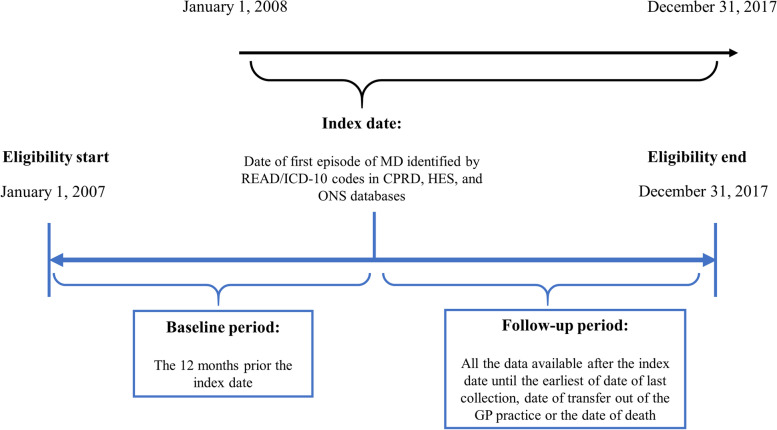
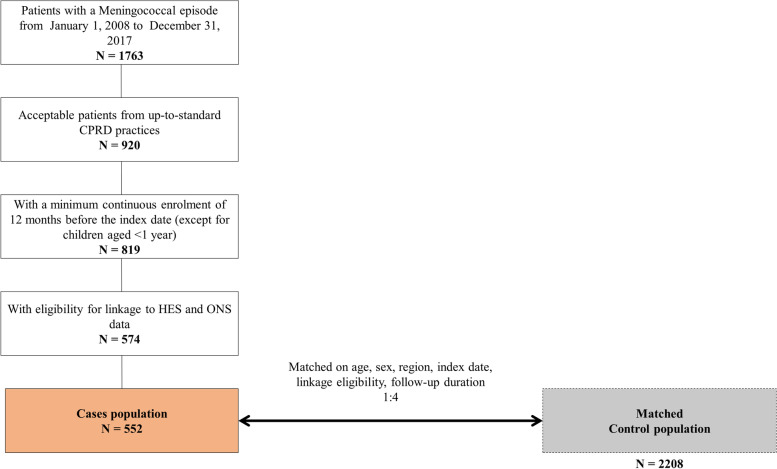
This was a 10-year retrospective observational cohort study designed to describe the incidence, case-fatality rate (CFR) and occurrence of sequelae due to meningococcal disease, in the UK between 2007 and 2017 using data from the UK CPRD-HES-ONS. Cases were identified and matched on age, gender, date of diagnosis of IMD and followed-up-time with a control group without IMD. Demographics, clinical characteristics, mortality, and IMD-related sequelae were examined for IMD cases and compared with matched controls for a more comprehensive assessment.
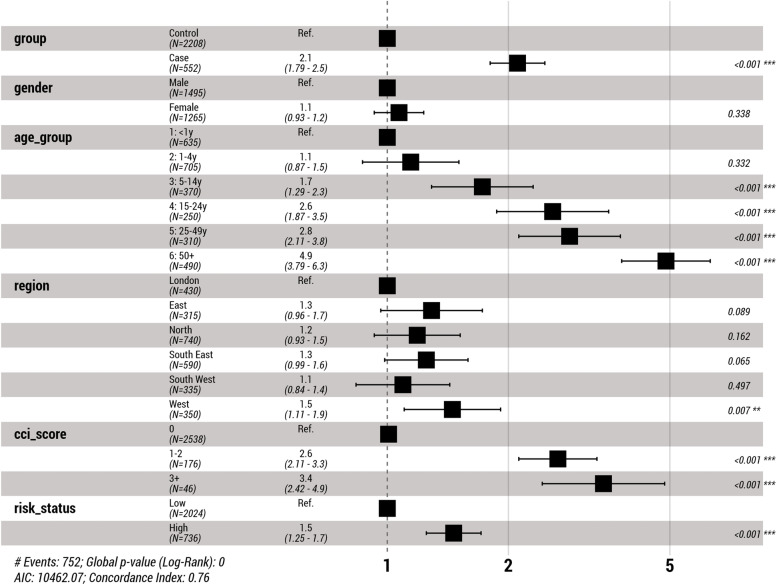
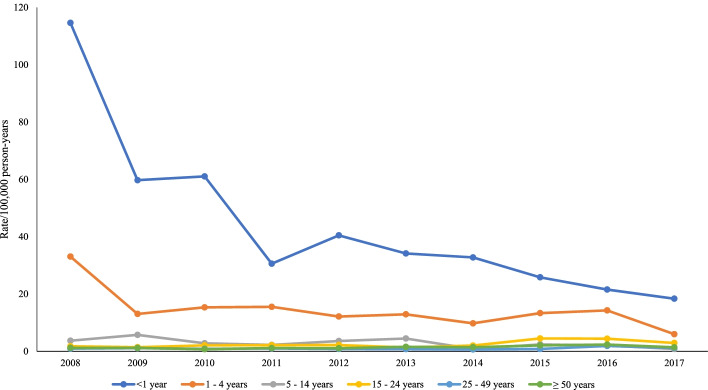
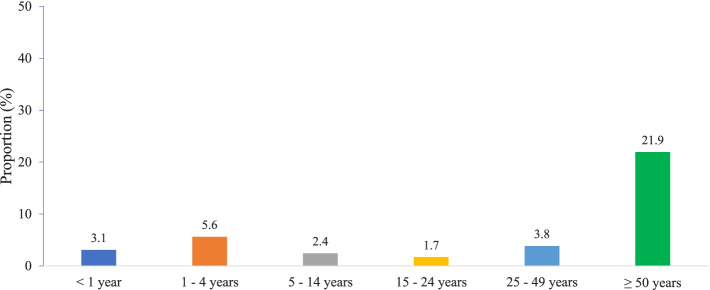
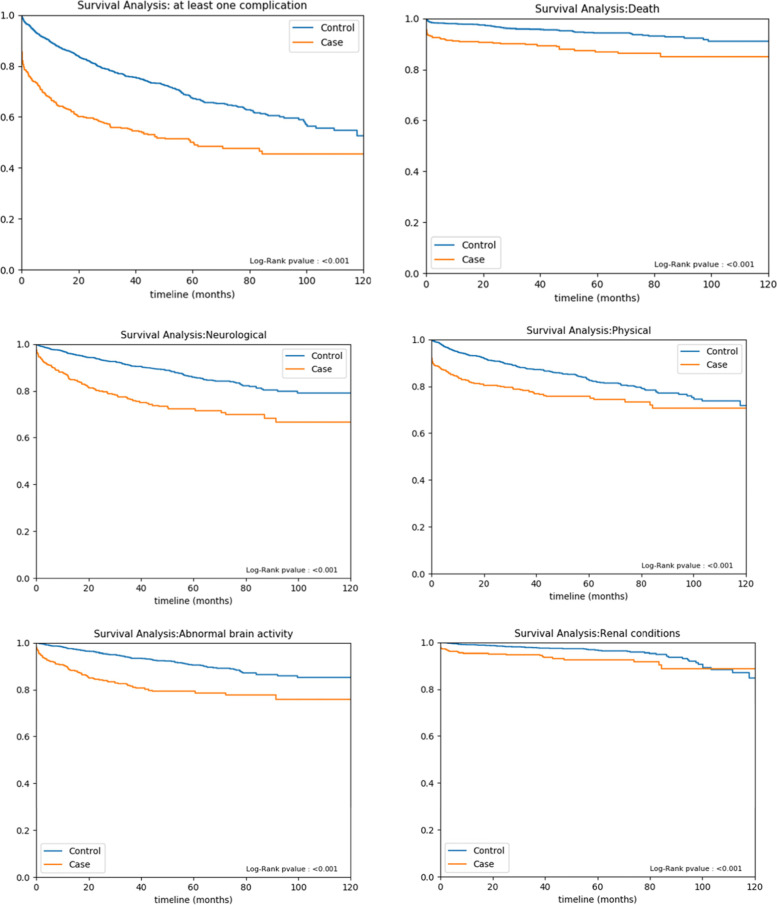
The study analysed 640 IMD patients with majority of the cases diagnosed (76.9%) in a hospital setting. Age-group analysis showed a decrease in the incidence rate of IMD in patients aged <1 year (30.4 - 7.5%) and an increase in those >50 years (10.4 - 27.8%). CFR was slightly higher among females, toddlers, and adults >50 years. No significant change in CFR was observed over study period. Case-control study showed a higher number of IMD sequelae among cases compared to age- and gender-matched controls, especially in those ≥ 50 years.
The study showed that, despite a relatively low incidence rate, IMD is responsible for a high CFR, namely in older age groups and by a high number of IMD sequelae. The study showed that leveraging data from existing databases can be used to complement surveillance data in truly assessing the epidemiology of IMD. Despite the availability of routine vaccination programs, IMD still poses a significant burden in the healthcare system of the UK. Optimization of vaccination programs may be required to reduce the disease burden.
侵袭性脑膜炎球菌病(IMD)在未经治疗的患者中会导致高死亡率,并且在20%的幸存者中会引发长期后遗症。为了对流行病学进行全面评估,需要对这些后遗症进行分析。本研究旨在通过分析从英国临床实践研究数据链(CPRD)收集的数据,并将其与医院 Episode 统计数据(HES)和国家统计局(ONS)死亡率登记数据相结合,调查2008年至2017年期间该疾病的流行病学情况,包括对后遗症的描述。
这是一项为期10年的回顾性观察队列研究,旨在利用英国CPRD - HES - ONS的数据描述2007年至2017年期间英国脑膜炎球菌病的发病率、病死率(CFR)和后遗症的发生情况。确定病例并根据年龄、性别、IMD诊断日期和随访时间与无IMD的对照组进行匹配。对IMD病例的人口统计学、临床特征、死亡率和与IMD相关的后遗症进行检查,并与匹配的对照组进行比较,以进行更全面的评估。
该研究分析了640例IMD患者,其中大多数病例(76.9%)在医院环境中被诊断。年龄组分析显示,<1岁患者的IMD发病率下降(30.4% - 7.5%),而>50岁患者的发病率上升(10.4% - 27.8%)。女性、幼儿和>50岁的成年人的CFR略高。在研究期间未观察到CFR有显著变化。病例对照研究显示,与年龄和性别匹配的对照组相比,病例中的IMD后遗症数量更多,尤其是在≥50岁的人群中。
该研究表明,尽管发病率相对较低,但IMD导致了高CFR,特别是在老年人群中,并且会引发大量IMD后遗症。该研究表明,利用现有数据库的数据可用于补充监测数据,以真正评估IMD的流行病学情况。尽管有常规疫苗接种计划,但IMD在英国医疗保健系统中仍然构成重大负担。可能需要优化疫苗接种计划以减轻疾病负担。