Cardiovascular Division, Department of Medicine, School of Medicine, University of Minnesota, Minneapolis, MN, USA.
Division of Epidemiology and Community Health, School of Public Health, University of Minnesota, Minneapolis, MN, USA.
J Hum Hypertens. 2023 Mar;37(3):197-204. doi: 10.1038/s41371-022-00669-x. Epub 2022 Mar 16.
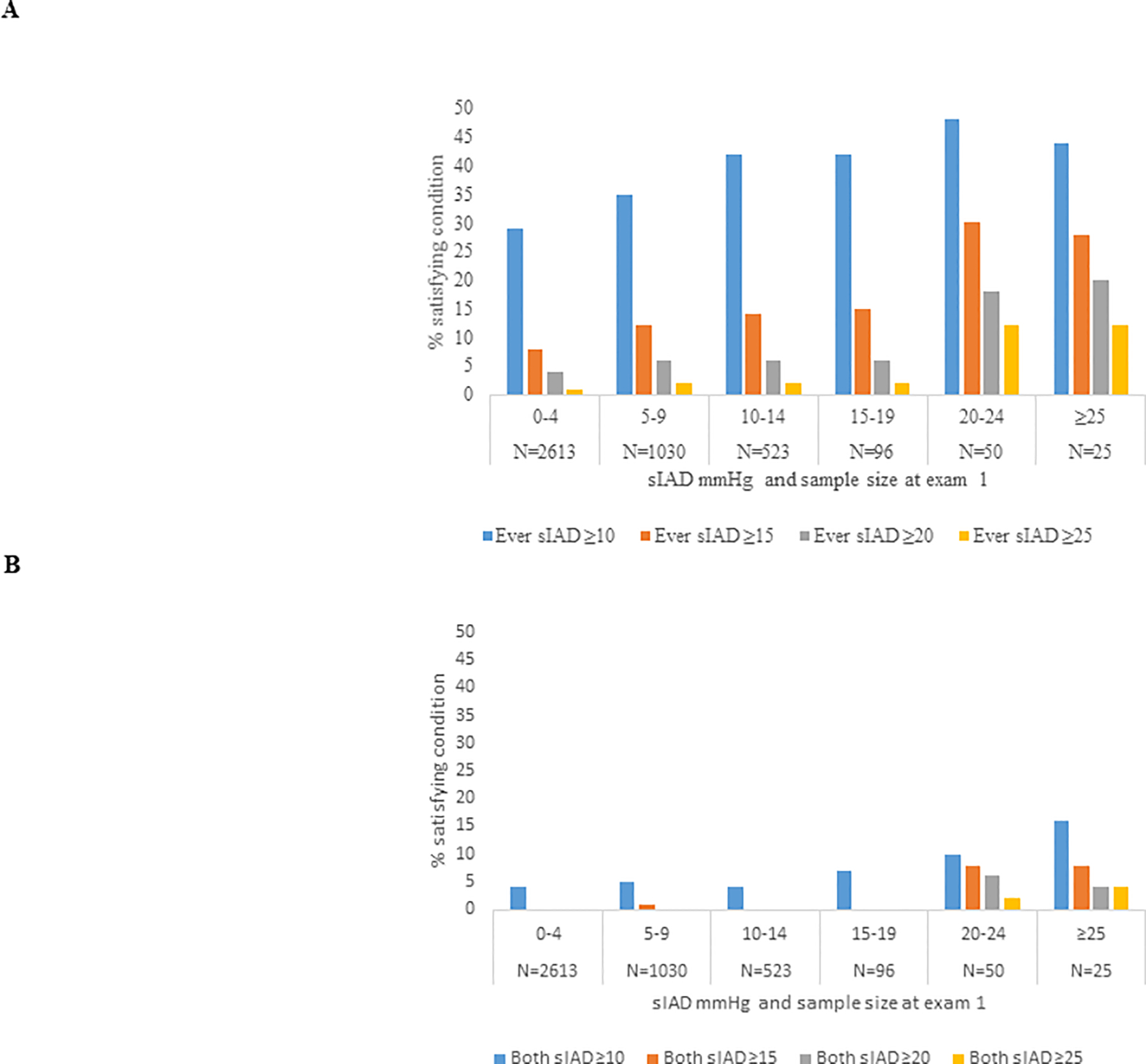
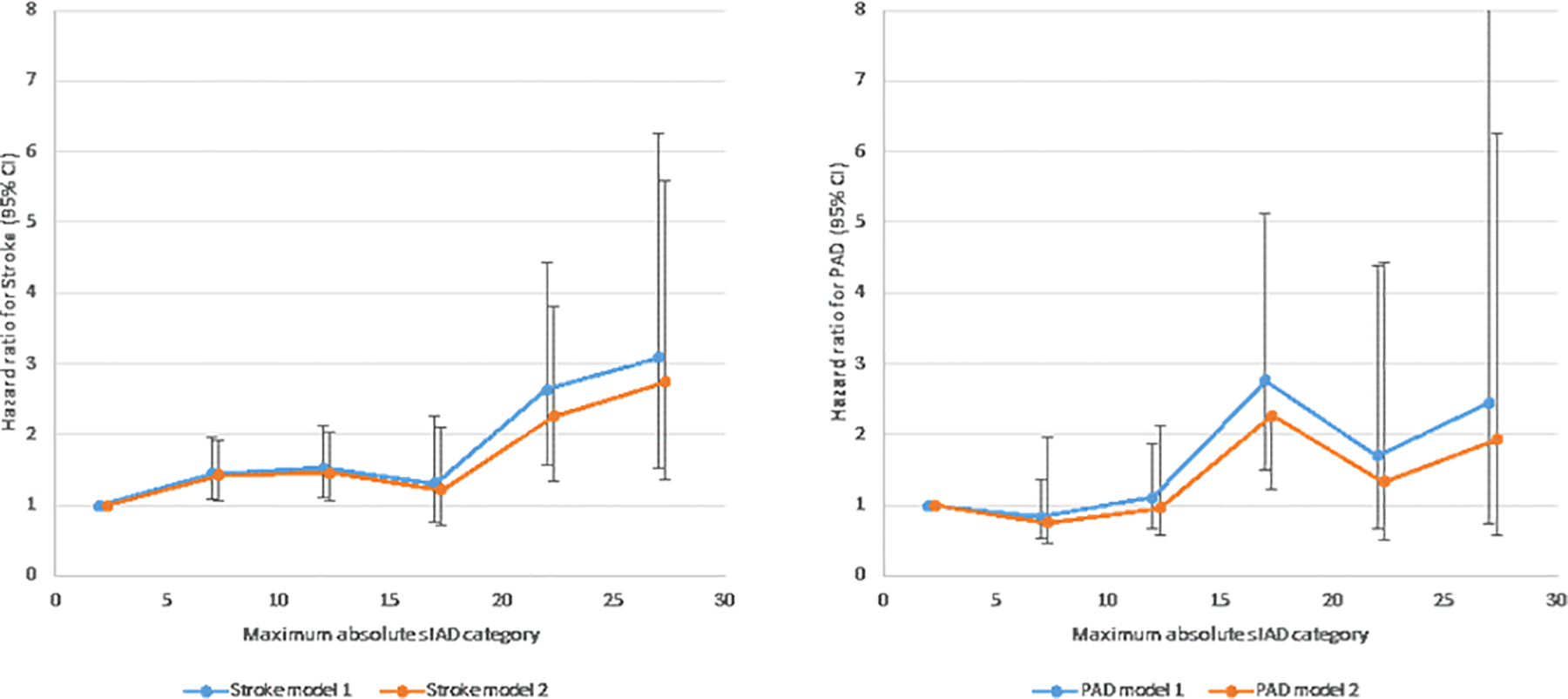
We investigated inter-arm systolic blood pressure (sIAD) difference, reproducibility, and incident cardiovascular disease (CVD). We hypothesized that higher sIAD values have low prevalence and nonpersistence over years, but that CVD risk is higher starting from the time of first high absolute sIAD. In Multi-Ethnic Study of Atherosclerosis participants (n = 6725, 53% female, 45-84 years old), Doppler systolic blood pressure (SBP) measurements were made in both arms (10-minute interval) thrice over 9.5 years. Proportional hazards for CVD (coronary heart disease, heart failure, stroke, peripheral arterial disease (PAD)) over 16.4 years were tested according to time-varying absolute inter-arm difference with covariates: (1) age, gender, race, and clinic; (2) model 1 plus height, heart rate, BP, antihypertensives, BMI, smoking status, lipids, lipid lowering medication, and diabetes. High sIAD was not persistent across exams. Maximum absolute sIAD ≥ 15 mmHg was found at least once in 815 persons. Maximum absolute sIAD had a graded relationship with incident stroke or PAD: 6.2% events; model 2 hazard ratio per 10 mmHg 1.34 (95% CI, 1.15-1.56) and this risk was approximately doubled for maximum absolute sIAD ≥ 15 mmHg vs 0-4 mmHg. Total CVD risk (18.4% events) was increased only for maximum absolute sIAD ≥25 mmHg. Associations with incident CVD did not differ for higher SBP in left vs right arm. A higher maximum absolute sIAD at any exam was associated with greater risk for stroke and PAD especially for values ≥ 15 mmHg, and ≥25 mmHg for other CVD. Measuring SBP between arms may help identify individuals at risk for CVD.
我们研究了双臂收缩压(sIAD)差异、可重复性和心血管疾病(CVD)的发病情况。我们假设较高的 sIAD 值具有较低的患病率和多年来的非持续性,但从首次出现较高绝对 sIAD 开始,CVD 风险更高。在多民族动脉粥样硬化研究参与者中(n=6725,女性占 53%,年龄 45-84 岁),在 9.5 年内进行了三次 10 分钟间隔的双臂多普勒收缩压(SBP)测量。根据随时间变化的绝对臂间差异和协变量(1)年龄、性别、种族和诊所;(2)模型 1 加身高、心率、BP、抗高血压药、BMI、吸烟状态、血脂、降脂药物和糖尿病,测试了 16.4 年内 CVD(冠心病、心力衰竭、中风、外周动脉疾病(PAD))的比例风险。高 sIAD 在整个检查过程中并不持续。在 815 人中至少有一次发现最大绝对 sIAD≥15mmHg。最大绝对 sIAD 与中风或 PAD 的发病呈梯度关系:6.2%的事件;每增加 10mmHg 的模型 2 风险比为 1.34(95%CI,1.15-1.56),最大绝对 sIAD≥15mmHg 与 0-4mmHg 相比,风险增加近一倍。只有最大绝对 sIAD≥25mmHg 时,总 CVD 风险(18.4%的事件)才会增加。左、右臂较高 SBP 与 CVD 发病的相关性无差异。任何检查中最高绝对 sIAD 值越高,与中风和 PAD 的风险越大,尤其是对于≥15mmHg 的值,对于其他 CVD,最高绝对 sIAD 值≥25mmHg。测量臂间 SBP 可能有助于识别 CVD 风险较高的个体。