Newcastle University, Biosciences Institute, Faculty of Medical Sciences, Newcastle upon Tyne, UK.
Newcells Biotech, Biosphere, Newcastle Helix, Newcastle upon Tyne, UK.
Stem Cells Transl Med. 2022 Mar 17;11(2):159-177. doi: 10.1093/stcltm/szab010.
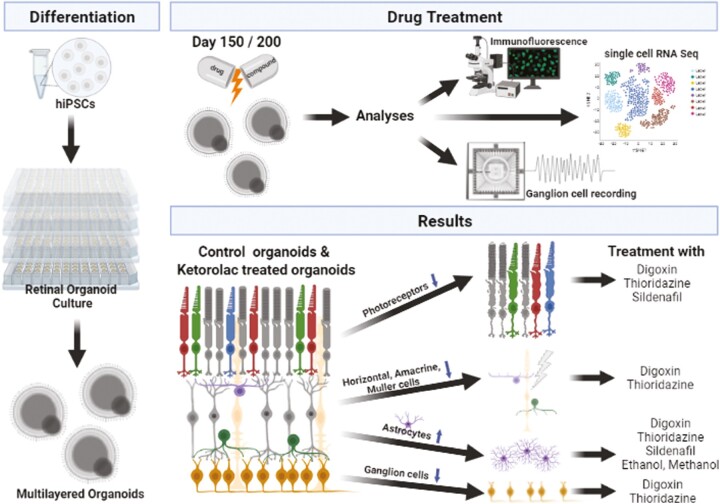
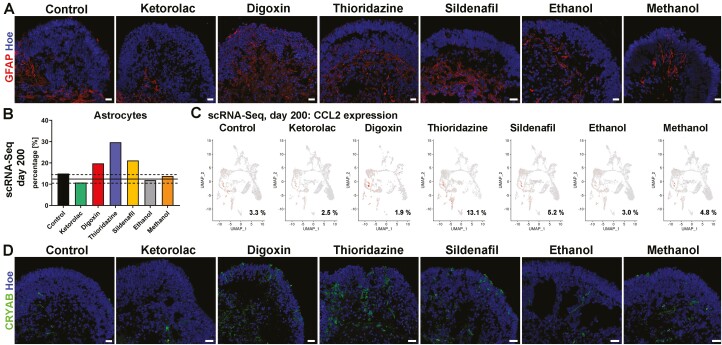
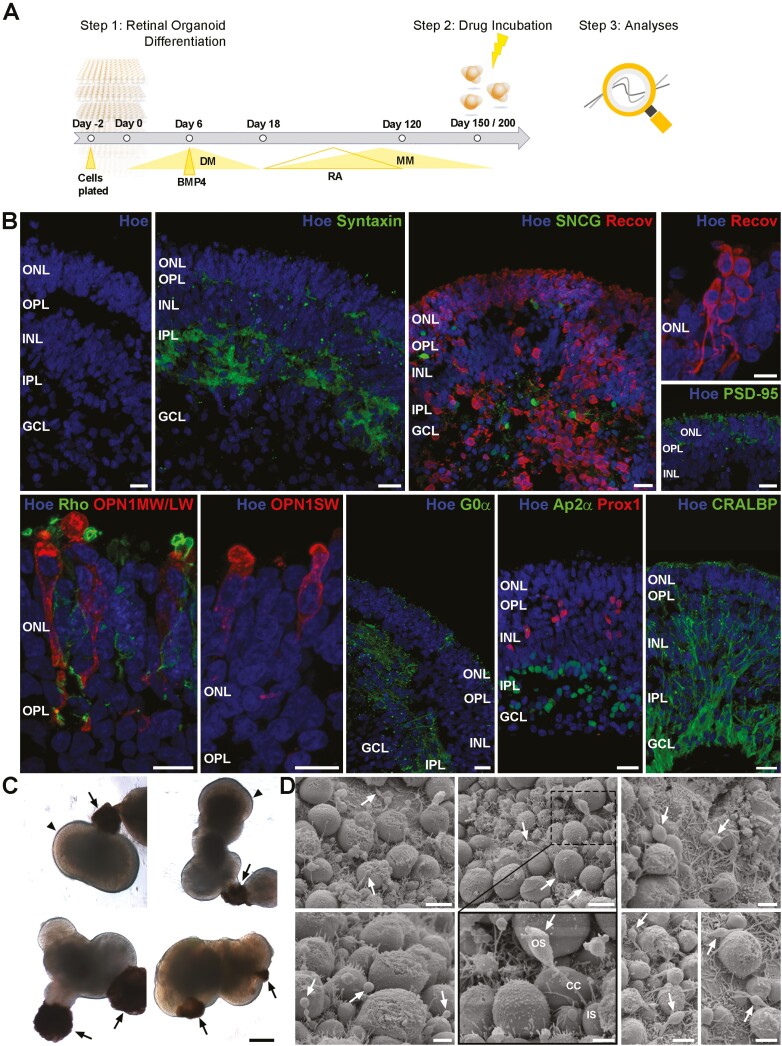
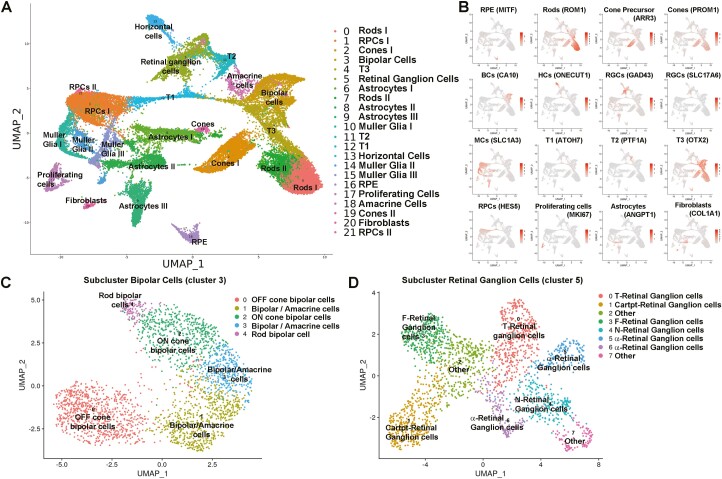
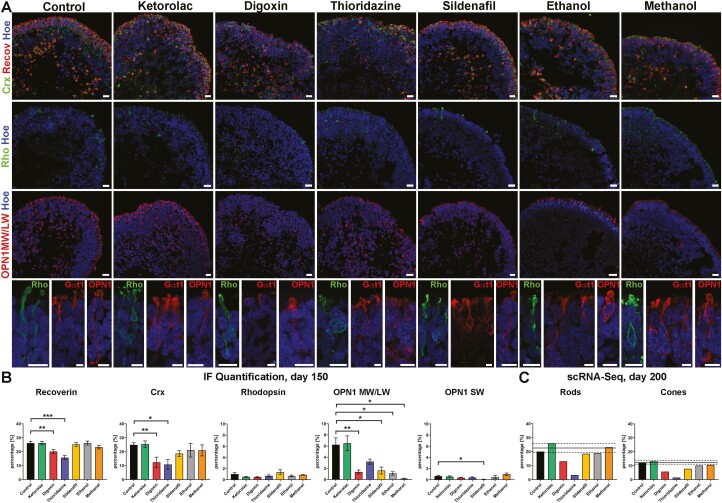
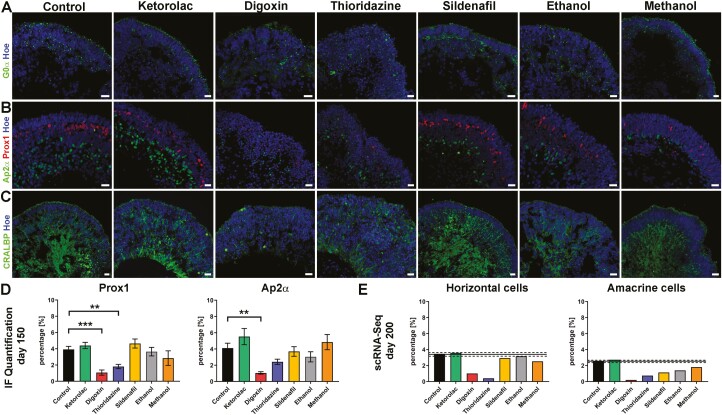
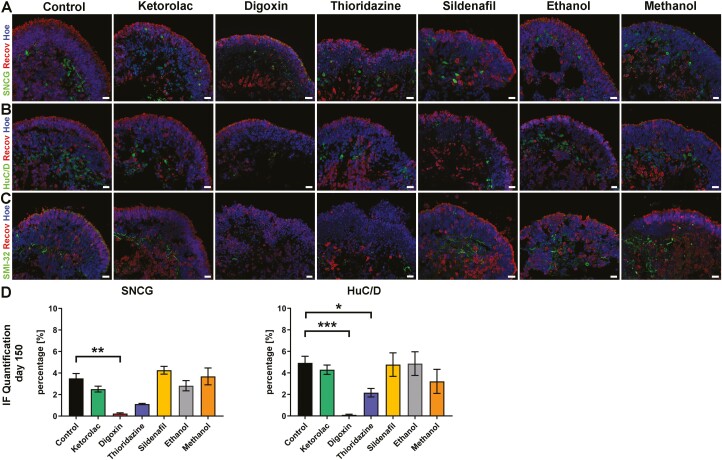
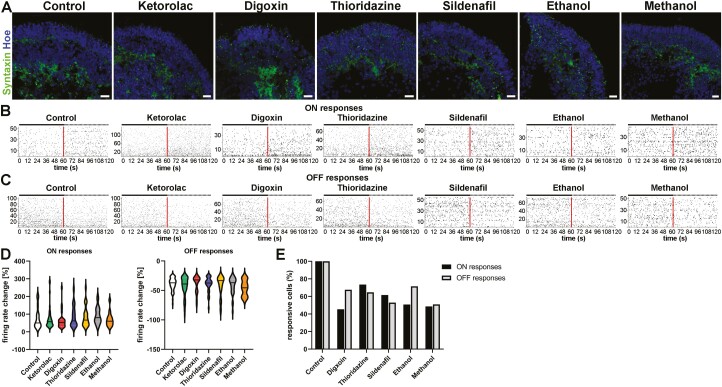
Retinal drug toxicity screening is essential for the development of safe treatment strategies for a large number of diseases. To this end, retinal organoids derived from human pluripotent stem cells (hPSCs) provide a suitable screening platform due to their similarity to the human retina and the ease of generation in large-scale formats. In this study, two hPSC cell lines were differentiated to retinal organoids, which comprised all key retinal cell types in multiple nuclear and synaptic layers. Single-cell RNA-Seq of retinal organoids indicated the maintenance of retinal ganglion cells and development of bipolar cells: both cell types segregated into several subtypes. Ketorolac, digoxin, thioridazine, sildenafil, ethanol, and methanol were selected as key compounds to screen on retinal organoids because of their well-known retinal toxicity profile described in the literature. Exposure of the hPSC-derived retinal organoids to digoxin, thioridazine, and sildenafil resulted in photoreceptor cell death, while digoxin and thioridazine additionally affected all other cell types, including Müller glia cells. All drug treatments caused activation of astrocytes, indicated by dendrites sprouting into neuroepithelium. The ability to respond to light was preserved in organoids although the number of responsive retinal ganglion cells decreased after drug exposure. These data indicate similar drug effects in organoids to those reported in in vivo models and/or in humans, thus providing the first robust experimental evidence of their suitability for toxicological studies.
视网膜药物毒性筛选对于开发大量疾病的安全治疗策略至关重要。为此,源自人类多能干细胞 (hPSC) 的视网膜类器官提供了一个合适的筛选平台,因为它们与人视网膜相似,并且易于大规模生成。在这项研究中,两种 hPSC 细胞系被分化为视网膜类器官,这些类器官包含多个核和突触层中的所有关键视网膜细胞类型。视网膜类器官的单细胞 RNA-Seq 表明维持了视网膜神经节细胞并发育出双极细胞:这两种细胞类型都分成了几个亚型。酮咯酸、地高辛、硫利达嗪、西地那非、乙醇和甲醇被选为在视网膜类器官上进行筛选的关键化合物,因为它们在文献中具有已知的视网膜毒性特征。地高辛、硫利达嗪和西地那非暴露于 hPSC 衍生的视网膜类器官中会导致光感受器细胞死亡,而地高辛和硫利达嗪还会影响所有其他细胞类型,包括 Müller 胶质细胞。所有药物处理都会导致星形胶质细胞激活,其树突状突入神经上皮。尽管药物暴露后对光有反应的视网膜神经节细胞数量减少,但类器官仍能保持对光的反应能力。这些数据表明,类器官中的药物作用与体内模型和/或人类报告的作用相似,从而为它们在毒理学研究中的适用性提供了第一个有力的实验证据。