Instituto de Biotecnología y Biología Molecular (IBBM), Universidad Nacional de La Plata-CONICET, La Plata, Argentina.
Instituto de Botánica del Nordeste (IBONE), Facultad de Ciencias Agrarias, Universidad Nacional del Nordeste-CONICET, Corrientes, Argentina.
Sci Rep. 2022 Mar 17;12(1):4591. doi: 10.1038/s41598-022-08720-0.
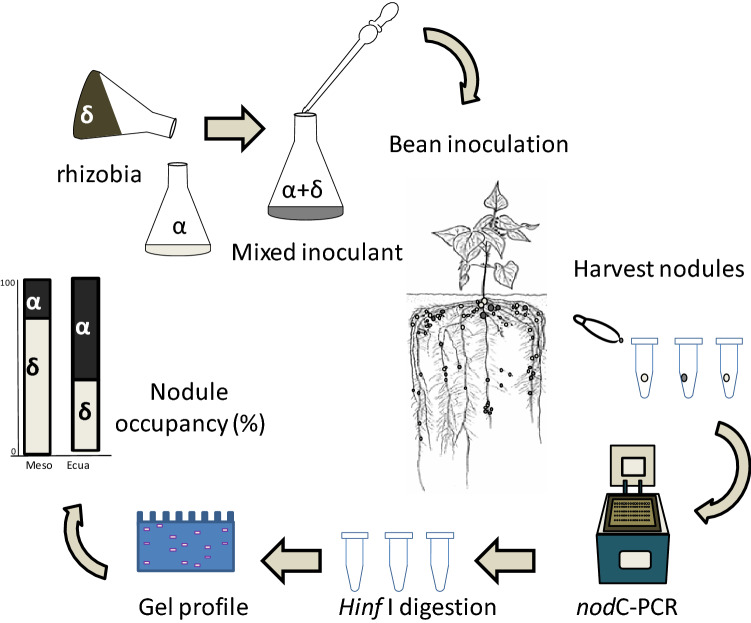
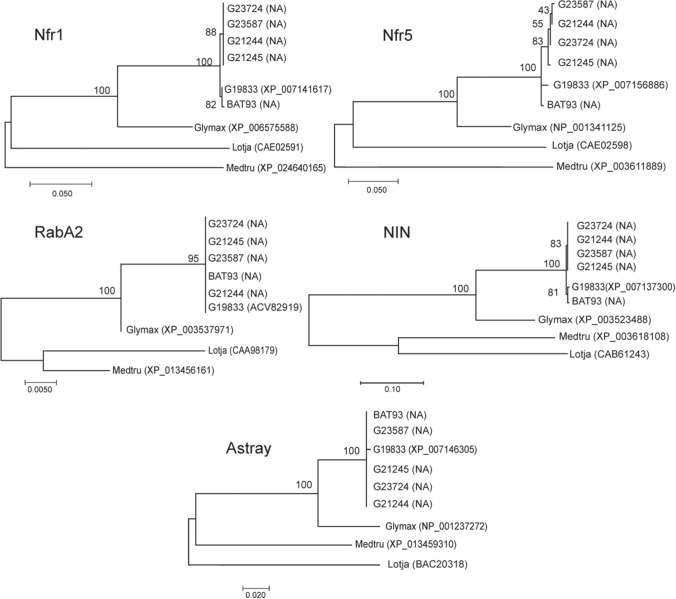
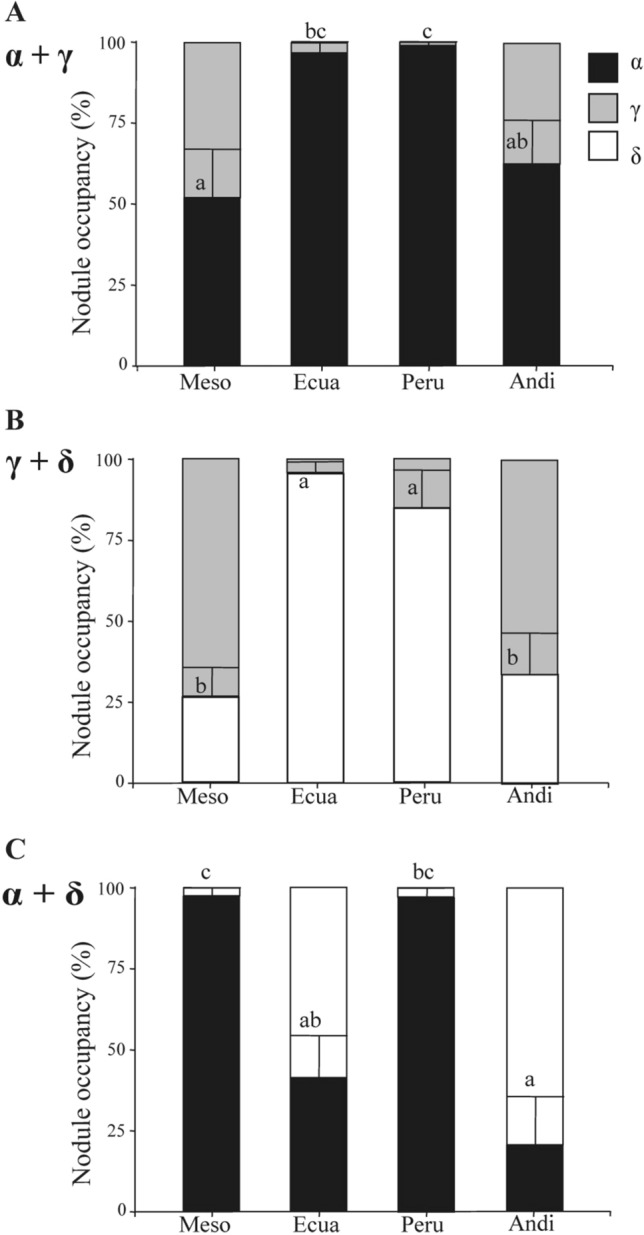
Phaseolus vulgaris (common bean), having a proposed Mexican origin within the Americas, comprises three centers of diversification: Mesoamerica, the southern Andes, and the Amotape-Huancabamba Depression in Peru-Ecuador. Rhizobium etli is the predominant rhizobium found symbiotically associated with beans in the Americasalthough closely related Rhizobium phylotypes have also been detected. To investigate if symbiosis between bean varieties and rhizobia evolved affinity, firstly nodulation competitiveness was studied after inoculation with a mixture of sympatric and allopatric rhizobial strains isolated from the respective geographical regions. Rhizobia strains harboring nodC types α and [Formula: see text], which were found predominant in Mexico and Ecuador, were comparable in nodule occupancy at 50% of each in beans from the Mesoamerican and Andean gene pools, but it is one of those two nodC types which clearly predominated in Ecuadorian-Peruvian beans as well as in Andean beans nodC type [Formula: see text] predominated the sympatric nodC type δ. The results indicated that those beans from Ecuador-Peru and Andean region, respectively exhibited no affinity for nodulation by the sympatric rhizobial lineages that were found to be predominant in bean nodules formed in those respective areas. Unlike the strains isolated from Ecuador, Rhizobium etli isolated from Mexico as well from the southern Andes was highly competitive for nodulation in beans from Ecuador-Peru, and quite similarly competitive in Mesoamerican and Andean beans. Finally, five gene products associated with symbiosis were examined to analyze variations that could be correlated with nodulation competitiveness. A small GTPase RabA2, transcriptional factors NIN and ASTRAY, and nodulation factor receptors NFR1 and NFR5- indicated high conservation but NIN, NFR1 and NFR5 of beans representative of the Ecuador-Peru genetic pool clustered separated from the Mesoamerican and Andean showing diversification and possible different interaction. These results indicated that both host and bacterial genetics are important for mutual affinity, and that symbiosis is another trait of legumes that could be sensitive to evolutionary influences and local adaptation.
菜豆(普通菜豆)起源于美洲的墨西哥,包含三个多样化中心:中美洲、安第斯山脉南部和秘鲁-厄瓜多尔的阿莫塔佩-万卡班巴洼地。根瘤菌 etli 是与美洲豆类共生的主要根瘤菌,尽管也检测到了密切相关的根瘤菌生物型。为了研究豆科植物品种和根瘤菌之间的共生关系是否进化出了亲和力,首先研究了共生菌株与来自各自地理区域的异源和同源根瘤菌菌株混合物接种后结瘤的竞争力。在中美洲和安第斯基因库的豆类中,含有 nodC 型α和[Formula: see text]的根瘤菌菌株在占据 50%的豆科植物时具有可比性,但在厄瓜多尔-秘鲁豆类和安第斯豆类中,这两种 nodC 型中有一种明显占主导地位 nodC 型[Formula: see text]在共生 nodC 型δ中占主导地位。结果表明,厄瓜多尔-秘鲁和安第斯地区的豆类分别对在这些地区形成的豆科植物结瘤中发现的优势共生根瘤菌谱系的结瘤没有亲和力。与从厄瓜多尔分离的菌株不同,从墨西哥和安第斯南部分离的根瘤菌 etli 对来自厄瓜多尔-秘鲁的豆类具有高度的结瘤竞争力,并且在中美洲和安第斯豆类中也具有相似的竞争力。最后,研究了五个与共生相关的基因产物,以分析可能与结瘤竞争力相关的变异。一种小 GTPase RabA2、转录因子 NIN 和 ASTRAY,以及结瘤因子受体 NFR1 和 NFR5-表明高度保守,但来自厄瓜多尔-秘鲁遗传库的豆类的 NIN、NFR1 和 NFR5 聚类与中美洲和安第斯聚类分离,表明多样化和可能的不同相互作用。这些结果表明,宿主和细菌遗传都对相互亲和力很重要,并且共生是豆科植物的另一个特征,可能对进化影响和本地适应敏感。