• 文献检索
  • 文档翻译
  • 深度研究
  • 学术资讯
  • Suppr Zotero 插件Zotero 插件
  • 邀请有礼
  • 套餐&价格
  • 历史记录
应用&插件
Suppr Zotero 插件Zotero 插件浏览器插件Mac 客户端Windows 客户端微信小程序
定价
高级版会员购买积分包购买API积分包
服务
文献检索文档翻译深度研究API 文档MCP 服务
关于我们
关于 Suppr公司介绍联系我们用户协议隐私条款
关注我们

Suppr 超能文献

核心技术专利:CN118964589B侵权必究
粤ICP备2023148730 号-1Suppr @ 2026

文献检索

告别复杂PubMed语法,用中文像聊天一样搜索,搜遍4000万医学文献。AI智能推荐,让科研检索更轻松。

立即免费搜索

文件翻译

保留排版,准确专业,支持PDF/Word/PPT等文件格式,支持 12+语言互译。

免费翻译文档

深度研究

AI帮你快速写综述,25分钟生成高质量综述,智能提取关键信息,辅助科研写作。

立即免费体验

人体皮肤在太赫兹波段的发射。

Emission from human skin in the sub THz frequency band.

机构信息

The Department of Applied Physics, The Hebrew University of Jerusalem, 9190401, Jerusalem, Israel.

The Department of Physics, Ariel University, 40700, Ariel, Israel.

出版信息

Sci Rep. 2022 Mar 18;12(1):4720. doi: 10.1038/s41598-022-08432-5.

DOI:10.1038/s41598-022-08432-5
PMID:35304510
原文链接:https://pmc.ncbi.nlm.nih.gov/articles/PMC8933490/
Abstract

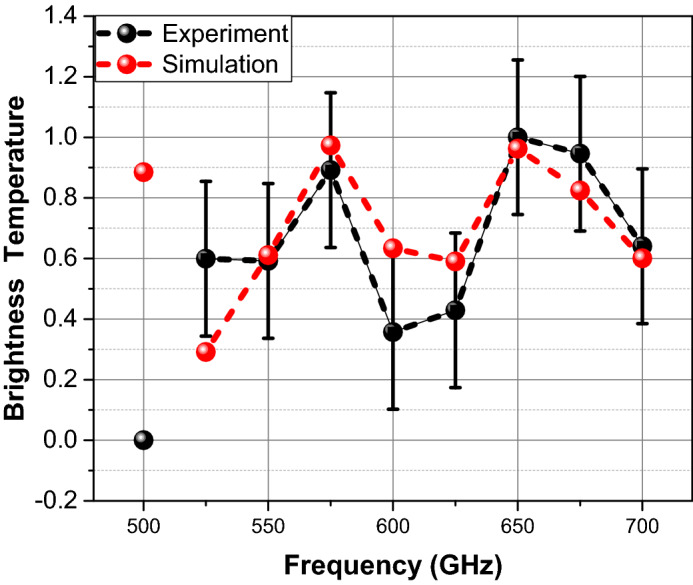
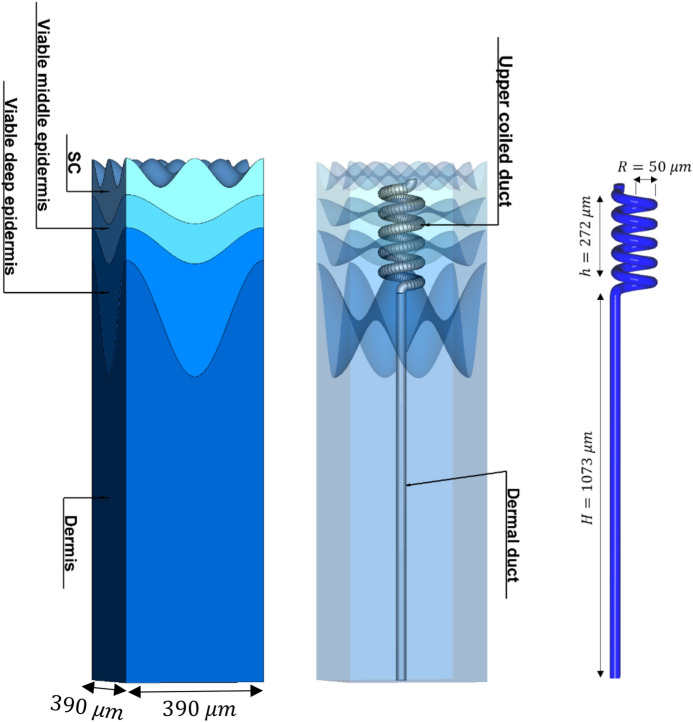
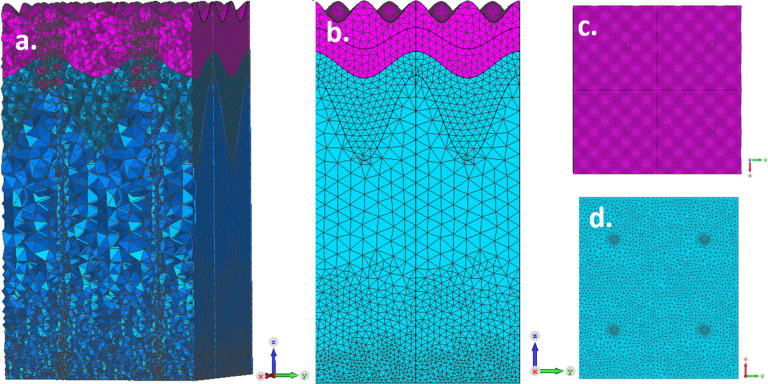
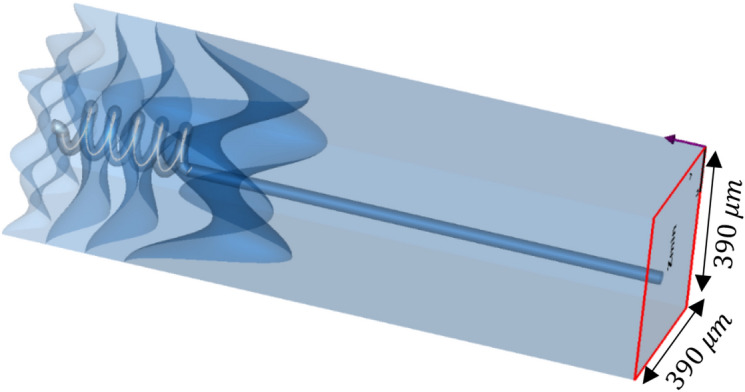
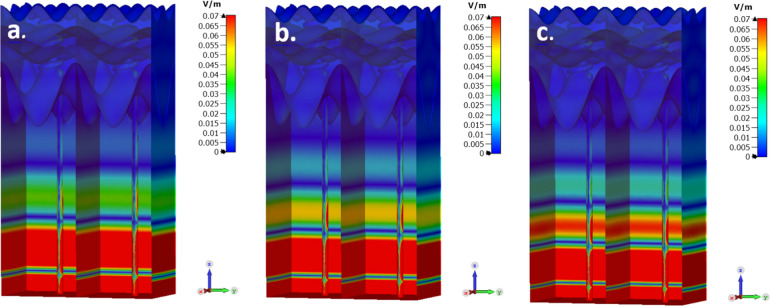
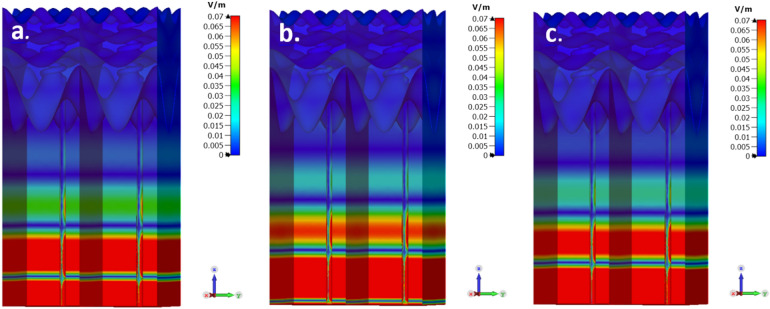
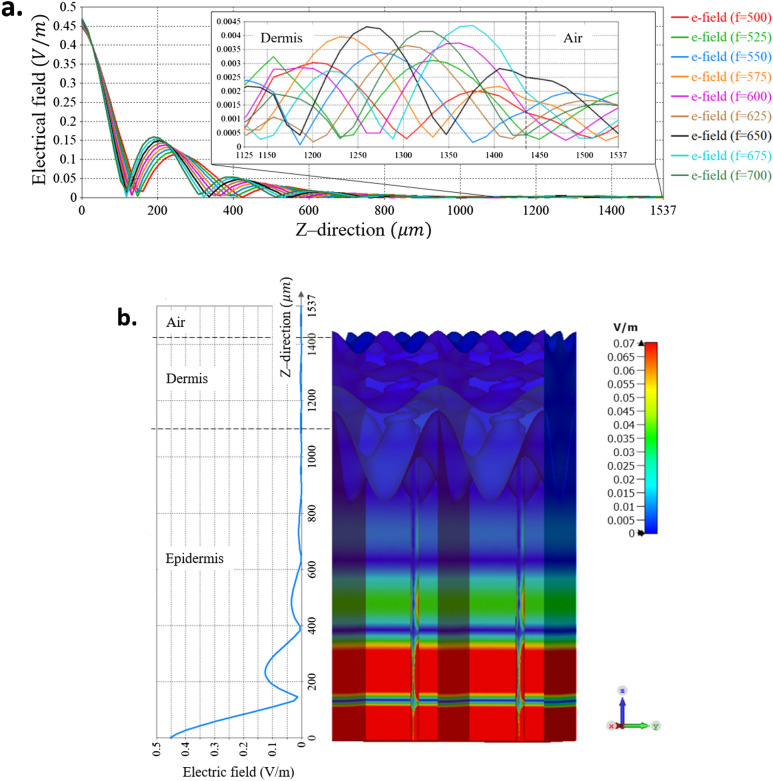
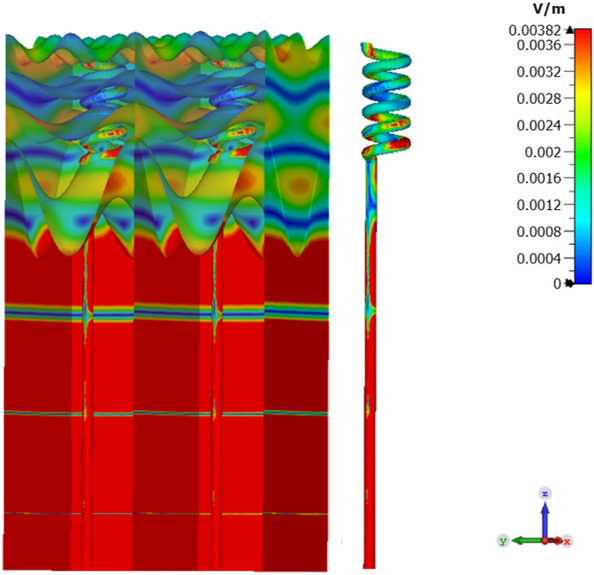
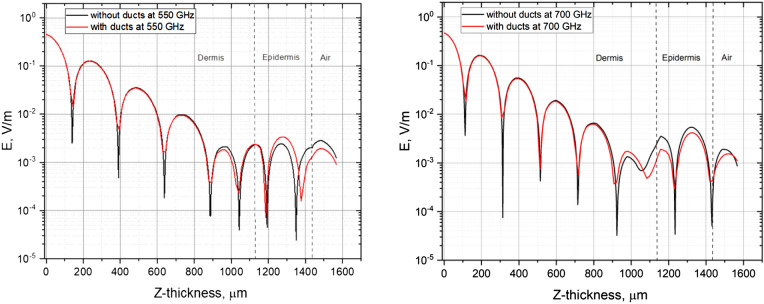
Recently published Radiometric measurements of human subjects in the frequency range 480-700 GHz, demonstrate the emission of blackbody radiation from the body core, rather than the skin surface. We present a detailed electromagnetic simulation of the dermis and epidermis, taking into account the presence of the sweat duct. This complex structure can be considered as an electromagnetic bio-metamaterial, whereby the layered structure, along with the topology of the sweat duct, reveals a complex interference pattern in the skin. The model is capable of accurately representing the skin greyness factor as a function of frequency and this is confirmed by radiometry of living human skin.

摘要

最近发表的在 480-700GHz 频率范围内对人体受试者的放射性测量结果表明,人体核心会发出黑体辐射,而不是来自皮肤表面。我们提出了一种详细的表皮和真皮的电磁模拟,考虑到了汗管的存在。这种复杂的结构可以被视为一种电磁生物超材料,其中分层结构以及汗管的拓扑结构在皮肤中呈现出复杂的干涉模式。该模型能够准确地表示皮肤灰度因子随频率的变化,这一点通过对活体人体皮肤的辐射测量得到了证实。
https://cdn.ncbi.nlm.nih.gov/pmc/blobs/cc05/8933490/1358fda1f46c/41598_2022_8432_Fig12_HTML.jpg
https://cdn.ncbi.nlm.nih.gov/pmc/blobs/cc05/8933490/1ce046973f59/41598_2022_8432_Fig1_HTML.jpg
https://cdn.ncbi.nlm.nih.gov/pmc/blobs/cc05/8933490/74168114bf47/41598_2022_8432_Fig2_HTML.jpg
https://cdn.ncbi.nlm.nih.gov/pmc/blobs/cc05/8933490/6e55a00e7a18/41598_2022_8432_Fig3_HTML.jpg
https://cdn.ncbi.nlm.nih.gov/pmc/blobs/cc05/8933490/ee7b29a8e497/41598_2022_8432_Fig4_HTML.jpg
https://cdn.ncbi.nlm.nih.gov/pmc/blobs/cc05/8933490/3d67d7378510/41598_2022_8432_Fig5_HTML.jpg
https://cdn.ncbi.nlm.nih.gov/pmc/blobs/cc05/8933490/86ef94f89e09/41598_2022_8432_Fig6_HTML.jpg
https://cdn.ncbi.nlm.nih.gov/pmc/blobs/cc05/8933490/960a85afd54d/41598_2022_8432_Fig7_HTML.jpg
https://cdn.ncbi.nlm.nih.gov/pmc/blobs/cc05/8933490/48d002f07989/41598_2022_8432_Fig8_HTML.jpg
https://cdn.ncbi.nlm.nih.gov/pmc/blobs/cc05/8933490/2bccc209de7c/41598_2022_8432_Fig9_HTML.jpg
https://cdn.ncbi.nlm.nih.gov/pmc/blobs/cc05/8933490/54e1349c6ec8/41598_2022_8432_Fig10_HTML.jpg
https://cdn.ncbi.nlm.nih.gov/pmc/blobs/cc05/8933490/92a1e818f61e/41598_2022_8432_Fig11_HTML.jpg
https://cdn.ncbi.nlm.nih.gov/pmc/blobs/cc05/8933490/1358fda1f46c/41598_2022_8432_Fig12_HTML.jpg
https://cdn.ncbi.nlm.nih.gov/pmc/blobs/cc05/8933490/1ce046973f59/41598_2022_8432_Fig1_HTML.jpg
https://cdn.ncbi.nlm.nih.gov/pmc/blobs/cc05/8933490/74168114bf47/41598_2022_8432_Fig2_HTML.jpg
https://cdn.ncbi.nlm.nih.gov/pmc/blobs/cc05/8933490/6e55a00e7a18/41598_2022_8432_Fig3_HTML.jpg
https://cdn.ncbi.nlm.nih.gov/pmc/blobs/cc05/8933490/ee7b29a8e497/41598_2022_8432_Fig4_HTML.jpg
https://cdn.ncbi.nlm.nih.gov/pmc/blobs/cc05/8933490/3d67d7378510/41598_2022_8432_Fig5_HTML.jpg
https://cdn.ncbi.nlm.nih.gov/pmc/blobs/cc05/8933490/86ef94f89e09/41598_2022_8432_Fig6_HTML.jpg
https://cdn.ncbi.nlm.nih.gov/pmc/blobs/cc05/8933490/960a85afd54d/41598_2022_8432_Fig7_HTML.jpg
https://cdn.ncbi.nlm.nih.gov/pmc/blobs/cc05/8933490/48d002f07989/41598_2022_8432_Fig8_HTML.jpg
https://cdn.ncbi.nlm.nih.gov/pmc/blobs/cc05/8933490/2bccc209de7c/41598_2022_8432_Fig9_HTML.jpg
https://cdn.ncbi.nlm.nih.gov/pmc/blobs/cc05/8933490/54e1349c6ec8/41598_2022_8432_Fig10_HTML.jpg
https://cdn.ncbi.nlm.nih.gov/pmc/blobs/cc05/8933490/92a1e818f61e/41598_2022_8432_Fig11_HTML.jpg
https://cdn.ncbi.nlm.nih.gov/pmc/blobs/cc05/8933490/1358fda1f46c/41598_2022_8432_Fig12_HTML.jpg

相似文献

1
Emission from human skin in the sub THz frequency band.人体皮肤在太赫兹波段的发射。
Sci Rep. 2022 Mar 18;12(1):4720. doi: 10.1038/s41598-022-08432-5.
2
The AC conductivity of human sweat ducts as the dominant factor in the sub-THz reflection coefficient of skin.人体汗腺的交流电导率是皮肤亚太赫兹反射系数的主要因素。
J Biophotonics. 2021 Jul;14(7):e202100027. doi: 10.1002/jbio.202100027. Epub 2021 Apr 30.
3
The human skin as a sub-THz receiver - Does 5G pose a danger to it or not?人体皮肤作为亚太赫兹接收器——5G 对其是否存在危害?
Environ Res. 2018 May;163:208-216. doi: 10.1016/j.envres.2018.01.032. Epub 2018 Feb 22.
4
The electromagnetic response of human skin in the millimetre and submillimetre wave range.人体皮肤在毫米波和亚毫米波波段的电磁响应。
Phys Med Biol. 2009 Jun 7;54(11):3341-63. doi: 10.1088/0031-9155/54/11/005. Epub 2009 May 8.
5
Circular polarization induced by the three-dimensional chiral structure of human sweat ducts.人类汗腺导管的三维手性结构诱导的圆偏振。
Phys Rev E Stat Nonlin Soft Matter Phys. 2014 Apr;89(4):042715. doi: 10.1103/PhysRevE.89.042715. Epub 2014 Apr 25.
6
Reassessment of the electromagnetic reflection response of human skin at W-band.W 波段人体皮肤电磁反射响应的再评估。
Opt Lett. 2011 Nov 1;36(21):4203-5. doi: 10.1364/OL.36.004203.
7
Morphology of human sweat ducts observed by optical coherence tomography and their frequency of resonance in the terahertz frequency region.通过光学相干断层扫描观察到的人体汗腺导管形态及其在太赫兹频率区域的共振频率。
Sci Rep. 2015 Mar 13;5:9071. doi: 10.1038/srep09071.
8
Measurement of the dielectric properties of the epidermis and dermis at frequencies from 0.5 GHz to 110 GHz.在0.5吉赫兹至110吉赫兹频率范围内测量表皮和真皮的介电特性。
Phys Med Biol. 2014 Aug 21;59(16):4739-47. doi: 10.1088/0031-9155/59/16/4739. Epub 2014 Aug 1.
9
Frequency of the resonance of the human sweat duct in a normal mode of operation.人体汗腺导管在正常运行模式下的共振频率。
Biomed Opt Express. 2018 Feb 23;9(3):1301-1308. doi: 10.1364/BOE.9.001301. eCollection 2018 Mar 1.
10
The remote sensing of mental stress from the electromagnetic reflection coefficient of human skin in the sub-THz range.基于太赫兹波段人体皮肤电磁反射系数的精神压力遥感探测。
Bioelectromagnetics. 2012 Jul;33(5):375-82. doi: 10.1002/bem.21698. Epub 2011 Dec 14.

引用本文的文献

1
The modeling of the interaction of pulsed 5G/6G signals and the fine structure of human skin.脉冲5G/6G信号与人体皮肤精细结构的相互作用建模
Sci Rep. 2025 Aug 5;15(1):28651. doi: 10.1038/s41598-025-13777-8.
2
Influence of Electrostatic Field on Optical Rotation of D-Glucose Solution: Experimental Research for Electric Field-Induced Biological Effect.静电场对 D-葡萄糖溶液旋光度的影响:电场诱导生物效应的实验研究。
Molecules. 2024 Oct 16;29(20):4898. doi: 10.3390/molecules29204898.
3
A wireless W-band 3D-printed temperature sensor based on a three-dimensional photonic crystal operating beyond 1000 C.

本文引用的文献

1
The AC conductivity of human sweat ducts as the dominant factor in the sub-THz reflection coefficient of skin.人体汗腺的交流电导率是皮肤亚太赫兹反射系数的主要因素。
J Biophotonics. 2021 Jul;14(7):e202100027. doi: 10.1002/jbio.202100027. Epub 2021 Apr 30.
2
The human skin as a sub-THz receiver - Does 5G pose a danger to it or not?人体皮肤作为亚太赫兹接收器——5G 对其是否存在危害?
Environ Res. 2018 May;163:208-216. doi: 10.1016/j.envres.2018.01.032. Epub 2018 Feb 22.
3
Morphology of human sweat ducts observed by optical coherence tomography and their frequency of resonance in the terahertz frequency region.
一种基于三维光子晶体的无线W波段3D打印温度传感器,工作温度超过1000摄氏度。
Commun Eng. 2024 Sep 23;3(1):137. doi: 10.1038/s44172-024-00282-5.
4
A scale-free universal relational information matrix (N-space) reconciles the information problem: N-space as the fabric of reality.一个无标度通用关系信息矩阵(N 空间)解决了信息问题:N 空间作为现实的结构。
Commun Integr Biol. 2023 May 11;16(1):2193006. doi: 10.1080/19420889.2023.2193006. eCollection 2023.
通过光学相干断层扫描观察到的人体汗腺导管形态及其在太赫兹频率区域的共振频率。
Sci Rep. 2015 Mar 13;5:9071. doi: 10.1038/srep09071.
4
Circular polarization induced by the three-dimensional chiral structure of human sweat ducts.人类汗腺导管的三维手性结构诱导的圆偏振。
Phys Rev E Stat Nonlin Soft Matter Phys. 2014 Apr;89(4):042715. doi: 10.1103/PhysRevE.89.042715. Epub 2014 Apr 25.
5
Infrared thermal imaging in medicine.医学中的红外热成像。
Physiol Meas. 2012 Mar;33(3):R33-46. doi: 10.1088/0967-3334/33/3/R33. Epub 2012 Feb 28.
6
The remote sensing of mental stress from the electromagnetic reflection coefficient of human skin in the sub-THz range.基于太赫兹波段人体皮肤电磁反射系数的精神压力遥感探测。
Bioelectromagnetics. 2012 Jul;33(5):375-82. doi: 10.1002/bem.21698. Epub 2011 Dec 14.
7
Modelling millimetre wave propagation and absorption in a high resolution skin model: the effect of sweat glands.毫米波波在高分辨率皮肤模型中的传播和吸收建模:汗腺的影响。
Phys Med Biol. 2011 Mar 7;56(5):1329-39. doi: 10.1088/0031-9155/56/5/007. Epub 2011 Feb 4.
8
Medical applications of shortwave FM radar: remote monitoring of cardiac and respiratory motion.短波调频雷达在医学中的应用:对心脏和呼吸运动的远程监测。
Med Phys. 2010 Mar;37(3):1332-8. doi: 10.1118/1.3267038.
9
Path-dependent human identification using a pyroelectric infrared sensor and fresnel lens arrays.使用热释电红外传感器和菲涅尔透镜阵列进行基于路径的人体识别。
Opt Express. 2006 Jan 23;14(2):609-24. doi: 10.1364/opex.14.000609.
10
The electromagnetic response of human skin in the millimetre and submillimetre wave range.人体皮肤在毫米波和亚毫米波波段的电磁响应。
Phys Med Biol. 2009 Jun 7;54(11):3341-63. doi: 10.1088/0031-9155/54/11/005. Epub 2009 May 8.