Population Health, Interior Health, Kelowna, BC, Canada.
Population Health, Interior Health, Kamloops, BC, Canada.
Can J Public Health. 2022 Jun;113(3):446-454. doi: 10.17269/s41997-022-00611-1. Epub 2022 Mar 18.
In 2018, a regional health authority in British Columbia (BC) initiated a multi-year project to support planning and response to extreme heat. Climate projections indicate that temperatures in the southern interior of BC will continue to increase, with concomitant negative impacts on human health. Successful climate change adaptation must include cross-sectoral action, inclusive of the health sector, to plan for and respond to climate-related events, including extreme heat.
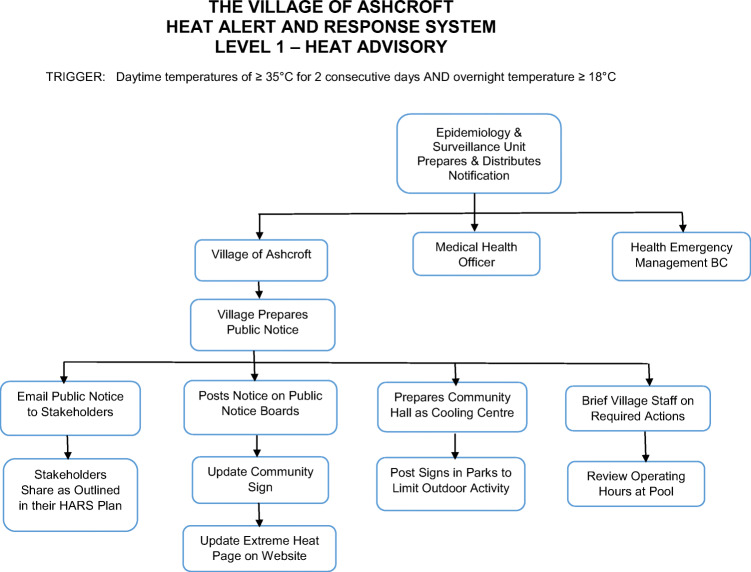
The objective of this project was to support the development and implementation of a Heat Alert and Response System (HARS) in a small, rural community. The health authority facilitated collaboration among provincial and local governments, community organizations, and First Nations partners to assess community assets, draft a plan for extreme heat, and prepare for a community-supported response during heat events.
Stakeholders expressed the importance of utilizing existing partnerships and community resources, such as physical and procedural infrastructure, in which to embed the HARS. It was imperative that the plan be simple, concise, and considerate of the community's unique context. Educational materials and a tailored method of dissemination were important for collective and individual risk mitigation.
A community-driven approach that utilized existing assets allowed for integration of HARS within municipal response plans and established infrastructure. The result is a sustainable public health intervention that has the potential to mitigate the negative health effects of extreme heat. Knowledge acquired through this initiative is informing similar HARS planning processes in other rural BC communities.
2018 年,不列颠哥伦比亚省(BC)的一个地区卫生局启动了一个多年项目,以支持规划和应对极端高温。气候预测表明,BC 省南部内陆地区的气温将继续上升,对人类健康产生相应的负面影响。成功的气候变化适应必须包括跨部门行动,包括卫生部门,以规划和应对与气候相关的事件,包括极端高温。
该项目的目标是支持在一个小的农村社区开发和实施高温警报和响应系统(HARS)。卫生局促进了省级和地方政府、社区组织和第一民族伙伴之间的合作,以评估社区资产、起草极端高温计划,并为高温事件期间社区支持的响应做好准备。
利益相关者表示,利用现有的伙伴关系和社区资源,如物理和程序基础设施,将 HARS 嵌入其中非常重要。该计划必须简单、简洁,并考虑到社区的独特背景。教育材料和定制的传播方法对于集体和个人的风险缓解非常重要。
这种社区驱动的方法利用了现有的资产,使 HARS 能够融入市政应急计划和现有的基础设施。其结果是一种可持续的公共卫生干预措施,有可能减轻极端高温对健康的负面影响。通过这一举措获得的知识正在为不列颠哥伦比亚省其他农村社区的类似 HARS 规划过程提供信息。