Department of Allergy, University Hospital of Zurich, Zurich, Switzerland.
Swiss Institute of Allergy and Asthma Research (SIAF), University of Zurich, Davos, Switzerland.
Clin Exp Allergy. 2022 Oct;52(10):1183-1194. doi: 10.1111/cea.14128. Epub 2022 Apr 1.
Earlier studies have suggested that the leukocyte redistribution can be considered as an immunological marker of the clinical response to corticosteroids (CS), representing an easy measurable potential biomarker in severe asthma.
The aim of this study was to determinate the utility of the leukocyte redistribution as a biomarker of disease heterogeneity in patients with severe asthma and as a bioindicator of potential CS resistance.
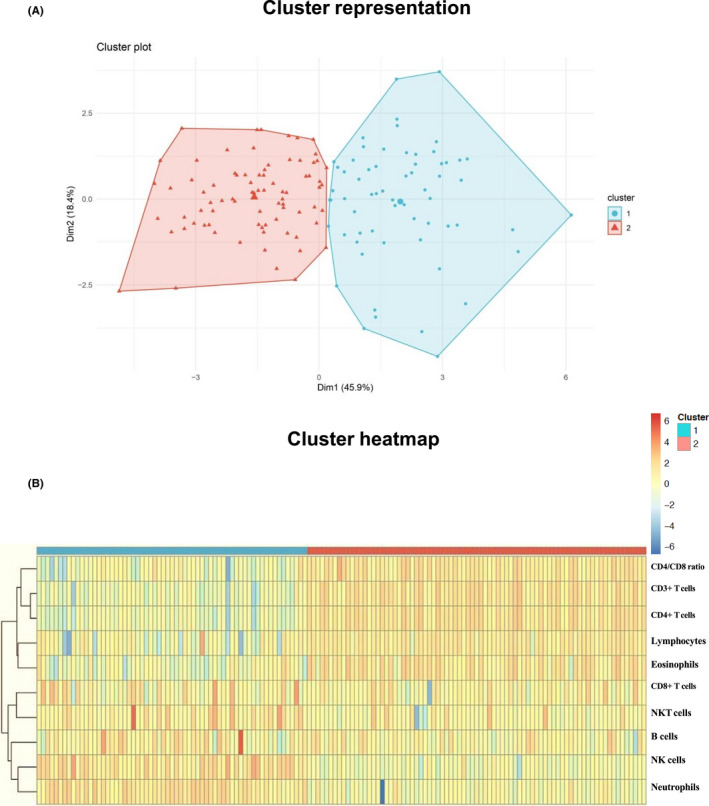
We developed an unbiased clustering approach based on the clinical data and the flow cytometry results of peripheral blood leukocyte phenotypes of 142 patients with severe asthma before and after systemic CS administration.
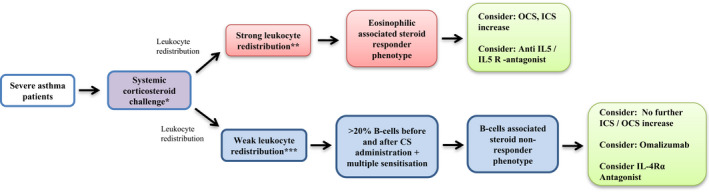
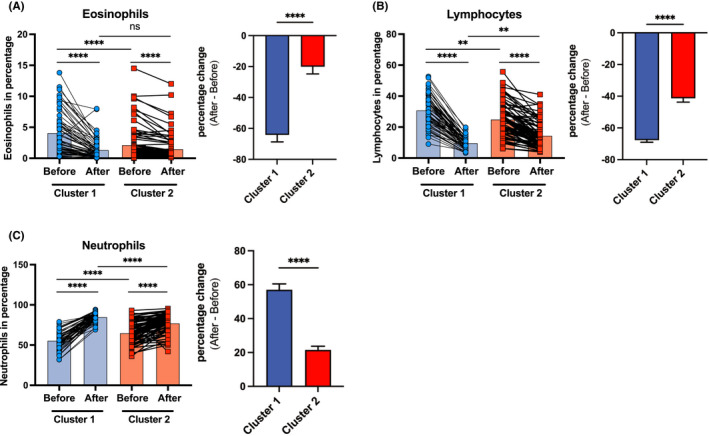
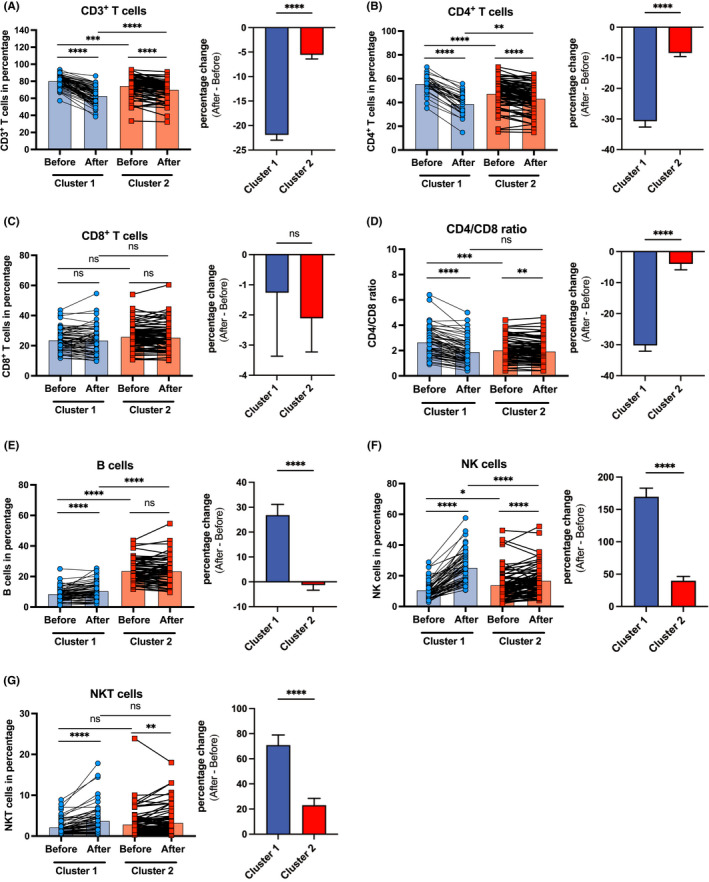
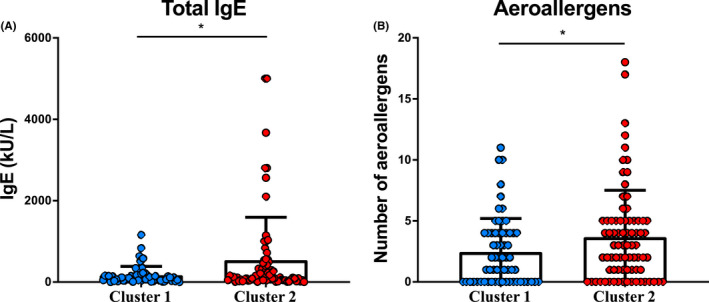
Based on the differences in the blood count eosinophils, neutrophils and lymphocytes, together with the flow cytometry measurements of basic T cell, B cell and NK cell subpopulations before and after systemic CS administration, we identified two severe asthma clusters, which differed in the cell frequencies, response to CS and atopy status. Patients in cluster 1 had higher frequency of blood eosinophils at baseline, were sensitized to less allergens and had better steroid responsiveness, measured as the pronounced leukocyte redistribution after the administration of systemic CS. Patients in cluster 2 were determined by the higher frequency of B-cells and stronger IgE sensitization status to the multiple allergens. They also displayed higher steroid resistance, as the clinical correlate for the lower leukocyte redistribution after administration of systemic CS.
The flow cytometry-based profiling of the basic populations of immune cells in the blood and its analysis before and after systemic corticosteroid administration could improve personalized treatment approaches in patients with severe asthma.
早期的研究表明,白细胞重新分布可被视为皮质类固醇(CS)临床反应的免疫标志物,代表严重哮喘中一种易于测量的潜在生物标志物。
本研究旨在确定白细胞重新分布作为严重哮喘患者疾病异质性的生物标志物的效用,以及作为潜在 CS 抵抗的生物标志物的潜力。
我们开发了一种基于临床数据和 142 例严重哮喘患者系统 CS 给药前后外周血白细胞表型流式细胞术结果的无偏聚类方法。
基于血计数嗜酸性粒细胞、中性粒细胞和淋巴细胞的差异,以及系统 CS 给药前后基础 T 细胞、B 细胞和 NK 细胞亚群的流式细胞术测量结果,我们确定了两种严重哮喘聚类,它们在细胞频率、CS 反应和特应性状态方面存在差异。聚类 1 的患者在基线时血液嗜酸性粒细胞频率较高,对较少的过敏原致敏,对类固醇的反应性更好,表现为系统 CS 给药后白细胞明显重新分布。聚类 2 的患者以 B 细胞频率较高和对多种过敏原的更强 IgE 致敏状态为特征。他们还表现出更高的类固醇耐药性,表现为系统 CS 给药后白细胞重新分布较低的临床相关性。
基于流式细胞术的血液中免疫细胞基本群体的分析及其在系统皮质类固醇给药前后的分析,可以改善严重哮喘患者的个体化治疗方法。