Latoszek Ewelina, Wiweger Małgorzata, Ludwiczak Jan, Dunin-Horkawicz Stanisław, Kuznicki Jacek, Czeredys Magdalena
International Institute of Molecular and Cell Biology in Warsaw, Laboratory of Neurodegeneration, Warsaw, Poland.
Structural Bioinformatics Laboratory, Centre of New Technologies, University of Warsaw, Warsaw, Poland.
Cell Biosci. 2022 Mar 19;12(1):34. doi: 10.1186/s13578-022-00755-0.
Huntington's disease (HD) is a neurodegenerative disorder whereby mutated huntingtin protein (mHTT) aggregates when polyglutamine repeats in the N-terminal of mHTT exceeds 36 glutamines (Q). However, the mechanism of this pathology is unknown. Siah1-interacting protein (SIP) acts as an adaptor protein in the ubiquitination complex and mediates degradation of other proteins. We hypothesized that mHTT aggregation depends on the dysregulation of SIP activity in this pathway in HD.
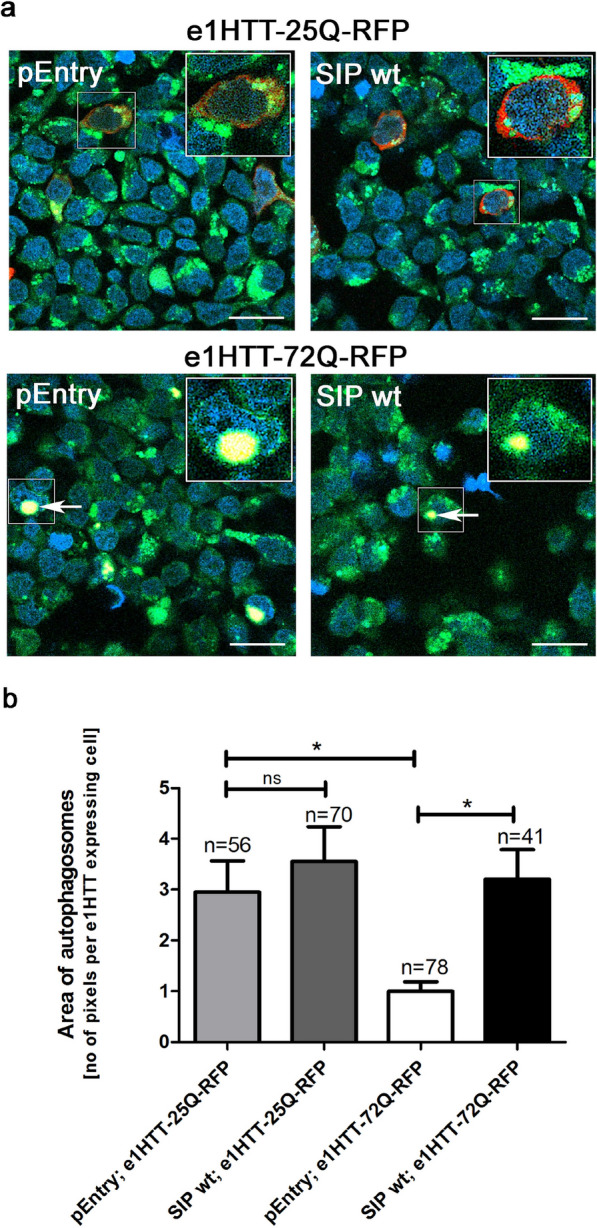
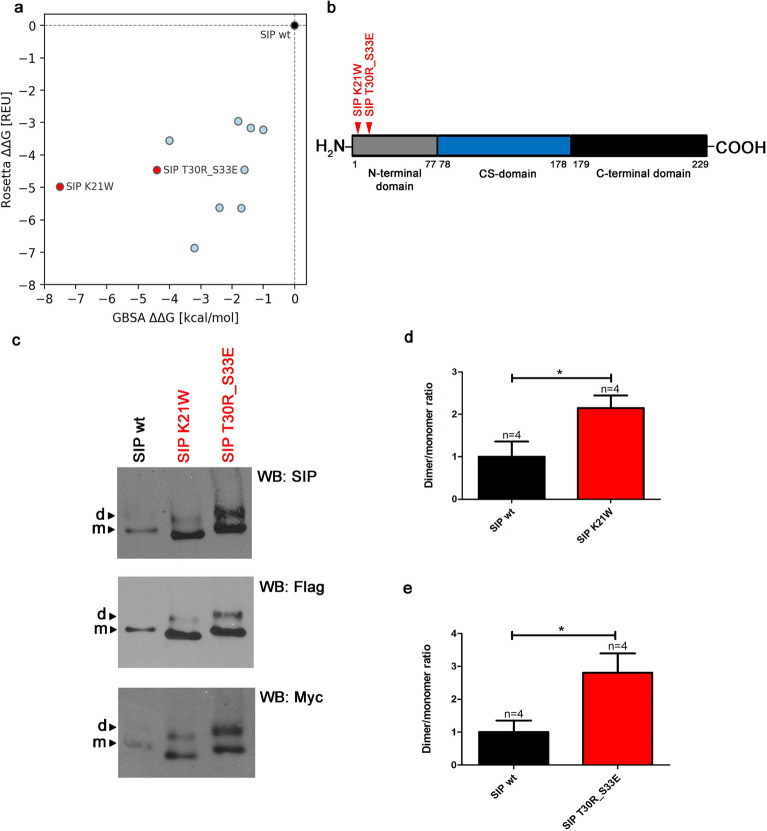
A higher SIP dimer/monomer ratio was observed in the striatum in young YAC128 mice, which overexpress mHTT. We found that SIP interacted with HTT. In a cellular HD model, we found that wildtype SIP increased mHTT ubiquitination, attenuated mHTT protein levels, and decreased HTT aggregation. We predicted mutations that should stabilize SIP dimerization and found that SIP mutant-overexpressing cells formed more stable dimers and had lower activity in facilitating mHTT ubiquitination and preventing exon 1 mHTT aggregation compared with wildtype SIP.
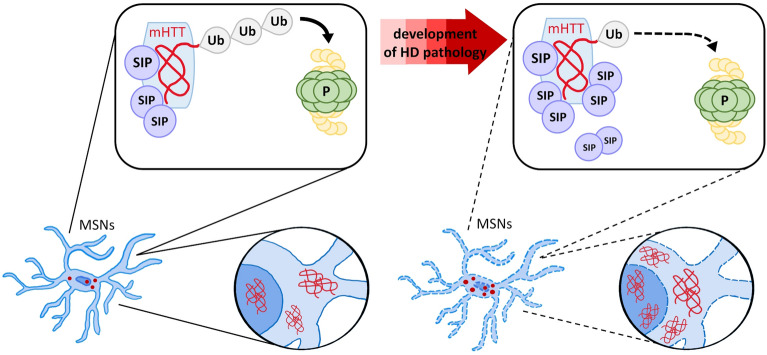
Our data suggest that an increase in SIP dimerization in HD medium spiny neurons leads to a decrease in SIP function in the degradation of mHTT through a ubiquitin-proteasome pathway and consequently an increase in mHTT aggregation. Therefore, SIP could be considered a potential target for anti-HD therapy during the early stage of HD pathology.
亨廷顿病(HD)是一种神经退行性疾病,当突变的亨廷顿蛋白(mHTT)N端的多聚谷氨酰胺重复序列超过36个谷氨酰胺(Q)时,mHTT会发生聚集。然而,这种病理机制尚不清楚。Siah1相互作用蛋白(SIP)在泛素化复合物中作为衔接蛋白,介导其他蛋白质的降解。我们推测在HD中,mHTT聚集依赖于该途径中SIP活性的失调。
在过表达mHTT的年轻YAC128小鼠的纹状体中观察到较高的SIP二聚体/单体比率。我们发现SIP与HTT相互作用。在细胞HD模型中,我们发现野生型SIP增加了mHTT的泛素化,降低了mHTT蛋白水平,并减少了HTT聚集。我们预测了应该稳定SIP二聚化的突变,并发现与野生型SIP相比,过表达SIP突变体的细胞形成了更稳定的二聚体,在促进mHTT泛素化和防止外显子1 mHTT聚集方面活性较低。
我们的数据表明,HD中型多棘神经元中SIP二聚化增加导致通过泛素-蛋白酶体途径降解mHTT的SIP功能下降,从而导致mHTT聚集增加。因此,在HD病理早期,SIP可被视为抗HD治疗的潜在靶点。