Latoszek Ewelina, Czeredys Magdalena
Laboratory of Neurodegeneration, International Institute of Molecular and Cell Biology in Warsaw, Warsaw, Poland.
Front Cell Dev Biol. 2021 Apr 1;9:657337. doi: 10.3389/fcell.2021.657337. eCollection 2021.
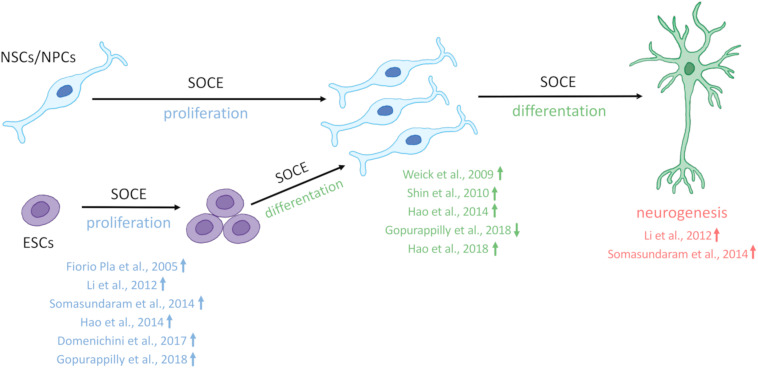
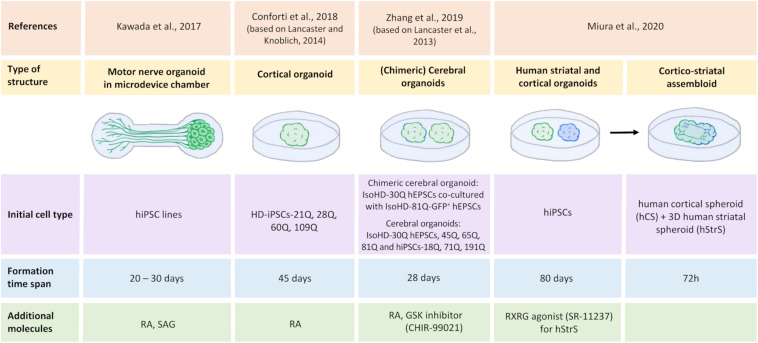
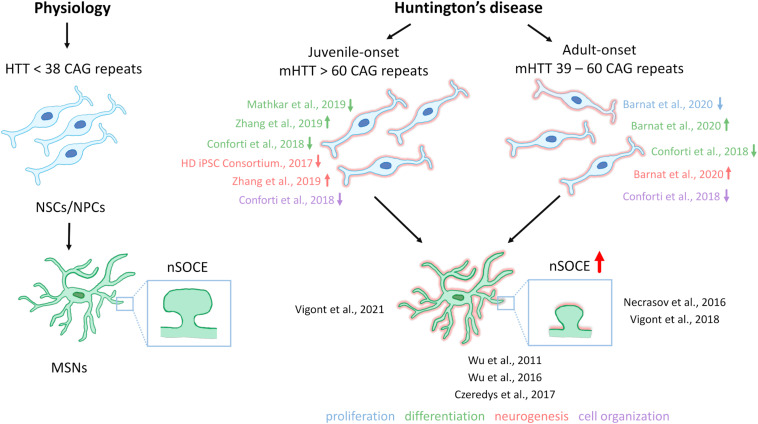
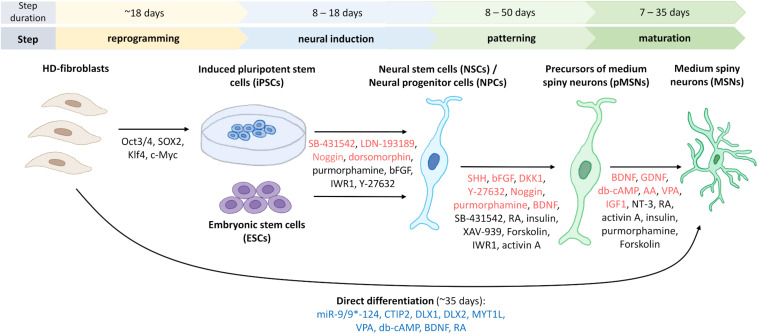
One of the major Ca signaling pathways is store-operated Ca entry (SOCE), which is responsible for Ca flow into cells in response to the depletion of endoplasmic reticulum Ca stores. SOCE and its molecular components, including stromal interaction molecule proteins, Orai Ca channels, and transient receptor potential canonical channels, are involved in the physiology of neural stem cells and play a role in their proliferation, differentiation, and neurogenesis. This suggests that Ca signaling is an important player in brain development. Huntington's disease (HD) is an incurable neurodegenerative disorder that is caused by polyglutamine expansion in the huntingtin (HTT) protein, characterized by the loss of γ-aminobutyric acid (GABA)-ergic medium spiny neurons (MSNs) in the striatum. However, recent research has shown that HD is also a neurodevelopmental disorder and Ca signaling is dysregulated in HD. The relationship between HD pathology and elevations of SOCE was demonstrated in different cellular and mouse models of HD and in induced pluripotent stem cell-based GABAergic MSNs from juvenile- and adult-onset HD patient fibroblasts. The present review discusses the role of SOCE in the physiology of neural stem cells and its dysregulation in HD pathology. It has been shown that elevated expression of STIM2 underlying the excessive Ca entry through store-operated calcium channels in induced pluripotent stem cell-based MSNs from juvenile-onset HD. In the light of the latest findings regarding the role of Ca signaling in HD pathology we also summarize recent progress in the differentiation of MSNs that derive from different cell sources. We discuss advances in the application of established protocols to obtain MSNs from fetal neural stem cells/progenitor cells, embryonic stem cells, induced pluripotent stem cells, and induced neural stem cells and the application of transdifferentiation. We also present recent progress in establishing HD brain organoids and their potential use for examining HD pathology and its treatment. Moreover, the significance of stem cell therapy to restore normal neural cell function, including Ca signaling in the central nervous system in HD patients will be considered. The transplantation of MSNs or their precursors remains a promising treatment strategy for HD.
主要的钙信号通路之一是储存式钙内流(SOCE),它负责在细胞内质网钙储存耗尽时使钙流入细胞。SOCE及其分子成分,包括基质相互作用分子蛋白、Orai钙通道和瞬时受体电位香草酸受体通道,参与神经干细胞的生理过程,并在其增殖、分化和神经发生中发挥作用。这表明钙信号在大脑发育中起着重要作用。亨廷顿舞蹈症(HD)是一种无法治愈的神经退行性疾病,由亨廷顿蛋白(HTT)中的多聚谷氨酰胺扩增引起,其特征是纹状体中γ-氨基丁酸(GABA)能中型多棘神经元(MSN)的丧失。然而,最近的研究表明,HD也是一种神经发育障碍,并且在HD中钙信号失调。在HD的不同细胞和小鼠模型以及来自青少年和成年期HD患者成纤维细胞的诱导多能干细胞来源的GABA能MSN中,证实了HD病理学与SOCE升高之间的关系。本综述讨论了SOCE在神经干细胞生理过程中的作用及其在HD病理学中的失调。研究表明,在青少年期HD的诱导多能干细胞来源的MSN中,通过储存式钙通道过度进入细胞的基础是基质相互作用分子2(STIM2)表达升高。鉴于关于钙信号在HD病理学中作用的最新发现,我们还总结了来自不同细胞来源的MSN分化的最新进展。我们讨论了应用既定方案从胎儿神经干细胞/祖细胞、胚胎干细胞、诱导多能干细胞和诱导神经干细胞中获得MSN以及转分化应用方面的进展。我们还介绍了建立HD脑类器官及其在检查HD病理学及其治疗方面潜在用途的最新进展。此外,还将考虑干细胞疗法恢复HD患者中枢神经系统正常神经细胞功能(包括钙信号)的意义。MSN或其前体的移植仍然是HD的一种有前景的治疗策略。