Department of Quantitative Health Sciences, Mayo Clinic, Jacksonville, FL, USA.
Department of Neuroscience, Mayo Clinic, Jacksonville, FL, USA; Clinical Trial Research Center, China-Japan Friendship Hospital, Beijing, PR China.
EBioMedicine. 2022 Apr;78:103929. doi: 10.1016/j.ebiom.2022.103929. Epub 2022 Mar 17.
African Americans (AA) remain underrepresented in Alzheimer's disease (AD) research, despite the prevalence of AD being double in AA compared to non-Hispanic whites. To address this disparity, our group has established the Florida Consortium for African American Alzheimer's Disease Studies (FCADS), focusing on the identification of genetic risk factors and novel plasma biomarkers.
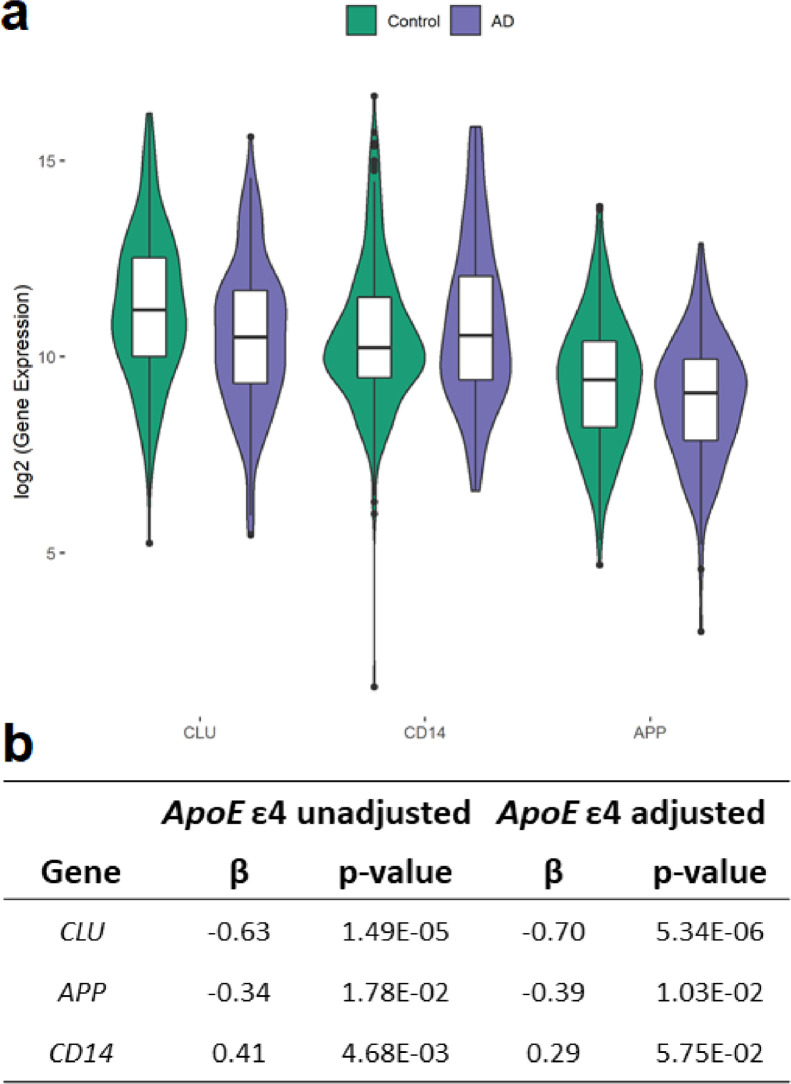
Utilizing FCADS whole exome sequence (WES) and plasma RNA samples from AD cases (n=151) and cognitively unimpaired (CU) elderly controls (n=269), we have performed differential gene expression (DGE) and expression quantitative trait locus (eQTL) analyses on 50 transcripts measured with a custom nanoString® panel. We designed this panel to measure, in plasma, cell-free mRNA (cf-mRNA) levels of AD-relevant genes.
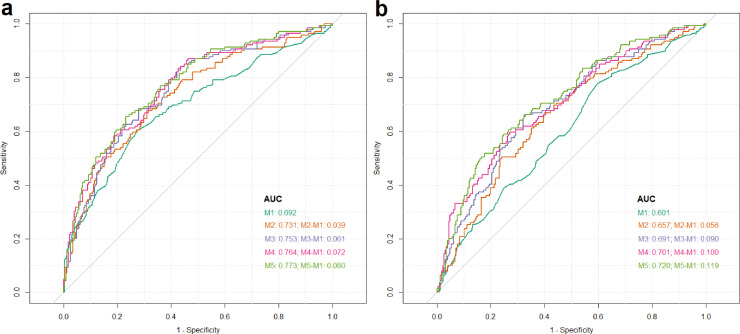
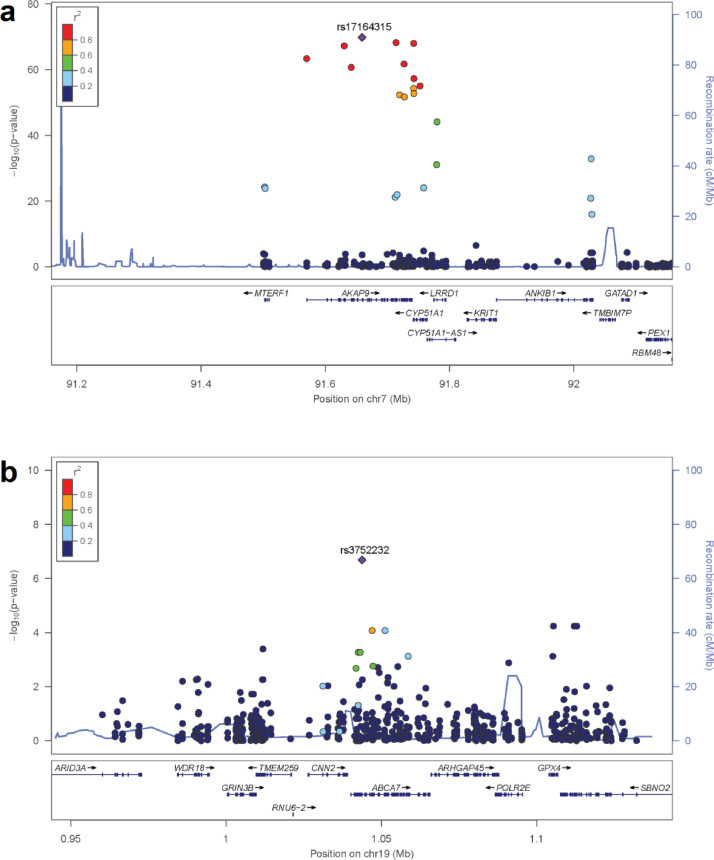
Association with higher plasma CLU in CU vs. AD remained significant after Bonferroni correction. Study-wide significant eQTL associations were observed with 105 WES variants in cis with 22 genes, including variants in genes previously associated with AD risk in AA such as ABCA7 and AKAP9. Results from this plasma eQTL analysis identified AD-risk variants in ABCA7 and AKAP9 that are significantly associated with lower and higher plasma mRNA levels of these genes, respectively. Receiver operating characteristic analysis of age, sex APOE-ε4 dosage, CLU, APP, CD14, ABCA7, AKAP9 and APOE mRNA levels, and ABCA7 and AKAP9 eQTLs, achieved 77% area under the curve to discriminate AD vs. CU, an 8% improvement over a model that only included age, sex and APOE-ε4 dosage.
Incorporating plasma mRNA levels could contribute to improved predictive value of AD biomarker panels.
This work was supported by the National Institute on Aging [RF AG051504, U01 AG046139, R01 AG061796 to NET; P30 AG062677 to JAL and NGR]; Florida Health Ed and Ethel Moore Alzheimer's Disease grants [5AZ03 and 7AZ17 to NET; 7AZ07 to MMC; 8AZ08 to JAL].
尽管非裔美国人(AA)患阿尔茨海默病(AD)的患病率是非西班牙裔白人的两倍,但他们在 AD 研究中仍然代表性不足。为了解决这一差距,我们的团队成立了佛罗里达非裔美国人 AD 研究联盟(FCADS),专注于确定遗传风险因素和新型血浆生物标志物。
利用 FCADS 全外显子组序列(WES)和 AD 病例(n=151)和认知正常老年人对照(n=269)的血浆 RNA 样本,我们对 50 个使用定制 nanoString® 面板测量的转录物进行了差异基因表达(DGE)和表达数量性状基因座(eQTL)分析。我们设计了这个面板来测量 AD 相关基因在血浆中的无细胞 mRNA(cf-mRNA)水平。
在 Bonferroni 校正后,CU 与 AD 相比,CLU 水平升高与血浆中 CLU 关联仍具有统计学意义。与 22 个基因中的 105 个 WES 变体在 cis 中观察到全基因组显著的 eQTL 关联,其中包括先前与 AA 中的 AD 风险相关的基因中的变体,如 ABCA7 和 AKAP9。该血浆 eQTL 分析的结果确定了 ABCA7 和 AKAP9 中的 AD 风险变体,这些变体与这些基因的血浆 mRNA 水平分别显著降低和升高相关。年龄、性别 APOE-ε4 剂量、CLU、APP、CD14、ABCA7、AKAP9 和 APOE mRNA 水平以及 ABCA7 和 AKAP9 eQTL 的接收者操作特征分析,达到了区分 AD 与 CU 的 77%曲线下面积,比仅包含年龄、性别和 APOE-ε4 剂量的模型提高了 8%。
纳入血浆 mRNA 水平可能有助于提高 AD 生物标志物组合的预测价值。
这项工作得到了美国国立卫生研究院的支持[RF AG051504、U01 AG046139、R01 AG061796 给 NET;P30 AG062677 给 JAL 和 NGR];佛罗里达州健康教育和 Ethel Moore 阿尔茨海默病赠款[5AZ03 和 7AZ17 给 NET;7AZ07 给 MMC;8AZ08 给 JAL]。