Gao Jianjun, Gu Zhaoyan
Department of Nephrology, Chinese PLA Strategic Support Force Characteristic Medical Center, Beijing, China.
Department of Endocrinology, Second Medical Center, Chinese PLA General Hospital, Beijing, China.
Front Pharmacol. 2022 Mar 4;13:832732. doi: 10.3389/fphar.2022.832732. eCollection 2022.
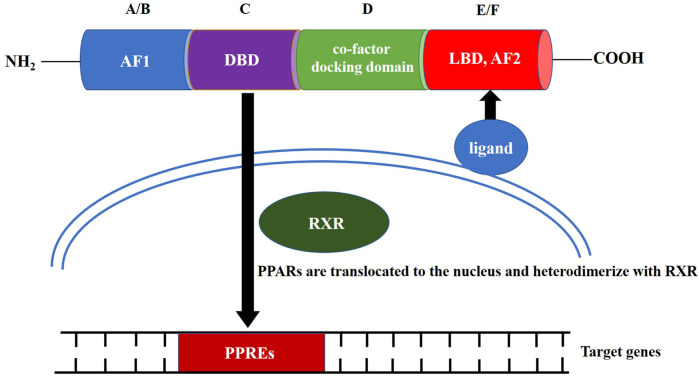
Peroxisome proliferator-activated receptors (PPARs) are members of the nuclear hormone receptor superfamily of ligand-activated transcription factors. Accumulating evidence suggests that PPARs may play an important role in the pathogenesis of kidney disease. All three members of the PPAR subfamily, PPARα, PPARβ/δ, and PPARγ, have been implicated in many renal pathophysiological conditions, including acute kidney injury, diabetic nephropathy, and chronic kidney disease, among others. Emerging data suggest that PPARs may be potential therapeutic targets for renal disease. This article reviews the physiological roles of PPARs in the kidney and discusses the therapeutic utility of PPAR agonists in the treatment of kidney disease.
过氧化物酶体增殖物激活受体(PPARs)是配体激活转录因子核激素受体超家族的成员。越来越多的证据表明,PPARs可能在肾脏疾病的发病机制中起重要作用。PPAR亚家族的所有三个成员,即PPARα、PPARβ/δ和PPARγ,都与许多肾脏病理生理状况有关,包括急性肾损伤、糖尿病肾病和慢性肾病等。新出现的数据表明,PPARs可能是肾脏疾病的潜在治疗靶点。本文综述了PPARs在肾脏中的生理作用,并讨论了PPAR激动剂在治疗肾脏疾病中的治疗效用。