Miura Shigenori, Morimoto Yuya, Furihata Tomomi, Takeuchi Shoji
Institute of Industrial Science, The University of Tokyo, Tokyo, Japan.
Department of Mechano-Informatics, Graduate School of Information Science and Technology, The University of Tokyo, Tokyo, Japan.
APL Bioeng. 2022 Mar 9;6(1):016103. doi: 10.1063/5.0085564. eCollection 2022 Mar.
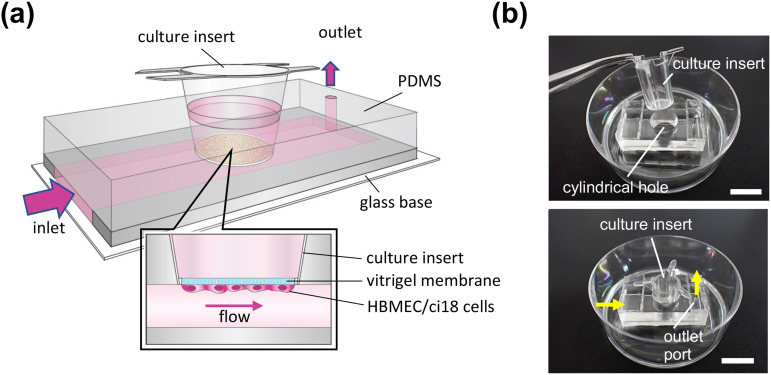
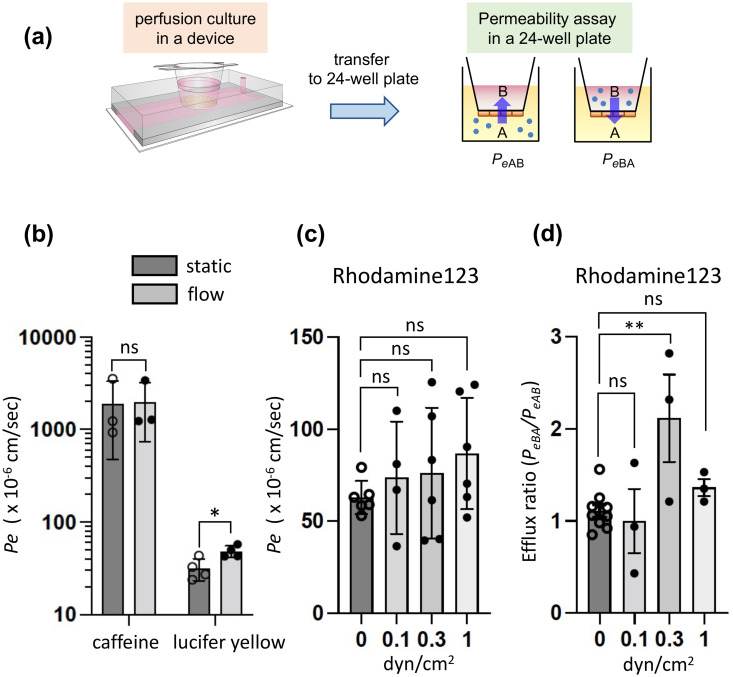
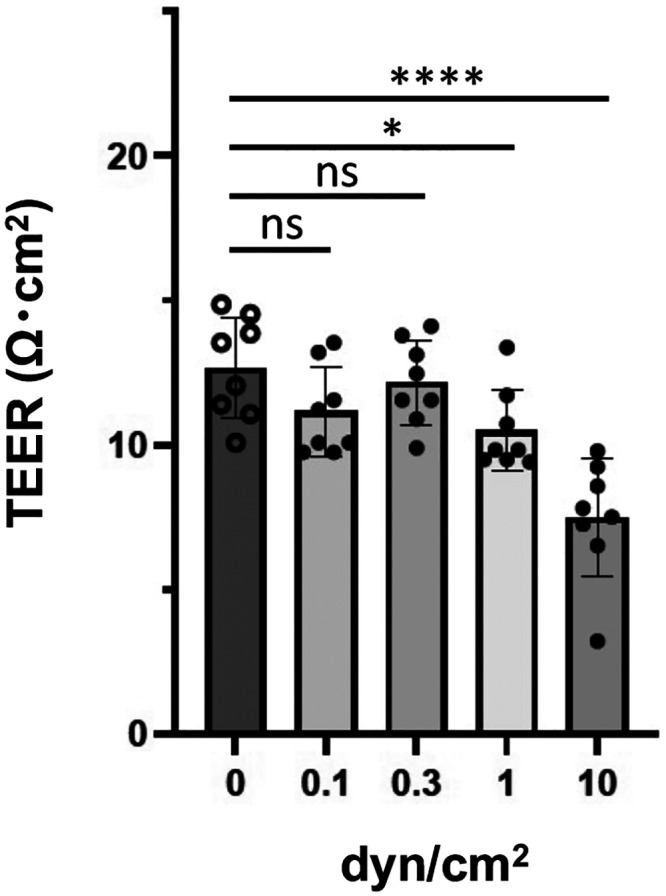
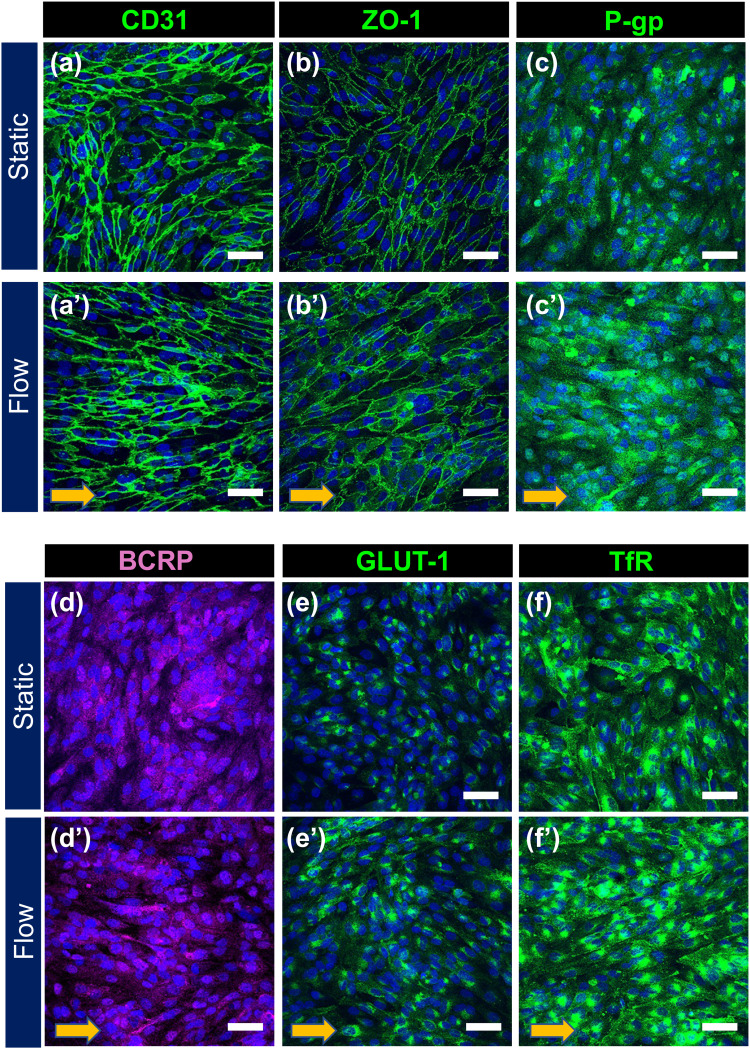
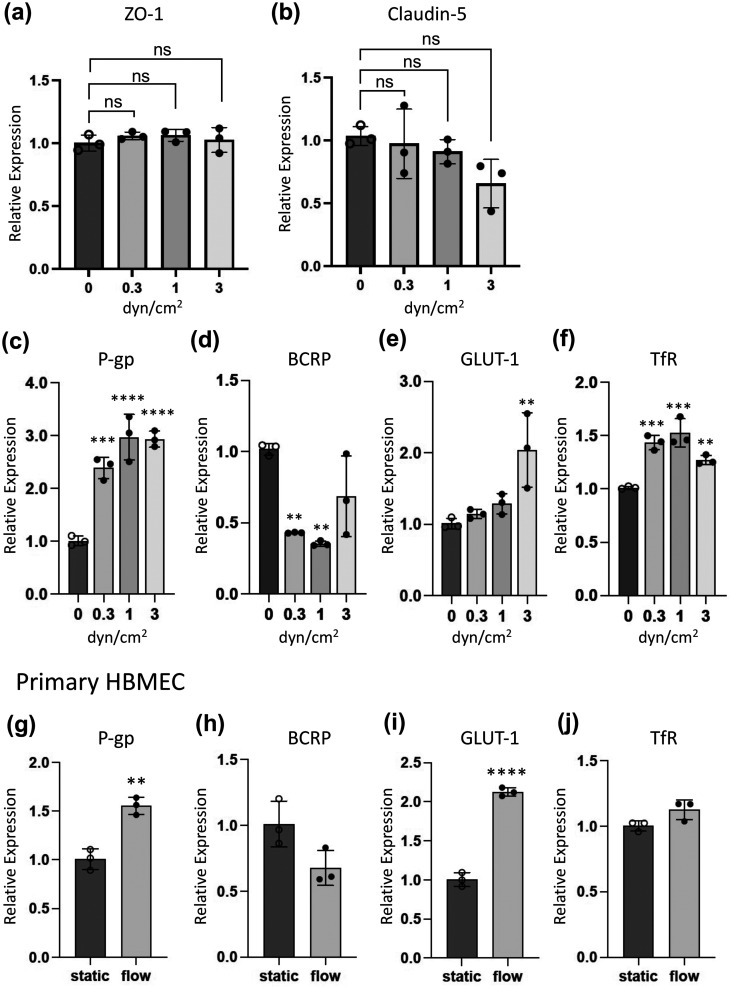
The blood-brain barrier (BBB) is a specialized brain endothelial barrier structure that regulates the highly selective transport of molecules under continuous blood flow. Recently, various types of BBB-on-chip models have been developed to mimic the microenvironmental cues that regulate the human BBB drug transport. However, technical difficulties in complex microfluidic systems limit their accessibility. Here, we propose a simple and easy-to-handle microfluidic device integrated with a cell culture insert to investigate the functional regulation of the human BBB endothelium in response to fluid shear stress (FSS). Using currently established immortalized human brain microvascular endothelial cells (HBMEC/ci18), we formed a BBB endothelial barrier without the substantial loss of barrier tightness under the relatively low range of FSS (0.1-1 dyn/cm). Expression levels of key BBB transporters and receptors in the HBMEC/ci18 cells were dynamically changed in response to the FSS, and the effect of FSS reached a plateau around 1 dyn/cm. Similar responses were observed in the primary HBMECs. Taking advantage of the detachable cell culture insert from the device, the drug efflux activity of P-glycoprotein (P-gp) was analyzed by the bidirectional permeability assay after the perfusion culture of cells. The data revealed that the FSS-stimulated BBB endothelium exhibited the 1.9-fold higher P-gp activity than that of the static culture control. Our microfluidic system coupling with the transwell model provides a functional human BBB endothelium with secured transporter activity, which is useful to investigate the bidirectional transport of drugs and its regulation by FSS.
血脑屏障(BBB)是一种特殊的脑内皮屏障结构,可在持续血流情况下调节分子的高度选择性转运。近来,已开发出多种类器官芯片模型来模拟调节人类血脑屏障药物转运的微环境线索。然而,复杂微流控系统中的技术难题限制了它们的可及性。在此,我们提出一种简单且易于操作的微流控装置,该装置集成了细胞培养插入物,以研究人类血脑屏障内皮细胞对流体剪切力(FSS)的功能调节。使用目前已建立的永生化人脑微血管内皮细胞(HBMEC/ci18),我们在相对较低范围的FSS(0.1 - 1达因/平方厘米)下形成了血脑屏障内皮屏障,且屏障紧密性没有实质性损失。HBMEC/ci18细胞中关键血脑屏障转运体和受体的表达水平随FSS动态变化,FSS的影响在约1达因/平方厘米时达到平台期。在原代HBMECs中也观察到类似反应。利用该装置中可拆卸的细胞培养插入物,在细胞灌注培养后通过双向通透性测定分析P - 糖蛋白(P - gp)的药物外排活性。数据显示,FSS刺激的血脑屏障内皮细胞的P - gp活性比静态培养对照高1.9倍。我们的微流控系统与Transwell模型相结合,提供了具有可靠转运体活性的功能性人类血脑屏障内皮细胞,这对于研究药物的双向转运及其受FSS的调节很有用。