Nguyen Andrew, Miller Weston P, Gupta Ashish, Lund Troy C, Schiferl Daniel, Lam Lok Sze Kelvin, Arzumanyan Zorayr, Orchard Paul J, Polgreen Lynda E
Lundquist Institute for Biomedical Innovation at Harbor-UCLA Medical Center Torrance CA USA.
Audentes Therapeutics, An Astellas Company San Francisco, (formerly at University of Minnesota) San Francisco CA USA.
JBMR Plus. 2022 Jan 25;6(3):e10597. doi: 10.1002/jbm4.10597. eCollection 2022 Mar.
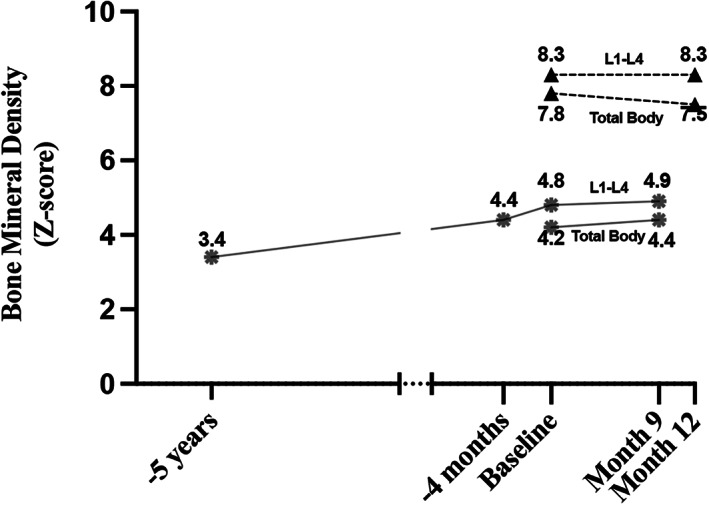
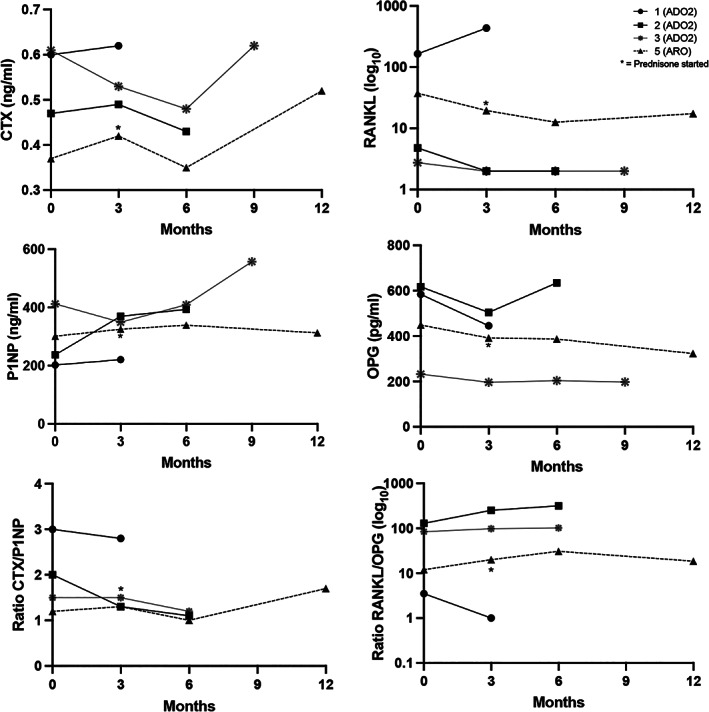
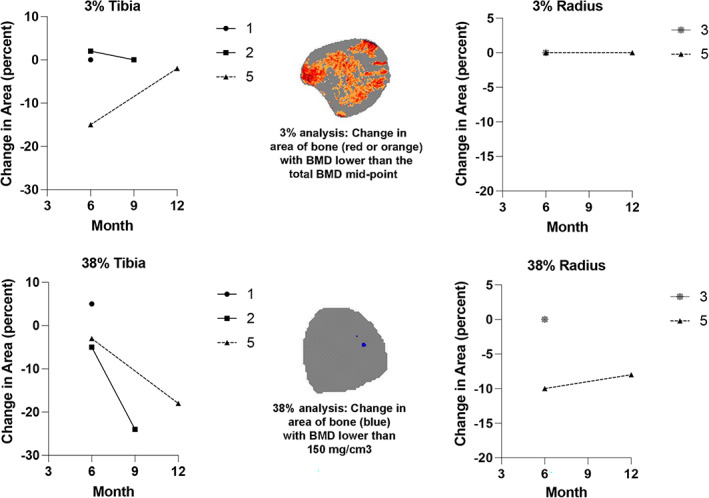
The only treatment currently available for patients with severe infantile osteopetrosis is hematopoietic cell transplantation (HCT). HCT-related toxicity and mortality risks typically preclude its use in non-infantile patients, and other therapies are needed for these patients who have significant disease-related morbidity. Interferon gamma-1b is currently approved by the U.S. Food and Drug Administration (FDA) for treatment of severe infantile osteopetrosis (autosomal recessive osteopetrosis [ARO]). However, little is known about the effects of interferon gamma-1b in non-infantile osteopetrosis. Thus, this pilot study aimed at testing the safety and tolerability of interferon gamma-1b in patients with non-infantile osteopetrosis and assessing the clinical effects. We performed a 12-month, open-label, multi-center pilot study involving patients >1 year-old diagnosed radiographically with osteopetrosis. Patients were initiated on interferon gamma-1b subcutaneously 15 μg/m three times weekly, to be titrated over 3 weeks to a goal of 100 μg/m three times weekly. The primary aim was safety and tolerability. The secondary aims were to assess changes in peripheral quantitative computed tomography (pQCT), dual-energy x-ray absorptiometry (DXA) bone mineral density (BMD) Z-scores, bone biomarkers, and quality-of-life (QOL) measures. Four of the five participants enrolled withdrew from the study between 3 and 9 months due to intolerability of interferon gamma-1b-related flu-like symptoms. The last participant completed the study with the addition of prednisone on days of interferon gamma-1b administration. DXA and pQCT outcomes were stable over 6-12 months, and there were no clear trends in bone biomarkers or QOL measures. No serious drug-related adverse events were reported during this study. Interferon gamma-1b was only tolerable in one of five participants with the addition of prednisone. The stabilization of BMD and other measures of bone health during this study suggest possible positive effects of interferon gamma-1b on osteopetrosis; however, additional data are needed before conclusions on treatment efficacy can be made. © 2022 The Authors. published by Wiley Periodicals LLC on behalf of American Society for Bone and Mineral Research.
目前,重症婴儿型骨硬化症患者唯一可用的治疗方法是造血细胞移植(HCT)。与HCT相关的毒性和死亡风险通常使其无法用于非婴儿患者,对于这些患有严重疾病相关发病率的患者,需要其他治疗方法。γ-1b干扰素目前已获美国食品药品监督管理局(FDA)批准用于治疗重症婴儿型骨硬化症(常染色体隐性遗传性骨硬化症[ARO])。然而,关于γ-1b干扰素在非婴儿型骨硬化症中的作用知之甚少。因此,这项初步研究旨在测试γ-1b干扰素在非婴儿型骨硬化症患者中的安全性和耐受性,并评估其临床效果。我们进行了一项为期12个月的开放标签、多中心初步研究,纳入年龄大于1岁、经影像学诊断为骨硬化症的患者。患者开始皮下注射γ-1b干扰素,剂量为15μg/m²,每周三次,在3周内逐渐滴定至目标剂量100μg/m²,每周三次。主要目的是安全性和耐受性。次要目的是评估外周定量计算机断层扫描(pQCT)、双能X线吸收法(DXA)骨矿物质密度(BMD)Z评分、骨生物标志物和生活质量(QOL)指标的变化。五名参与研究的患者中有四名在3至9个月之间因无法耐受与γ-1b干扰素相关的流感样症状而退出研究。最后一名参与者在使用γ-1b干扰素的日子里加用泼尼松后完成了研究。DXA和pQCT结果在6至12个月内保持稳定,骨生物标志物或QOL指标没有明显趋势。在这项研究中没有报告严重的药物相关不良事件。在加用泼尼松的情况下,五名参与者中只有一名能够耐受γ-1b干扰素。在这项研究中BMD和其他骨健康指标的稳定表明γ-1b干扰素可能对骨硬化症有积极作用;然而,在得出关于治疗效果的结论之前,还需要更多数据。©2022作者。由Wiley Periodicals LLC代表美国骨与矿物质研究学会出版。