Key Laboratory of Insect Developmental and Evolutionary Biology, Center for Excellence in Molecular Plant Sciences, Shanghai Institute of Plant Physiology and Ecology, Chinese Academy of Sciences, Shanghai, China.
CAS Center for Excellence in Biotic Interactions, University of Chinese Academy of Sciences, Beijing, China.
PLoS Genet. 2022 Mar 21;18(3):e1010131. doi: 10.1371/journal.pgen.1010131. eCollection 2022 Mar.
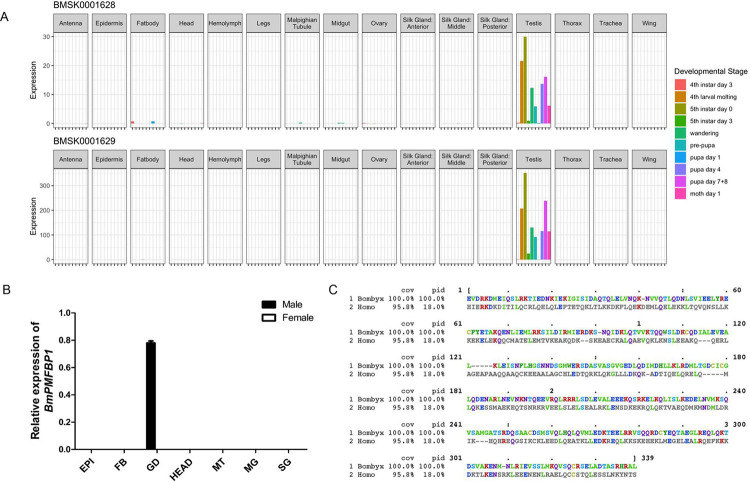
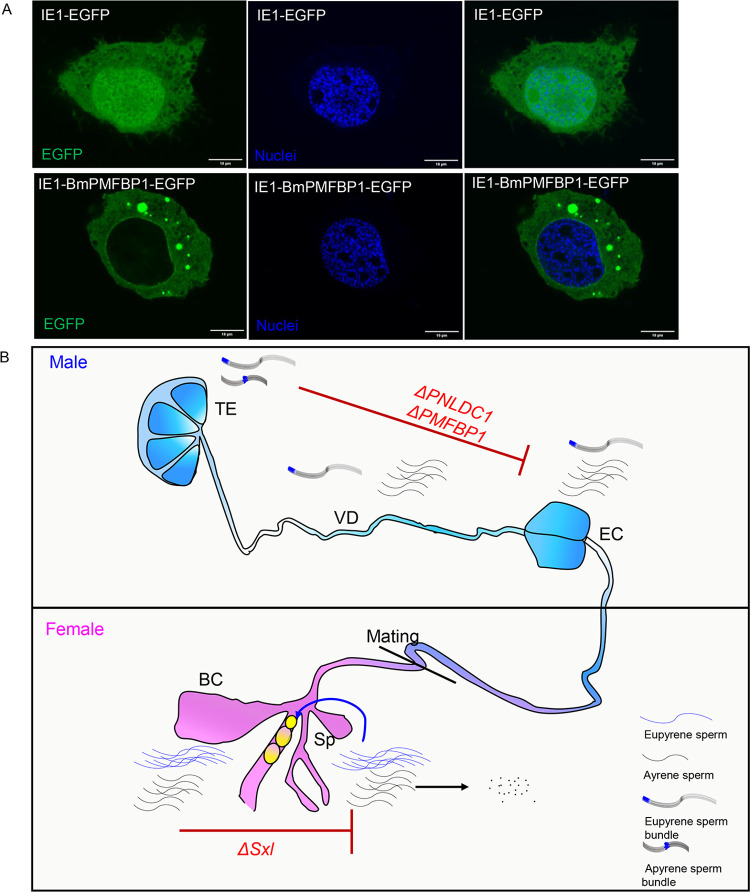
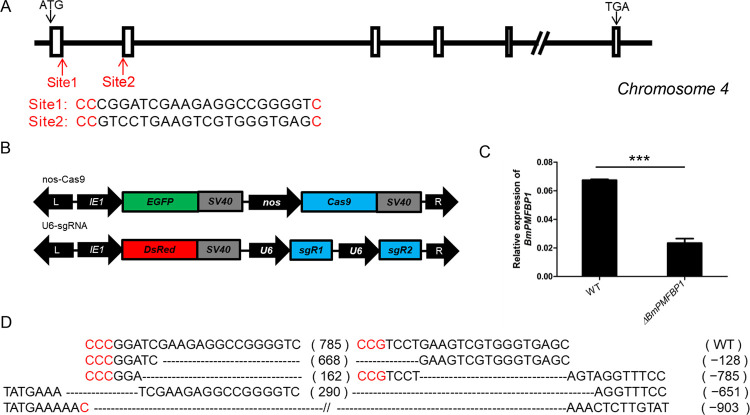
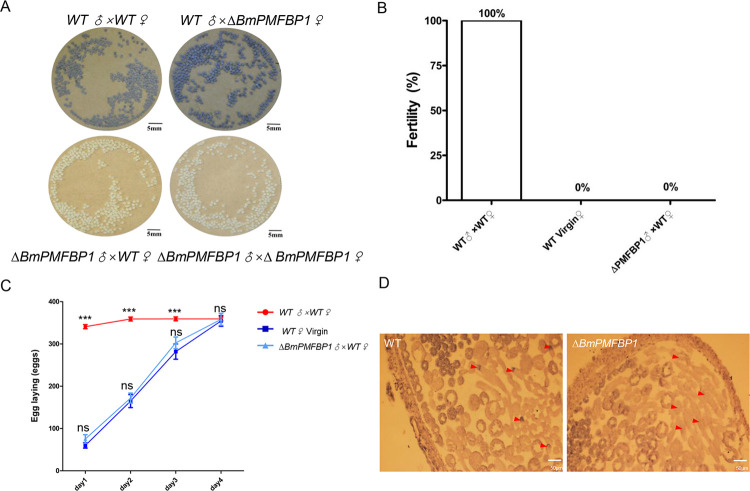
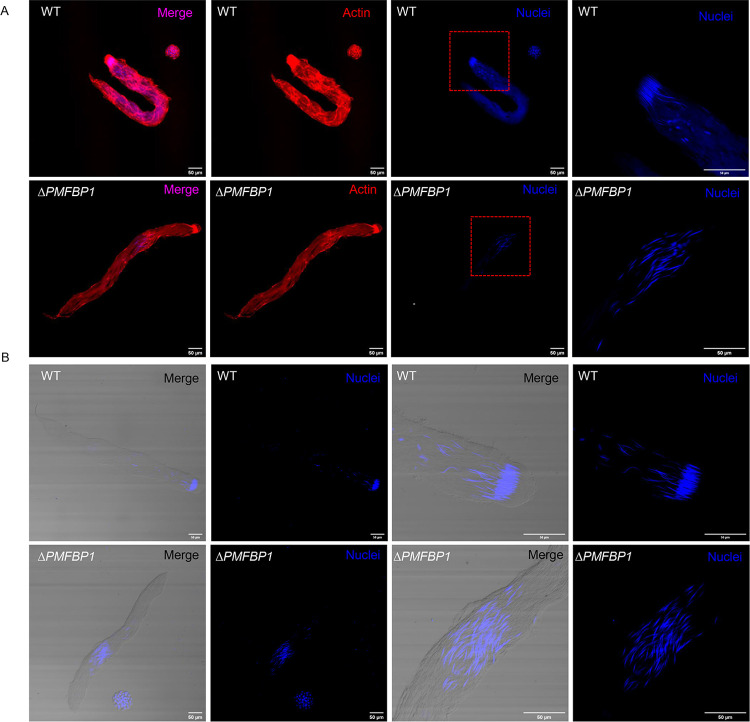
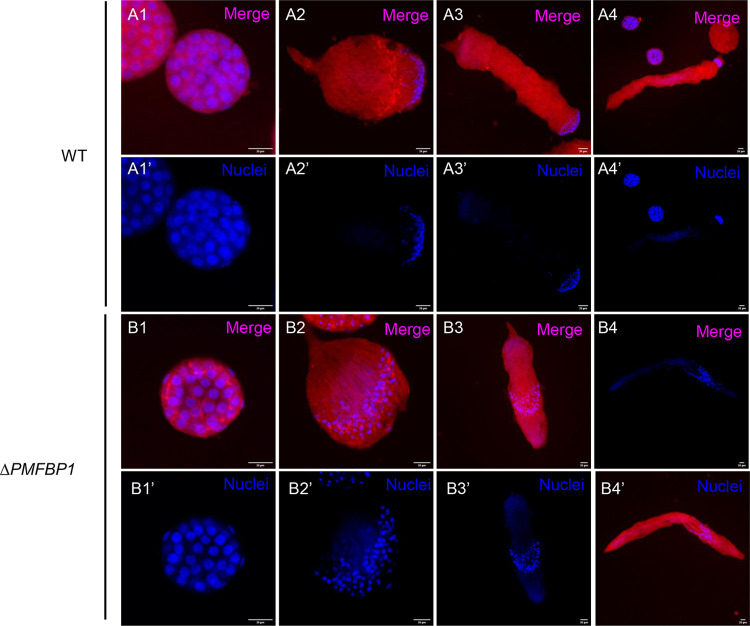
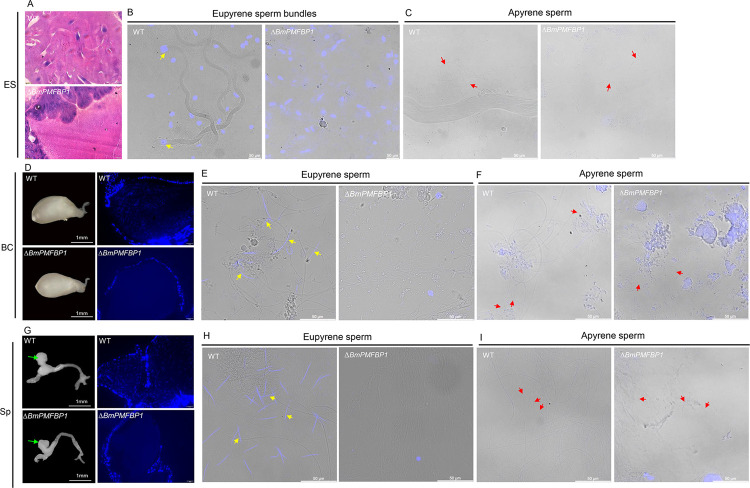
Sperm deliver the male complement of DNA to the ovum, and thus play a key role in sexual reproduction. Accordingly, spermatogenesis has outstanding significance in fields as disparate as infertility treatments and pest-control, making it a broadly interesting and important focus for molecular genetics research in a wide range of species. Here we investigate spermatogenesis in the model lepidopteran insect Bombyx mori (silkworm moth), with particular focus on the gene PMFBP1 (polyamine modulated factor 1 binding protein 1). In humans and mouse, PMFBP1 is essential for spermatogenesis, and mutations of this gene are associated with acephalic spermatozoa, which cause infertility. We identified a B. mori gene labeled as "PMFBP1" in GenBank's RefSeq database and sought to assess its role in spermatogenesis. Like in mammals, the silkworm version of this gene (BmPMFBP1) is specifically expressed in testes. We subsequently generated BmPMFBP1 mutants using a transgenic CRISPR/Cas9 system. Mutant males were sterile while the fertility of mutant females was comparable to wildtype females. In B. mori, spermatogenesis yields two types of sperm, the nucleated fertile eupyrene sperm, and anucleated unfertile apyrene sperm. Mutant males produced abnormal eupyrene sperm bundles but normal apyrene sperm bundles. For eupyrene sperm, nuclei were mislocated and disordered inside the bundles. We also found the BmPMFBP1 deficiency blocked the release of eupyrene sperm bundles from testes to ejaculatory seminalis. We found no obvious abnormalities in the production of apyrene sperm in mutant males, and double-matings with apyrene-deficient sex-lethal mutants rescued the ΔBmPMFBP1 infertility phenotype. These results indicate BmPMFBP1 functions only in eupyrene spermatogenesis, and highlight that distinct genes underlie the development of the two sperm morphs commonly found in Lepidoptera. Bioinformatic analyses suggest PMFBP1 may have evolved independently in lepidoptera and mammals, and that despite the shared name, are likely not homologous genes.
精子将雄性 DNA 传递给卵子,因此在有性生殖中起着关键作用。因此,精子发生在不育治疗和害虫防治等不同领域都具有突出的意义,这使得它成为广泛有趣和重要的分子遗传学研究焦点,涉及许多物种。在这里,我们研究了模式鳞翅目昆虫家蚕(蚕丝蛾)中的精子发生,特别关注基因 PMFBP1(多胺调节因子 1 结合蛋白 1)。在人类和小鼠中,PMFBP1 对精子发生至关重要,该基因的突变与无头精子有关,导致不育。我们在 GenBank 的 RefSeq 数据库中鉴定了一个标记为“PMFBP1”的家蚕基因,并试图评估其在精子发生中的作用。与哺乳动物一样,这种基因的家蚕版本(BmPMFBP1)特异性在睾丸中表达。随后,我们使用转基因 CRISPR/Cas9 系统生成了 BmPMFBP1 突变体。突变雄性不育,而突变雌性的生育能力与野生型雌性相当。在家蚕中,精子发生产生两种类型的精子,有核可育的真精囊精子和无核不育的假精囊精子。突变雄性产生异常的真精囊精子束,但正常的假精囊精子束。对于真精囊精子,核在束内错位和紊乱。我们还发现 BmPMFBP1 缺乏会阻止真精囊精子束从睾丸释放到射精精液中。我们在家蚕突变雄性中没有发现假精囊精子产生的明显异常,并且与假精囊缺陷性性致死突变体的双重交配挽救了 ΔBmPMFBP1 不育表型。这些结果表明 BmPMFBP1 仅在家蚕的真精囊精子发生中起作用,并强调了在鳞翅目昆虫中普遍存在的两种精子形态的发育所依赖的不同基因。生物信息学分析表明,PMFBP1 可能在鳞翅目动物和哺乳动物中独立进化,并且尽管名称相同,但它们可能不是同源基因。