Sohrab Sayed Sartaj, El-Kafrawy Sherif Aly, Azhar Esam Ibraheem
Special Infectious Agents Unit, King Fahd Medical Research Center, King Abdulaziz University, Post Box, No-80216, Jeddah 21589, Saudi Arabia.
Department of Medical Laboratory Sciences, Faculty of Applied Medical Sciences, King Abdulaziz University, Jeddah, Saudi Arabia.
J King Saud Univ Sci. 2022 Jun;34(4):101965. doi: 10.1016/j.jksus.2022.101965. Epub 2022 Mar 16.
The COVID-19 was identified for the first time from the sea food market, Wuhan city, China in 2019 and the pathogenic organism was identified as SARS-CoV-2. Currently, this virus has spread to 223 countries and territories and known as a serious issue for the global human community. Many vaccines have been developed and used for immunization.
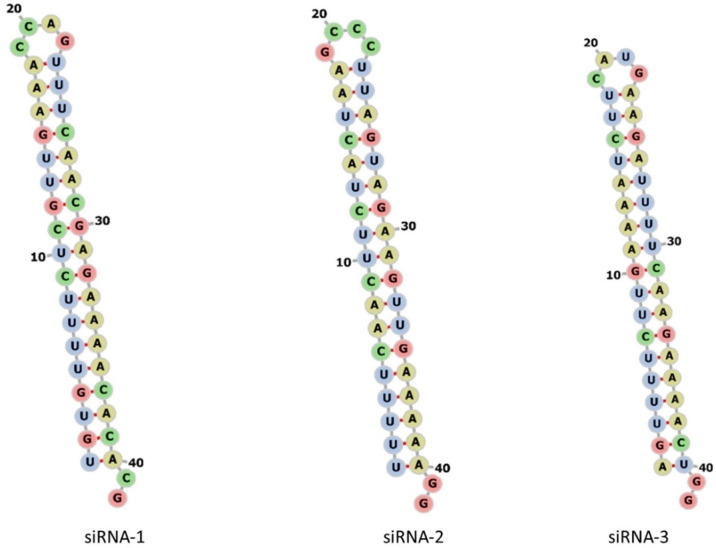
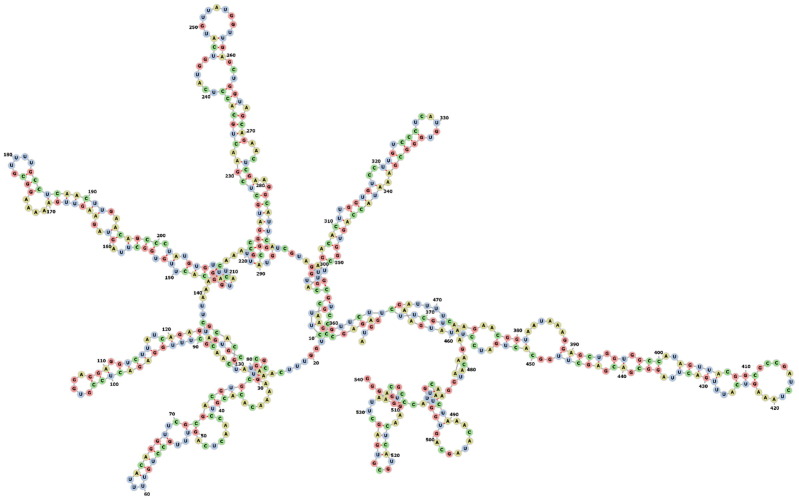
We have reported the insilico prediction, designing, secondary structure prediction, molecular docking analysis, and assessment of siRNAs against SARS-CoV-2. The online bioinformatic approach was used for siRNAs selection and designing. The selected siRNAs were evaluated for antiviral efficacy by using Lipofectamine 2000 as delivery agent to HEK-293 cells. The MTT assay was used for cytotoxicity determination. The antiviral efficacy of potential siRNAs was determined based on the Ct value of q-RT-PCR and the data analysis was done by Prism-GraphPad software.
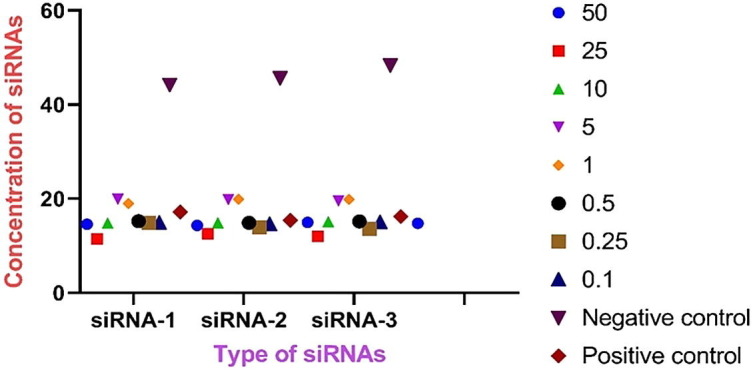
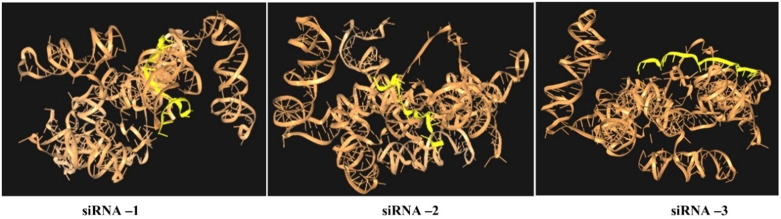
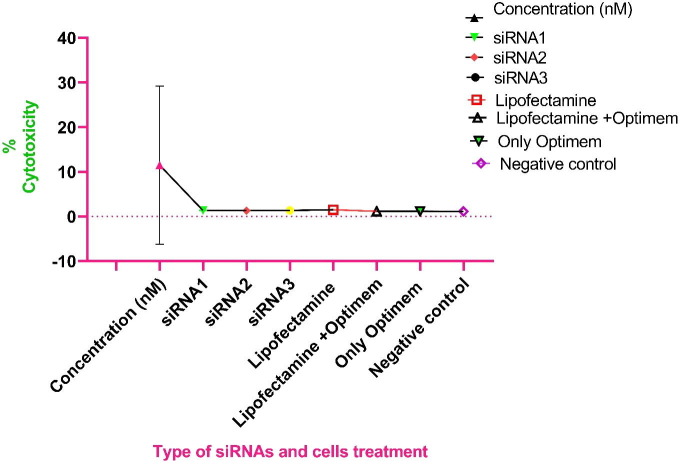
The analyzed data resulted in the selection of only three siRNAs out of twenty-six siRNAs generated by online software. The secondary structure prediction and molecular docking analysis of siRNAs revealed the efficient binding to the target. There was no cellular toxicity observed in the HEK-293 cells at any tested concentrations of siRNAs. The purification of RNA was completed from inoculated cells and subjected to q-RT-PCR. The highest Ct value was observed in siRNA 3 than the others. The results offered valuable evidence and invigorated us to assess the potency of siRNAs by using alone or in combination in other human cells.
The data generated from this study indicates the significance of in silico prediction and narrow down the potential siRNA' against SARS-CoV-2, and molecular docking investigation offered the effective siRNAs binding with the target. Finally, it is concluded that the online bioinformatics approach provided the prediction and selection of siRNAs with better antiviral efficacy. The siRNA-3 was observed to be the best for reduction of viral RNA in cells.
2019年首次在中国武汉市的海鲜市场发现了新型冠状病毒肺炎(COVID-19),其病原体被鉴定为严重急性呼吸综合征冠状病毒2(SARS-CoV-2)。目前,这种病毒已传播到223个国家和地区,成为全球人类社会面临的一个严重问题。许多疫苗已被研发并用于免疫接种。
我们报告了针对SARS-CoV-2的计算机预测、设计、二级结构预测、分子对接分析以及小干扰RNA(siRNAs)的评估。采用在线生物信息学方法进行siRNAs的选择和设计。以Lipofectamine 2000作为转染试剂,将所选siRNAs转染至人胚肾293(HEK-293)细胞,评估其抗病毒效果。采用MTT法测定细胞毒性。根据实时荧光定量聚合酶链反应(q-RT-PCR)的Ct值确定潜在siRNAs的抗病毒效果,并使用Prism-GraphPad软件进行数据分析。
在线软件生成的26个siRNAs中,经分析数据仅筛选出3个siRNAs。siRNAs的二级结构预测和分子对接分析表明其与靶标有效结合。在任何测试浓度的siRNAs作用下,HEK-293细胞均未观察到细胞毒性。从接种细胞中完成RNA纯化,并进行q-RT-PCR。siRNA 3的Ct值高于其他siRNAs。这些结果提供了有价值的证据,并激励我们评估siRNAs单独或联合在其他人类细胞中的效力。
本研究产生的数据表明了计算机预测的重要性,并缩小了针对SARS-CoV-2的潜在siRNAs范围,分子对接研究提供了与靶标有效结合的siRNAs。最后得出结论,在线生物信息学方法提供了具有更好抗病毒效果的siRNAs的预测和选择。观察到siRNA-3在降低细胞中病毒RNA方面效果最佳。