Adelaide Medical School, Faculty of Health and Medical Sciences, University of Adelaide, Adelaide, South Australia, Australia.
Department of Gastroenterology, The Queen Elizabeth Hospital, Adelaide, South Australia, Australia.
J Gastroenterol Hepatol. 2022 Jul;37(7):1263-1274. doi: 10.1111/jgh.15832. Epub 2022 Mar 31.
Rates of antimicrobial-resistant Helicobacter pylori infection are rising globally; however, geospatial location and its interaction with risk factors for infection have not been closely examined.
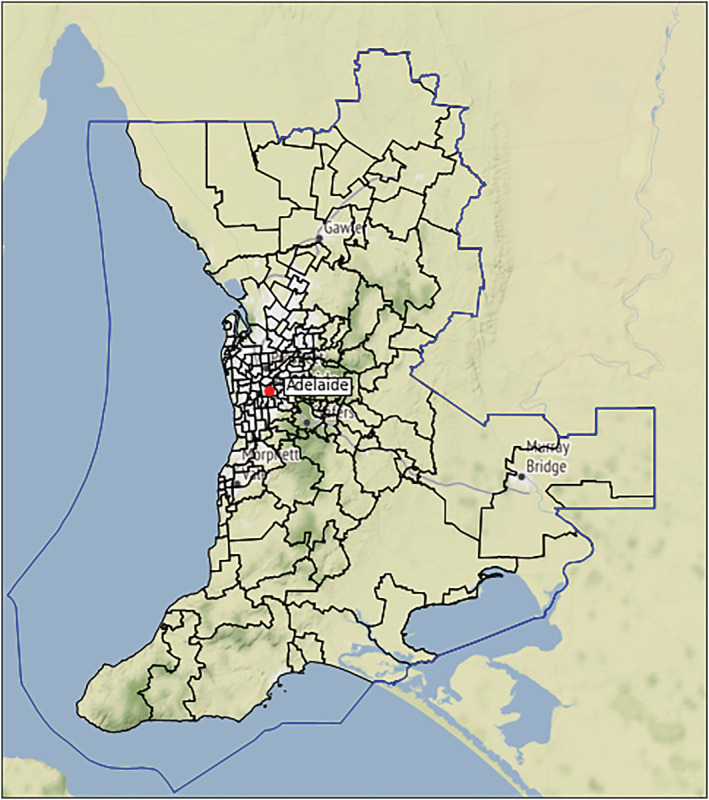
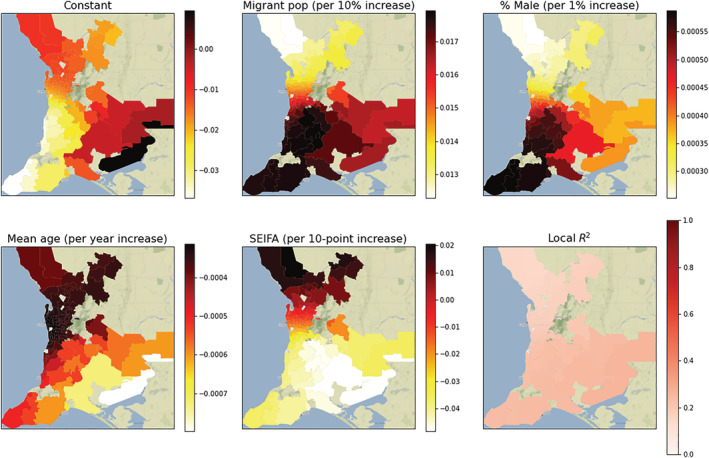
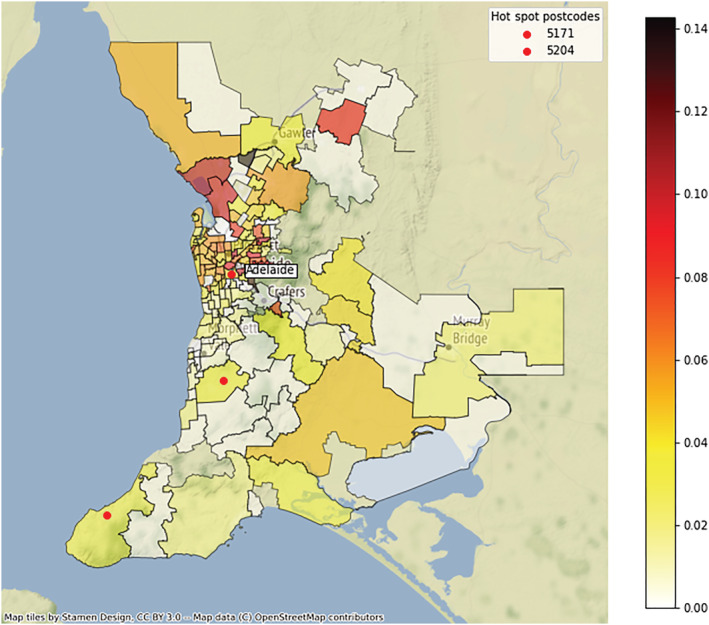
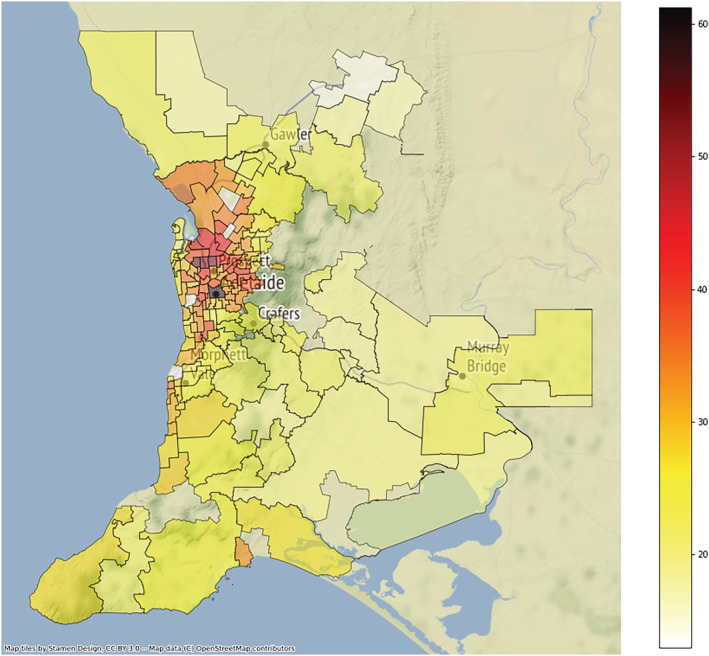
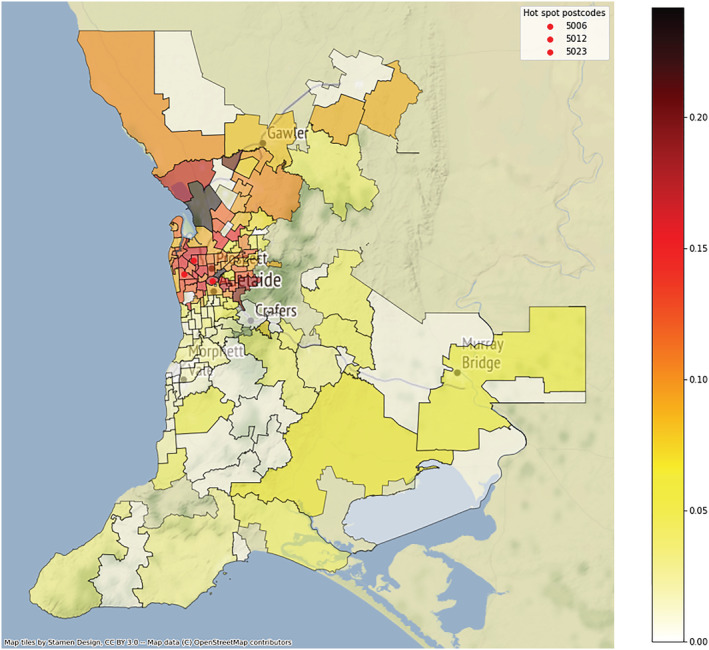
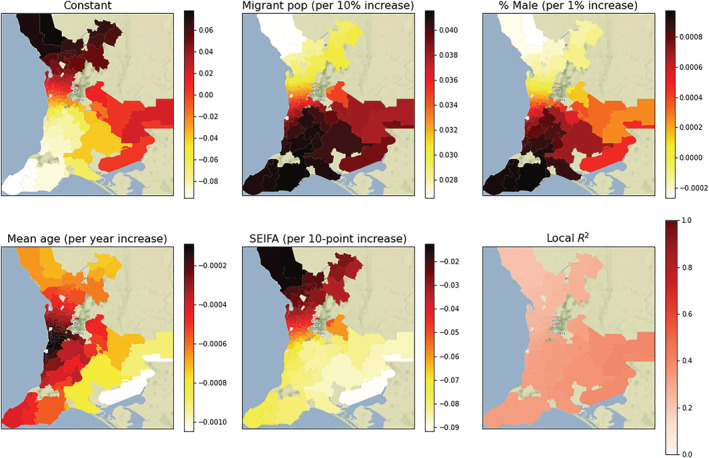
Gastric biopsy specimens were collected to detect H. pylori infection at multiple centers in Adelaide, South Australia, between 1998 and 2017. The geospatial distribution of antibiotic-resistant H. pylori in the Greater Adelaide region was plotted using choropleth maps. Moran's I was used to assess geospatial correlation, and multivariate linear regression (MLR) was used to examine associations between migration status, socioeconomic status, age, gender, and rates of H. pylori positivity and antibiotic resistance. Geographically weighted regression (GWR) was used to determine the extent to which the associations varied according to geospatial location.
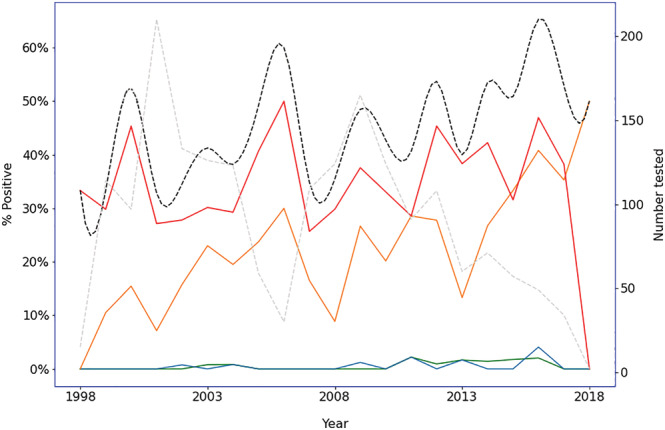
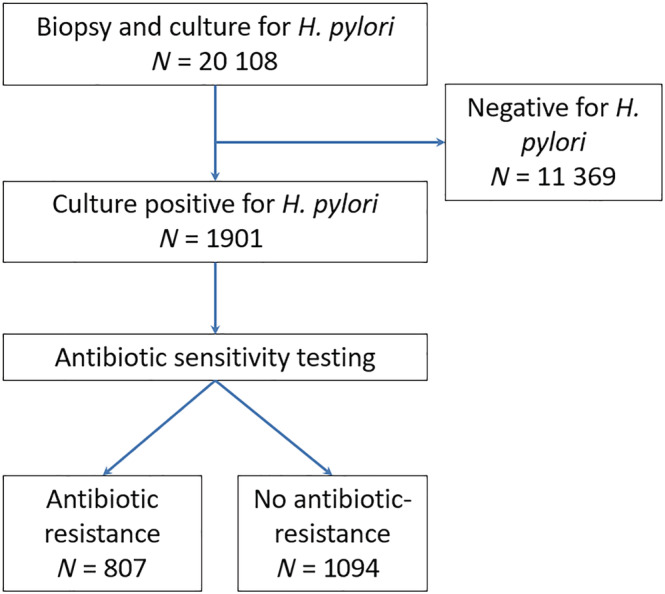
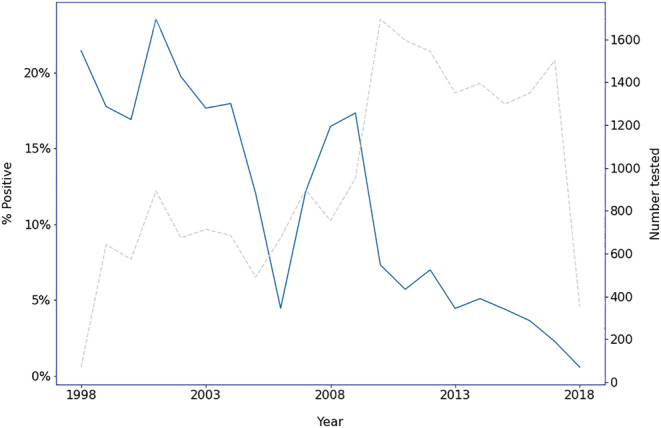
Of 20 108 biopsies across 136 postcodes within the Greater Adelaide region, 1901 (9.45%) were H. pylori positive. Of these, 797 (41.9%) displayed clarithromycin, tetracycline, metronidazole, or amoxicillin resistance. In MLR, migration status was associated with the rate of H. pylori positivity (β = 3.85% per 10% increase in a postcode's migrant population; P < 0.001). H. pylori positivity and resistance to any antibiotic were geospatially clustered (Moran's I = 0.571 and 0.280, respectively; P < 0.001 for both). In GWR, there was significant geospatial variation in the strength of the migrant association for both H. pylori positivity and antibiotic resistance.
Our study demonstrates the heterogeneous geospatial distribution of H. pylori positivity and antibiotic resistance, as well as its interaction with migrant status. Geographic location and migrant status are important factors to consider for H. pylori eradication therapy.
全球范围内,对抗生素耐药的幽门螺杆菌(Helicobacter pylori)感染率正在上升;然而,其地理空间位置及其与感染风险因素的相互作用尚未得到密切研究。
1998 年至 2017 年间,在南澳大利亚阿德莱德的多个中心采集胃活检标本,以检测 H. pylori 感染。使用面域图绘制阿德莱德大都市区抗生素耐药性 H. pylori 的地理空间分布。使用 Moran's I 评估地理空间相关性,并用多元线性回归(MLR)分析移民状况、社会经济地位、年龄、性别以及 H. pylori 阳性率和抗生素耐药率之间的关系。使用地理加权回归(GWR)确定关联随地理空间位置变化的程度。
在阿德莱德大都市区的 136 个邮区中的 20108 个活检中,1901 个(9.45%)为 H. pylori 阳性。其中,797 个(41.9%)显示克拉霉素、四环素、甲硝唑或阿莫西林耐药。在 MLR 中,移民状况与 H. pylori 阳性率相关(每 10%增加一个邮区的移民人口,阳性率增加 3.85%;P < 0.001)。H. pylori 阳性和对任何抗生素的耐药性呈地理空间聚类(Moran's I 分别为 0.571 和 0.280;两者均 P < 0.001)。在 GWR 中,H. pylori 阳性和抗生素耐药性的移民相关性存在显著的地理空间差异。
本研究表明,H. pylori 阳性和抗生素耐药性具有异质的地理空间分布,以及其与移民状况的相互作用。地理位置和移民状况是根除 H. pylori 治疗的重要考虑因素。