Polli Filip S, Kohlmeier Kristi A
Drug Design and Pharmacology, University of Copenhagen, Copenhagen 2100, Denmark.
World J Psychiatry. 2022 Feb 19;12(2):212-235. doi: 10.5498/wjp.v12.i2.212.
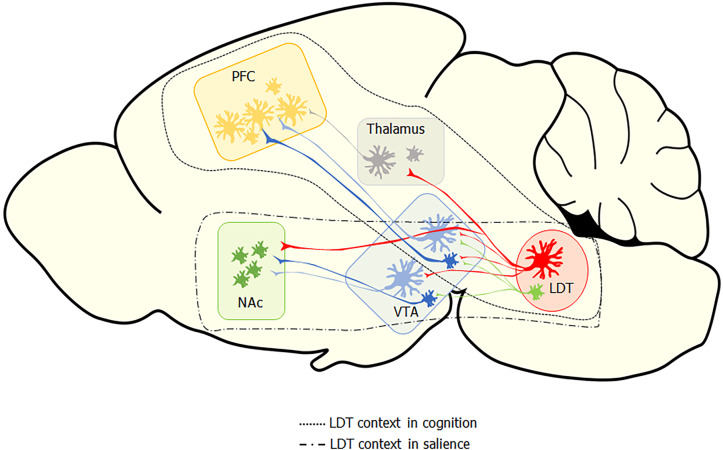
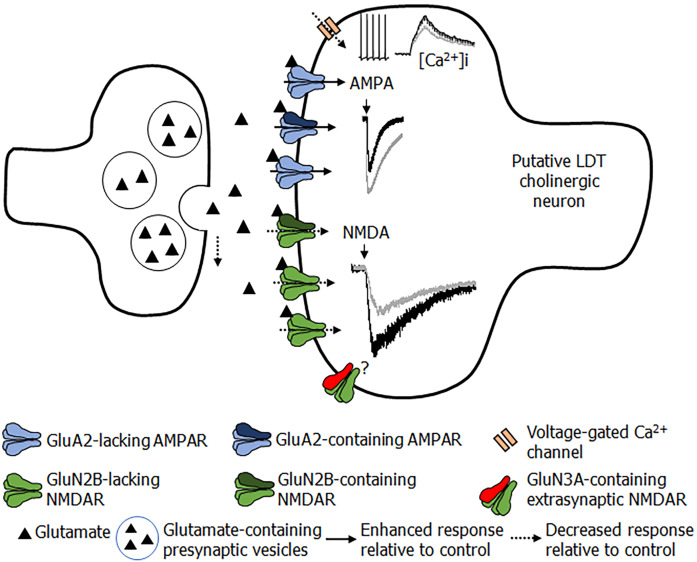
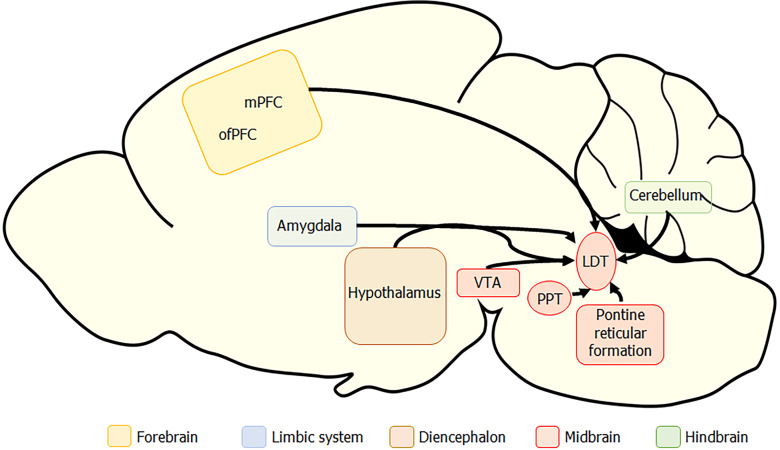
As we cycle between the states of wakefulness and sleep, a bilateral cholinergic nucleus in the pontine brain stem, the laterodorsal tegmentum (LDT), plays a critical role in controlling salience processing, attention, behavioral arousal, and electrophysiological signatures of the sub- and microstates of sleep. Disorders involving abnormal alterations in behavioral and motivated states, such as drug dependence, likely involve dysfunctions in LDT signaling. In addition, as the LDT exhibits connectivity with the thalamus and mesocortical circuits, as well as receives direct, excitatory input from the prefrontal cortex, a role for the LDT in cognitive symptoms characterizing attention-deficit/hyperactivity disorder (ADHD) including impulsivity, inflexibility, and dysfunctions of attention is suggested. Prenatal nicotine exposure (PNE) is associated with a higher risk for later life development of drug dependence and ADHD, suggesting alteration in development of brain regions involved in these behaviors. PNE has been shown to alter glutamate and cholinergic signaling within the LDT. As glutamate and acetylcholine are major excitatory mediators, these alterations would likely alter excitatory output to target regions in limbic motivational circuits and to thalamic and cortical networks mediating executive control. Further, PNE alters neuronal development and transmission within prefrontal cortex and limbic areas that send input to the LDT, which would compound effects of differential processing within the PNE LDT. When taken together, alterations in signaling in the LDT are likely to play a role in negative behavioral outcomes seen in PNE individuals, including a heightened risk of drug dependence and ADHD behaviors.
当我们在清醒和睡眠状态之间循环时,脑桥脑干中的一个双侧胆碱能核团,即外侧背盖区(LDT),在控制显著性处理、注意力、行为唤醒以及睡眠亚状态和微状态的电生理特征方面发挥着关键作用。涉及行为和动机状态异常改变的疾病,如药物依赖,可能与LDT信号传导功能障碍有关。此外,由于LDT与丘脑和中皮层回路存在连接,并且接收来自前额叶皮层的直接兴奋性输入,因此提示LDT在注意力缺陷多动障碍(ADHD)的认知症状(包括冲动、僵化和注意力功能障碍)中发挥作用。产前尼古丁暴露(PNE)与日后出现药物依赖和ADHD的风险较高有关,这表明参与这些行为的脑区发育发生了改变。研究表明,PNE会改变LDT内的谷氨酸和胆碱能信号传导。由于谷氨酸和乙酰胆碱是主要的兴奋性介质,这些改变可能会改变向边缘动机回路中的靶区域以及介导执行控制的丘脑和皮层网络的兴奋性输出。此外,PNE会改变向LDT发送输入的前额叶皮层和边缘区域内的神经元发育和传递,这会加剧PNE-LDT内差异处理的影响。综合来看,LDT信号传导的改变可能在PNE个体出现的负面行为结果中起作用,包括药物依赖和ADHD行为风险增加。