Dong Jie, Ma Tian-Shi, Tu Jiang-Feng, Chen You-Wei
Cancer Center, Department of Gastroenterology, Zhejiang Provincial People's Hospital (Affiliated People's Hospital, Hangzhou Medical College), Hangzhou 310014, Zhejiang Province, China.
Cancer Center, Department of Pathology, Zhejiang Provincial People's Hospital (Affiliated People's Hospital, Hangzhou Medical College), Hangzhou 310014, Zhejiang Province, China.
World J Gastrointest Surg. 2022 Feb 27;14(2):200-210. doi: 10.4240/wjgs.v14.i2.200.
Cronkhite-Canada syndrome (CCS) is a rare nonhereditary disease with a syndrome of multiple gastrointestinal polyps, skin pigmentation, hair loss, and fingernail/toenail dystrophy. Intussusception is a serious condition with an occurrence rate of 5% in adults, which is mainly caused by intestinal tumors or other intestinal occupations.
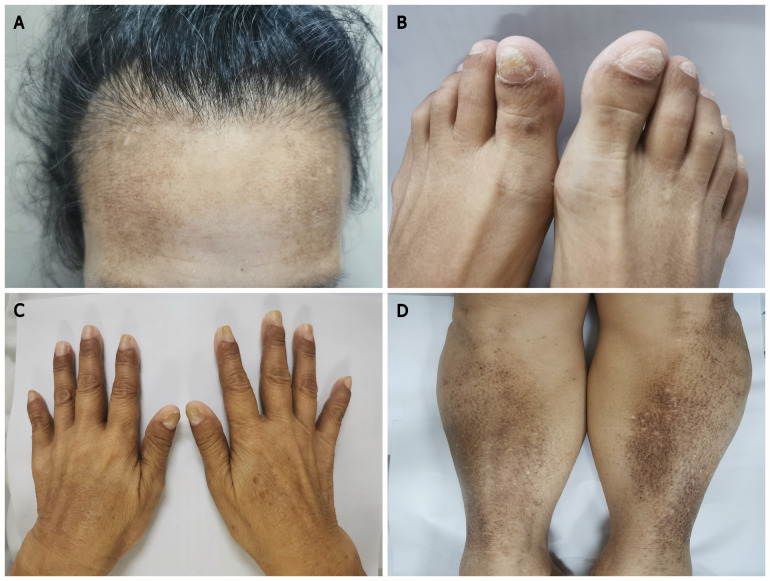
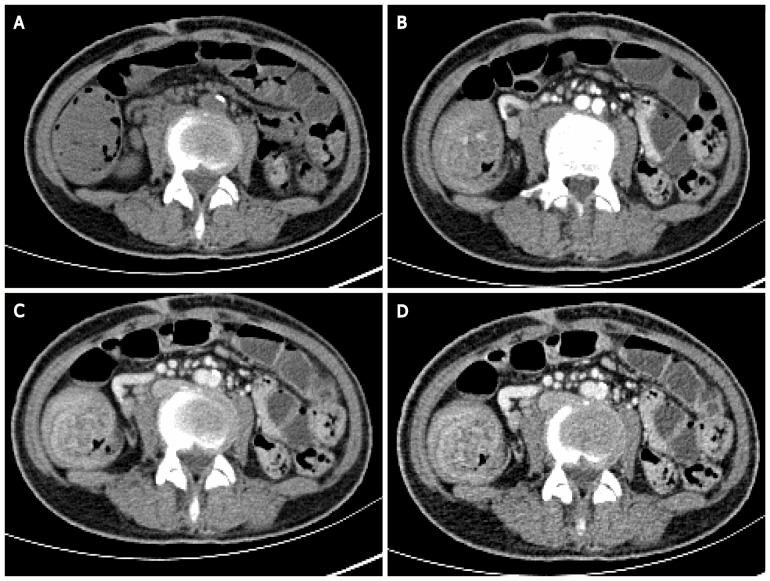
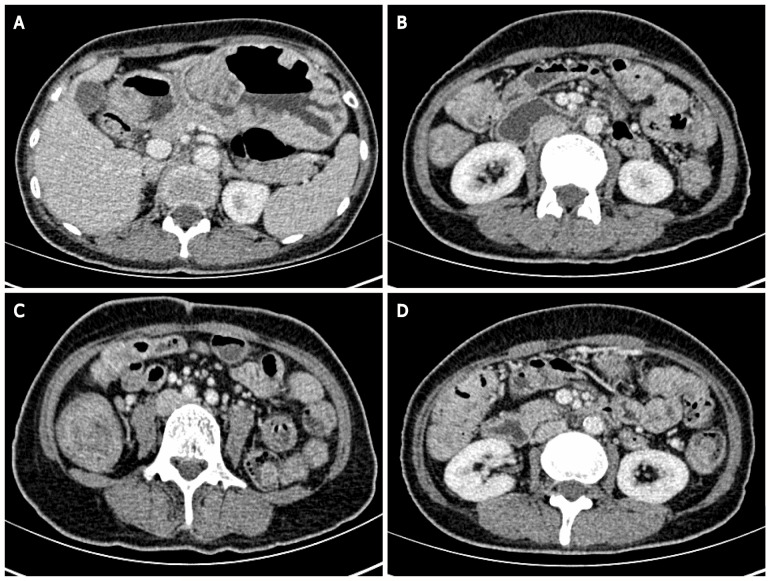
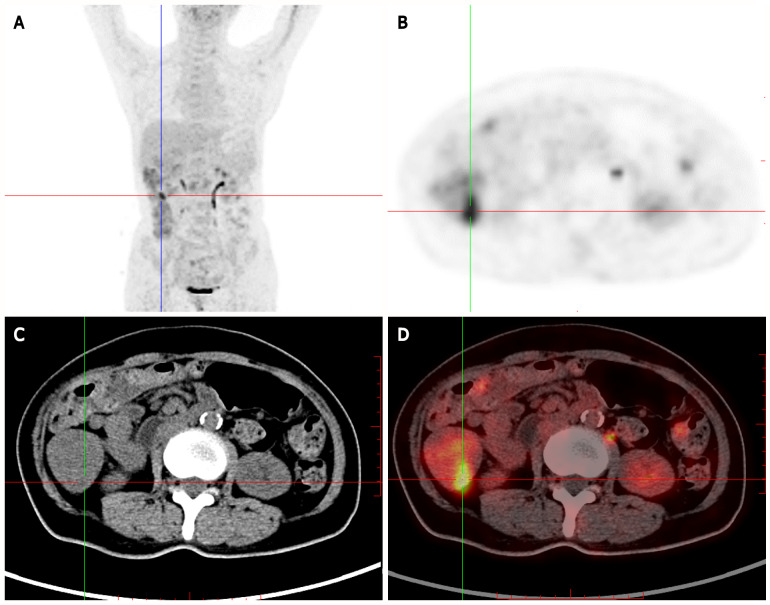
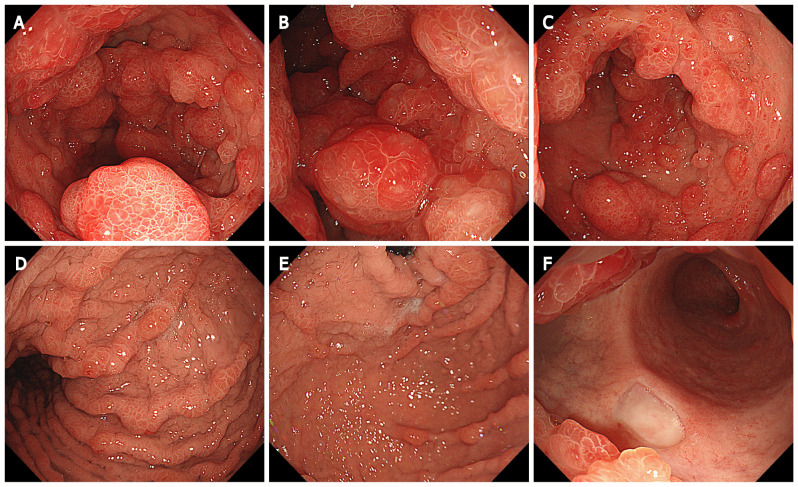
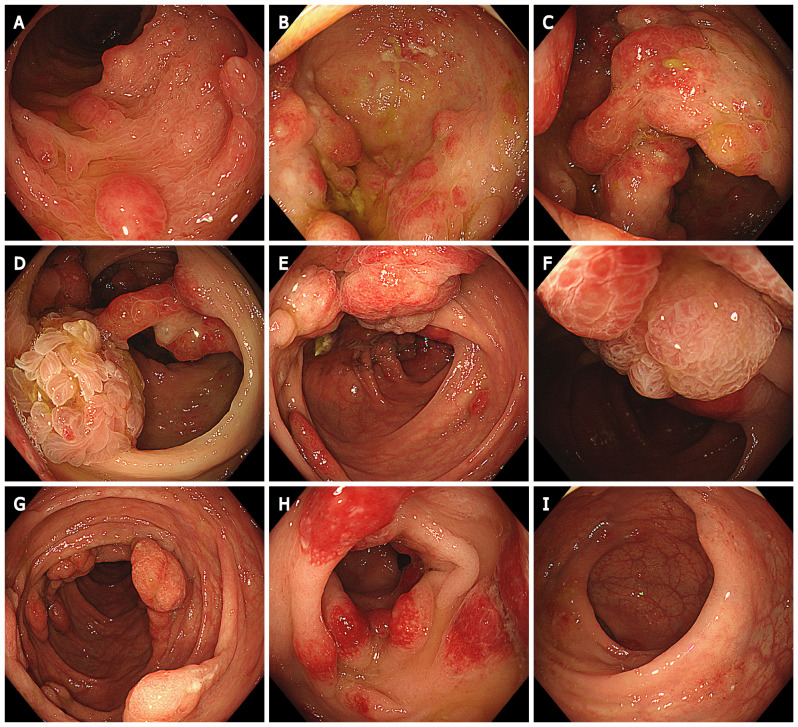
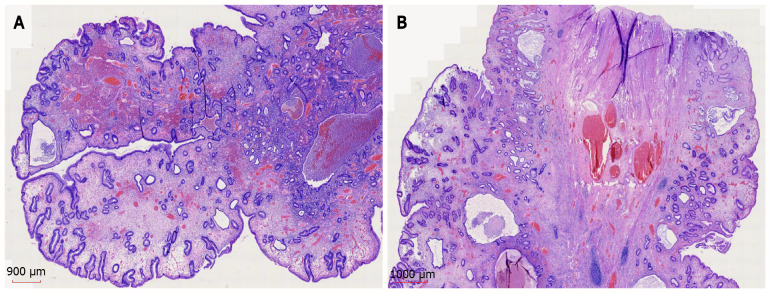
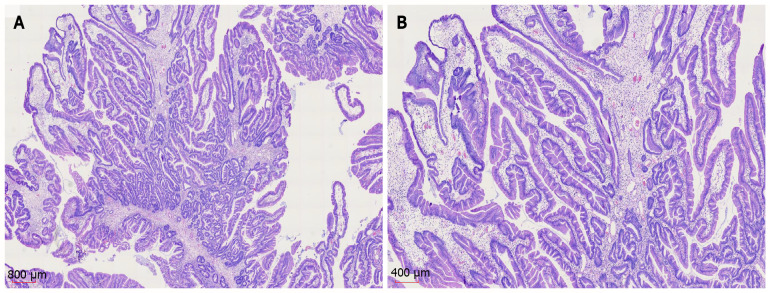
A 57-year-old woman was admitted to our hospital due to abdominal distension and pain for the past year. Her nausea and vomiting symptoms had been aggravated for the past month. Previous transoral enteroscopy results one year prior showed chronic erosive gastritis protuberans, duodenitis, and jejunitis. She had sparse body hair and brown pigmentation on the skin of her hands and bilateral anterior tibias. The nails of both hands were pale and lacked luster, and the fingernail of her ring finger was longitudinally cracked. Gastroscopy showed extensive diffuse polypoid lump changes in the gastric body and antrum, of 0.5-3 cm in size. Colonoscopy showed multiple polypoid mucosal bulges in the terminal ileum and multiple polyps (0.3-5 cm) throughout the colon. The patient was diagnosed with CCS and underwent partial excision of the polyps, but she refused hormone therapy. One month later, the patient complained of nausea and vomiting, accompanied by abdominal pain and inability to pass gas or stool. Contrast-enhanced computed tomography of the abdomen showed gastrointestinal polyposis and ileocecal intussusception. She underwent stomach and bowel surgery.
CCS, as a rare disease with poor prognosis, should be treated aggressively. Systematic steroids, immunosuppressive agents, and biological agents were not applied; thus, the patient's symptoms quickly progressed, and intussusception occurred. She had to undergo surgery. Improved compliance may lead to a better prognosis.
克朗凯特-加拿大综合征(CCS)是一种罕见的非遗传性疾病,具有多发性胃肠道息肉、皮肤色素沉着、脱发以及指甲/趾甲营养不良等症状。肠套叠是一种严重病症,在成年人中的发生率为5%,主要由肠道肿瘤或其他肠道占位性病变引起。
一名57岁女性因过去一年出现腹胀和腹痛入院。在过去一个月里,她的恶心和呕吐症状加重。一年前的经口小肠镜检查结果显示为慢性隆起糜烂性胃炎、十二指肠炎症和空肠炎。她身体毛发稀疏,双手及双侧胫前皮肤有褐色色素沉着。双手指甲苍白且无光泽,右手无名指指甲纵向裂开,。胃镜检查显示胃体和胃窦广泛弥漫性息肉样肿块改变,大小为0.5 - 3厘米。结肠镜检查显示回肠末端有多个息肉样黏膜隆起,整个结肠有多个息肉(0.3 - 5厘米)。该患者被诊断为CCS,并接受了息肉部分切除术,但她拒绝激素治疗。一个月后,患者主诉恶心、呕吐,伴有腹痛,且无法排气或排便。腹部增强计算机断层扫描显示胃肠道息肉病和回盲部肠套叠。她接受了胃肠手术。
CCS作为一种预后较差的罕见疾病,应积极治疗。由于未应用系统性类固醇、免疫抑制剂和生物制剂,患者症状迅速进展并发生了肠套叠,不得不接受手术。提高依从性可能会带来更好的预后。