Centre of Reproduction, Development & Aging and Institute of Translation Medicine, Faculty of Health Sciences, University of Macau, Avenida de Universidade, Taipa, Macau, China.
Brain Research Centre and Department of Biology, Southern University of Science and Technology, 1088 Xueyuan Blvd, Nanshan District, Shenzhen, Guangdong Province, China.
BMC Biol. 2022 Mar 23;20(1):71. doi: 10.1186/s12915-022-01272-9.
Despite recent progress in understanding the molecular mechanisms regulating aging and lifespan, and the pathways involved being conserved in different species, a full understanding of the aging process has not been reached. In particular, increasing evidence suggests an active role for the nervous system in lifespan regulation, with sensory neurons, as well as serotonin and GABA signaling, having been shown to regulate lifespan in Caenorhabditis elegans (C. elegans). However, the contribution of additional neural factors, and a broad understanding of the role of the nervous system in regulating aging remains to be established. Here, we examine the impact of the dopamine system in regulating aging in C. elegans.
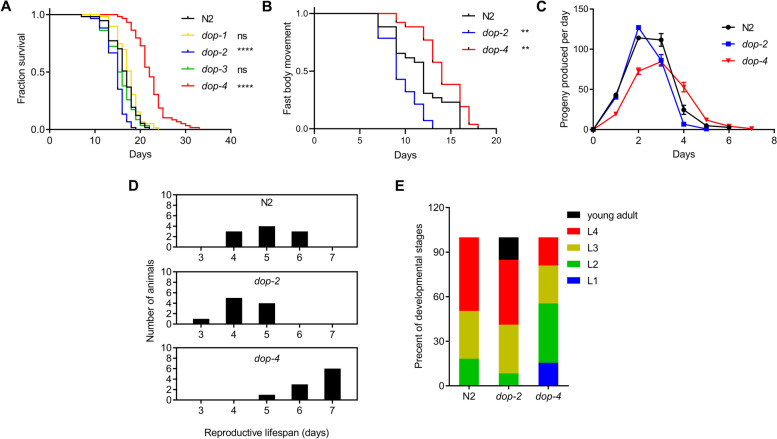
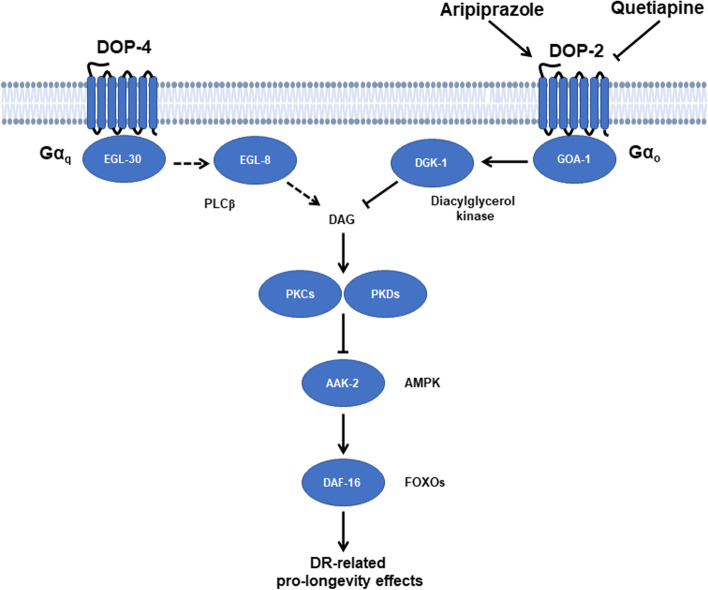
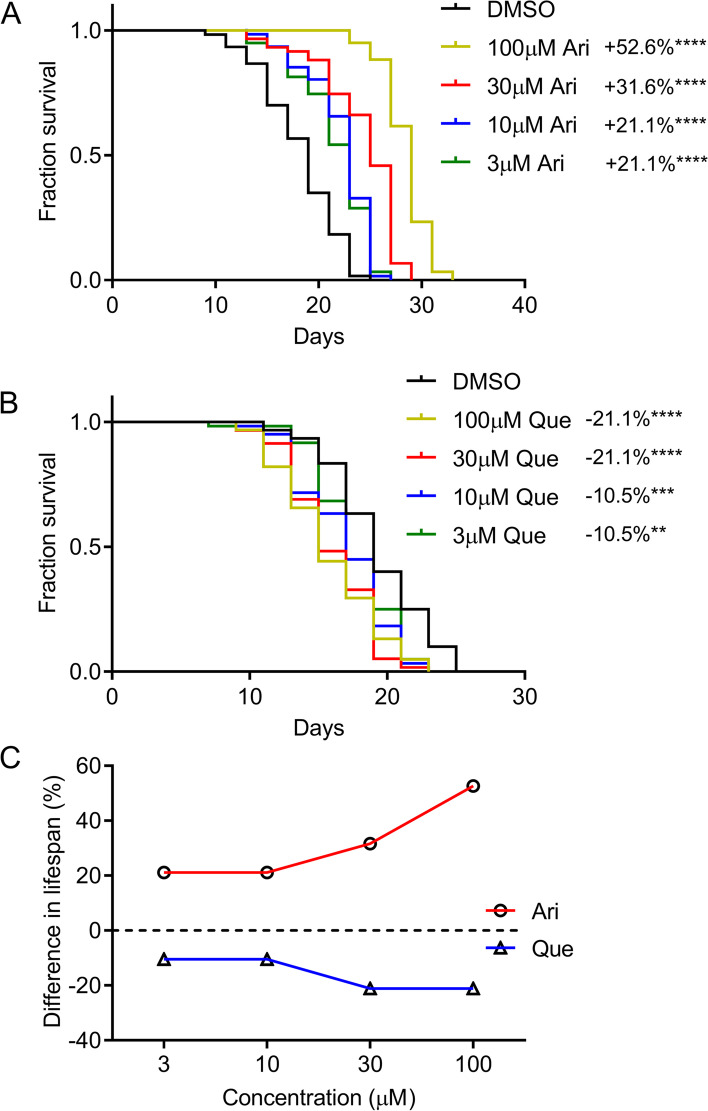
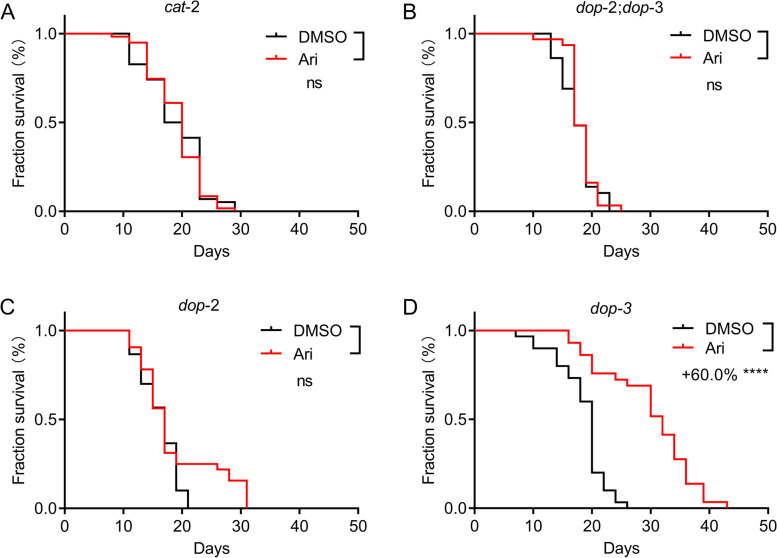
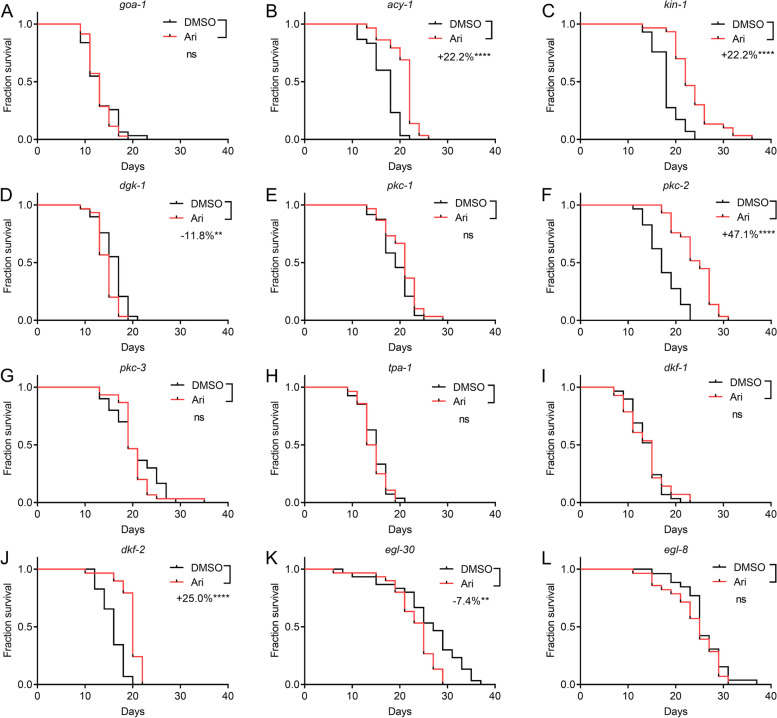
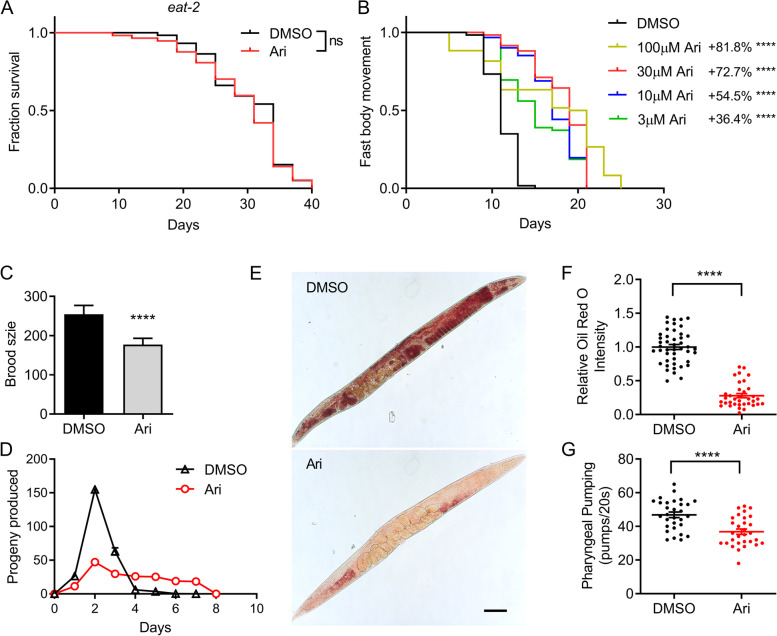
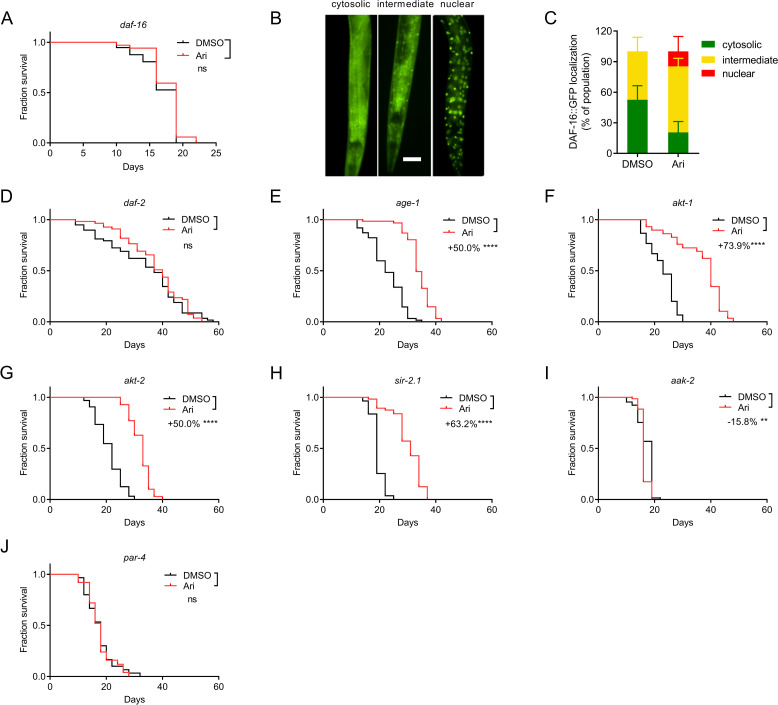
We report that mutations of DOP-4, a dopamine D1-like receptor (D1R), and DOP-2, a dopamine D2-like receptor (D2R) oppositely affected lifespan, fast body movement span, reproductive lifespan, and developmental rate in C. elegans. Activation of D2R using aripiprazole, an antipsychotic drug, robustly extended both lifespan and healthspan. Conversely, inhibition of D2R using quetiapine shortened worm lifespan, further supporting the role of dopamine receptors in lifespan regulation. Mechanistically, D2R signaling regulates lifespan through a dietary restriction mechanism mediated by the AAK-2-DAF-16 pathway. The DAG-PKC/PKD pathway links signaling between dopamine receptors and the downstream AAK-2-DAF-16 pathway to transmit longevity signals.
These data demonstrated a novel role of dopamine receptors in lifespan and dietary restriction regulation. The clinically approved antipsychotic aripiprazole holds potential as a novel anti-aging drug.
尽管近年来在理解调控衰老和寿命的分子机制方面取得了进展,而且不同物种中涉及的途径也具有保守性,但人们尚未完全了解衰老过程。特别是,越来越多的证据表明神经系统在寿命调控中发挥着积极作用,感觉神经元以及血清素和 GABA 信号已被证明可调控秀丽隐杆线虫(C. elegans)的寿命。然而,仍需确定其他神经因素的贡献,以及神经系统在调控衰老中的广泛作用。在这里,我们研究了多巴胺系统在调控 C. elegans 衰老中的作用。
我们报告说,多巴胺 D1 样受体(D1R)的 DOP-4 和多巴胺 D2 样受体(D2R)的 DOP-2 的突变会对秀丽隐杆线虫的寿命、快速身体运动跨度、生殖寿命和发育速度产生相反的影响。使用抗精神病药物阿立哌唑激活 D2R 可显著延长寿命和健康寿命。相反,使用喹硫平抑制 D2R 会缩短蠕虫的寿命,这进一步支持了多巴胺受体在寿命调控中的作用。从机制上讲,D2R 信号通过 AAK-2-DAF-16 途径介导的饮食限制机制来调节寿命。DAG-PKC/PKD 途径将多巴胺受体之间的信号与下游 AAK-2-DAF-16 途径联系起来,以传递长寿信号。
这些数据表明多巴胺受体在寿命和饮食限制调节中具有新的作用。临床批准的抗精神病药物阿立哌唑有可能成为一种新型的抗衰老药物。