Cerebrovascular Diseases Laboratory, Institute of Neuroscience, Chongqing Medical University, Chongqing, 400016, China.
Qujiang No. 2 Middle School, Xi'an, 710000, China.
Transl Psychiatry. 2022 Mar 22;12(1):114. doi: 10.1038/s41398-022-01875-4.
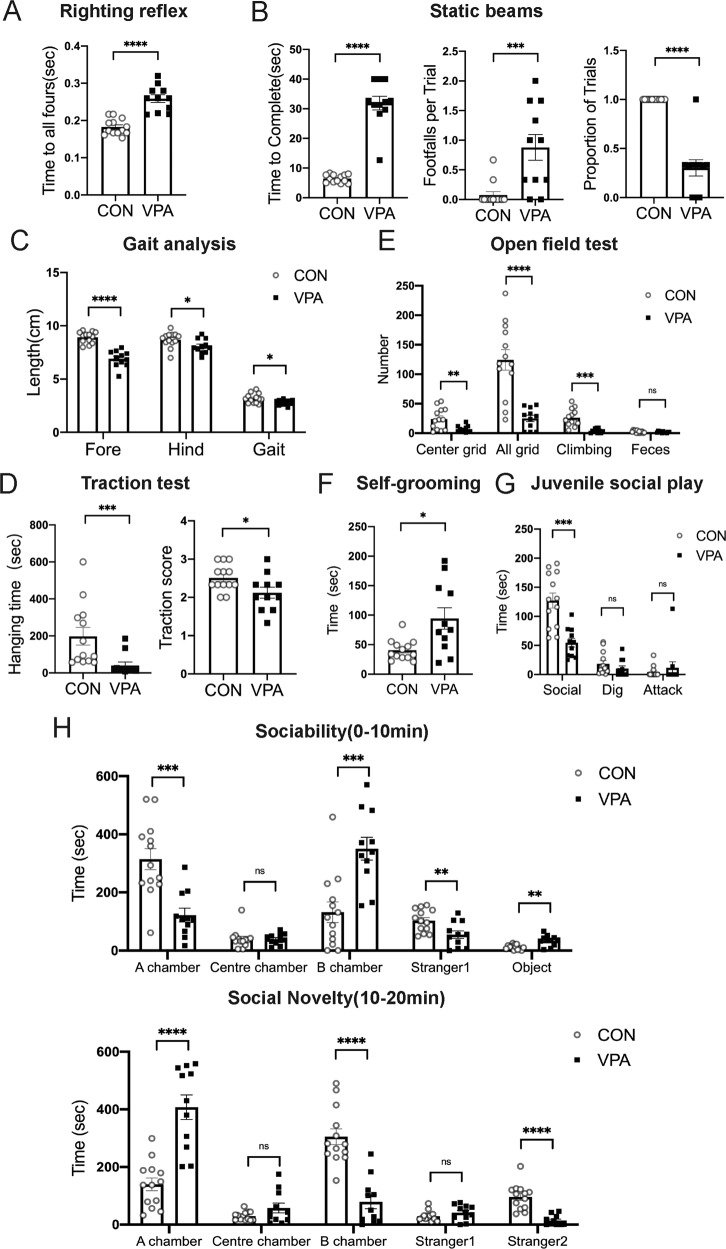
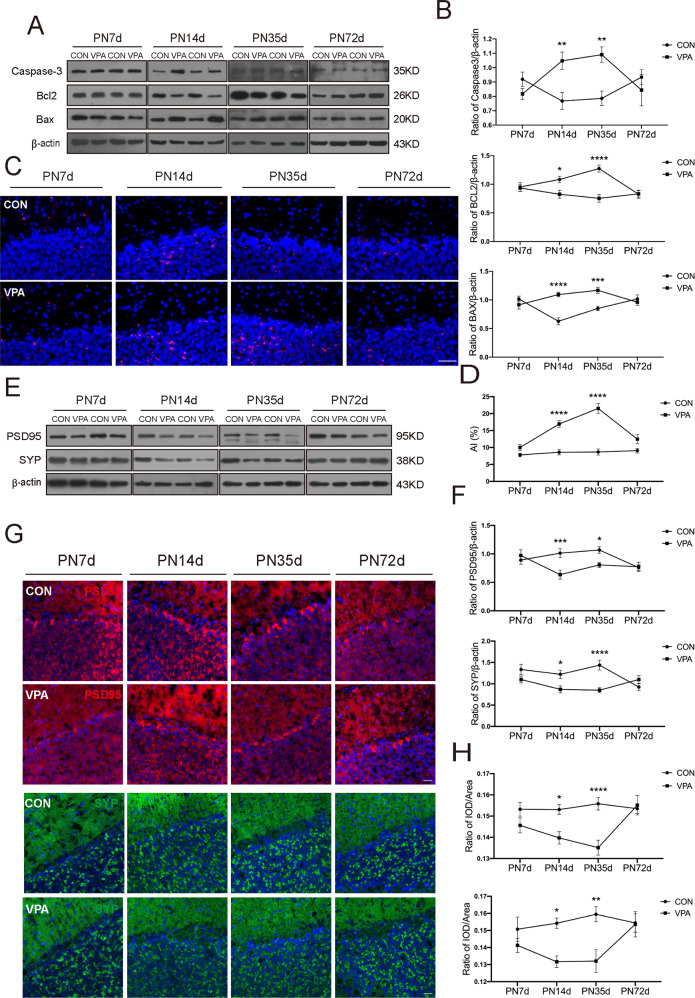
Autism spectrum disorder (ASD) is a neurodevelopmental disease featuring social interaction deficits and repetitive/stereotyped behaviours; the prevalence of this disorder has continuously increased. Progranulin (PGRN) is a neurotrophic factor that promotes neuronal survival and differentiation. However, there have not been sufficient studies investigating its effect in animal models of autism. This study investigated the effects of PGRN on autistic phenotypes in rats treated with valproic acid (VPA) and assessed the underlying molecular mechanisms. PGRN was significantly downregulated in the cerebellum at postnatal day 14 (PND14) and PND35 in VPA-exposed rats, which simultaneously showed defective social preference, increased repetitive behaviours, and uncoordinated movements. When human recombinant PGRN (r-PGRN) was injected into the cerebellum of newborn ASD model rats (PND10 and PND17), some of the behavioural defects were alleviated. r-PGRN supplementation also reduced cerebellar neuronal apoptosis and rescued synapse formation in ASD rats. Mechanistically, we confirmed that PGRN protects neurodevelopment via the PI3K/Akt/GSK-3β pathway in the cerebellum of a rat ASD model. Moreover, we found that prosaposin (PSAP) promoted the internalisation and neurotrophic activity of PGRN. These results experimentally demonstrate the therapeutic effects of PGRN on a rat model of ASD for the first time and provide a novel therapeutic strategy for autism.
自闭症谱系障碍(ASD)是一种神经发育疾病,其特征是社交互动缺陷和重复/刻板行为;这种疾病的患病率一直在持续上升。颗粒体蛋白(PGRN)是一种神经营养因子,可促进神经元存活和分化。然而,目前还没有足够的研究来调查其在自闭症动物模型中的作用。本研究探讨了颗粒体蛋白(PGRN)在丙戊酸(VPA)处理的大鼠自闭症表型中的作用,并评估了其潜在的分子机制。在 VPA 暴露的大鼠的出生后第 14 天(PND14)和第 35 天(PND35),小脑中的颗粒体蛋白(PGRN)明显下调,同时表现出社交偏好缺陷、重复行为增加和运动不协调。当将人重组颗粒体蛋白(r-PGRN)注射到新生自闭症模型大鼠(PND10 和 PND17)的小脑时,一些行为缺陷得到了缓解。r-PGRN 补充还减少了自闭症大鼠小脑神经元凋亡并挽救了突触形成。从机制上讲,我们证实颗粒体蛋白(PGRN)通过 PI3K/Akt/GSK-3β 通路在自闭症大鼠的小脑保护神经发育。此外,我们发现前脑啡肽原(PSAP)促进了颗粒体蛋白(PGRN)的内化和神经营养活性。这些结果首次在自闭症大鼠模型中实验证明了颗粒体蛋白(PGRN)的治疗效果,并为自闭症提供了一种新的治疗策略。