Liu Guan-Ting, Kochlamazashvili Gaga, Puchkov Dmytro, Müller Rainer, Schultz Carsten, Mackintosh Albert I, Vollweiter Dennis, Haucke Volker, Soykan Tolga
Leibniz-Forschungsinstitut für Molekulare Pharmakologie (FMP), Berlin, Germany.
European Molecular Biology Laboratory (EMBL), Cell Biology and Biophysics Unit, Heidelberg, Germany.
EMBO J. 2022 May 2;41(9):e109352. doi: 10.15252/embj.2021109352. Epub 2022 Mar 22.
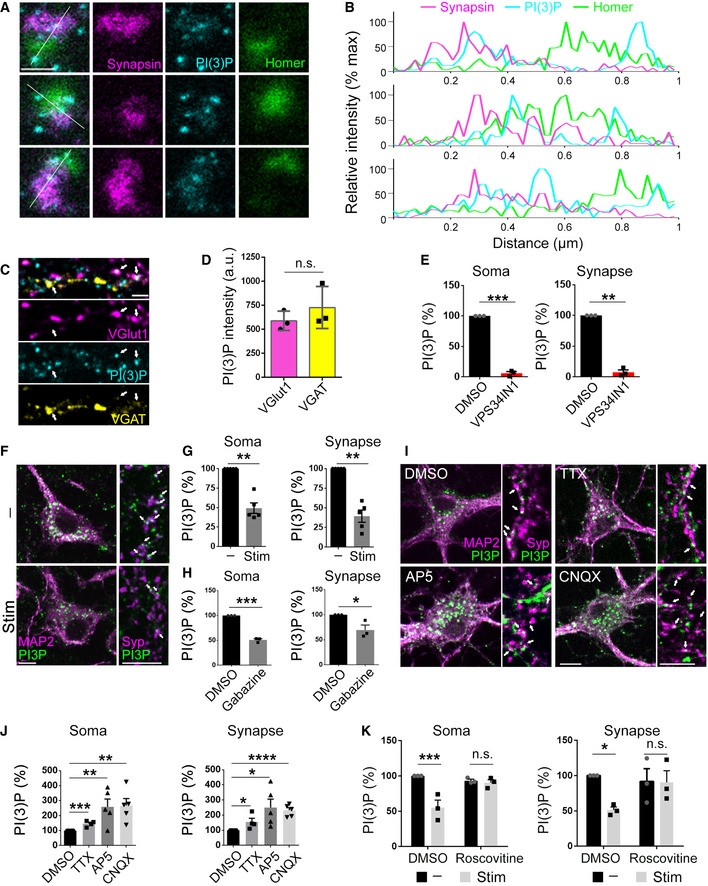
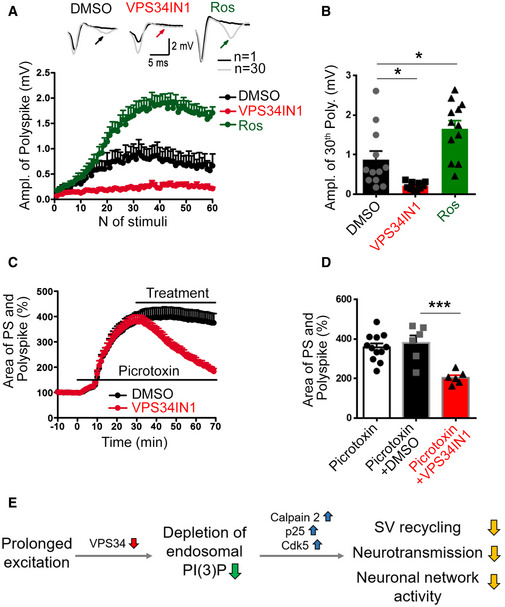
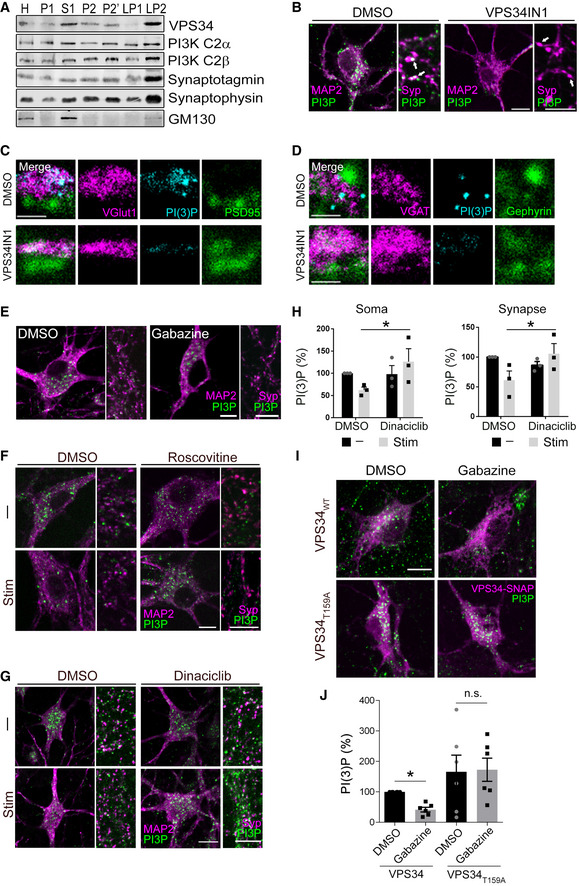
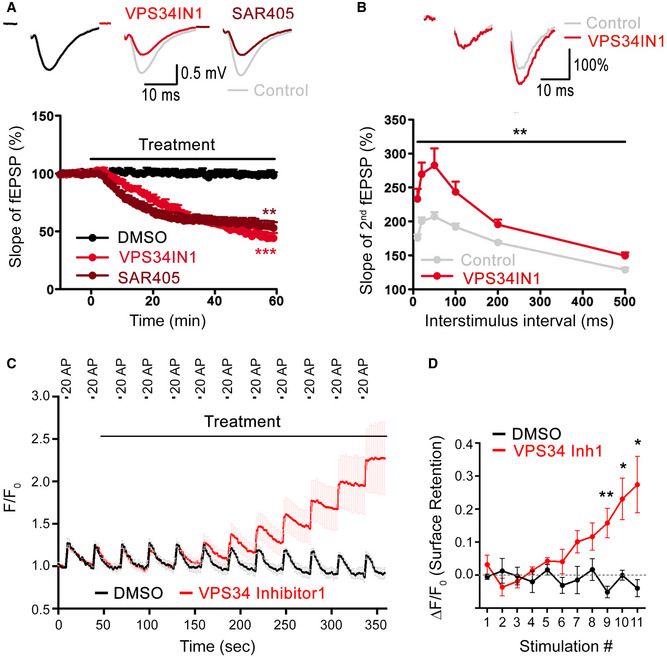
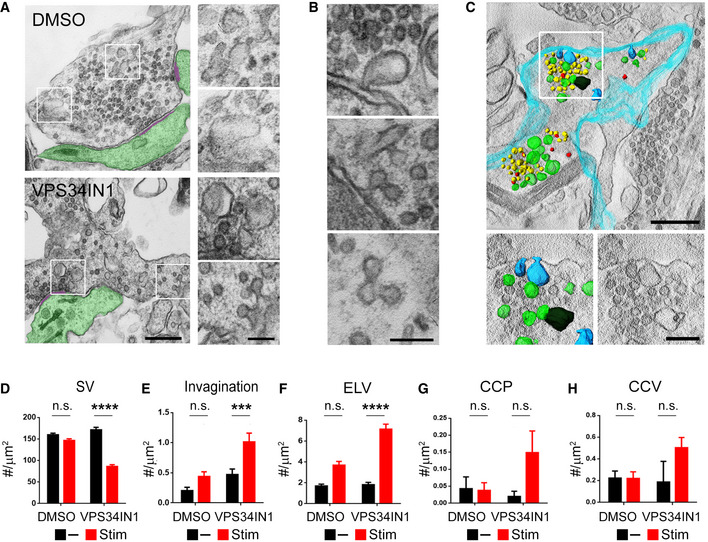
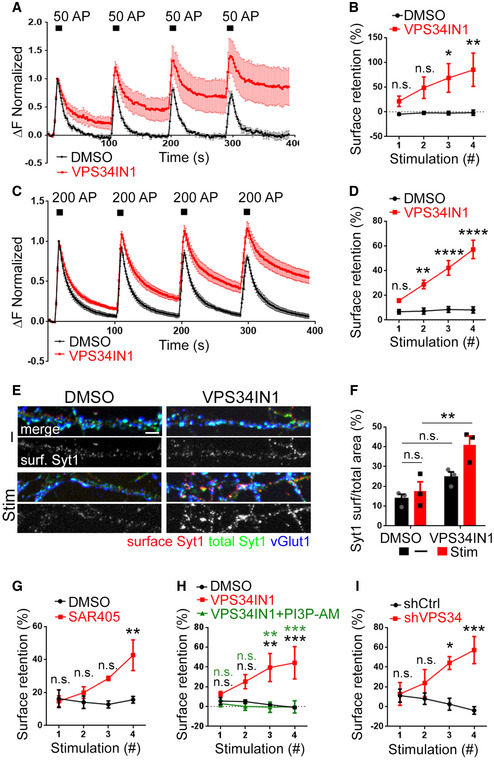
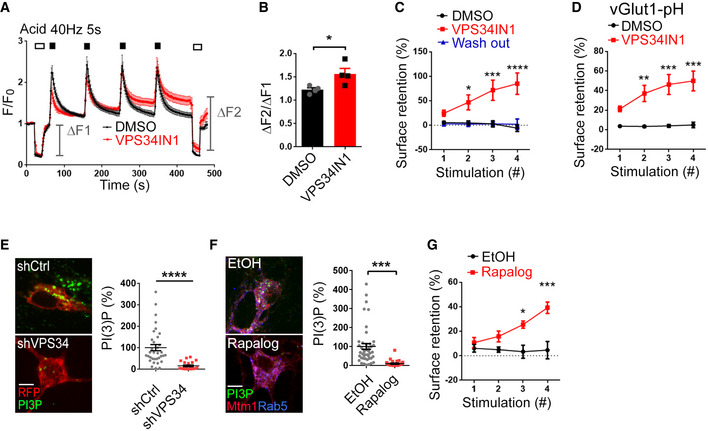
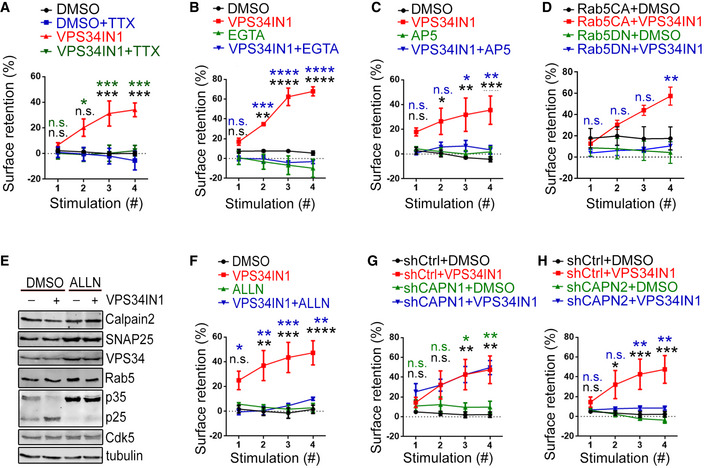
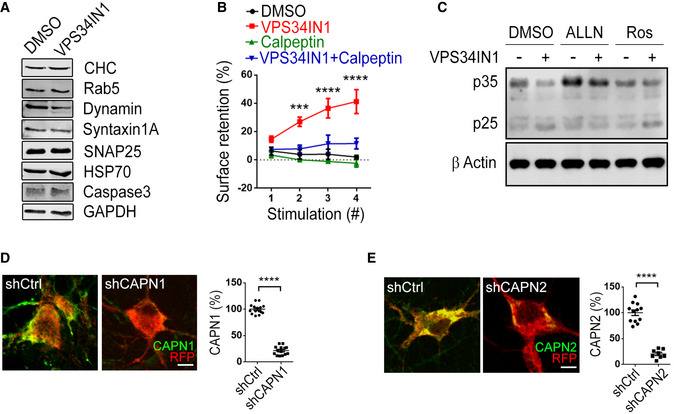
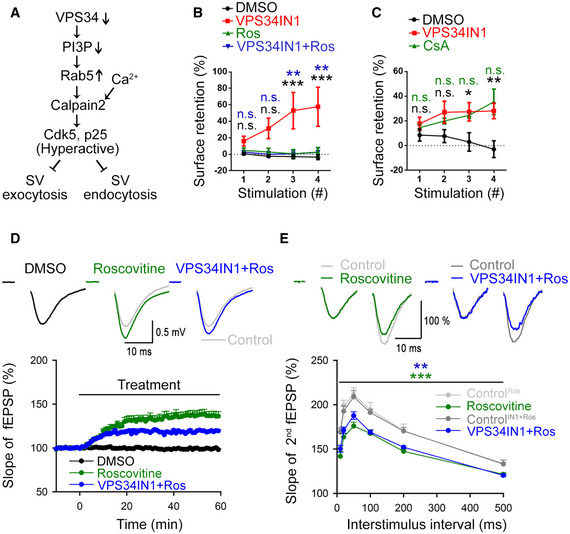
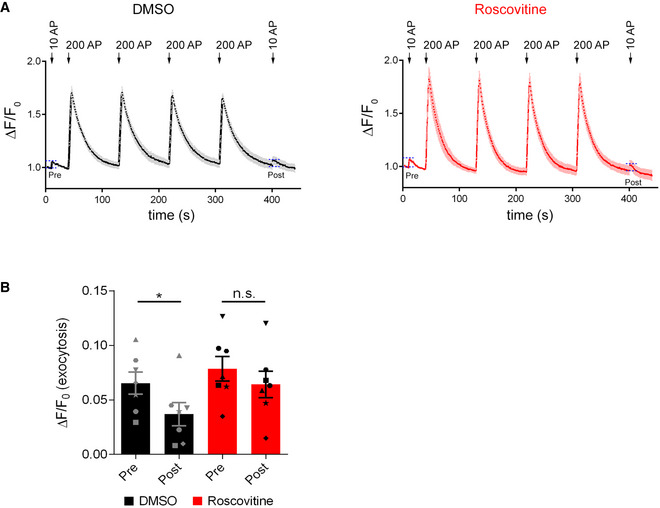
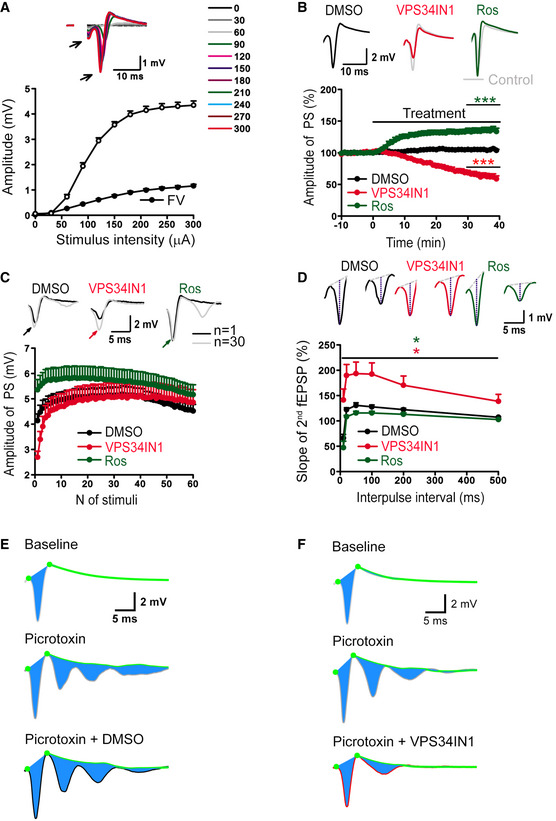
Neural circuit function requires mechanisms for controlling neurotransmitter release and the activity of neuronal networks, including modulation by synaptic contacts, synaptic plasticity, and homeostatic scaling. However, how neurons intrinsically monitor and feedback control presynaptic neurotransmitter release and synaptic vesicle (SV) recycling to restrict neuronal network activity remains poorly understood at the molecular level. Here, we investigated the reciprocal interplay between neuronal endosomes, organelles of central importance for the function of synapses, and synaptic activity. We show that elevated neuronal activity represses the synthesis of endosomal lipid phosphatidylinositol 3-phosphate [PI(3)P] by the lipid kinase VPS34. Neuronal activity in turn is regulated by endosomal PI(3)P, the depletion of which reduces neurotransmission as a consequence of perturbed SV endocytosis. We find that this mechanism involves Calpain 2-mediated hyperactivation of Cdk5 downstream of receptor- and activity-dependent calcium influx. Our results unravel an unexpected function for PI(3)P-containing neuronal endosomes in the control of presynaptic vesicle cycling and neurotransmission, which may explain the involvement of the PI(3)P-producing VPS34 kinase in neurological disease and neurodegeneration.
神经回路功能需要控制神经递质释放和神经网络活动的机制,包括突触接触的调节、突触可塑性和稳态缩放。然而,在分子水平上,神经元如何内在地监测和反馈控制突触前神经递质释放和突触小泡(SV)循环以限制神经网络活动,目前仍知之甚少。在这里,我们研究了神经元内体(对突触功能至关重要的细胞器)与突触活动之间的相互作用。我们发现,神经元活动增强会抑制脂质激酶VPS34合成内体脂质磷脂酰肌醇3-磷酸[PI(3)P]。反过来,神经元活动受内体PI(3)P的调节,内体PI(3)P的耗尽会因SV内吞作用受到干扰而减少神经传递。我们发现,这一机制涉及钙蛋白酶2介导的受体和活性依赖性钙内流下游的Cdk5过度激活。我们的研究结果揭示了含PI(3)P的神经元内体在控制突触前小泡循环和神经传递方面的意外功能,这可能解释了产生PI(3)P的VPS34激酶与神经疾病和神经退行性变的关联。