• 文献检索
  • 文档翻译
  • 深度研究
  • 学术资讯
  • Suppr Zotero 插件Zotero 插件
  • 邀请有礼
  • 套餐&价格
  • 历史记录
应用&插件
Suppr Zotero 插件Zotero 插件浏览器插件Mac 客户端Windows 客户端微信小程序
定价
高级版会员购买积分包购买API积分包
服务
文献检索文档翻译深度研究API 文档MCP 服务
关于我们
关于 Suppr公司介绍联系我们用户协议隐私条款
关注我们

Suppr 超能文献

核心技术专利:CN118964589B侵权必究
粤ICP备2023148730 号-1Suppr @ 2026

文献检索

告别复杂PubMed语法,用中文像聊天一样搜索,搜遍4000万医学文献。AI智能推荐,让科研检索更轻松。

立即免费搜索

文件翻译

保留排版,准确专业,支持PDF/Word/PPT等文件格式,支持 12+语言互译。

免费翻译文档

深度研究

AI帮你快速写综述,25分钟生成高质量综述,智能提取关键信息,辅助科研写作。

立即免费体验

Rhes 蛋白在神经元之间转运,促进突变型亨廷顿蛋白在大脑中的扩散。

Rhes protein transits from neuron to neuron and facilitates mutant huntingtin spreading in the brain.

机构信息

Department of Neuroscience, The Scripps Research Institute, 130 Scripps Way, Jupiter, FL 33458, USA.

Department of Neurology, University of Florida, Gainesville, FL 32610, USA.

出版信息

Sci Adv. 2022 Mar 25;8(12):eabm3877. doi: 10.1126/sciadv.abm3877. Epub 2022 Mar 23.

DOI:10.1126/sciadv.abm3877
PMID:35319973
原文链接:https://pmc.ncbi.nlm.nih.gov/articles/PMC8942366/
Abstract

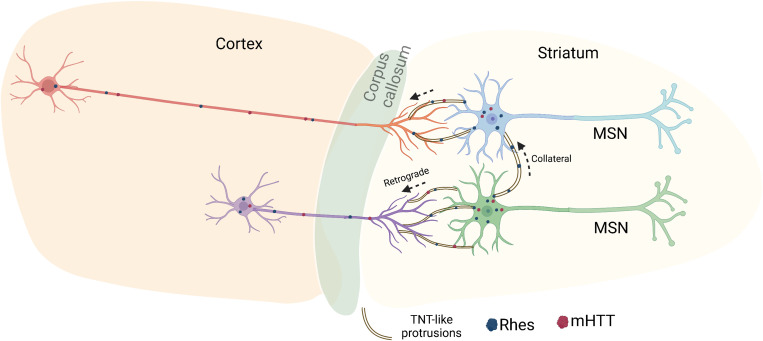
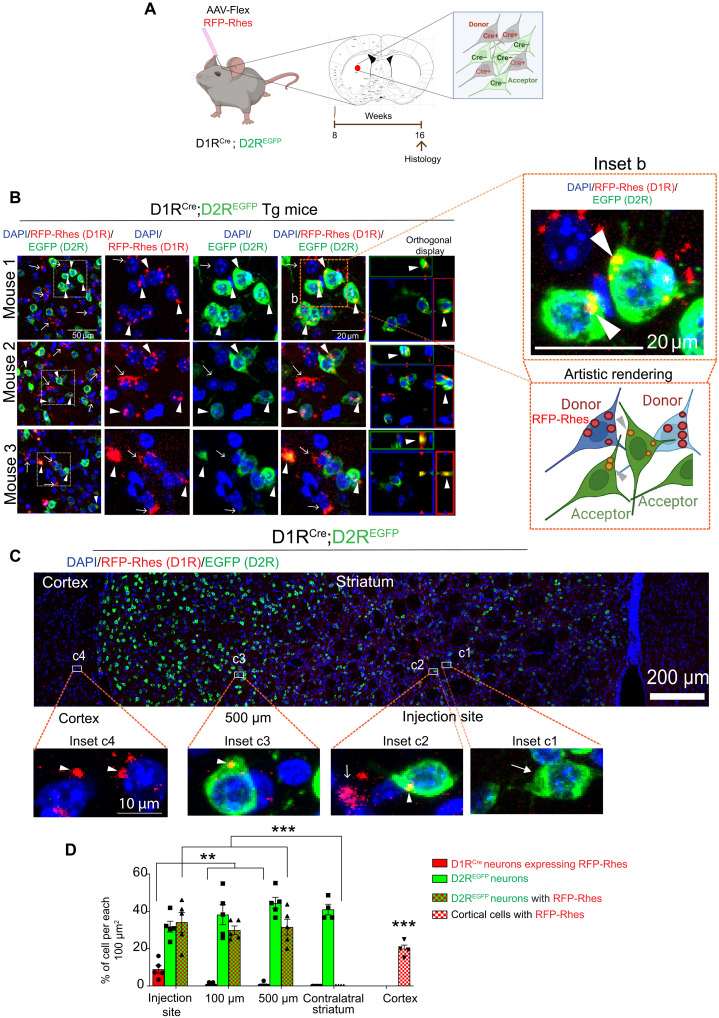
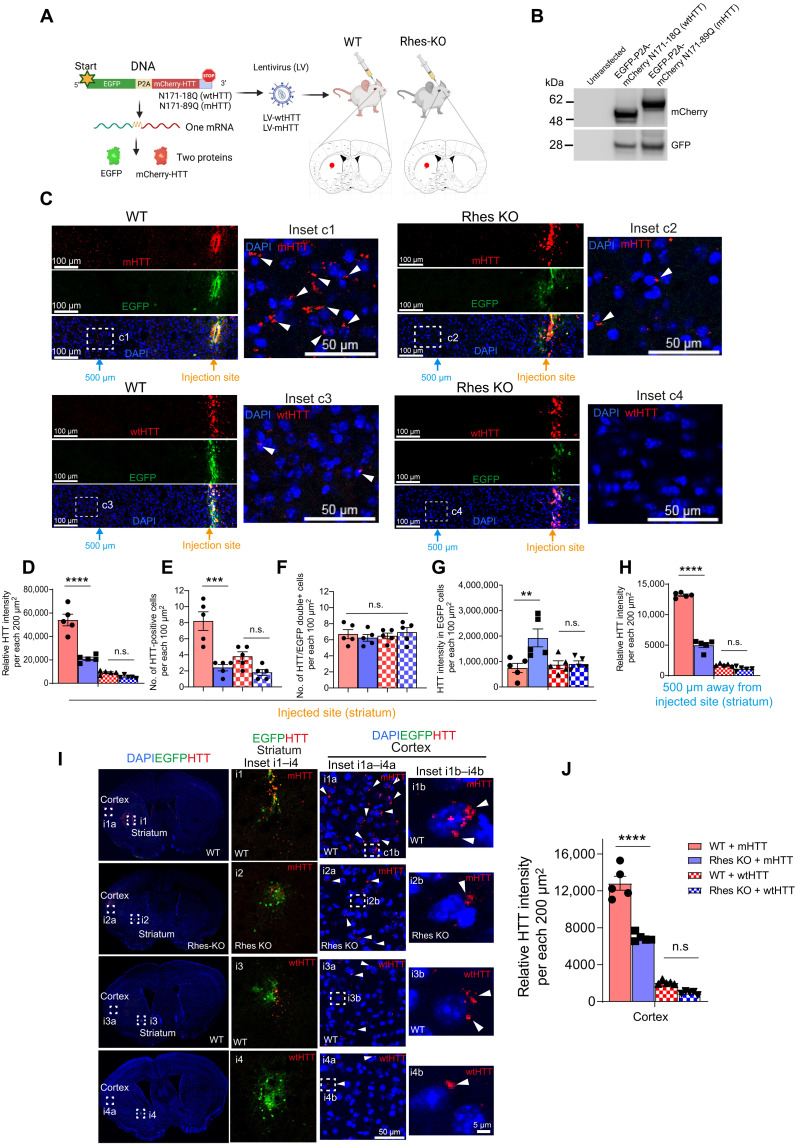
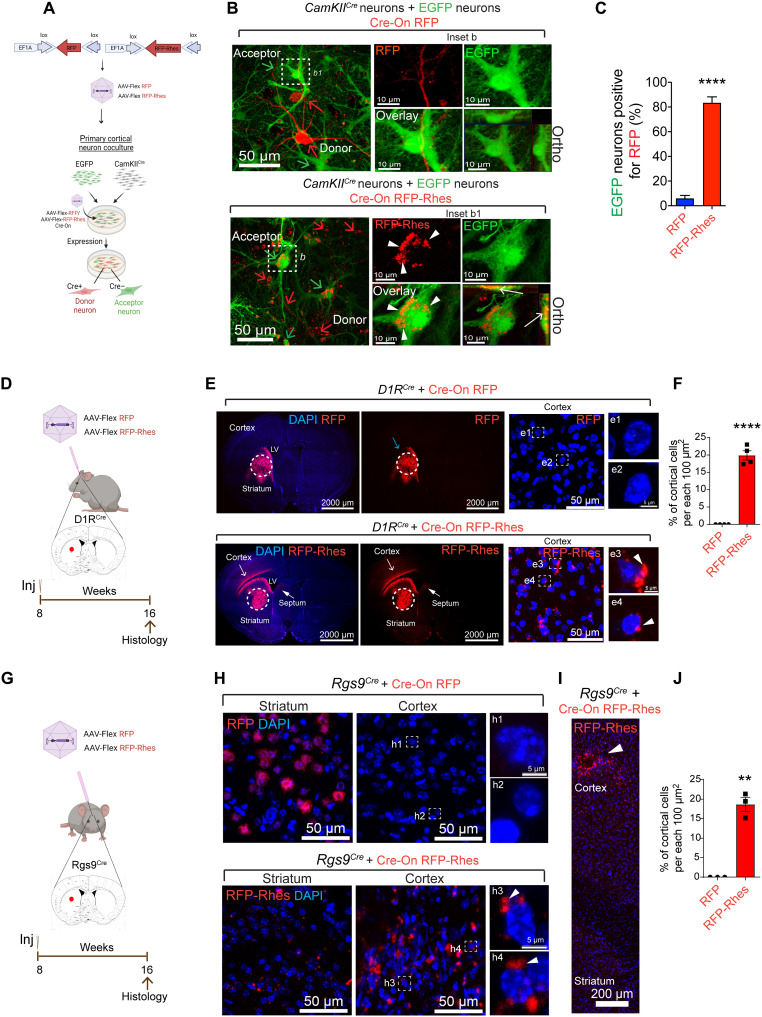
Rhes () is a thyroid hormone-induced gene that regulates striatal motor activity and promotes neurodegeneration in Huntington disease (HD) and tauopathy. Rhes moves and transports the HD protein, polyglutamine-expanded huntingtin (mHTT), via tunneling nanotube (TNT)-like membranous protrusions between cultured neurons. However, similar intercellular Rhes transportation in the intact brain was unknown. Here, we report that Rhes induces TNT-like protrusions in the striatal medium spiny neurons (MSNs) and transported between dopamine-1 receptor (D1R)-MSNs and D2R-MSNs of intact striatum and organotypic brain slices. Notably, mHTT is robustly transported within the striatum and from the striatum to the cortical areas in the brain, and Rhes deletion diminishes such transport. Moreover, Rhes moves to the cortical regions following restricted expression in the MSNs of the striatum. Thus, Rhes is a first striatum-enriched protein demonstrated to move and transport mHTT between neurons and brain regions, providing new insights into interneuronal protein transport in the brain.

摘要

Rhes(Rhesus)是一种甲状腺激素诱导基因,可调节纹状体运动活动,并促进亨廷顿病(HD)和 tau 病中的神经退行性变。Rhes 通过隧道纳米管(TNT)样膜状突起在培养神经元之间移动和运输 HD 蛋白,多聚谷氨酰胺扩展的亨廷顿蛋白(mHTT)。然而,完整大脑中是否存在类似的细胞间 Rhes 运输尚不清楚。在这里,我们报告 Rhes 在纹状体中间神经元(MSNs)中诱导 TNT 样突起,并在完整纹状体和器官型脑片中在多巴胺 1 型受体(D1R)-MSNs 和 D2R-MSNs 之间运输。值得注意的是,mHTT 在纹状体中被强烈运输,并从纹状体运输到大脑的皮质区域,而 Rhes 缺失会减少这种运输。此外,Rhes 在纹状体中的 MSNs 中受限表达后移动到皮质区域。因此,Rhes 是第一个被证明可在神经元和脑区之间移动和运输 mHTT 的富含纹状体的蛋白,为脑内神经元间蛋白运输提供了新的见解。
https://cdn.ncbi.nlm.nih.gov/pmc/blobs/8c5a/8942366/859805576b51/sciadv.abm3877-f5.jpg
https://cdn.ncbi.nlm.nih.gov/pmc/blobs/8c5a/8942366/5ed099f51c4d/sciadv.abm3877-f1.jpg
https://cdn.ncbi.nlm.nih.gov/pmc/blobs/8c5a/8942366/53ae6f9cb324/sciadv.abm3877-f2.jpg
https://cdn.ncbi.nlm.nih.gov/pmc/blobs/8c5a/8942366/09d53fdec2f0/sciadv.abm3877-f3.jpg
https://cdn.ncbi.nlm.nih.gov/pmc/blobs/8c5a/8942366/75e465f3a10e/sciadv.abm3877-f4.jpg
https://cdn.ncbi.nlm.nih.gov/pmc/blobs/8c5a/8942366/859805576b51/sciadv.abm3877-f5.jpg
https://cdn.ncbi.nlm.nih.gov/pmc/blobs/8c5a/8942366/5ed099f51c4d/sciadv.abm3877-f1.jpg
https://cdn.ncbi.nlm.nih.gov/pmc/blobs/8c5a/8942366/53ae6f9cb324/sciadv.abm3877-f2.jpg
https://cdn.ncbi.nlm.nih.gov/pmc/blobs/8c5a/8942366/09d53fdec2f0/sciadv.abm3877-f3.jpg
https://cdn.ncbi.nlm.nih.gov/pmc/blobs/8c5a/8942366/75e465f3a10e/sciadv.abm3877-f4.jpg
https://cdn.ncbi.nlm.nih.gov/pmc/blobs/8c5a/8942366/859805576b51/sciadv.abm3877-f5.jpg

相似文献

1
Rhes protein transits from neuron to neuron and facilitates mutant huntingtin spreading in the brain.Rhes 蛋白在神经元之间转运,促进突变型亨廷顿蛋白在大脑中的扩散。
Sci Adv. 2022 Mar 25;8(12):eabm3877. doi: 10.1126/sciadv.abm3877. Epub 2022 Mar 23.
2
Striatal Induction and Spread of the Huntington's Disease Protein: A Novel Rhes Route.纹状体诱导与亨廷顿病蛋白的扩散:一种新的 Rhes 途径。
J Huntingtons Dis. 2022;11(3):281-290. doi: 10.3233/JHD-220548.
3
Ectopic expression of the striatal-enriched GTPase Rhes elicits cerebellar degeneration and an ataxia phenotype in Huntington's disease.纹状体丰富的 GTPase Rhes 的异位表达会引起亨廷顿病的小脑变性和共济失调表型。
Neurobiol Dis. 2015 Oct;82:66-77. doi: 10.1016/j.nbd.2015.05.011. Epub 2015 Jun 3.
4
Rhes travels from cell to cell and transports Huntington disease protein via TNT-like protrusion.Rhes 从一个细胞迁移到另一个细胞,并通过 TNT 样突起运输亨廷顿病蛋白。
J Cell Biol. 2019 Jun 3;218(6):1972-1993. doi: 10.1083/jcb.201807068. Epub 2019 May 10.
5
The role of Rhes, Ras homolog enriched in striatum, in neurodegenerative processes.Ras 同源物富集在纹状体中的 Rhes 在神经退行性过程中的作用。
Exp Cell Res. 2013 Sep 10;319(15):2310-5. doi: 10.1016/j.yexcr.2013.03.033. Epub 2013 Apr 10.
6
Bioinformatics analysis of Ras homologue enriched in the striatum, a potential target for Huntington's disease therapy.纹状体富集 Ras 同源物的生物信息学分析,亨廷顿病治疗的一个潜在靶点。
Int J Mol Med. 2019 Dec;44(6):2223-2233. doi: 10.3892/ijmm.2019.4373. Epub 2019 Oct 15.
7
Rhes Tunnels: A Radical New Way of Communication in the Brain's Striatum?丘脑中的 Rhes 隧道:大脑纹状体中的一种全新的沟通方式?
Bioessays. 2020 Jun;42(6):e1900231. doi: 10.1002/bies.201900231. Epub 2020 Apr 1.
8
Huntington's disease is a disorder of the corpus striatum: focus on Rhes (Ras homologue enriched in the striatum).亨廷顿病是纹状体的一种疾病:聚焦于 Rhes(富含在纹状体中的 Ras 同源物)。
Neuropharmacology. 2011 Jun;60(7-8):1187-92. doi: 10.1016/j.neuropharm.2010.10.025. Epub 2010 Oct 31.
9
Rhes, a striatal-selective protein implicated in Huntington disease, binds beclin-1 and activates autophagy.Rhes,一种纹状体选择性蛋白,与亨廷顿病有关,它与 beclin-1 结合并激活自噬。
J Biol Chem. 2014 Feb 7;289(6):3547-54. doi: 10.1074/jbc.M113.536912. Epub 2013 Dec 9.
10
Rhes regulates dopamine D2 receptor transmission in striatal cholinergic interneurons.Rhes 调节纹状体胆碱能中间神经元中的多巴胺 D2 受体传递。
Neurobiol Dis. 2015 Jun;78:146-61. doi: 10.1016/j.nbd.2015.03.021. Epub 2015 Mar 26.

引用本文的文献

1
Beyond synapses: cytoplasmic connections in brain function and evolution.超越突触:脑功能与进化中的细胞质连接
Biol Rev Camb Philos Soc. 2025 Oct;100(5):2055-2070. doi: 10.1111/brv.70034. Epub 2025 Jun 14.
2
Intercellular communication in the brain via dendritic nanotubular network.大脑中通过树突状纳米管网络进行的细胞间通讯。
bioRxiv. 2025 May 21:2025.05.20.655147. doi: 10.1101/2025.05.20.655147.
3
Hijacking intercellular trafficking for the spread of protein aggregates in neurodegenerative diseases: a focus on tunneling nanotubes (TNTs).

本文引用的文献

1
Rhes, a striatal enriched protein, regulates post-translational small-ubiquitin-like-modifier (SUMO) modification of nuclear proteins and alters gene expression.Rhes,一种纹状体丰富的蛋白,调节核蛋白的翻译后小泛素样修饰物(SUMO)修饰,并改变基因表达。
Cell Mol Life Sci. 2024 Apr 8;81(1):169. doi: 10.1007/s00018-024-05181-8.
2
Prion-like properties of the mutant huntingtin protein in living organisms: the evidence and the relevance.突变型亨廷顿蛋白在生物体中的类朊病毒特性:证据及相关性
Mol Psychiatry. 2022 Jan;27(1):269-280. doi: 10.1038/s41380-021-01350-4.
3
An unusual presentation of Huntington's disease.
劫持细胞间运输用于神经退行性疾病中蛋白质聚集体的传播:聚焦于隧道纳米管(TNTs)。
Extracell Vesicles Circ Nucl Acids. 2023 Mar 9;4(1):27-43. doi: 10.20517/evcna.2023.05. eCollection 2023.
4
Potential Mechanisms of Tunneling Nanotube Formation and Their Role in Pathology Spread in Alzheimer's Disease and Other Proteinopathies.隧道纳米管形成的潜在机制及其在阿尔茨海默病和其他蛋白病中病理扩散中的作用。
Int J Mol Sci. 2024 Oct 8;25(19):10797. doi: 10.3390/ijms251910797.
5
Invisible Bridges: Unveiling the Role and Prospects of Tunneling Nanotubes in Cancer Therapy.隐形桥梁:揭示隧道纳米管在癌症治疗中的作用和前景。
Mol Pharm. 2024 Nov 4;21(11):5413-5429. doi: 10.1021/acs.molpharmaceut.4c00563. Epub 2024 Oct 7.
6
Astroglia proliferate upon the biogenesis of tunneling nanotubes via α-synuclein dependent transient nuclear translocation of focal adhesion kinase.星形胶质细胞通过粘着斑激酶的α-突触核蛋白依赖性瞬时核转位在隧道纳米管生物发生时增殖。
iScience. 2024 Jul 23;27(8):110565. doi: 10.1016/j.isci.2024.110565. eCollection 2024 Aug 16.
7
Rhes, a striatal enriched protein, regulates post-translational small-ubiquitin-like-modifier (SUMO) modification of nuclear proteins and alters gene expression.Rhes,一种纹状体丰富的蛋白,调节核蛋白的翻译后小泛素样修饰物(SUMO)修饰,并改变基因表达。
Cell Mol Life Sci. 2024 Apr 8;81(1):169. doi: 10.1007/s00018-024-05181-8.
8
Transmission-selective muscle pathology induced by the active propagation of mutant huntingtin across the human neuromuscular synapse.突变型亨廷顿蛋白在人类神经肌肉突触间的主动传播所引发的传导选择性肌肉病变。
Front Mol Neurosci. 2024 Jan 3;16:1287510. doi: 10.3389/fnmol.2023.1287510. eCollection 2023.
9
Tunneling Nanotube: An Enticing Cell-Cell Communication in the Nervous System.隧道纳米管:神经系统中一种诱人的细胞间通讯方式。
Biology (Basel). 2023 Sep 27;12(10):1288. doi: 10.3390/biology12101288.
10
Rhes depletion promotes striatal accumulation and aggregation of mutant huntingtin in a presymptomatic HD mouse model.在症状前亨廷顿舞蹈症小鼠模型中,去除恒河猴因子促进了突变型亨廷顿蛋白在纹状体中的积累和聚集。
Front Aging Neurosci. 2023 Aug 10;15:1237018. doi: 10.3389/fnagi.2023.1237018. eCollection 2023.
亨廷顿舞蹈症的一种罕见表现形式。
Clin Case Rep. 2021 Jul 16;9(7):e04547. doi: 10.1002/ccr3.4547. eCollection 2021 Jul.
4
Relating quantitative 7T MRI across cortical depths to cytoarchitectonics, gene expression and connectomics.将7T定量磁共振成像(MRI)跨皮质深度与细胞构筑学、基因表达和连接组学相关联。
Hum Brain Mapp. 2021 Oct 15;42(15):4996-5009. doi: 10.1002/hbm.25595. Epub 2021 Jul 17.
5
Structural insight into transmissive mutant huntingtin species by correlative light and electron microscopy and cryo-electron tomography.通过共聚焦光和电子显微镜及冷冻电子断层成像术对可传播突变亨廷顿蛋白物种的结构分析。
Biochem Biophys Res Commun. 2021 Jun 30;560:99-104. doi: 10.1016/j.bbrc.2021.04.124. Epub 2021 May 10.
6
Tunneling nanotubes: Reshaping connectivity.隧道纳米管:重塑连接性。
Curr Opin Cell Biol. 2021 Aug;71:139-147. doi: 10.1016/j.ceb.2021.03.003. Epub 2021 Apr 15.
7
Patterns of neuronal Rhes as a novel hallmark of tauopathies.神经元 Rhes 模式作为 tau 病的新型标志。
Acta Neuropathol. 2021 May;141(5):651-666. doi: 10.1007/s00401-021-02279-2. Epub 2021 Mar 7.
8
Tau Isoform-Driven CBD Pathology Transmission in Oligodendrocytes in Humanized Tau Mice.人源化tau小鼠少突胶质细胞中tau异构体驱动的CBD病理传播
Front Neurol. 2021 Jan 15;11:589471. doi: 10.3389/fneur.2020.589471. eCollection 2020.
9
Patient-derived glioblastoma stem cells transfer mitochondria through tunneling nanotubes in tumor organoids.患者来源的胶质母细胞瘤干细胞通过肿瘤类器官中的隧道纳米管转移线粒体。
Biochem J. 2021 Jan 15;478(1):21-39. doi: 10.1042/BCJ20200710.
10
Phagocytic glia are obligatory intermediates in transmission of mutant huntingtin aggregates across neuronal synapses.吞噬性神经胶质细胞是突变亨廷顿蛋白聚集物在神经元突触间传播的必需中间物。
Elife. 2020 May 28;9:e58499. doi: 10.7554/eLife.58499.