Department for Orthopaedics and Traumatology, Kepler University Hospital GmbH, Johannes Kepler University Linz, Krankenhausstrasse 9, 4020 Linz and Altenberger Strasse 69, 4040, Linz, Austria.
BMC Musculoskelet Disord. 2022 Mar 23;23(1):280. doi: 10.1186/s12891-022-05240-w.
Periprosthetic femoral fractures (PFFs) represent a major cause for surgical revision after hip arthroplasty with detrimental consequences for patients. The Vancouver classification has been traditionally used since its introduction in 1995. The Unified Classification System (UCS) was described in 2014, to widen the spectrum by aiming for a more comprehensive approach. The UCS also aimed to replace the Vancouver classification by expanding the idea of the Vancouver classification to the whole musculoskeletal apparatus. After introduction of the UCS, the question was raised, whether the UCS found its place in the field of analysing PFFs. Therefore, this systematic review was performed to investigate, the use of the UCS compared to the established Vancouver classification.
Medline was searched for reports published between 1 January 2016 and 31 November 2020, without language restriction. Included were original articles, irrespective of the level of evidence and case reports reporting on a PFF and using either the Vancouver or the UCS to classify the fractures. Excluded were reviews and systematic reviews.
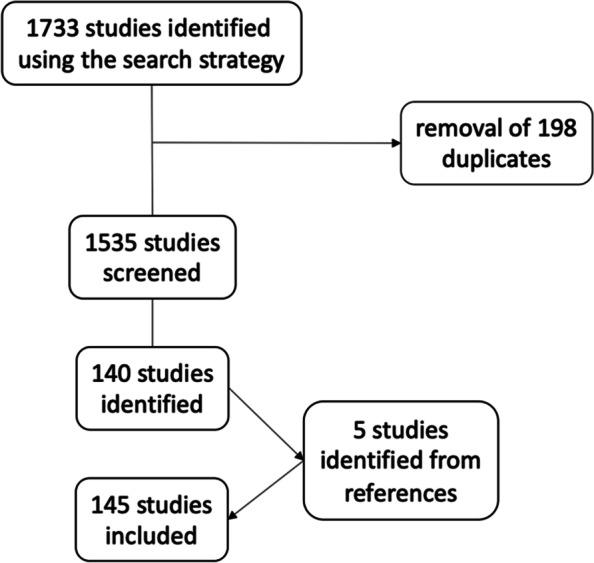
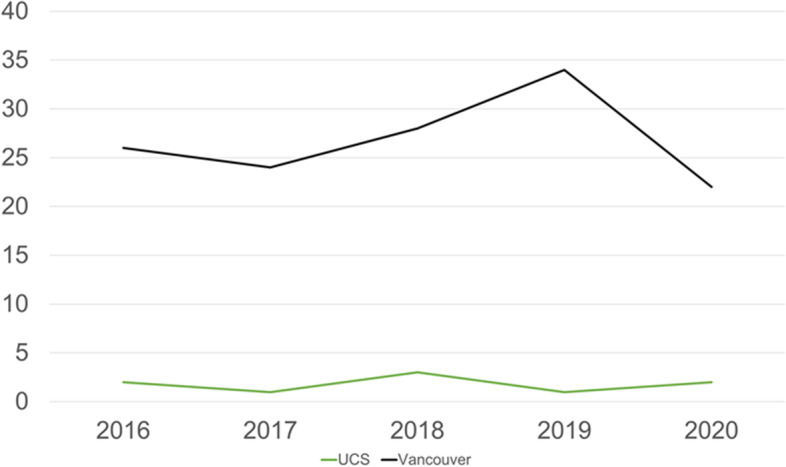
One hundred forty-six studies were included in the analysis. UCS has not been used in a single registry study, giving a pooled cohort size of 3299 patients, compared to 59,178 patients in studies using the Vancouver classification. Since 2016, one study using UCS was published in a top journal, compared to 37 studies using the Vancouver classification (p=0.29). During the study period, the number of yearly publications remained stagnant (p=0.899).
Despite valuable improvement and expansion of the latter UCS, to date, the Vancouver system clearly leads the field of classifying PFFs in the sense of the common use.
髋关节置换术后的股骨假体周围骨折(PFF)是手术翻修的主要原因,对患者有不利影响。自 1995 年引入以来,传统上一直使用温哥华分类法。2014 年描述了统一分类系统(UCS),旨在通过更全面的方法拓宽范围。UCS 还旨在通过将温哥华分类法的理念扩展到整个肌肉骨骼系统来取代温哥华分类法。UCS 引入后,有人提出 UCS 是否在分析 PFF 领域找到了自己的位置。因此,进行了这项系统评价,以调查 UCS 与既定的温哥华分类法的使用情况。
检索 2016 年 1 月 1 日至 2020 年 11 月 31 日期间发表的报告,无语言限制。纳入的是使用温哥华或 UCS 对骨折进行分类的 PFF 病例报告的原始文章,不论证据水平和病例报告如何。排除的是综述和系统评价。
146 项研究纳入分析。UCS 尚未在单个登记研究中使用,汇总队列大小为 3299 例患者,而使用温哥华分类法的研究中有 59178 例患者。自 2016 年以来,有一项使用 UCS 的研究发表在顶级期刊上,而使用温哥华分类法的研究有 37 项(p=0.29)。在研究期间,每年的出版物数量保持停滞不前(p=0.899)。
尽管 UCS 进行了有价值的改进和扩展,但迄今为止,温哥华系统在 PFF 分类领域的使用仍然更为普遍。