Department of Cardiovascular Disease, People's Hospital of Aksu, Aksu, Xinjiang 843000, P.R. China.
Department of Orthopedic Surgery, The Second Affiliated Hospital and Yuying Children's Hospital of Wenzhou Medical University, Wenzhou, Zhejiang 325027, P.R. China.
Mol Med Rep. 2022 May;25(5). doi: 10.3892/mmr.2022.12696. Epub 2022 Mar 24.
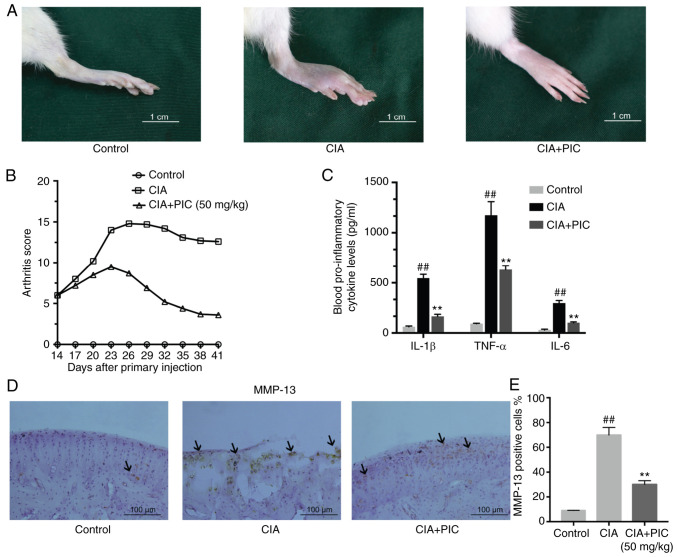
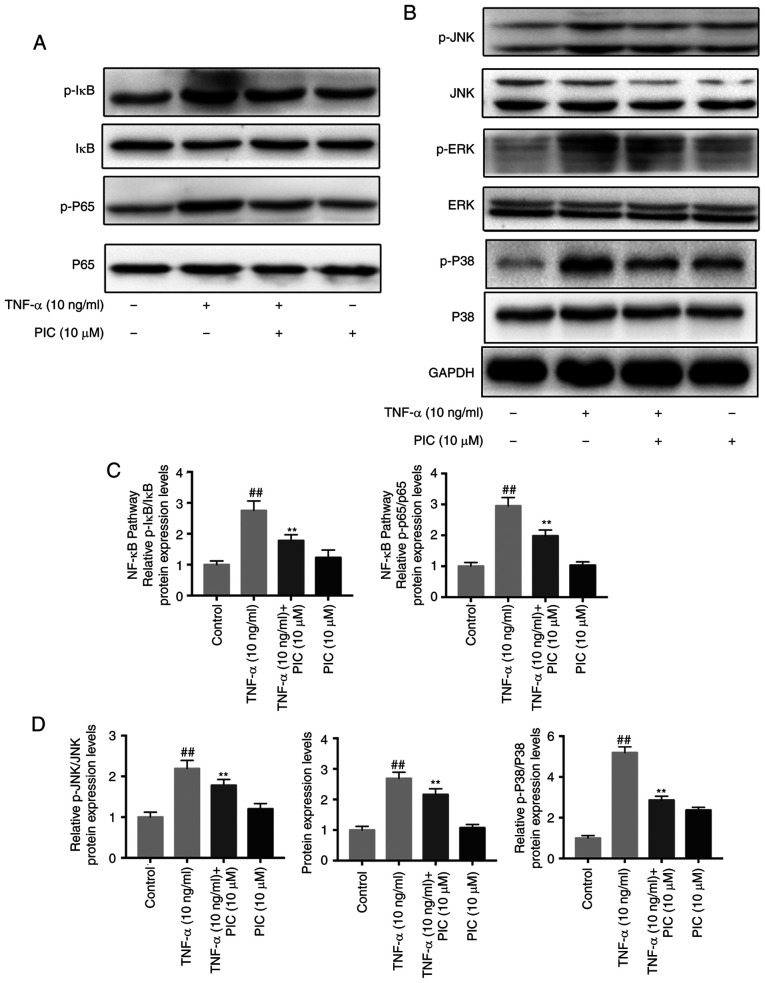
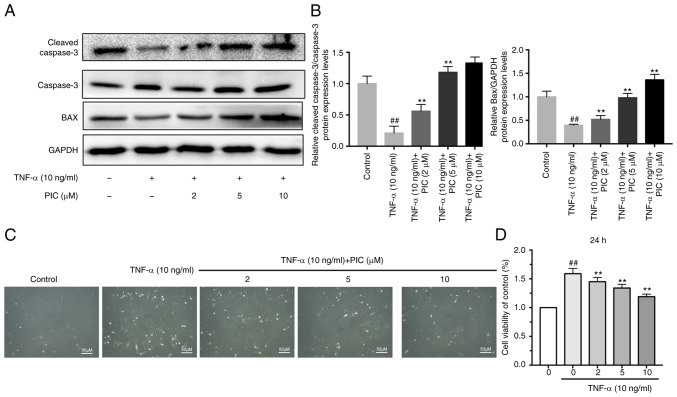
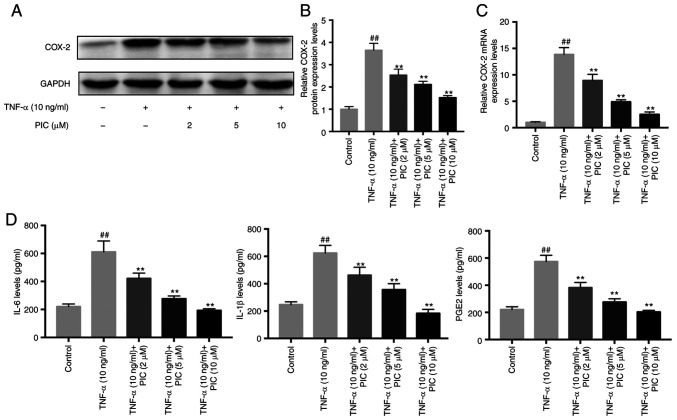
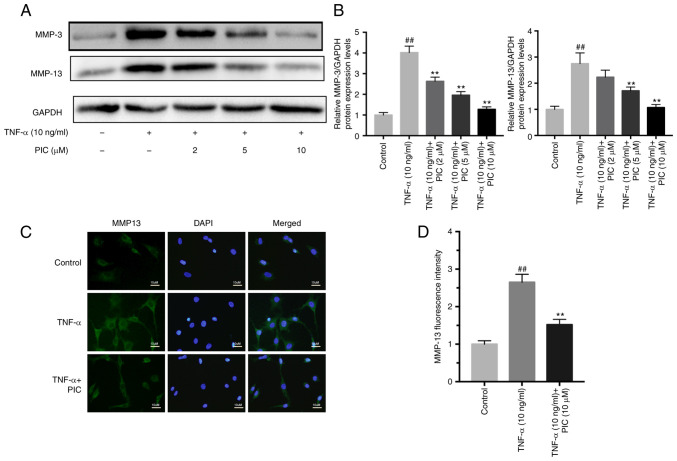
Rheumatoid arthritis (RA) is a chronic inflammatory disease that mainly targets the synovial membrane, thus causing stiffness, deformity and dysfunction of joints. To date, no effective anti‑inflammatory treatments are available for RA. Piceatannol (PIC) is a natural derivative of resveratrol, which has been reported to attenuate the inflammatory response. To evaluate the effect of PIC on RA and to determine the underlying molecular target of PIC, both and experiments were performed in the present study. A CIA rat model was established to evaluate the therapeutic effects of PIC. TNF‑α, IL‑1β and IL‑6 levels in blood were measured by ELISA. Western blotting, immunofluorescence analysis and reverse transcription‑quantitative PCR (RT‑qPCR) were used to analyze the expression levels of protein and mRNA. , RA‑fibroblast‑like synoviocytes (FLSs) were pretreated with PIC and subsequently stimulated with TNF‑α. The results revealed that PIC significantly upregulated the expression levels of proapoptotic proteins such as Bax and cleaved caspase‑3. PIC also significantly reduced the production of proinflammatory cytokines, including PGE2, IL‑6 and IL‑1β, and significantly downregulated the expression of cyclooxygenase‑2 at both the mRNA and protein expression levels. Furthermore, PIC downregulated the expression of MMP‑3 and MMP‑13, which have been found to be highly expressed in the synovium of patients with RA. Mechanistically, PIC was capable of significantly downregulating the expression levels of proteins involved in the NF‑κB and MAPK signaling pathways. The results of the experiments using a rat collagen‑induced arthritis model demonstrated that PIC decreased the arthritis score and exerted beneficial effects in cartilage and significantly reduced the expression of MMP‑13. In conclusion, the findings of the present study revealed that PIC could suppress the inflammatory response, promote apoptosis, and exert a significant regulatory effect on the NF‑κB and MAPK signaling pathways in RA‑FLSs. Therefore, PIC may represent a potential drug for the future treatment of RA.
类风湿关节炎(RA)是一种慢性炎症性疾病,主要针对滑膜,从而导致关节僵硬、畸形和功能障碍。迄今为止,尚无有效的抗炎治疗方法可用于 RA。白藜芦醇(PIC)是白藜芦醇的天然衍生物,据报道可减轻炎症反应。为了评估 PIC 对 RA 的影响并确定 PIC 的潜在分子靶标,本研究进行了 和 实验。建立 CIA 大鼠模型评估 PIC 的治疗效果。通过 ELISA 测量血液中 TNF-α、IL-1β 和 IL-6 的水平。使用 Western blot、免疫荧光分析和逆转录-定量 PCR(RT-qPCR)分析蛋白和 mRNA 的表达水平。在 RA-成纤维样滑膜细胞(FLS)中预先用 PIC 处理,然后用 TNF-α刺激。结果表明,PIC 显著上调了促凋亡蛋白如 Bax 和 cleaved caspase-3 的表达水平。PIC 还显著降低了促炎细胞因子(包括 PGE2、IL-6 和 IL-1β)的产生,并显著下调了 COX-2 的 mRNA 和蛋白表达水平。此外,PIC 下调了 MMP-3 和 MMP-13 的表达,这两种蛋白在 RA 患者的滑膜中表达水平较高。从机制上讲,PIC 能够显著下调参与 NF-κB 和 MAPK 信号通路的蛋白表达水平。使用大鼠胶原诱导性关节炎模型的 实验结果表明,PIC 降低了关节炎评分,并对软骨产生了有益影响,显著降低了 MMP-13 的表达。综上所述,本研究结果表明,PIC 可抑制 RA-FLS 中的炎症反应、促进细胞凋亡,并对 NF-κB 和 MAPK 信号通路发挥显著的调节作用。因此,PIC 可能成为未来治疗 RA 的潜在药物。