Yang Xiaoyun, Zhang Yan, Lin Cheng
College of Energy and Transportation Engineering, Inner Mongolia Agricultural University, Hohhot 010018, China.
Department of Civil Engineering, University of Victoria, Victoria, BC V8P 5C2, Canada.
Gels. 2022 Feb 25;8(3):145. doi: 10.3390/gels8030145.
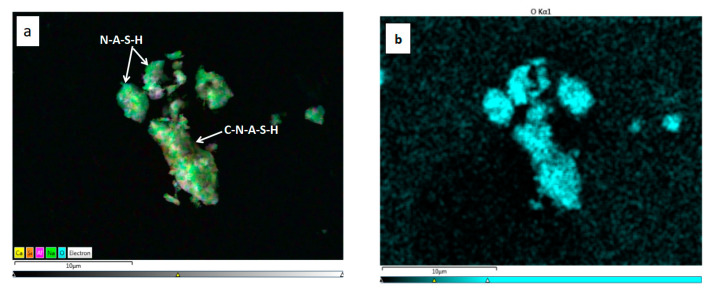
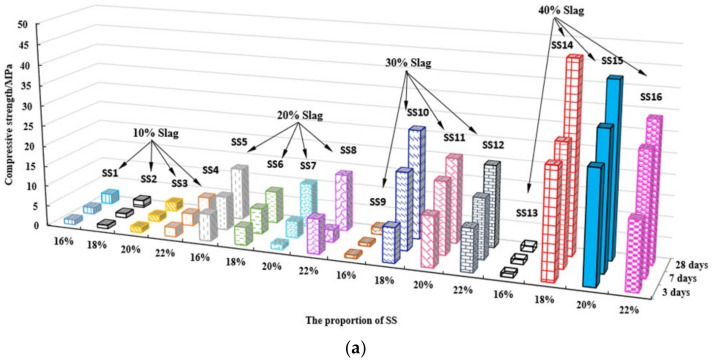
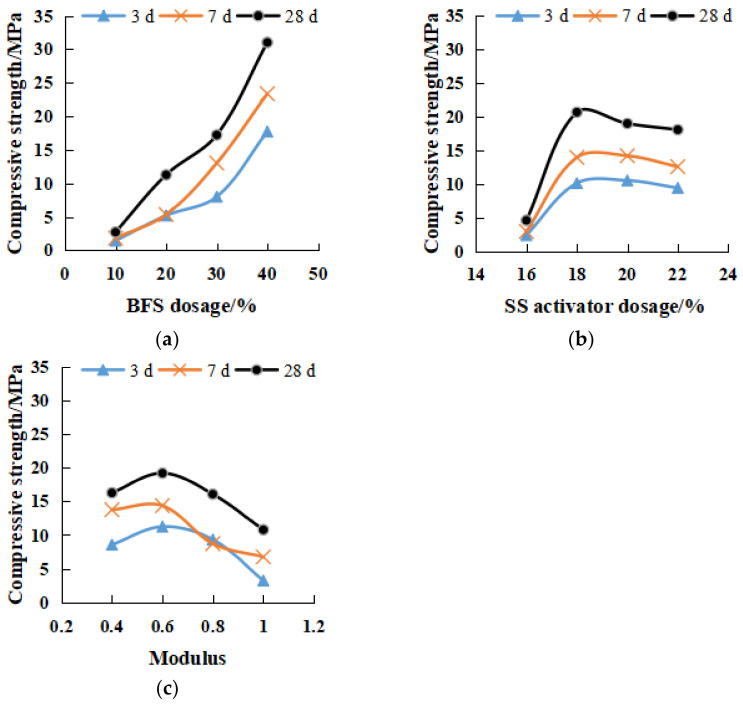
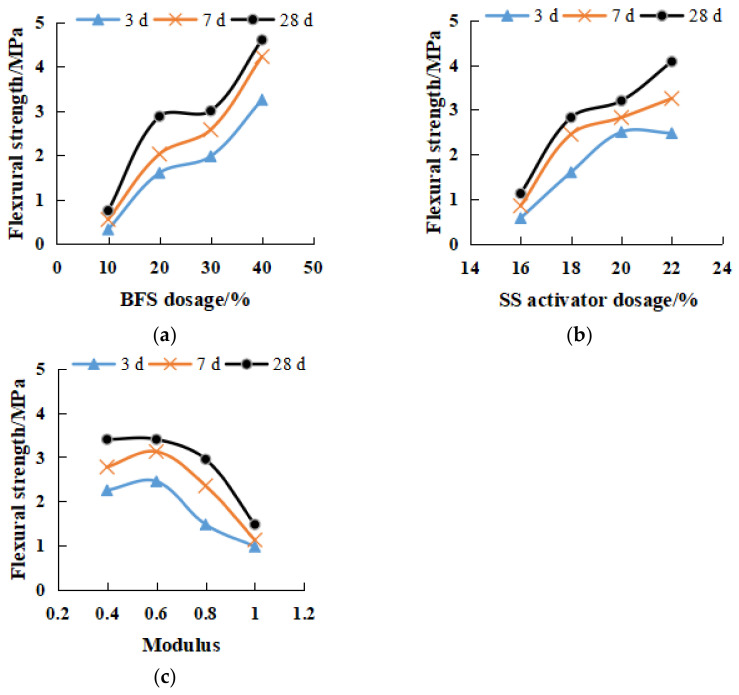
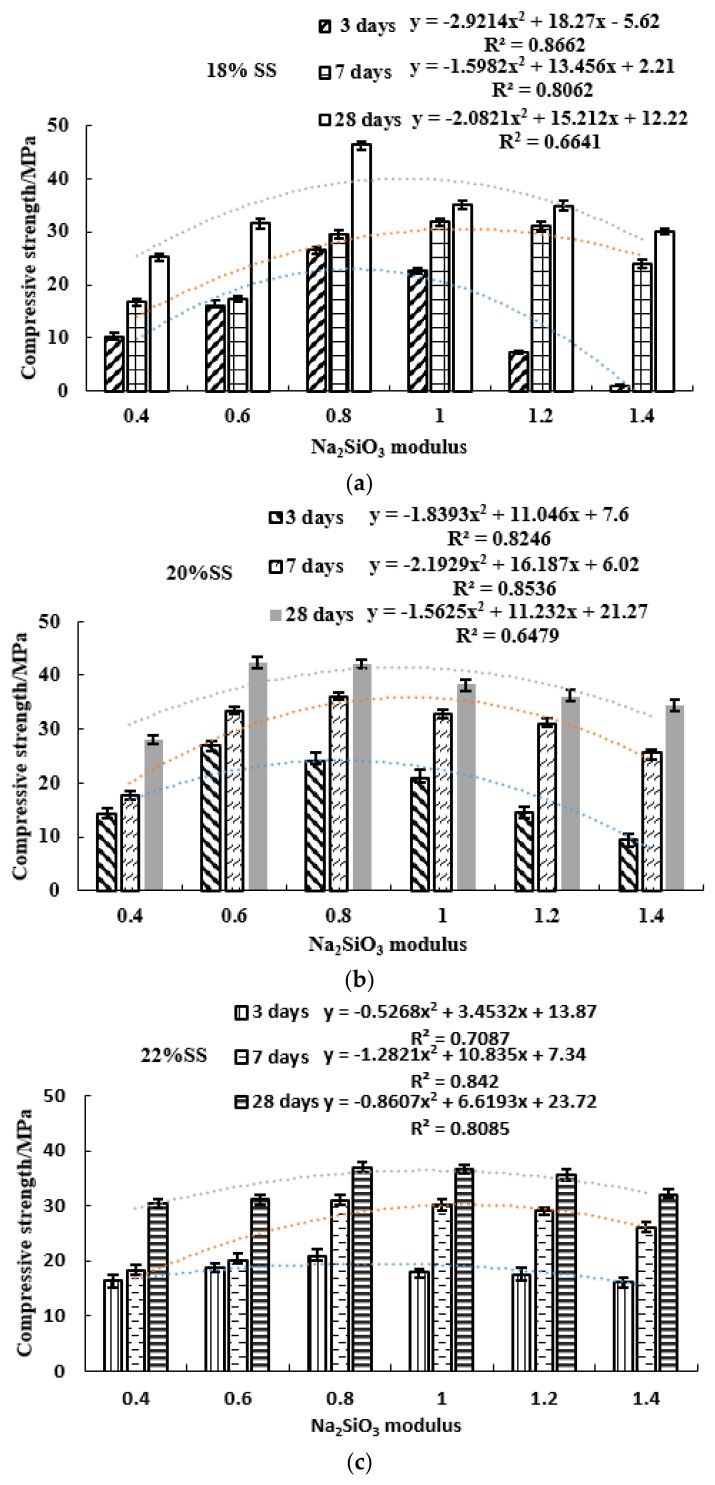
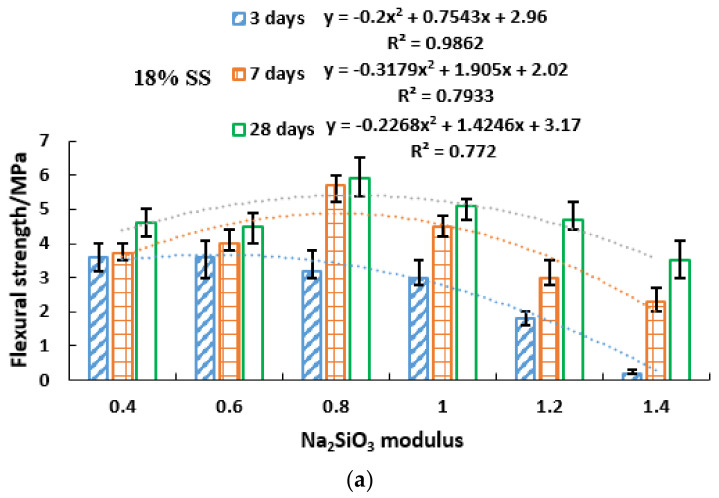
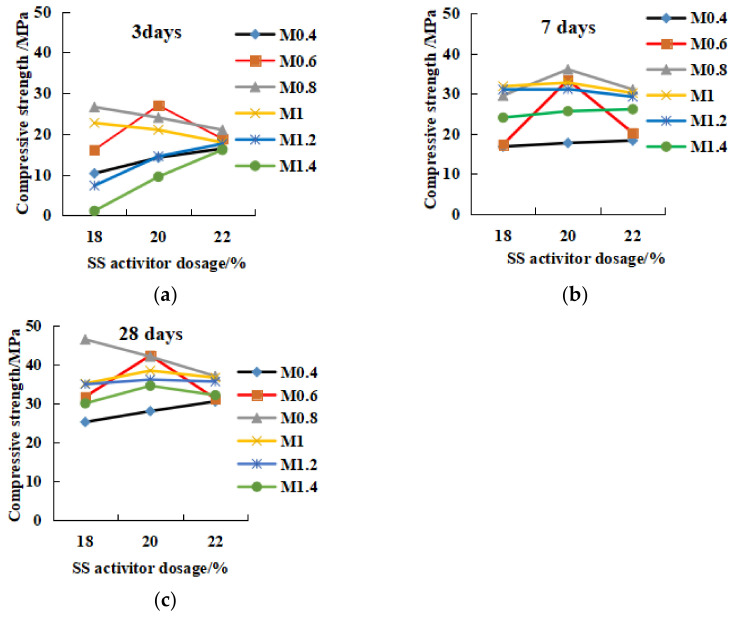
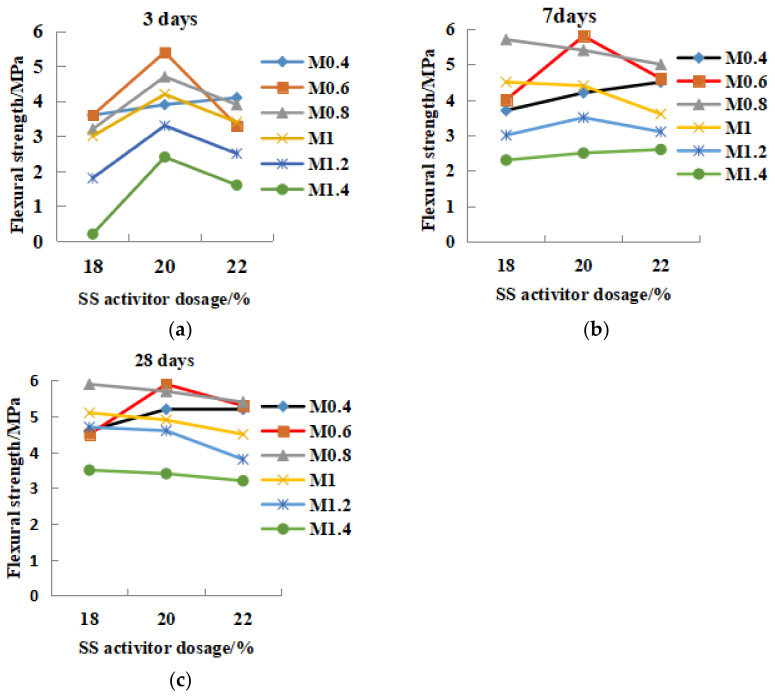
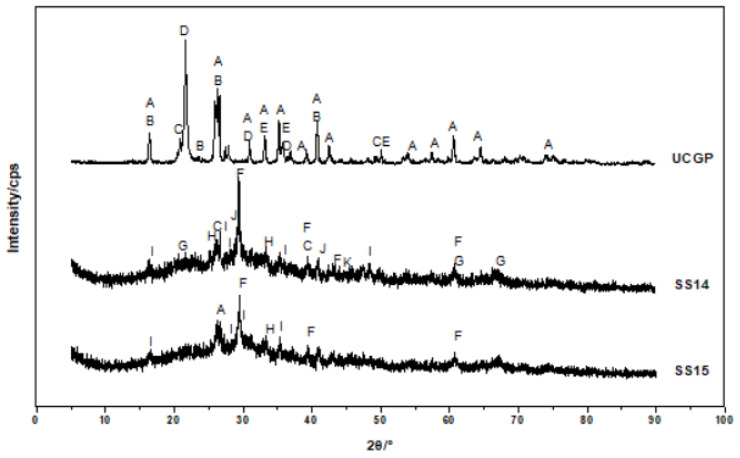
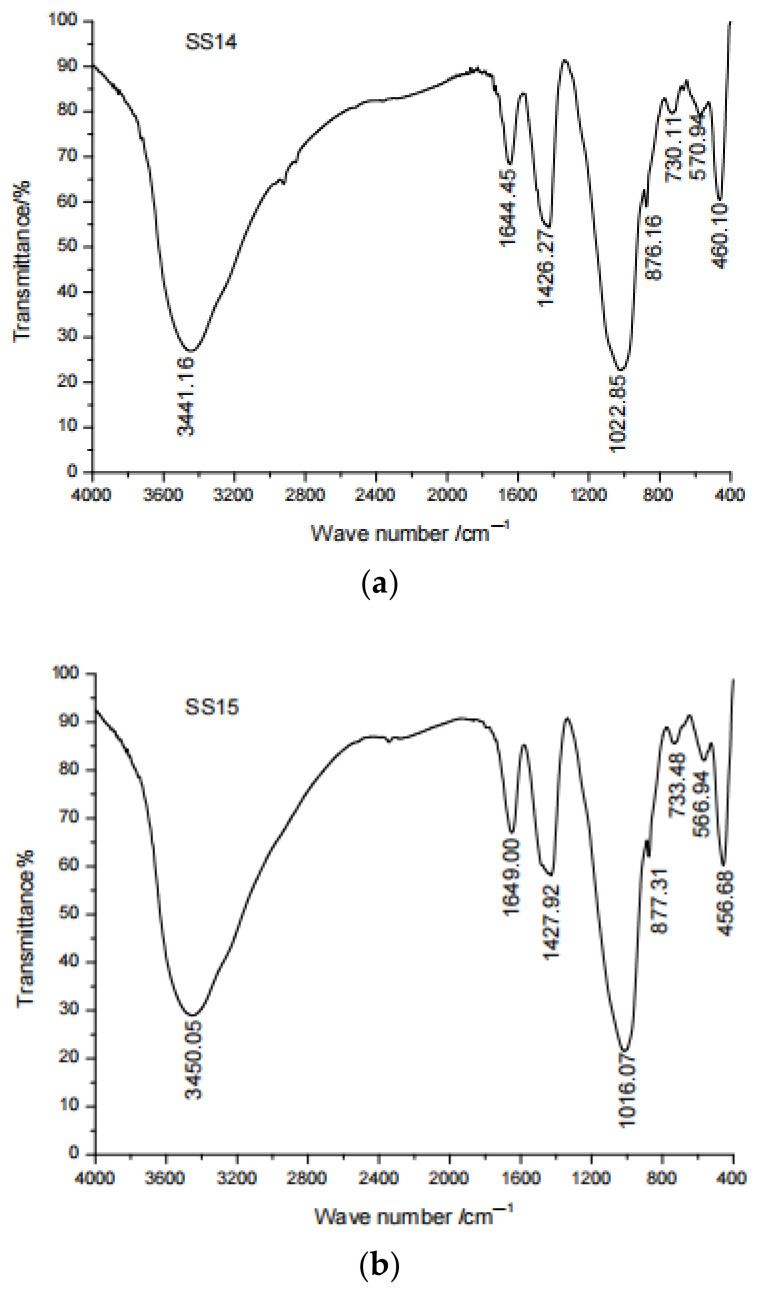
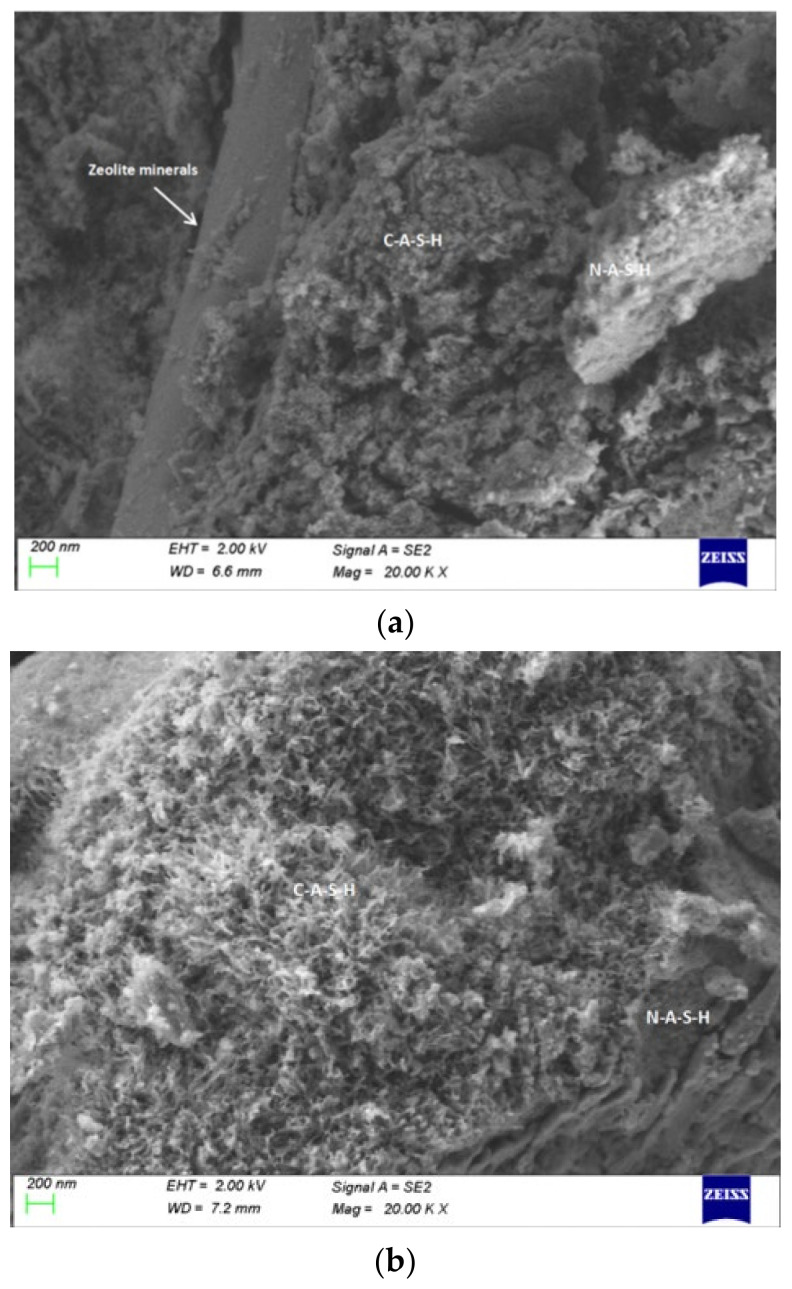
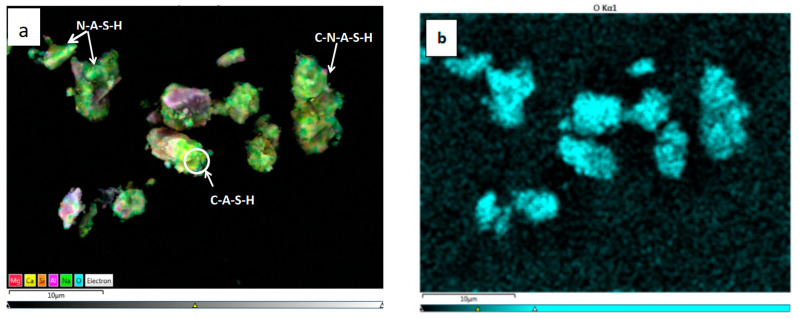
Geopolymer gel that possesses advantageous features of fast setting, high strength, and good durability is increasingly used in civil engineering, including rapid retrofit projects, roadway, and other construction projects. Furthermore, geopolymer gel is also a green and economical material as it derives from solid wastes. In this study, activators with different sodium silicate modulus and alkali content were used to activate ultrafine coal gangue and slag powder to prepare coal-gangue-based geopolymers with high strength. To study the influence of slag powder content, sodium silicate modulus, and alkali activator content on strength, a two-stage design was adopted. In the first stage, the orthogonal test with three factors and four levels (10−40% slag, 0.4−1.0 modulus, 16−22%) was used to obtain the influence of each factor on the strength and select the design range of the specimen mix ratio with higher strength. In the second stage, based on the orthogonal experiment, the scope was narrowed to continue to find the optimal excitation scheme and the relationship between the influencing factors and strength. Further, mineral compositional, microstructural, functional group and elemental analyses were performed using X-ray diffraction technique, IR infrared diffraction, electron microscope observation and energy spectrum analysis to elucidate the mechanisms of the strength development. The results show that the factors affecting the geopolymer’s strength were in the order of slag content > alkali content > modulus. The optimum dosage of alkali activator was 18−20%, and the sodium silicate modulus was 0.6−0.8, and the compressive and flexural strength could reach above 40 MPa and 5.9 MPa, respectively. The compressive strength and modulus were in a parabolic relationship. Three types of cementing gels (N-A-S-H, C-A-S-H, and C-N-A-S-H) that were characterized with dense structure and high strength were identified from coal gangue and slag powder after alkali excitation.
具有凝结快、强度高、耐久性好等优点的地质聚合物凝胶越来越多地应用于土木工程中,包括快速改造项目、道路工程和其他建筑项目。此外,地质聚合物凝胶也是一种绿色经济的材料,因为它来源于固体废弃物。在本研究中,使用不同硅酸钠模量和碱含量的活化剂来活化超细煤矸石和矿渣粉,以制备高强度的煤矸石基地质聚合物。为了研究矿渣粉含量、硅酸钠模量和碱活化剂含量对强度的影响,采用了两阶段设计。在第一阶段,采用三因素四水平(10−40%矿渣、0.4−1.0模量、16−22%)的正交试验,以获得各因素对强度的影响,并选择较高强度的试件配合比设计范围。在第二阶段,基于正交试验,缩小范围继续寻找最佳激发方案以及影响因素与强度之间的关系。此外,利用X射线衍射技术、红外红外衍射、电子显微镜观察和能谱分析进行矿物组成、微观结构、官能团和元素分析,以阐明强度发展的机制。结果表明,影响地质聚合物强度的因素顺序为矿渣含量>碱含量>模量。碱活化剂的最佳用量为18−20%,硅酸钠模量为0.6−0.8,抗压强度和抗折强度分别可达40 MPa以上和5.9 MPa以上。抗压强度与模量呈抛物线关系。碱激发后,从煤矸石和矿渣粉中鉴定出三种结构致密、强度高的胶凝凝胶(N-A-S-H、C-A-S-H和C-N-A-S-H)。