Yang Shunli, Zafar Khan Muhammad Umar, Liu Baohong, Humza Muhammad, Yin Shuanghui, Cai Jianping
State Key Laboratory of Veterinary Etiological Biology, National Foot and Mouth Disease Reference Laboratory, Lanzhou Veterinary Research Institute, Chinese Academy of Agricultural Sciences, Lanzhou 730046, China.
Department of Veterinary Sciences, Superior University, Lahore 54000, Pakistan.
Vet Sci. 2022 Feb 24;9(3):101. doi: 10.3390/vetsci9030101.
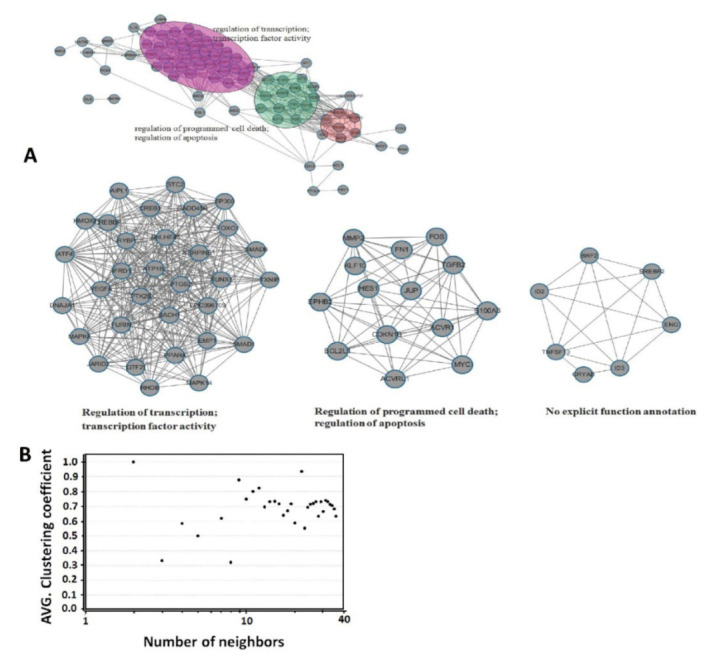
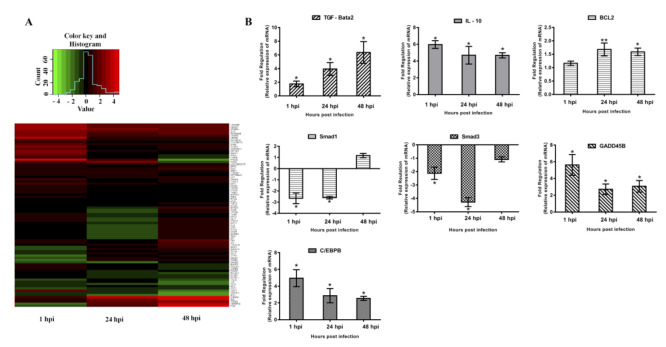
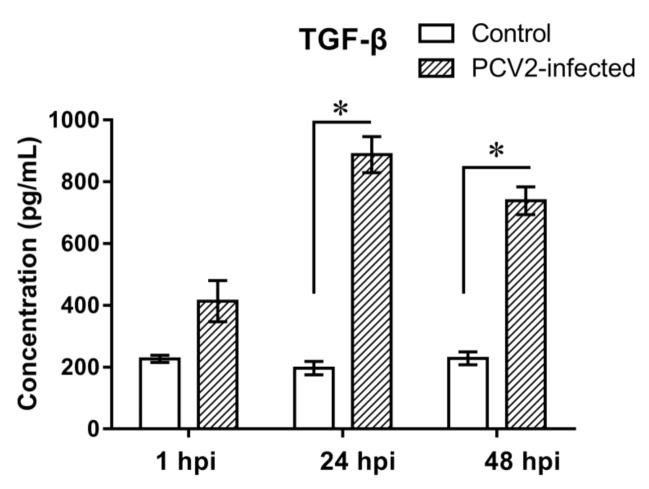
Porcine circovirus 2 (PCV2) has been recognized as an immunosuppressive pathogen. However, the crosstalk between this virus and its host cells in related signaling pathways remains poorly understood. In this study, the expression profiles of 84 genes involved in transforming growth factor-beta (TGF-β) signaling pathway were probed in PCV2b-infected primary porcine alveolar macrophages (PAMs) by using an RT profiler PCR array system. The protein expression levels of cytokines involved in the TGF-β signaling pathway were determined with a RayBiotech fluorescent Quantibody porcine cytokine array system. Results showed that 48, 30, and 42 genes were differentially expressed at 1, 24, and 48 h after infection, respectively. A large number of genes analyzed by a co-expression network and implicated in transcriptional regulation and apoptosis were differentially expressed in PCV2b-infected PAMs. Among these genes, TGF-β, interleukin-10, CCAAT/enhancer-binding protein beta (C/EBPB), growth arrest, and DNA-damage-inducible 45 beta (GADD45B), and BCL2 were upregulated. By contrast, SMAD family member 1 (smad1) and smad3 were downregulated. These results suggested that the TGF-β signaling pathway was repressed in PAMs at the early onset of PCV2 infection. The inhibited apoptosis was indicated by the upregulated C/EBPB, GADD45B, and BCL2, and by the downregulated smad1 and smad3, which possibly increased the duration of PCV2 replication-permissive conditions and caused a persistent infection. Our study may provide insights into the underlying antiviral functional changes in the immune system of PCV2-infected pigs.
猪圆环病毒2型(PCV2)已被公认为一种免疫抑制性病原体。然而,该病毒与其宿主细胞在相关信号通路中的相互作用仍知之甚少。在本研究中,利用RT Profiler PCR芯片系统,检测了PCV2b感染的原代猪肺泡巨噬细胞(PAM)中84个参与转化生长因子-β(TGF-β)信号通路的基因的表达谱。使用RayBiotech荧光定量猪细胞因子芯片系统测定了TGF-β信号通路中相关细胞因子的蛋白表达水平。结果显示,感染后1、24和48小时分别有48、30和42个基因差异表达。通过共表达网络分析并涉及转录调控和凋亡的大量基因在PCV2b感染的PAM中差异表达。在这些基因中,TGF-β、白细胞介素-10、CCAAT/增强子结合蛋白β(C/EBPB)、生长停滞和DNA损伤诱导蛋白45β(GADD45B)以及BCL2上调。相比之下,SMAD家族成员1(smad1)和smad3下调。这些结果表明,在PCV2感染初期,PAM中的TGF-β信号通路受到抑制。C/EBPB、GADD45B和BCL2的上调以及smad1和smad3的下调表明细胞凋亡受到抑制,这可能延长了PCV2复制许可条件的持续时间并导致持续性感染。我们的研究可能为深入了解PCV2感染猪免疫系统中潜在的抗病毒功能变化提供线索。