Division of Pediatric Hospital Medicine, Department of Pediatrics, Stanford University School of Medicine, Stanford, California, United States of America.
College of Medicine, SUNY Upstate Medical University, Syracuse, New York, United States of America.
PLoS One. 2022 Mar 24;17(3):e0264926. doi: 10.1371/journal.pone.0264926. eCollection 2022.
In 2019, 2.4 million neonates died globally, with most deaths occurring in low-resource settings. Despite the introduction of neonatal intensive care units (NICUs) in these settings, neonatal mortality remains high, and caring for sick neonates around the clock can be challenging due to limited staff and resources.
To evaluate whether neonatal intensive care admissions during daytime and overnight hours affects in-hospital neonatal mortality.
A retrospective case-control study was conducted using 2016 chart data at a University hospital in Ethiopia. Cases were defined as neonates who died in the NICU, and controls were defined as neonates who survived. Overnight hours were defined as 17:00 to 07:59, and day hours were defined as 08:00 to 16:59. Univariate and multivariate logistic regressions were used to investigate the relationship between time of admission and mortality, along with perinatal characteristics.
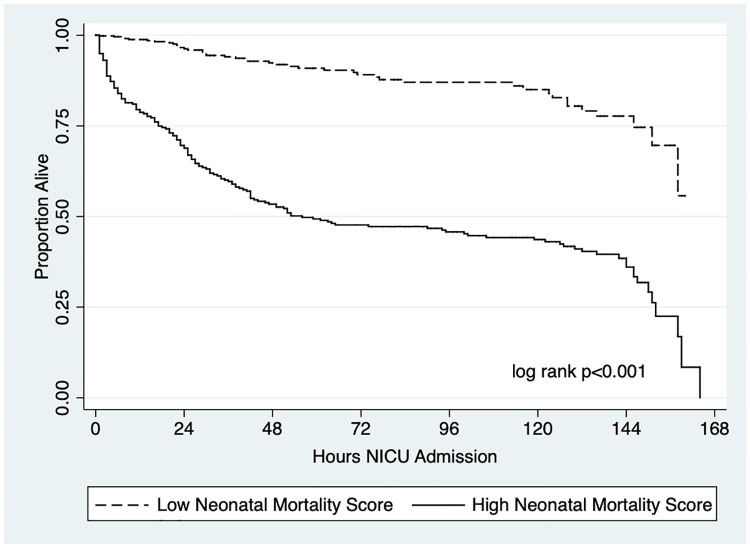
A total of 812 neonates, 207 cases and 605 controls, met inclusion criteria. There were 342 admissions during the day and 470 overnight. Neonatal mortality (aOR 1.02, 95% CI [0.64-1.62], p = 0.93) was not associated with overnight admissions after controlling for maternal age, parity, C-section, birthweight, and gestational age, respiratory distress, and admission level of consciousness. Admission heart rate >160 (aOR 0.52, 95% CI [0.30-0.91], p = 0.02) was the only variable significantly associated with overnight admissions.
Being admitted overnight to the NICU in Gondar, Ethiopia was not associated with increased mortality, consistent with a constant level of care, regardless of the time of admission. Further qualitative and implementation research are needed to understand contextual factors that have affected these data.
2019 年,全球有 240 万新生儿死亡,其中大多数死亡发生在资源匮乏的环境中。尽管这些环境中引入了新生儿重症监护病房(NICU),但新生儿死亡率仍然很高,由于工作人员和资源有限,昼夜不停地照顾患病新生儿具有挑战性。
评估白天和夜间新生儿重症监护病房收治是否会影响院内新生儿死亡率。
这是一项在埃塞俄比亚一所大学医院进行的回顾性病例对照研究,使用了 2016 年的图表数据。病例定义为在 NICU 死亡的新生儿,对照组定义为存活的新生儿。夜间时段定义为 17:00 至 07:59,日间时段定义为 08:00 至 16:59。采用单变量和多变量逻辑回归分析来调查入院时间与死亡率以及围产期特征之间的关系。
共有 812 名新生儿符合纳入标准,其中 207 例为病例,605 例为对照。白天有 342 例入院,夜间有 470 例入院。在校正了母亲年龄、产次、剖宫产、出生体重、胎龄、呼吸窘迫和入院意识水平后,夜间入院与新生儿死亡率(比值比 1.02,95%置信区间 [0.64-1.62],p = 0.93)无关。入院时心率>160(比值比 0.52,95%置信区间 [0.30-0.91],p = 0.02)是唯一与夜间入院显著相关的变量。
在埃塞俄比亚贡德尔的 NICU 夜间入院与死亡率增加无关,这与无论入院时间如何,始终保持同等的护理水平一致。需要进一步进行定性和实施研究,以了解影响这些数据的背景因素。