Siripuram Ram, Bartolek Zinka, Patil Ketki, Gill Saj S, Pai S Balakrishna
Wallace H. Coulter Department of Biomedical Engineering, Georgia Institute of Technology and Emory University, Atlanta, GA 30332, USA.
Biomedicines. 2022 Mar 2;10(3):583. doi: 10.3390/biomedicines10030583.
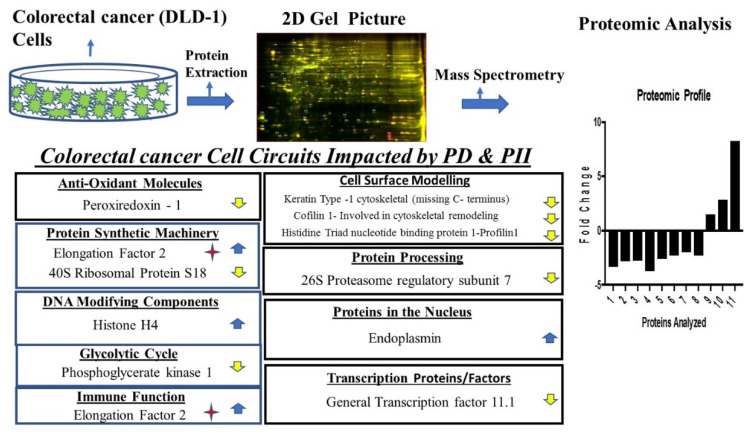
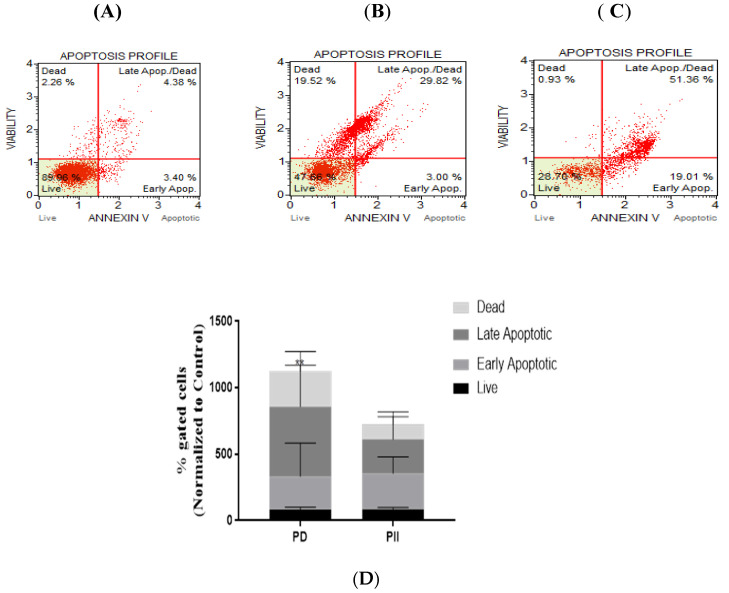
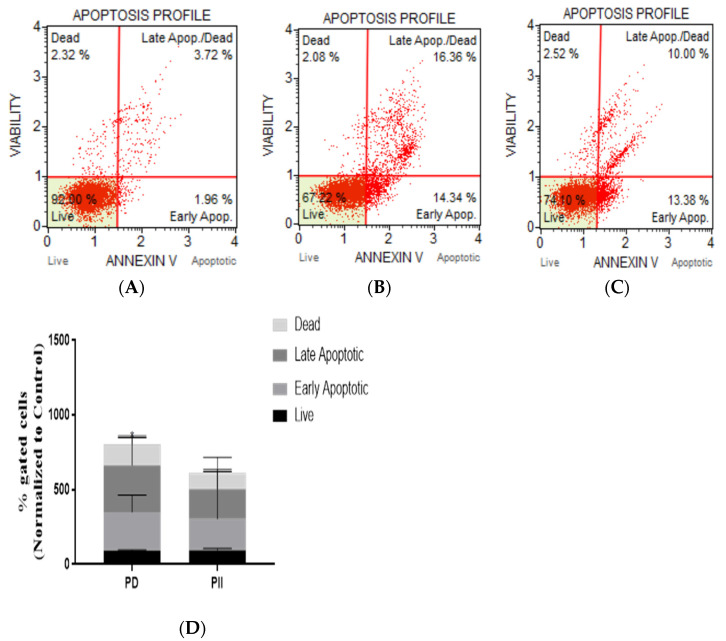
The prevalence of colorectal cancer has increased world-wide with high rates of mortality and morbidity. In the absence of efficacious drugs to treat this neoplasia, there is an imminent need to discover molecules with multifaceted effects. To this end, we opted to study the effect of steroidal saponins such as Polyphyllins. We performed anticancer activity studies with three analogs of Polyphyllins: Polyphyllin D (PD), Polyphyllin II (PII) and Polyphyllin G (PG). Here we show the potent effect of PD, PII (IC of 0.5-1 µM) and PG (IC of 3 µM) in inhibiting the viability of colorectal adenocarcinoma cells (DLD-1) and colorectal carcinoma cells (HCT116). PD and PII also showed inhibition of cell proliferation and sustained response upon withdrawal of the compounds when assessed by clonogenic assays in both the cell lines. Elucidation of the molecular mode of action revealed impact on the programmed cell death pathway. Additionally, proteomic profiling of DLD-1 revealed pivotal proteins differentially regulated by PD and PII, including a downregulated peroxiredoxin-1 which is considered as one of the novel targets to combat colorectal cancers and an upregulated elongation factor 2 (EF2), one of the key molecules considered as a tumor associated antigen (TAA) in colon cancer. Entities of cell metabolic pathways including downregulation of the key enzyme Phosphoglycerate kinase 1 of the glycolytic pathway was also observed. Importantly, the fold changes per se of the key components has led to the loss of viability of the colorectal cancer cells. We envision that the multifaceted function of PD and PII against the proliferation of colorectal carcinoma cells could have potential for novel treatments such as chemoimmunotherapy for colorectal adenocarcinomas. Future studies to develop these compounds as potent anti-colorectal cancer agents are warranted.
全球范围内,结直肠癌的发病率呈上升趋势,死亡率和发病率居高不下。由于缺乏有效的治疗该肿瘤的药物,迫切需要发现具有多方面作用的分子。为此,我们选择研究甾体皂苷如重楼皂苷的作用。我们用重楼皂苷的三种类似物进行了抗癌活性研究:重楼皂苷D(PD)、重楼皂苷II(PII)和重楼皂苷G(PG)。在此我们展示了PD、PII(半数抑制浓度为0.5 - 1 μM)和PG(半数抑制浓度为3 μM)对抑制结肠腺癌细胞(DLD - 1)和结肠癌细胞(HCT116)活力的显著作用。通过克隆形成试验评估,在这两种细胞系中,PD和PII还显示出抑制细胞增殖以及在撤除化合物后持续的反应。对分子作用模式的阐明揭示了其对程序性细胞死亡途径的影响。此外,DLD - 1的蛋白质组分析显示,PD和PII差异调节关键蛋白,包括下调的过氧化物还原酶 - 1(其被认为是对抗结直肠癌的新靶点之一)和上调的延伸因子2(EF2),EF2是结肠癌中被认为是肿瘤相关抗原(TAA)的关键分子之一。还观察到细胞代谢途径的实体,包括糖酵解途径关键酶磷酸甘油酸激酶1的下调。重要的是,关键成分本身的倍数变化导致了结肠癌细胞活力的丧失。我们设想,PD和PII对结肠癌细胞增殖的多方面作用可能为结肠腺癌的化学免疫疗法等新治疗方法带来潜力。有必要开展进一步研究,将这些化合物开发成有效的抗结直肠癌药物。