Asai Shunichi, Koma Ayaka, Nohata Nijiro, Kinoshita Takashi, Kikkawa Naoko, Kato Mayuko, Minemura Chikashi, Uzawa Katsuhiro, Hanazawa Toyoyuki, Seki Naohiko
Department of Functional Genomics, Chiba University Graduate School of Medicine, Chiba 260-8670, Japan.
Department of Otorhinolaryngology/Head and Neck Surgery, Chiba University Graduate School of Medicine, Chiba 260-8670, Japan.
Biomedicines. 2022 Mar 12;10(3):663. doi: 10.3390/biomedicines10030663.
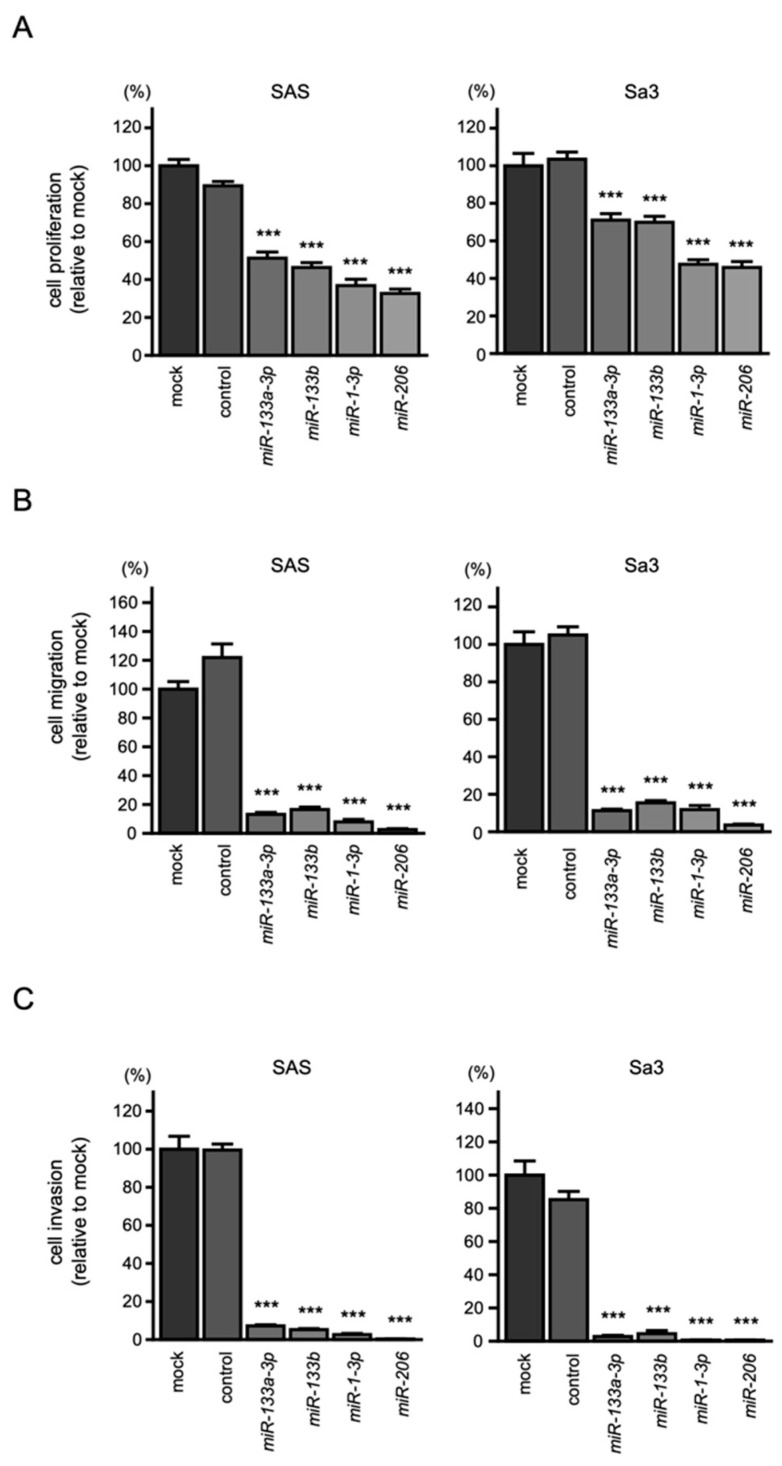
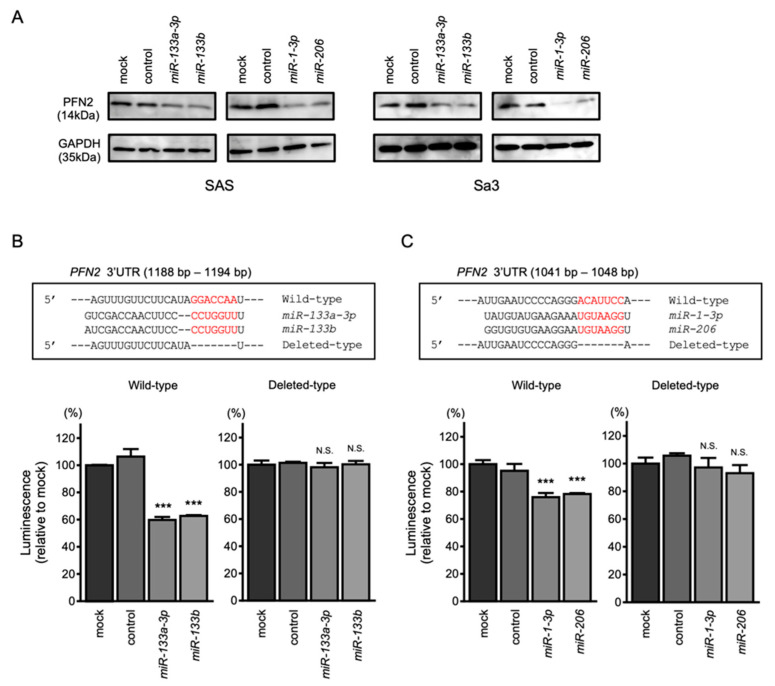
Based on our original RNA sequence-based microRNA (miRNA) signatures of head and neck squamous cell carcinoma (HNSCC), it was revealed that the expression levels of miR-1-3p, miR-206, miR-133a-3p, and miR-133b were significantly suppressed in cancer specimens. Seed sequences of miR-1-3p/miR-206 and miR-133a-3p/miR-133b are identical. Interestingly, miR-1-3p/miR-133a-3p and miR-206/miR-133b are clustered in the human genome. We hypothesized that the genes coordinately controlled by these miRNAs are closely involved in the malignant transformation of HNSCC. Our in silico analysis identified a total of 28 genes that had putative miR-1-3p/miR-133a-3p and miR-206/miR-133b binding sites. Moreover, their expression levels were upregulated in HNSCC tissues. Multivariate Cox regression analyses showed that expression of PFN2 and PSEN1 were independent prognostic factors for patients with HNSCC (p < 0.05). Notably, four miRNAs (i.e., miR-1-3p, miR-206, miR-133a-3p, and miR-133b) directly bound the 3′untranslated region of PFN2 and controlled expression of the gene in HNSCC cells. Overexpression of PFN2 was confirmed in clinical specimens, and its aberrant expression facilitated cancer cell migration and invasion abilities. Our miRNA-based strategy continues to uncover novel genes closely involved in the oncogenesis of HNSCC.
基于我们最初的基于RNA序列的头颈部鳞状细胞癌(HNSCC)微小RNA(miRNA)特征,结果显示miR-1-3p、miR-206、miR-133a-3p和miR-133b在癌组织标本中的表达水平显著下调。miR-1-3p/miR-206以及miR-133a-3p/miR-133b的种子序列相同。有趣的是,miR-1-3p/miR-133a-3p和miR-206/miR-133b在人类基因组中是成簇的。我们推测这些miRNA协同调控的基因与HNSCC的恶性转化密切相关。我们的生物信息学分析共鉴定出28个具有假定的miR-1-3p/miR-133a-3p和miR-206/miR-133b结合位点的基因。此外,它们在HNSCC组织中的表达水平上调。多因素Cox回归分析显示,PFN2和PSEN1的表达是HNSCC患者的独立预后因素(p<0.05)。值得注意的是,四种miRNA(即miR-1-3p、miR-206、miR-133a-3p和miR-133b)直接结合PFN2的3'非翻译区并调控HNSCC细胞中该基因的表达。PFN2在临床标本中过表达得到证实,其异常表达促进了癌细胞的迁移和侵袭能力。我们基于miRNA的策略不断发现与HNSCC肿瘤发生密切相关的新基因。