Chen Po-Yen, Cheng Jai-Hong, Wu Zong-Sheng, Chuang Yao-Chi
Department of Urology, Kaohsiung Chang Gung Memorial Hospital, Chang Gung University College of Medicine, Kaohsiung 833, Taiwan.
Center for Shock Wave Medicine and Tissue Engineering, Kaohsiung Chang Gung Memorial Hospital, Chang Gung University College of Medicine, Kaohsiung 833, Taiwan.
Biomedicines. 2022 Mar 15;10(3):675. doi: 10.3390/biomedicines10030675.
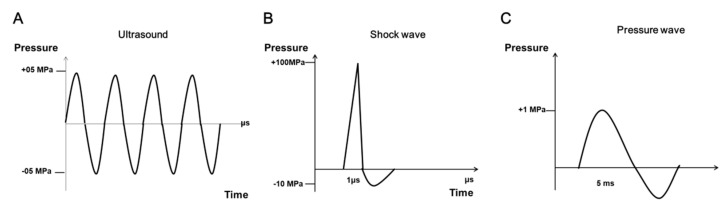
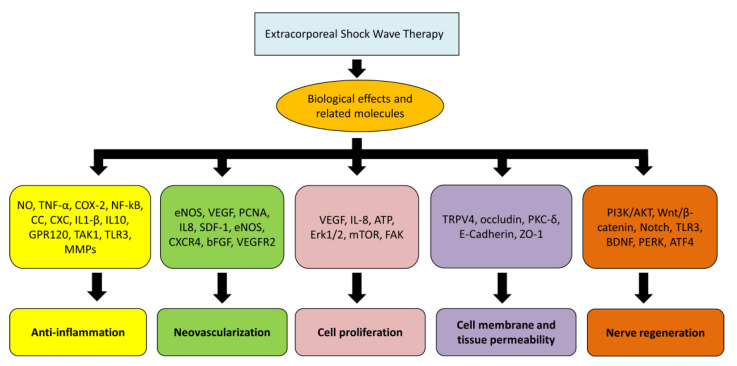
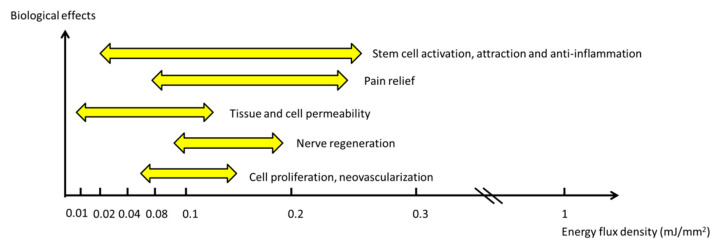
A shock wave (SW), which carries energy and propagates through a medium, is a type of continuous transmitted sonic wave that can achieve rapid energy transformations. SWs have been applied for many fields of medical science in various treatment settings. In urology, high-energy extracorporeal SWs have been used to disintegrate urolithiasis for 30 years. However, at lower energy levels, SWs enhance the expression of vascular endothelial growth factor (VEGF), endothelial nitric oxide synthase (eNOS), proliferating cell nuclear antigen (PCNA), chemoattractant factors, and the recruitment of progenitor cells, and inhibit inflammatory molecules. Low energy extracorporeal shock wave (LESW) therapy has been used in urology for treating chronic prostatitis/chronic pelvic pain syndrome (CP/CPPS), interstitial cystitis/bladder pain syndrome (IC/BPS), overactive bladder, stress urinary incontinence, and erectile dysfunction through the mechanisms of anti-inflammation, neovascularization, and tissue regeneration. Additionally, LESW have been proven to temporarily increase tissue permeability and facilitate intravesical botulinum toxin delivery for treating overactive bladders in animal studies and in a human clinical trial. LESW assisted drug delivery was also suggested to have a synergistic effect in combination with cisplatin to improve the anti-cancer effect for treating urothelial cancer in an in vitro and in vivo study. LESW assisted drug delivery in uro-oncology is an interesting suggestion, but no comprehensive clinical trials have been conducted as of yet. Taken together, LESW is a promising method for the treatment of various diseases in urology. However, further investigation with a large scale of clinical studies is necessary to confirm the real role of LESW in clinical use. This article provides information on the basics of SW physics, mechanisms of action on biological systems, and new frontiers of SW medicine in urology.
冲击波(SW)是一种携带能量并在介质中传播的连续传播的声波,能够实现快速的能量转换。冲击波已在各种治疗环境中的许多医学领域得到应用。在泌尿外科,高能体外冲击波用于治疗尿石症已有30年历史。然而,在较低能量水平下,冲击波可增强血管内皮生长因子(VEGF)、内皮型一氧化氮合酶(eNOS)、增殖细胞核抗原(PCNA)、趋化因子的表达以及祖细胞的募集,并抑制炎症分子。低能量体外冲击波(LESW)疗法已在泌尿外科用于治疗慢性前列腺炎/慢性盆腔疼痛综合征(CP/CPPS)、间质性膀胱炎/膀胱疼痛综合征(IC/BPS)、膀胱过度活动症、压力性尿失禁和勃起功能障碍,其作用机制包括抗炎、新生血管形成和组织再生。此外,在动物研究和一项人体临床试验中,已证明低能量体外冲击波可暂时增加组织通透性并促进膀胱内肉毒杆菌毒素的递送,用于治疗膀胱过度活动症。在一项体外和体内研究中,低能量体外冲击波辅助药物递送还被认为与顺铂联合使用具有协同作用,可提高治疗尿路上皮癌的抗癌效果。低能量体外冲击波辅助药物递送在泌尿肿瘤学中是一个有趣的提议,但截至目前尚未进行全面的临床试验。综上所述,低能量体外冲击波是治疗泌尿外科各种疾病的一种有前景的方法。然而,需要进行大规模的临床研究进一步调查,以确认低能量体外冲击波在临床应用中的实际作用。本文提供了关于冲击波物理学基础、对生物系统的作用机制以及泌尿外科冲击波医学新前沿的信息。