Sharett Institute of Oncology, Hadassah-Hebrew University Medical Center, Jerusalem 91120, Israel.
Faculty of Medicine, The Hebrew University, Jerusalem 9112102, Israel.
Genes (Basel). 2022 Feb 27;13(3):438. doi: 10.3390/genes13030438.
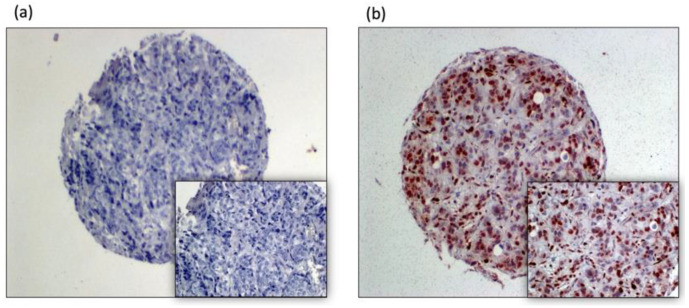
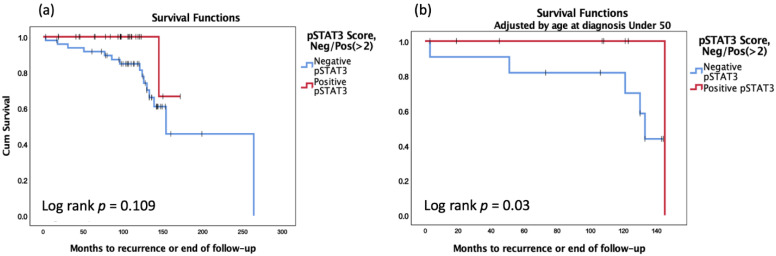
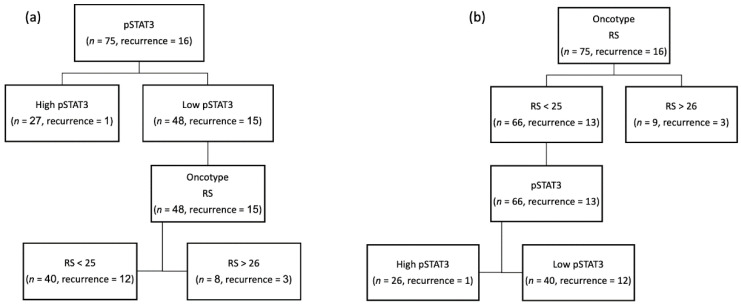
The likelihood of recurrence in breast cancer patients with hormone receptor-positive (HR-positive) tumors is influenced by clinical, histopathological, and molecular features. Recent studies suggested that activated STAT3 (pSTAT3) might serve as a biomarker of outcome in breast cancer patients. In the present work, we have analyzed the added value of pSTAT3 to OncotypeDx Recurrence Score (RS) in patient prognostication. We have found that patients with low RS (<26) and low pSTAT3 might represent a population at a higher risk for cancer recurrence. Furthermore, we have observed that a positive pSTAT3 score alone can be a favorable marker for patients with HR-positive breast cancer under the age of 50. In an era of personalized medicine, these findings warrant further appraisal of chemotherapy benefit in this population.
激素受体阳性(HR 阳性)肿瘤乳腺癌患者的复发可能性受临床、组织病理学和分子特征的影响。最近的研究表明,激活的 STAT3(pSTAT3)可能是乳腺癌患者预后的生物标志物。在本研究中,我们分析了 pSTAT3 对 OncotypeDx 复发评分(RS)在患者预后中的附加价值。我们发现,RS 低(<26)且 pSTAT3 低的患者可能代表癌症复发风险较高的人群。此外,我们观察到,对于年龄小于 50 岁的 HR 阳性乳腺癌患者,pSTAT3 评分阳性本身就是一个有利的标志物。在个体化医学时代,这些发现需要进一步评估该人群的化疗获益。