Medical Genetics Laboratory, Department of Pharmacy, Health and Nutritional Sciences, University of Calabria, 87036 Rende, Italy.
Genes (Basel). 2022 Mar 18;13(3):537. doi: 10.3390/genes13030537.
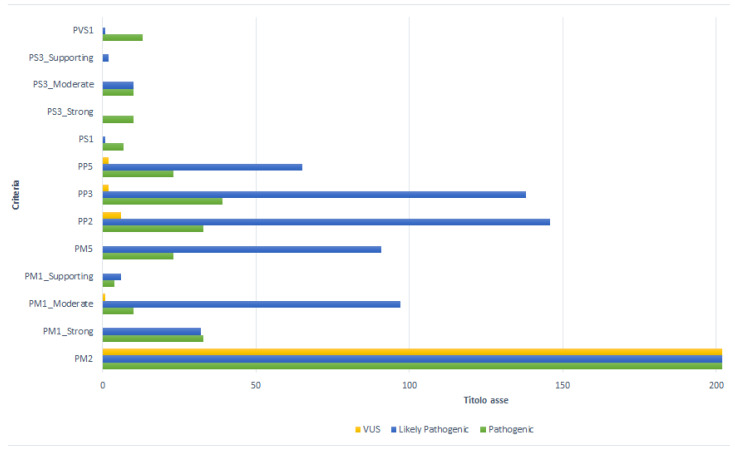
Amyotrophic lateral sclerosis (ALS) is the most common type of motor neuron disease whose causes are unclear. The first ALS gene associated with the autosomal dominant form of the disease was . This gene has a high rate of rare variants, and an appropriate classification is essential for a correct ALS diagnosis. In this study, we re-evaluated the classification of all previously reported variants ( = 202) from ALSoD, project MinE, and in-house databases by applying the ACMG-AMP criteria to ALS. New bioinformatics analysis, frequency rating, and a thorough search for functional studies were performed. We also proposed adjusting criteria strength describing how to apply them to variants. Most of the previously reported variants have been reclassified as likely pathogenic and pathogenic based on the modified weight of the PS3 criterion, highlighting how in vivo or in vitro functional studies are determining their interpretation and classification. Furthermore, this study reveals the concordance and discordance of annotations between open databases, indicating the need for expert review to adapt the study of variants to a specific disease. Indeed, in complex diseases, such as ALS, the oligogenic inheritance, the presence of genes that act as risk factors and the reduced penetration must be considered. Overall, the diagnosis of ALS remains clinical, and improving variant classification could support genetic data as diagnostic criteria.
肌萎缩侧索硬化症(ALS)是最常见的运动神经元疾病,其病因尚不清楚。与该病常染色体显性形式相关的第一个 ALS 基因是. 该基因具有很高的罕见变异率,因此进行适当的分类对于正确的 ALS 诊断至关重要。在这项研究中,我们通过应用 ACMG-AMP 标准对 ALS 重新评估了来自 ALSoD、MinE 项目和内部数据库的所有先前报道的 变异体( = 202)的分类。我们还对新的生物信息学分析、频率评分以及对功能研究的彻底搜索进行了评估。我们还提出了调整描述如何将其应用于 变异体的标准强度的建议。基于 PS3 标准的修改权重,先前报道的大多数变异体已重新分类为可能致病性和致病性,这突出了体内或体外功能研究如何决定其解释和分类。此外,这项研究揭示了开放数据库之间注释的一致性和差异性,表明需要专家审查来适应对特定疾病的变异体研究。事实上,在 ALS 等复杂疾病中,必须考虑寡基因遗传、存在作为风险因素的基因以及降低的通透性。总体而言,ALS 的诊断仍然是临床的,改善变异体分类可以支持遗传数据作为诊断标准。